Bicycle Waltz
(Music:England/Dance:USA)
Song Title: Les bicyclettes de Belsize
Lyrics: Barry Mason and Leslie Reed
Music: Barry Mason and Leslie Reed
Singer: Engelbert Humperdinck
Dance Title: Bicycle Waltz
Chinese Dance Title: 腳踏車華士
Choreographers: Charlie and Marge Carter
"Les Bicyclettes de Belsize" is the theme song for the 1968 British 30-minute short musical film of the same name. The original title is French, meaning "The Bicycles of Belsize Park." The film was inspired by the 1964 French romantic musical drama Les Parapluies de Cherbourg (The Umbrellas of Cherbourg).
The theme song for Les Bicyclettes de Belsize was composed by Barry Mason and Leslie Reed. This short film tells the story of a young man riding his bicycle through Belsize Park, London. While distracted by a beautiful woman, he accidentally crashes, which leads to a romance with a fashion model. (Note: There is actually no park named "Belsize" in London, so dont bother looking for it when you visit!)
Since we mentioned that "Bicycle Waltz" is a film theme song, there must be a story behind it, right? Hehe~ As usual, grab your stools, because Teacher Frog is about to tell a story.
This film could almost be classified as a silent film. Aside from the background music and songs, there are only two lines of spoken dialogue in the entire movie:
"Whats your name?"
"My name is Katie."
Other than that, there is practically 30 minutes with no dialogue at all, not even subtitles. Impressive, right? (Teacher Frog’s statement is a bit contradictory; if there is no dialogue, why would there be subtitles? Hehe~).
The film opens in the morning in a small English town. The camera pans down from the rooftops, offering a birds-eye view of various street scenes... Wait, why is a half-naked man climbing out of a second-floor window? Highly suspicious... Unexpectedly, this scene of infidelity is caught right on camera, hehe~
Movie Opening Sequence: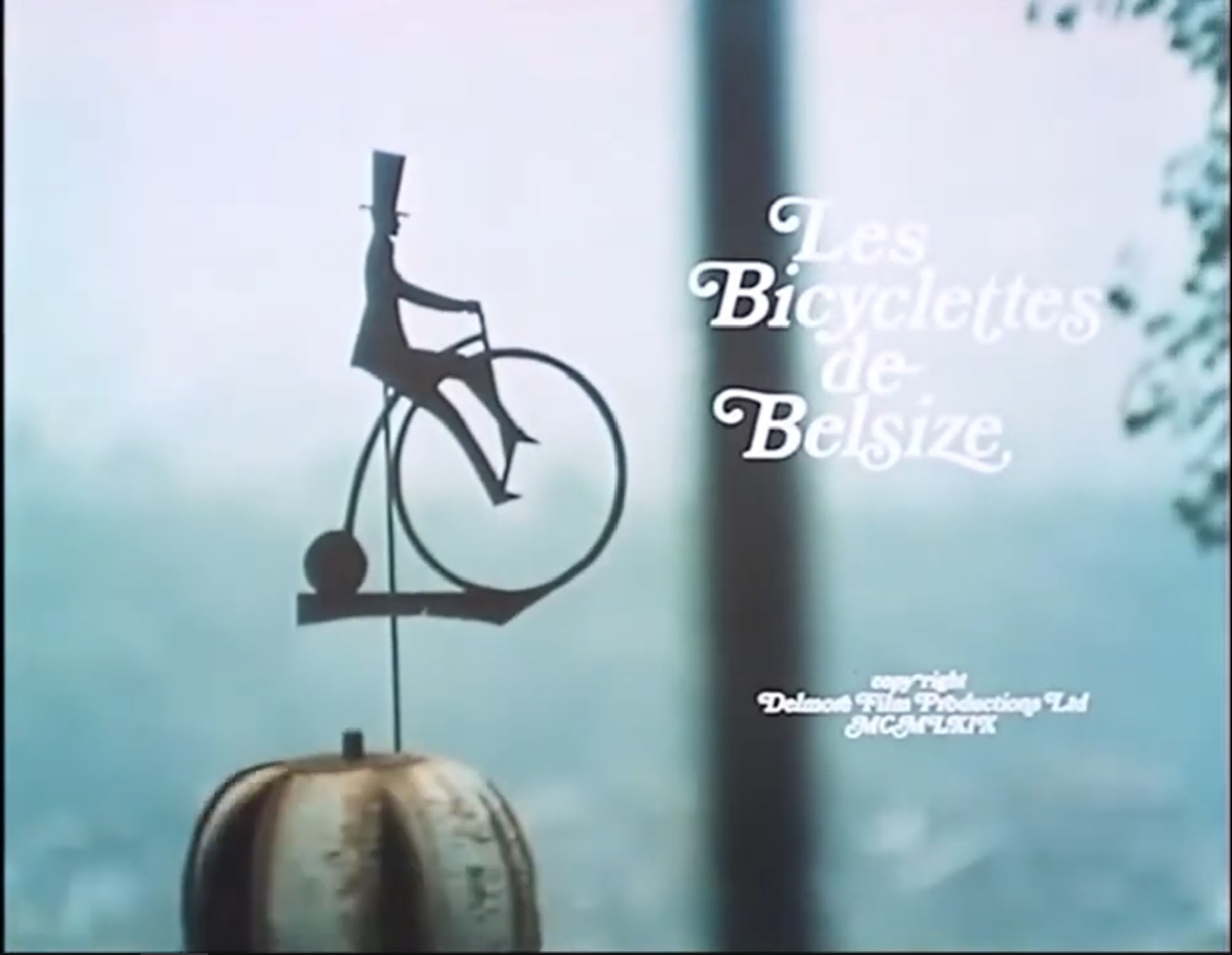
A morning street scene in a small English town: 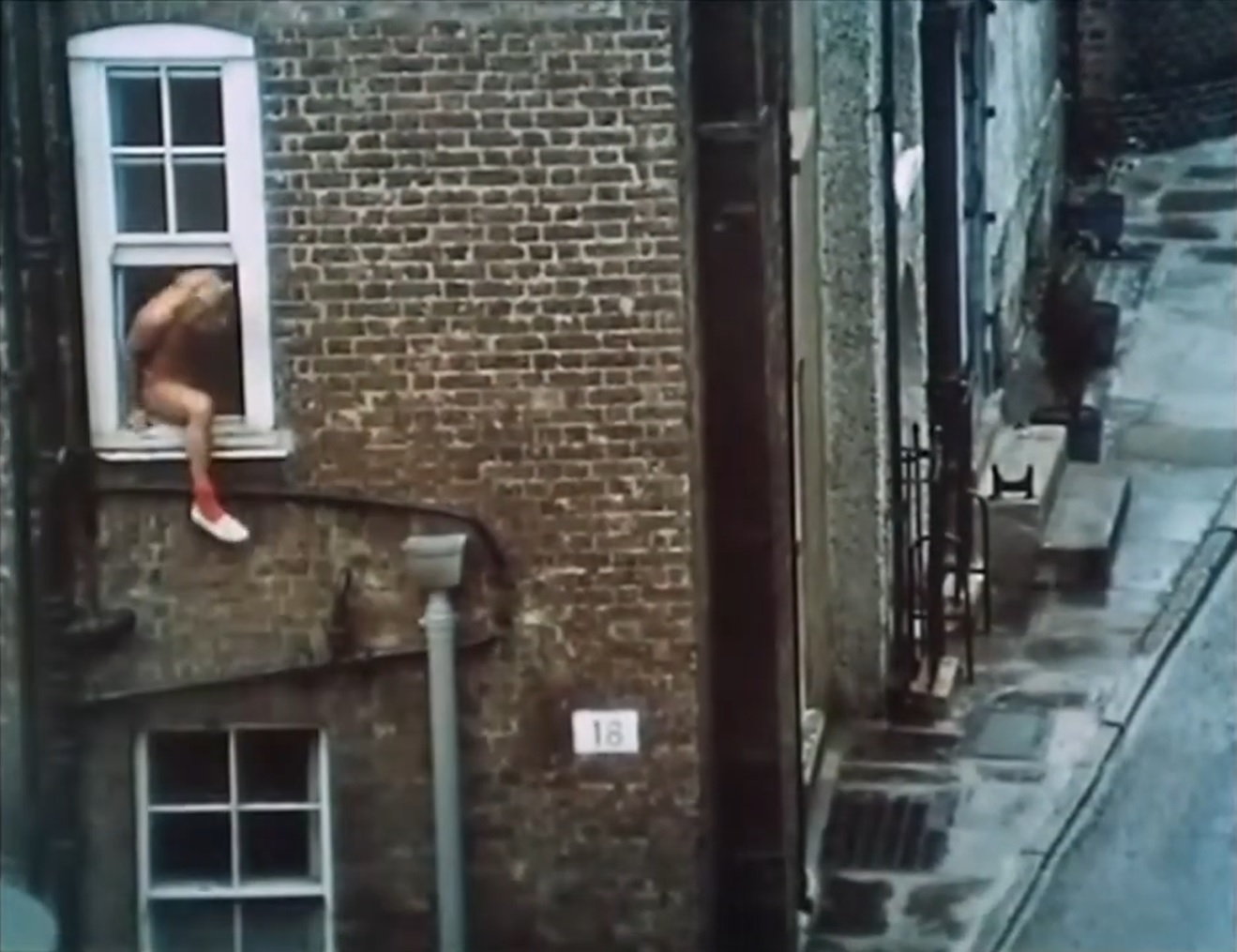
Another ordinary day begins as a stylish, handsome young man appears. (Teacher Frogs note: This is the male lead, Steve. Actually, the film never mentions his name and only refers to him as an unnamed young man. Teacher Frog found the protagonists name in the British Film Institutes database, so for the rest of the story, I will refer to him as Steve.) He rides his bicycle right off his roof to start his workday.
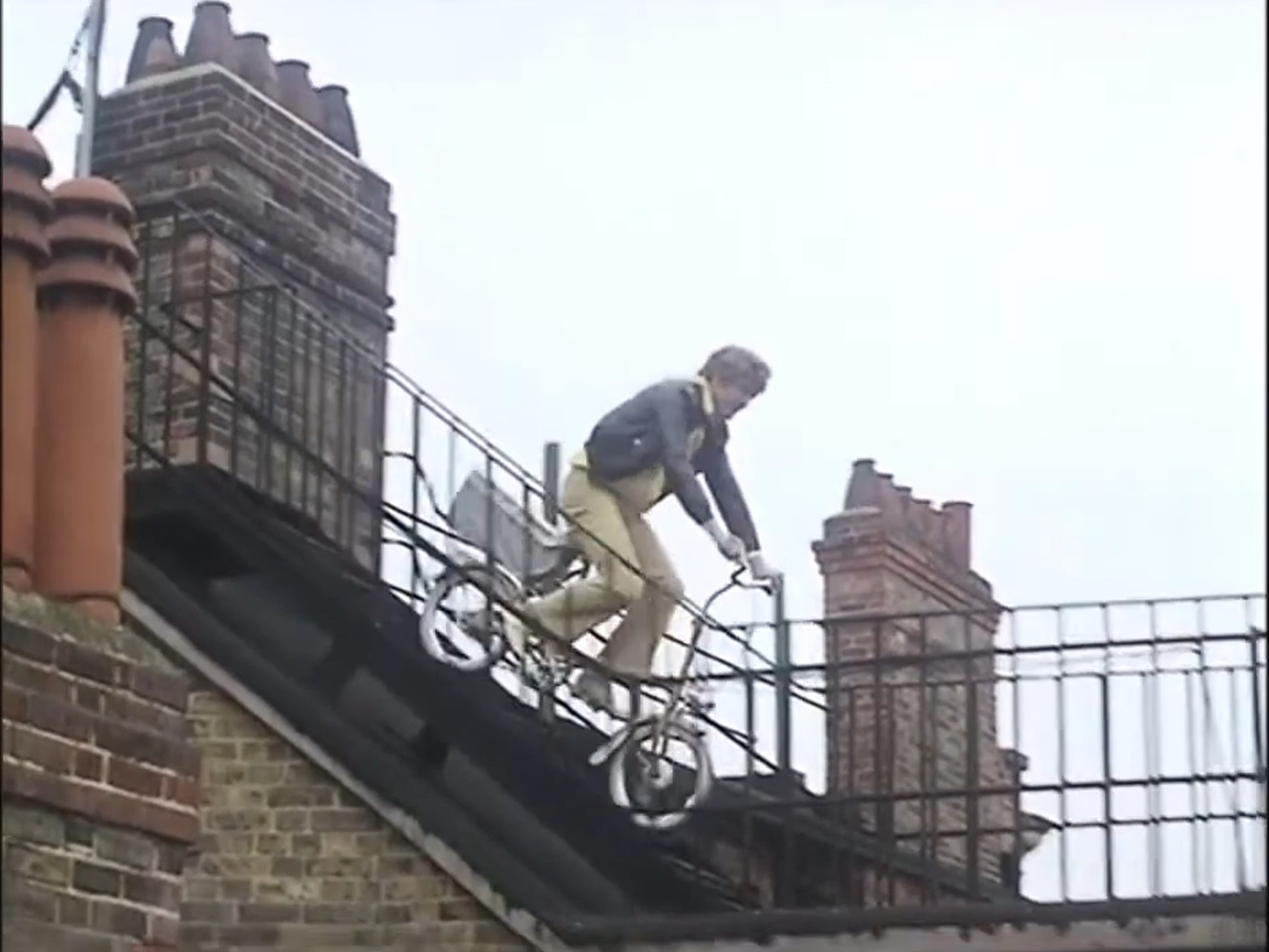
(Dont ask me why he would do something so absurd as riding a bike off a roof; I dont know either, and the movie doesnt explain it. But seeing him shave by the chimney on his neighbors roof makes the bike stunt less surprising.)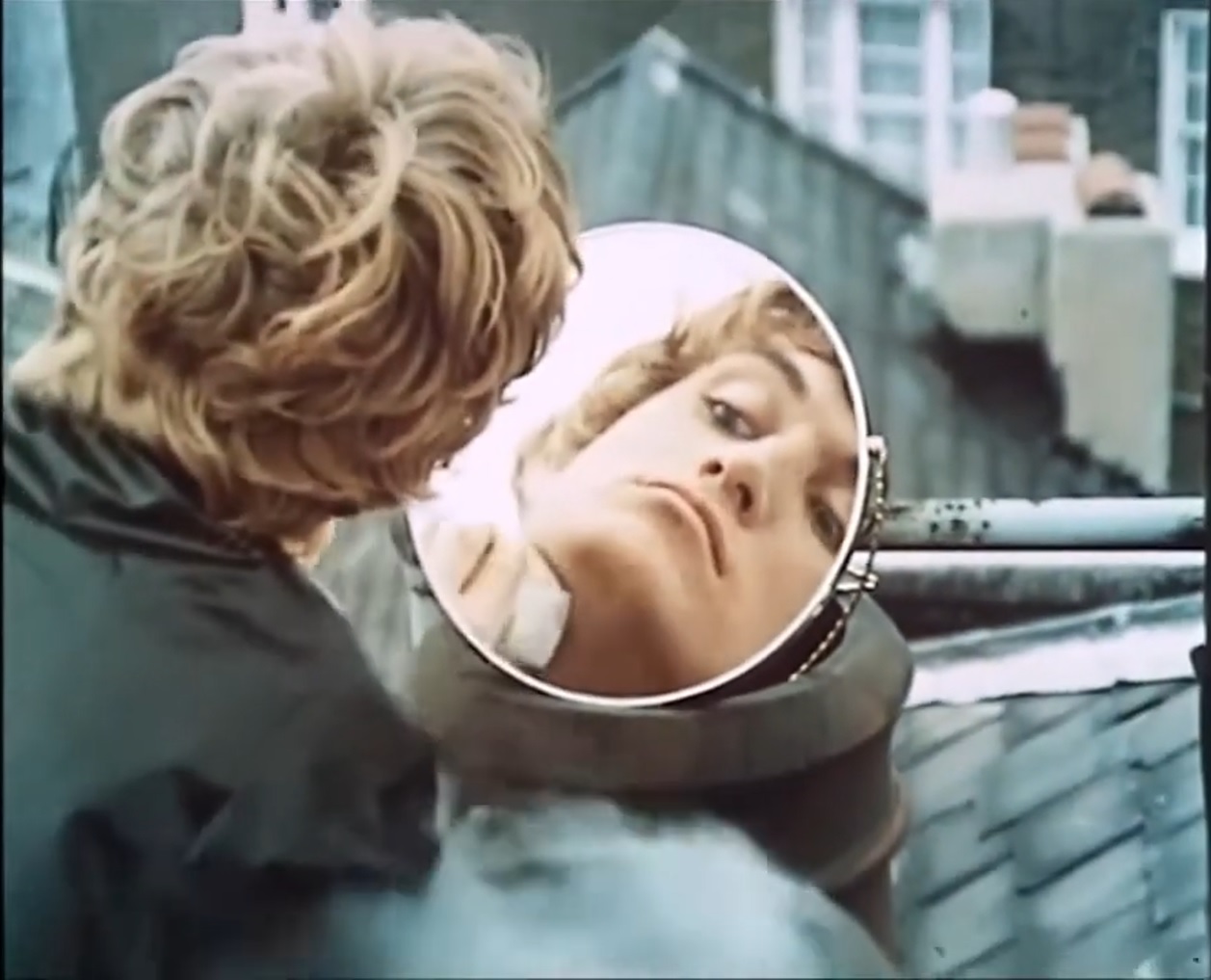
Accompanied by the original theme song of "Bicycle Waltz" and the crisp ringing of his bicycle bell, Steve happily pedals to work. 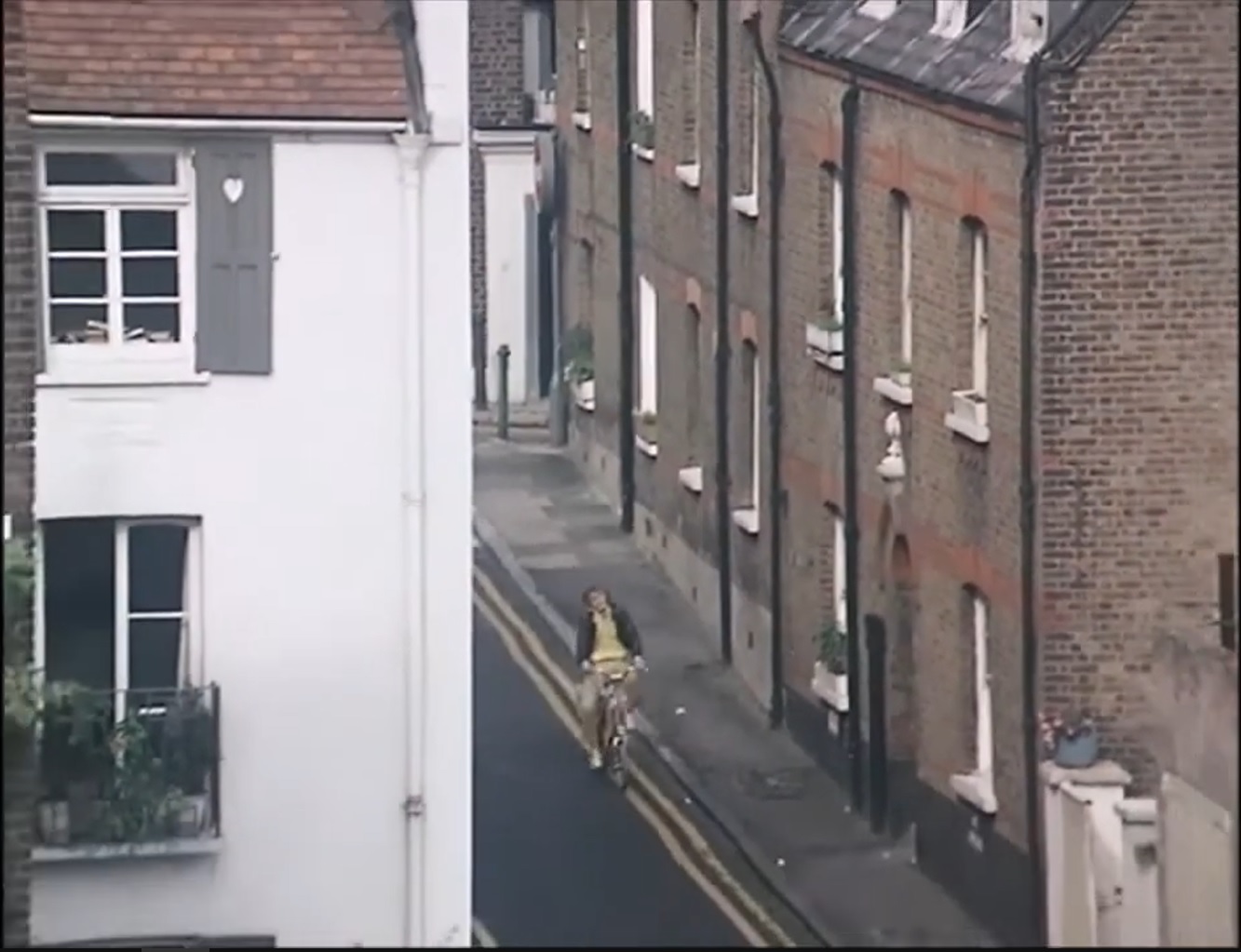
However, while looking back at the beautiful legs of a woman in a red miniskirt climbing some stairs, Steve loses control of his bike. He collides with a little girl wearing braces and a ponytail who is riding a tricycle. While the little girl is completely unharmed, Steve sees stars and collapses to the ground.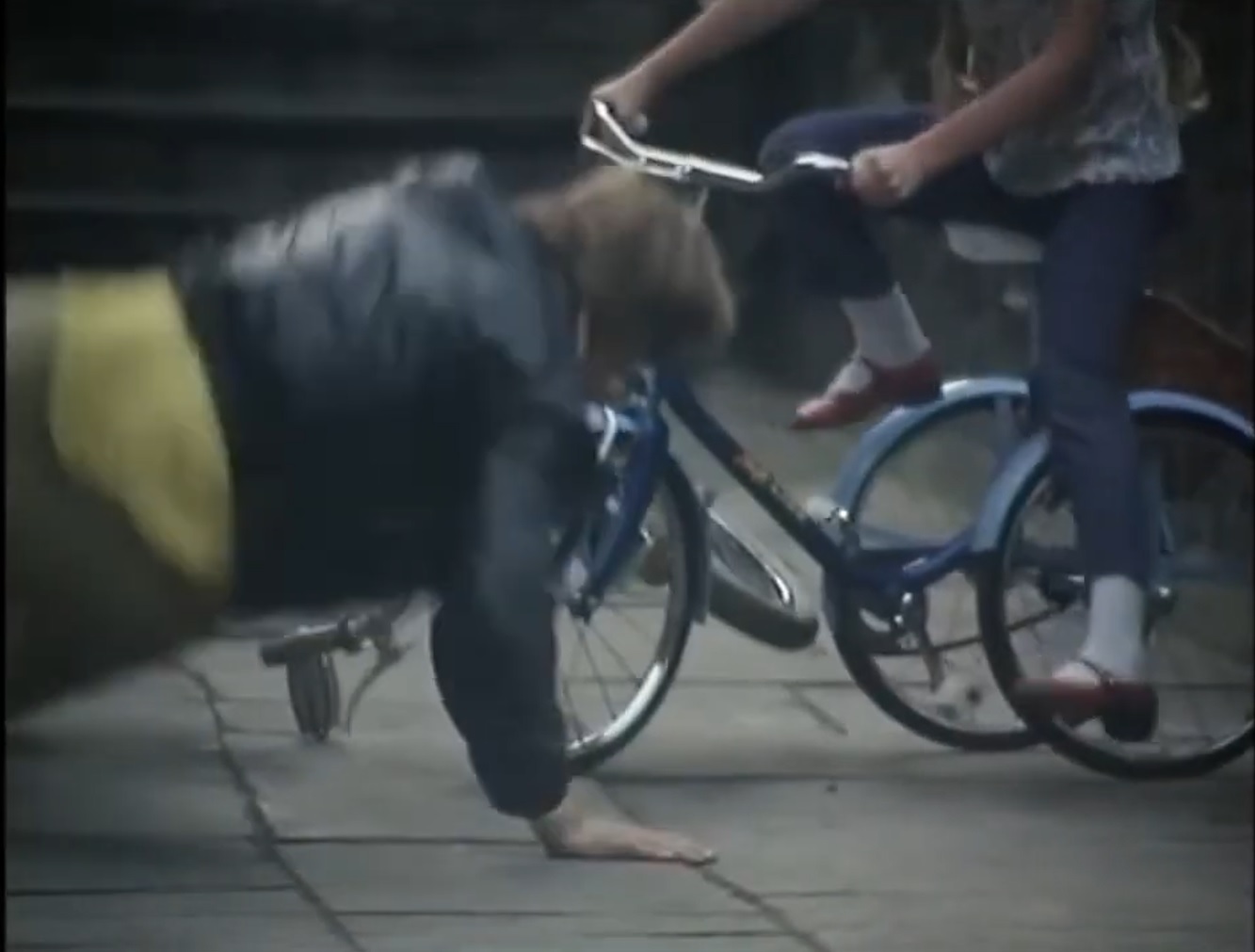
Gazing at such a handsome face, the little girl realizes he is the Prince Charming she has always dreamed of (even though she looks under 10 years old) and instantly falls for him.
When Steve regains consciousness, he checks himself over and finds he is alright, and the little girl is fine too. He then asks for her name, leading to the only two lines of dialogue in the entire movie:
"Whats your name?"
"My name is Katie."
With that, he gets back on his bicycle and rushes off to work.
However, how could little Katie give up on what might be the love of her life? She pedals her tricycle and chases after him. Sensing that something is wrong and that he is being followed, Steve unconsciously speeds up. 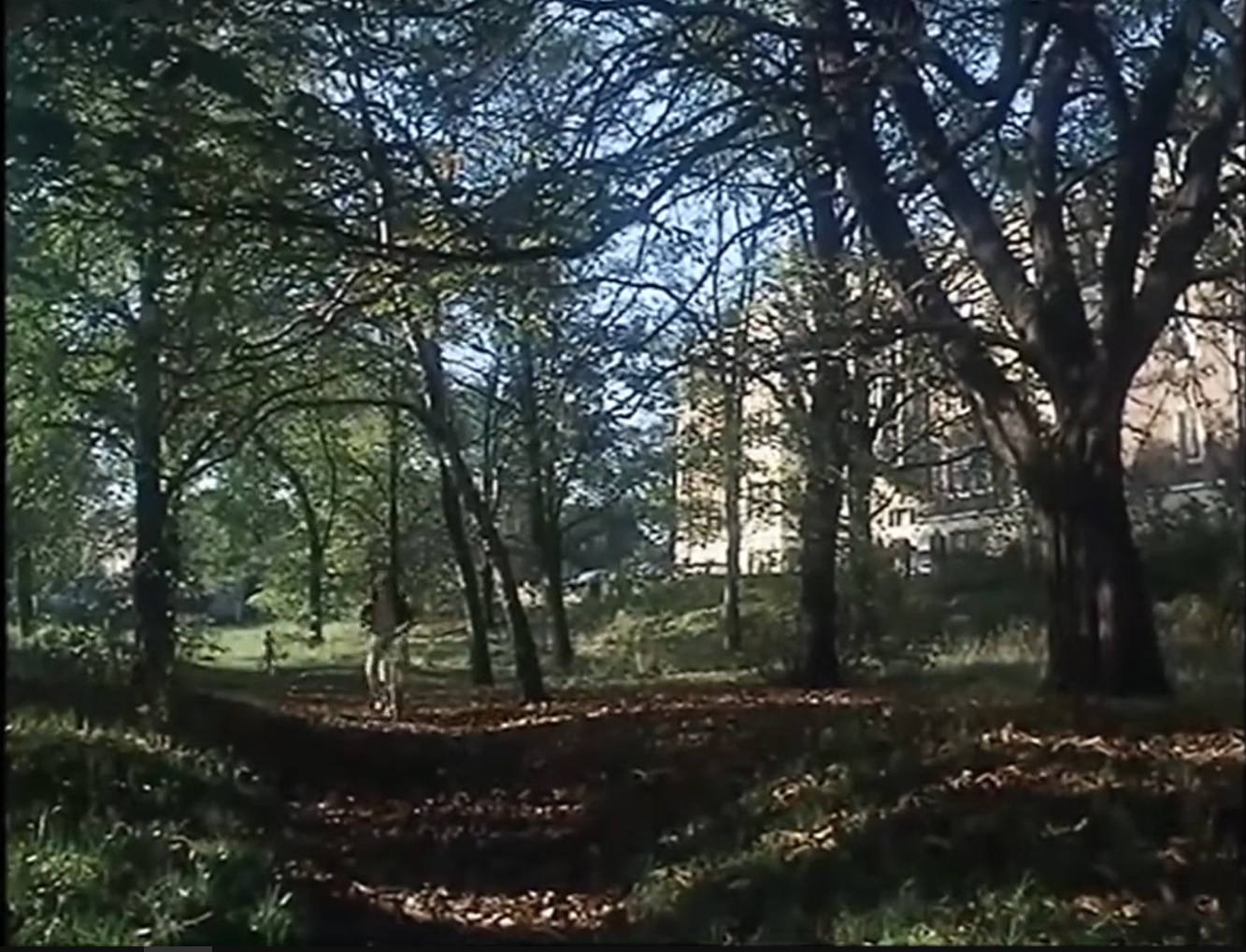
Just as he turns his head to check if Katie is still there, he fails to notice that the road ahead has ended. He swerves erratically and finally crashes right into a giant billboard.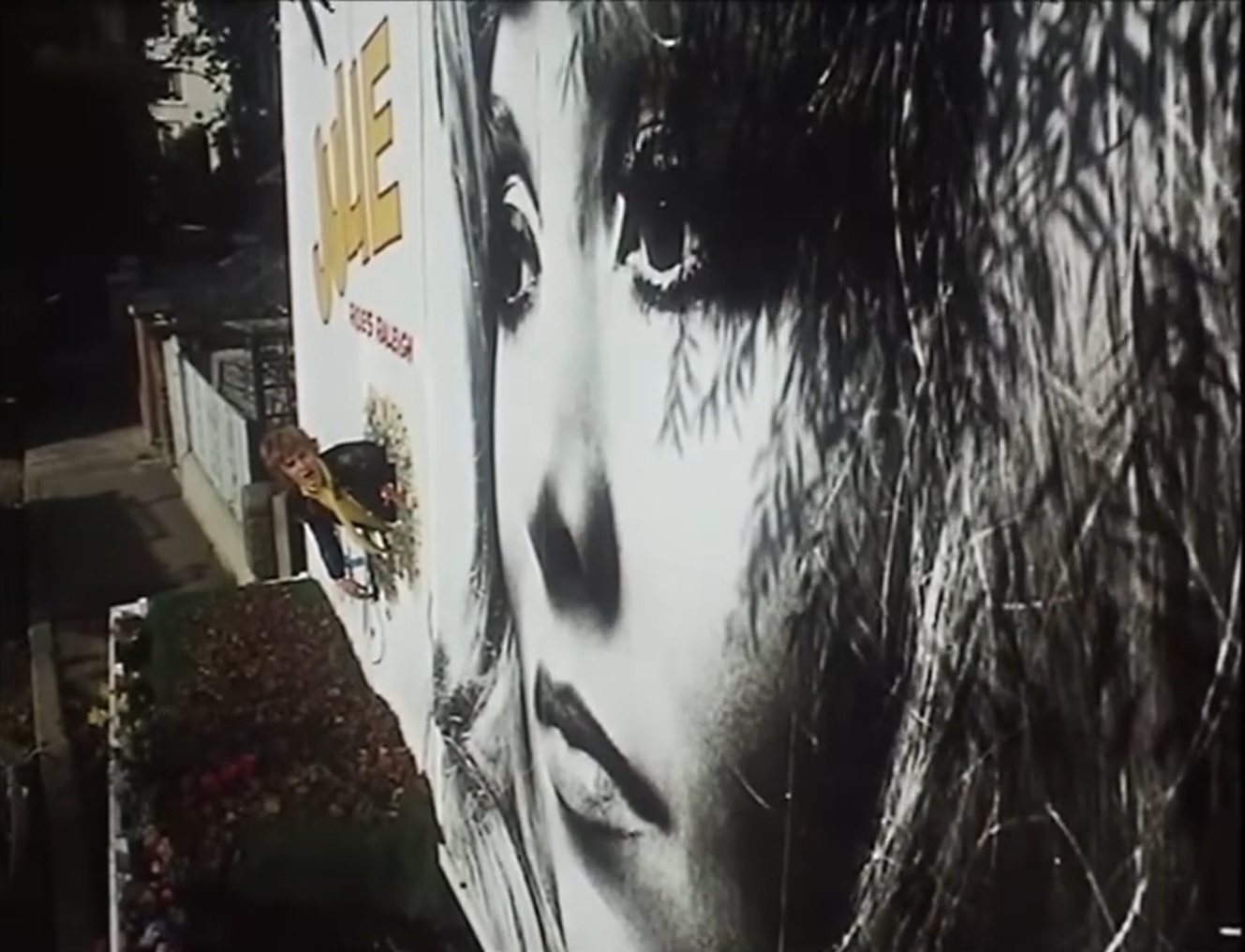
The massive advertisement features a popular fashion model named Julie. Steve falls instantly in love with Julies sweet image on the billboard and begins singing a love song to it. Katie, who has followed him all this way, witnesses the scene and is consumed by jealousy.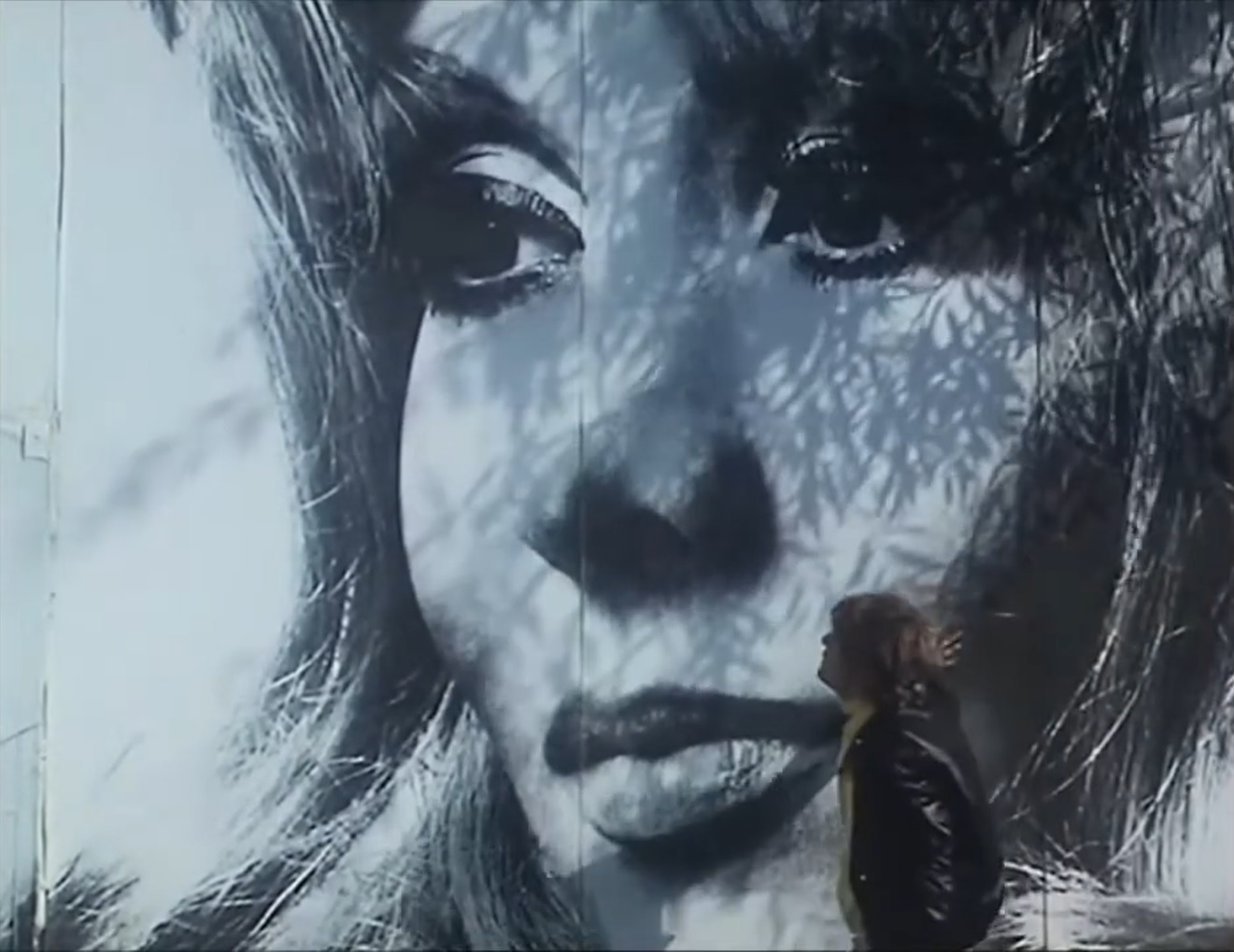
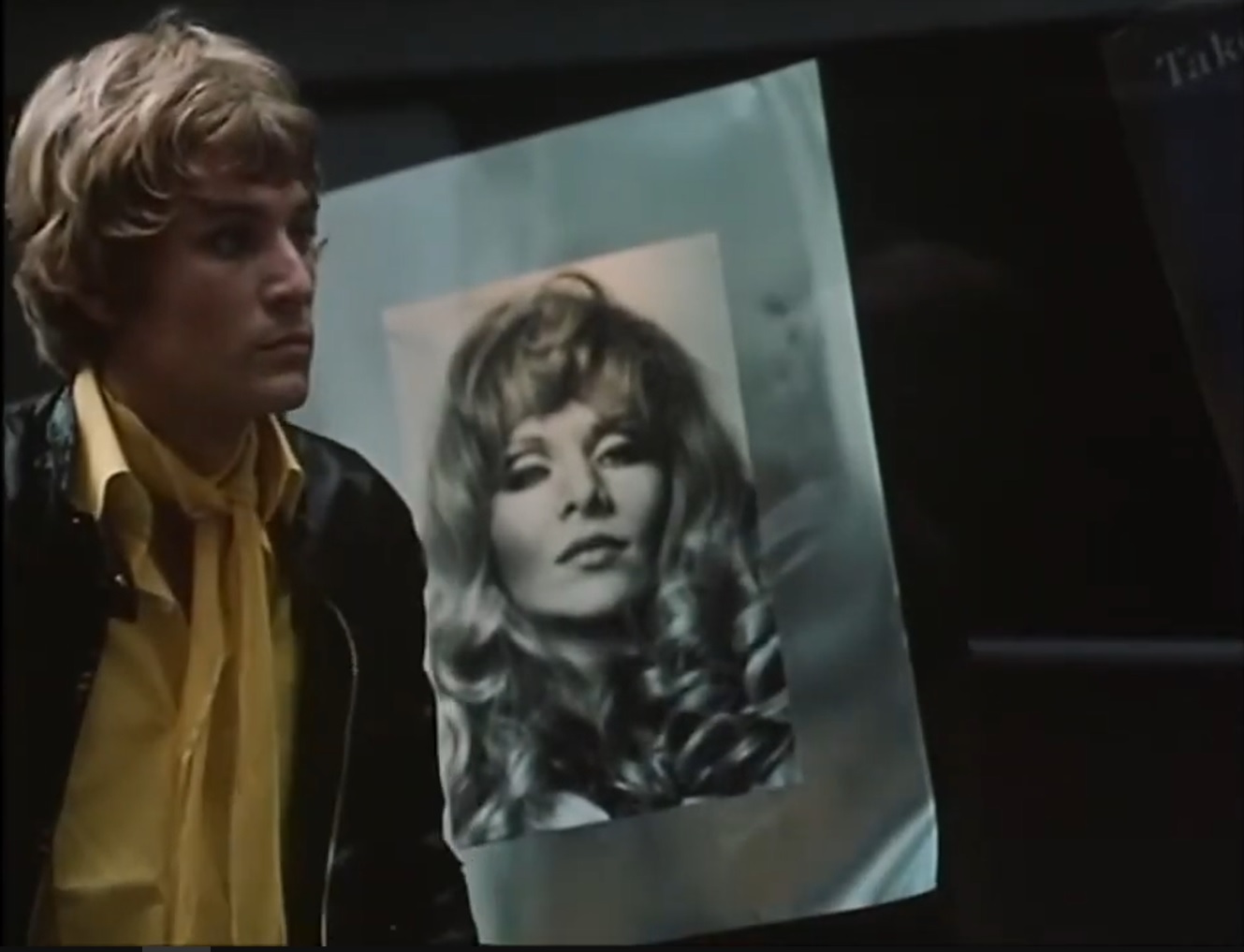
After a chaotic morning, Steve finally arrives at his workplace, a print shop. At the entrance, he sees a pile of incoming mail. He opens the packages one by one, and one of them happens to be a large poster of Julie. After gazing longingly at it, he hangs the poster on the front window of the print shop.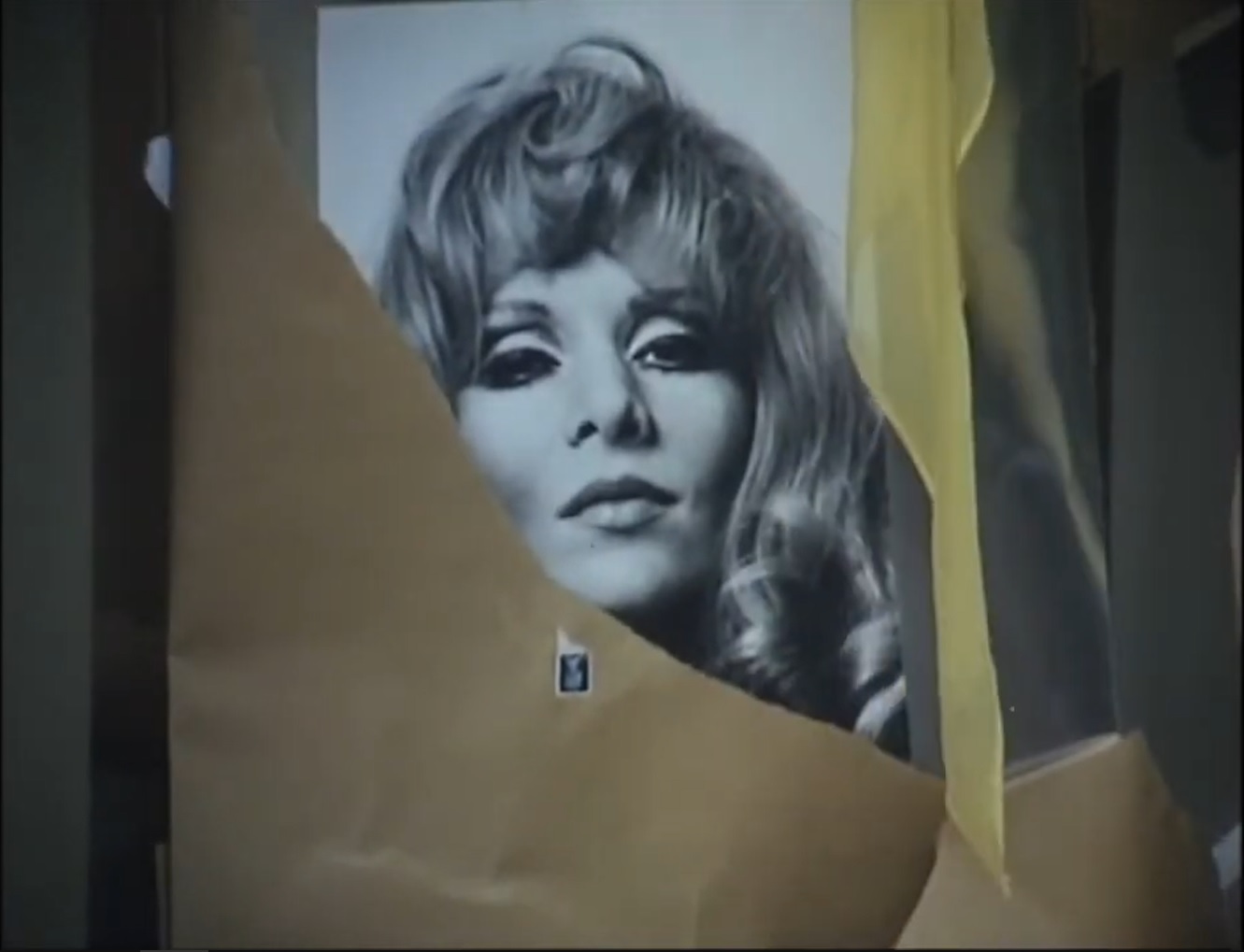
The scene shifts. By a stroke of coincidence, Julie is doing a fashion photoshoot in the building directly opposite Steves print shop. 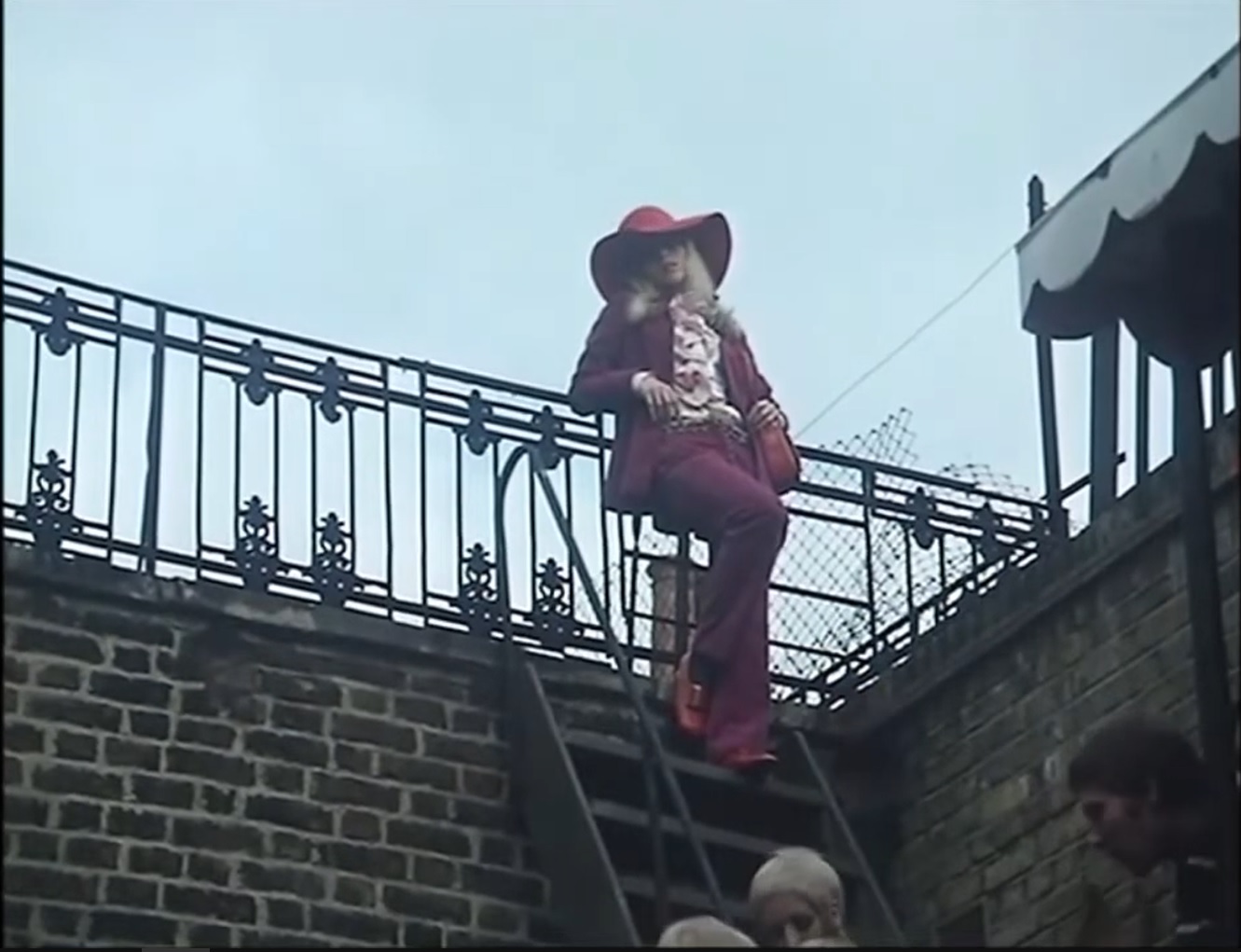
After wrapping up her shoot, Julie walks past the shop and spots Steve staring at her poster through the glass.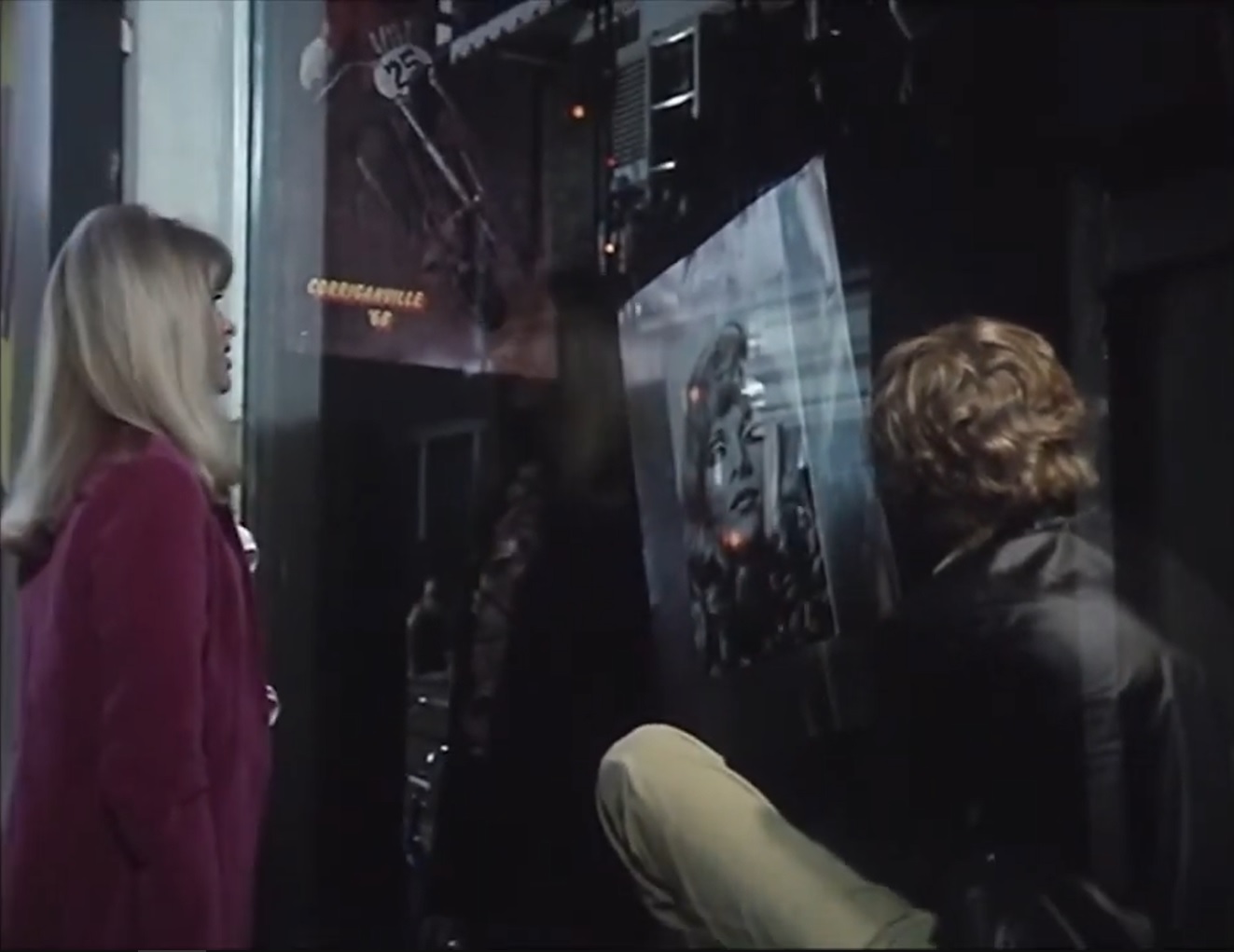
Steve discovers that the woman of his dreams is standing right outside his window. Meanwhile, Julie, who is usually pampered and aloof, instantly knows she has found the love of her life the moment their eyes meet. Unconsciously, they kiss through the glass pane. 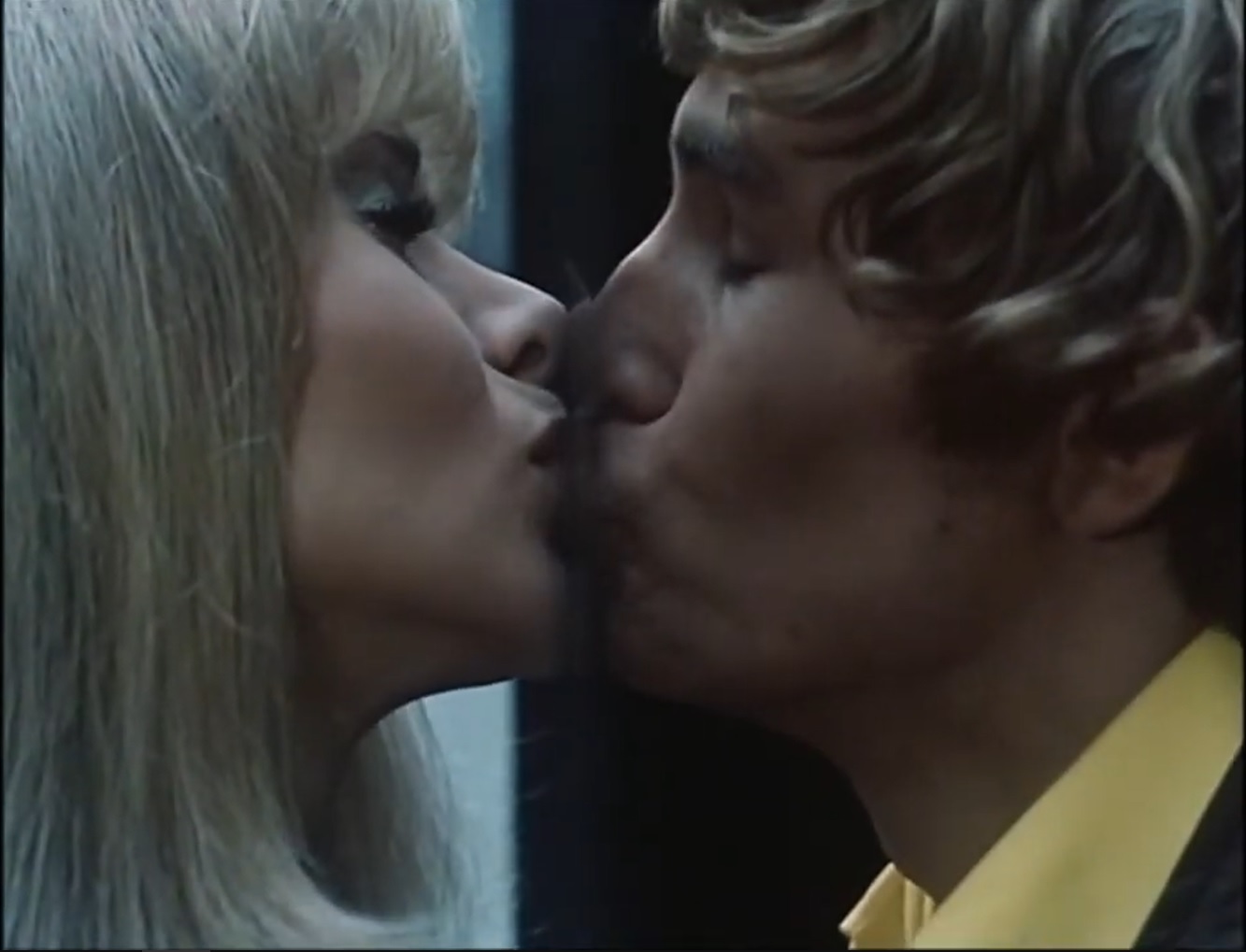
Overjoyed, Steve rushes outside to meet her, only to find her being pulled into a van by her agency staff and driven to her next shoot, leaving him standing there in disappointment.
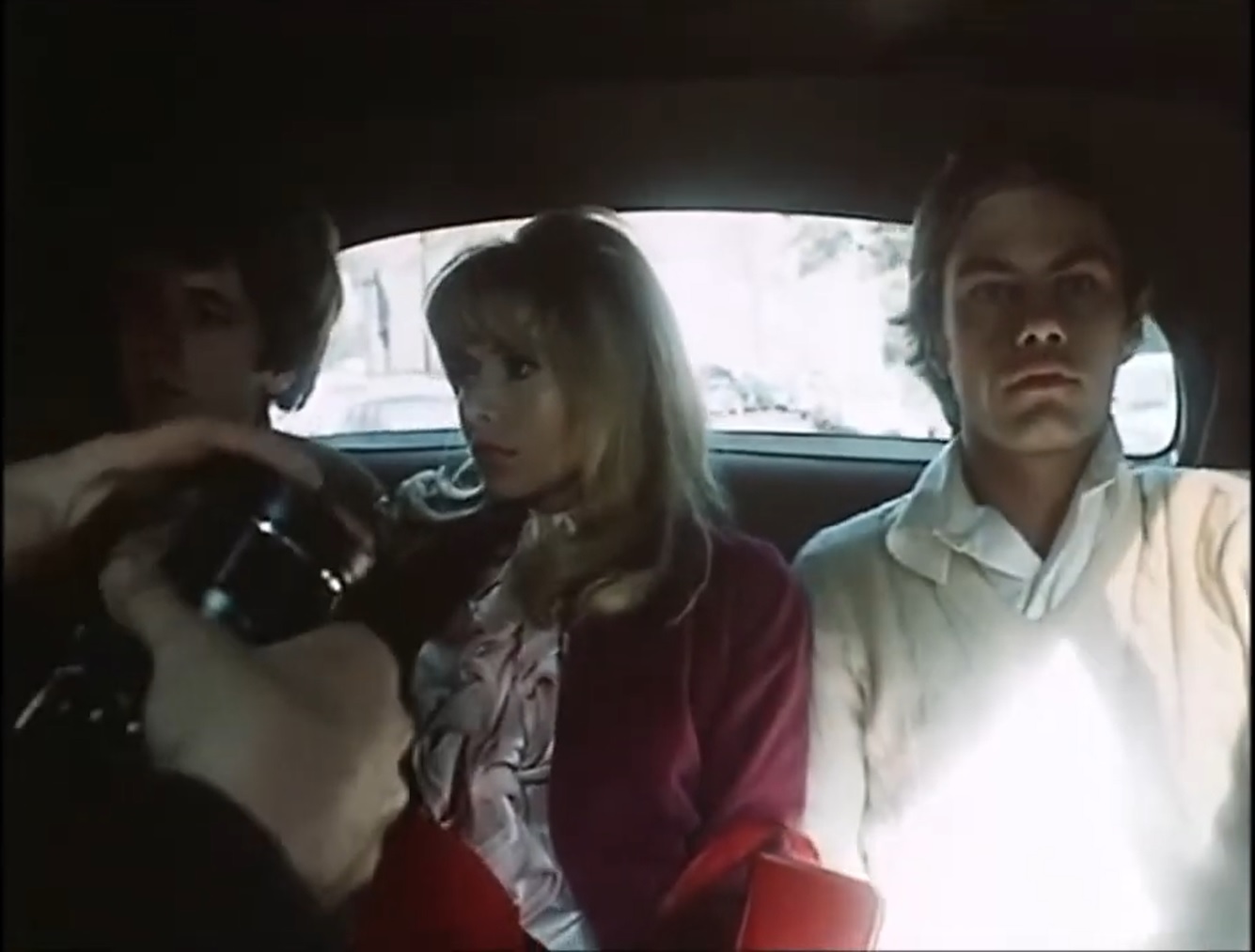
Dressed in various fashionable outfits, Julie struck professional poses for the camera, but her mind was elsewhere, leaving her restless and distracted. She was completely preoccupied, trying to figure out what kind of man she had just met.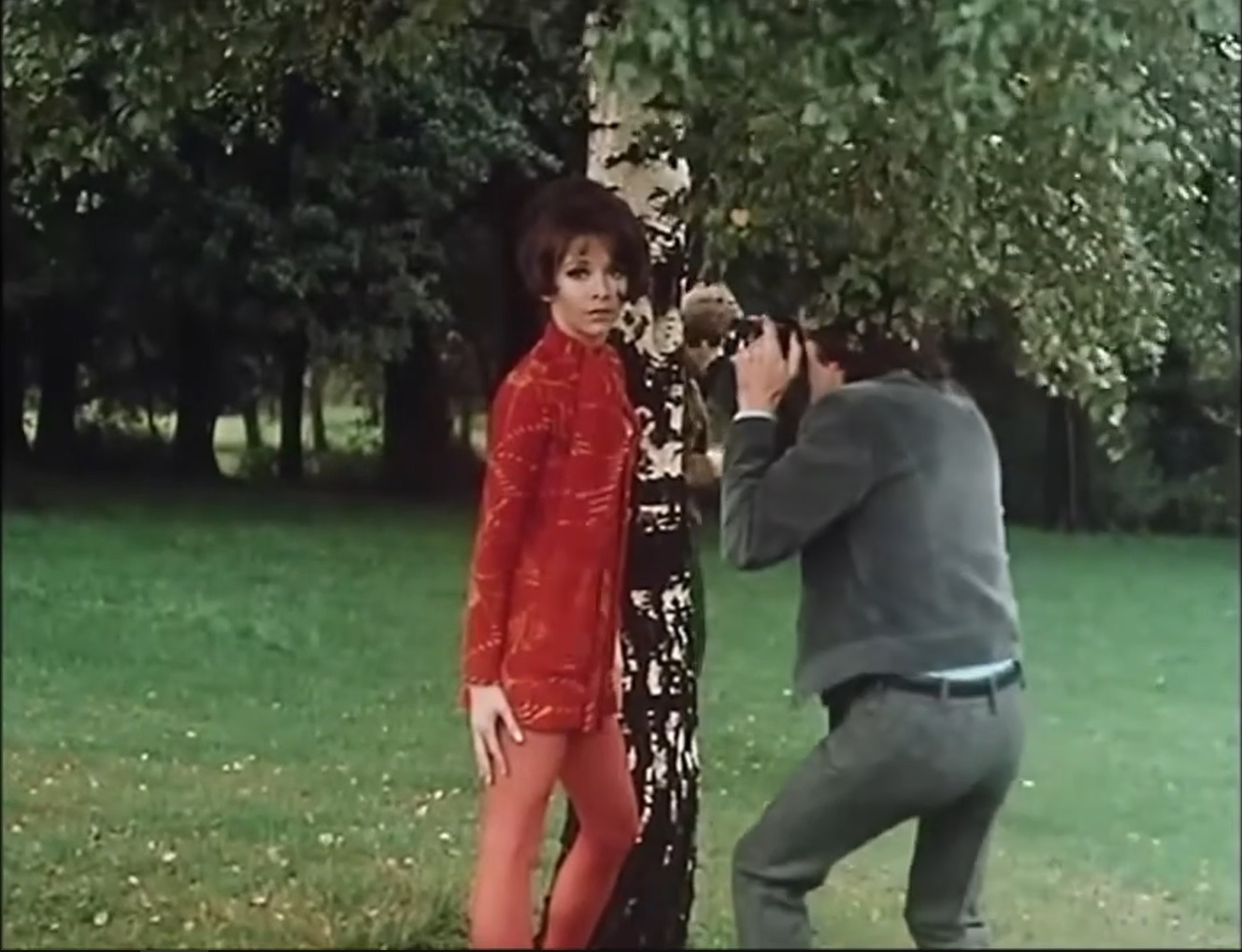
Meanwhile, Steve, having lost track of Julie, frantically cycled around the area, hoping to cross paths with his long-awaited soulmate.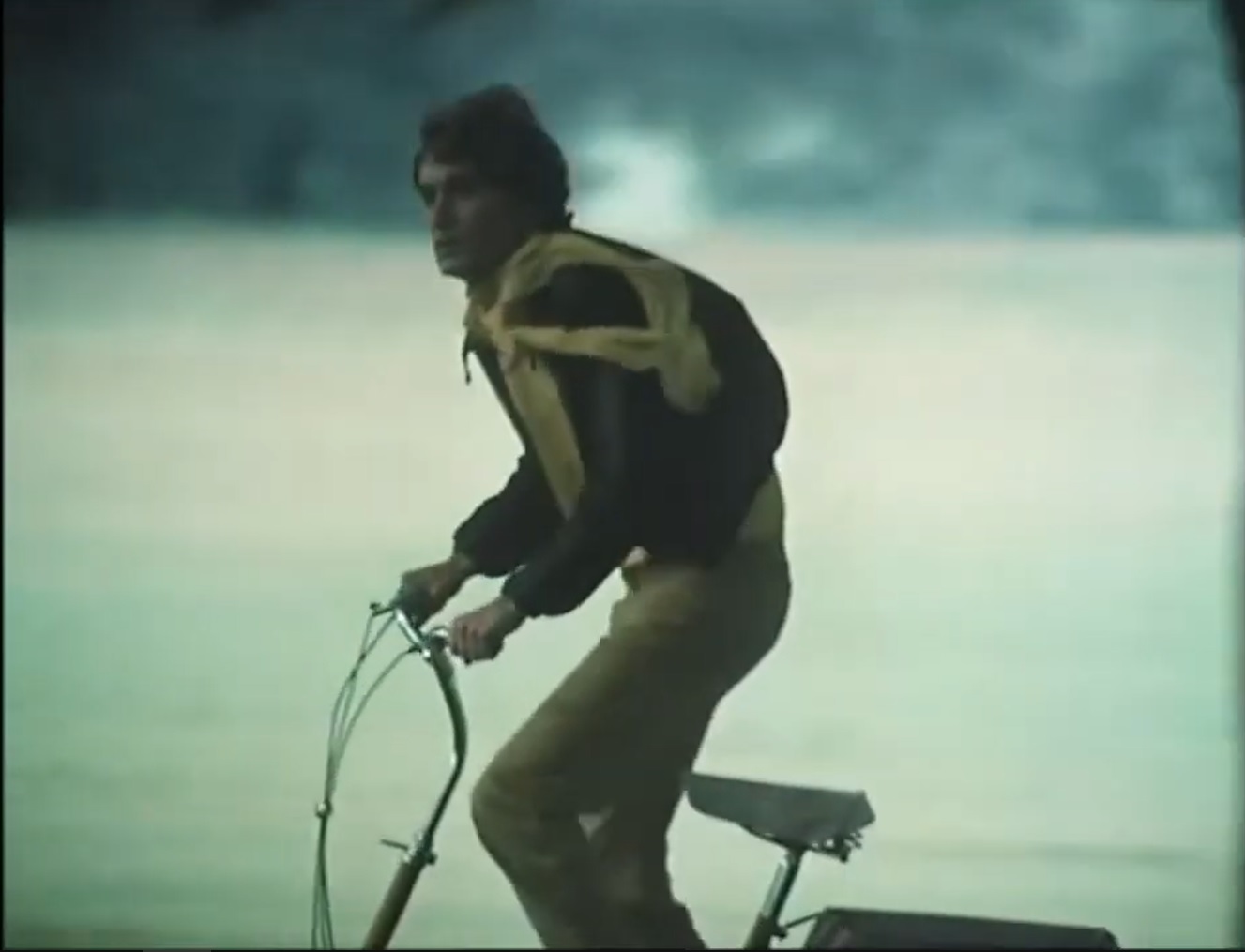
Finally, while riding his bicycle through the park, Steve spotted Julie. He sang a love song to her once more, and then, hand in hand, they romantically strolled toward the other side of the park.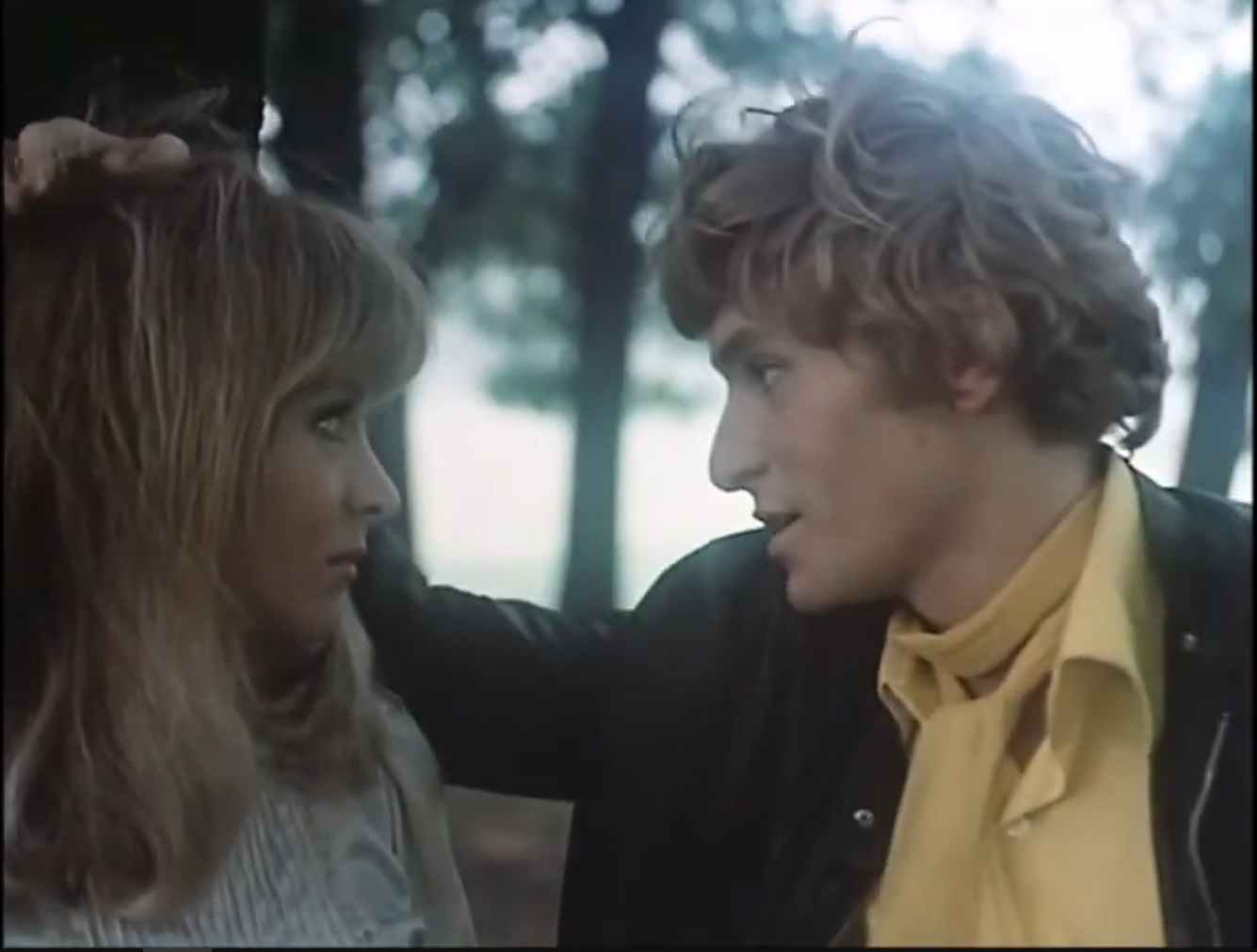
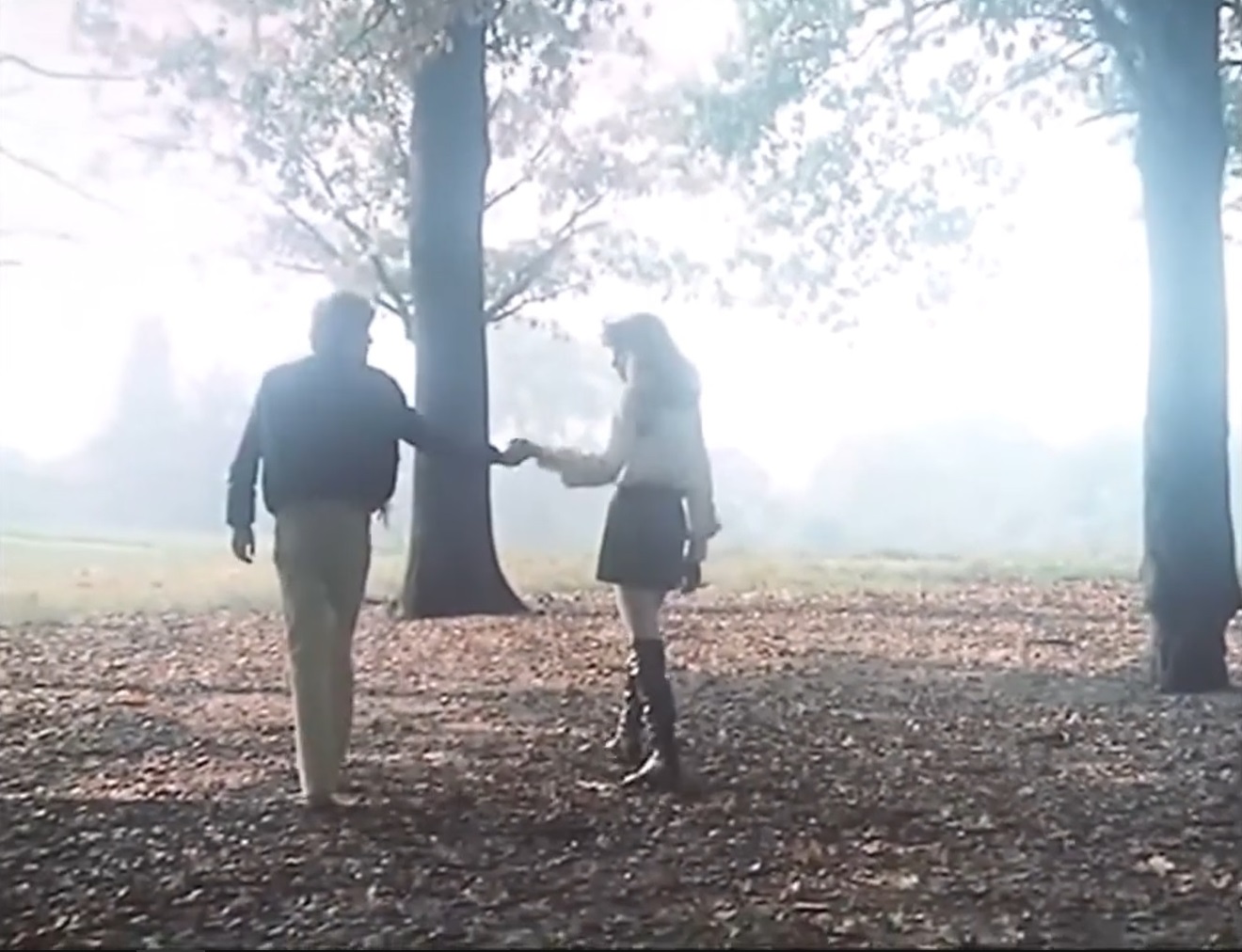
The happy couple embarked on a beautiful life together, and the movie ended right there… wait, the movie isnt over yet! Remember Katie, the little girl with braces on her tricycle who was experiencing her very first heartbreak? She had been tailing Steve the entire time, witnessing everything from the moment Steve and Julie met. Heartbroken, Katie watched their receding figures, overwhelmed with sorrow. This part of the plot definitely needs some explanation; the screenwriter did not forget about her.
Just as Katie was wallowing in sadness, another bicycle appeared from the far end of the park. The rider was a little boy around Katie’s age. The boy was utterly captivated by Katie’s beauty, flashing his best, most charming smile to show his irresistible attraction. Katie returned his kindness with an accepting smile. A moment later, they pedaled off together toward the other side of the park.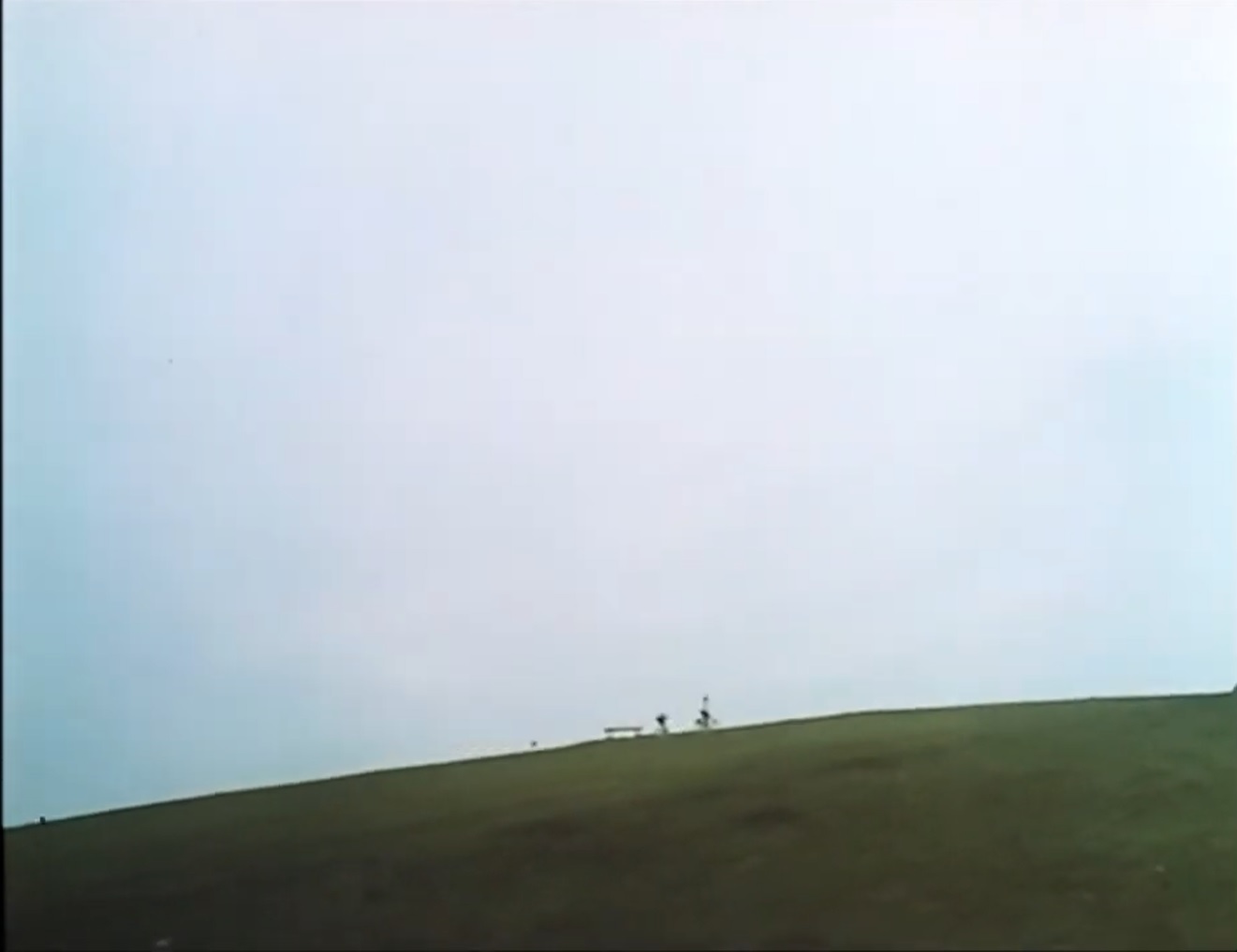
At that exact moment, the whistle-like melody of the theme song chimed in again, and a British gentleman rode out on a classic vintage bicycle to take a final bow, officially bringing the film to a close. This single closing shot beautifully brought the narrative full circle, returning to the core theme: bicycles in Belsize Park.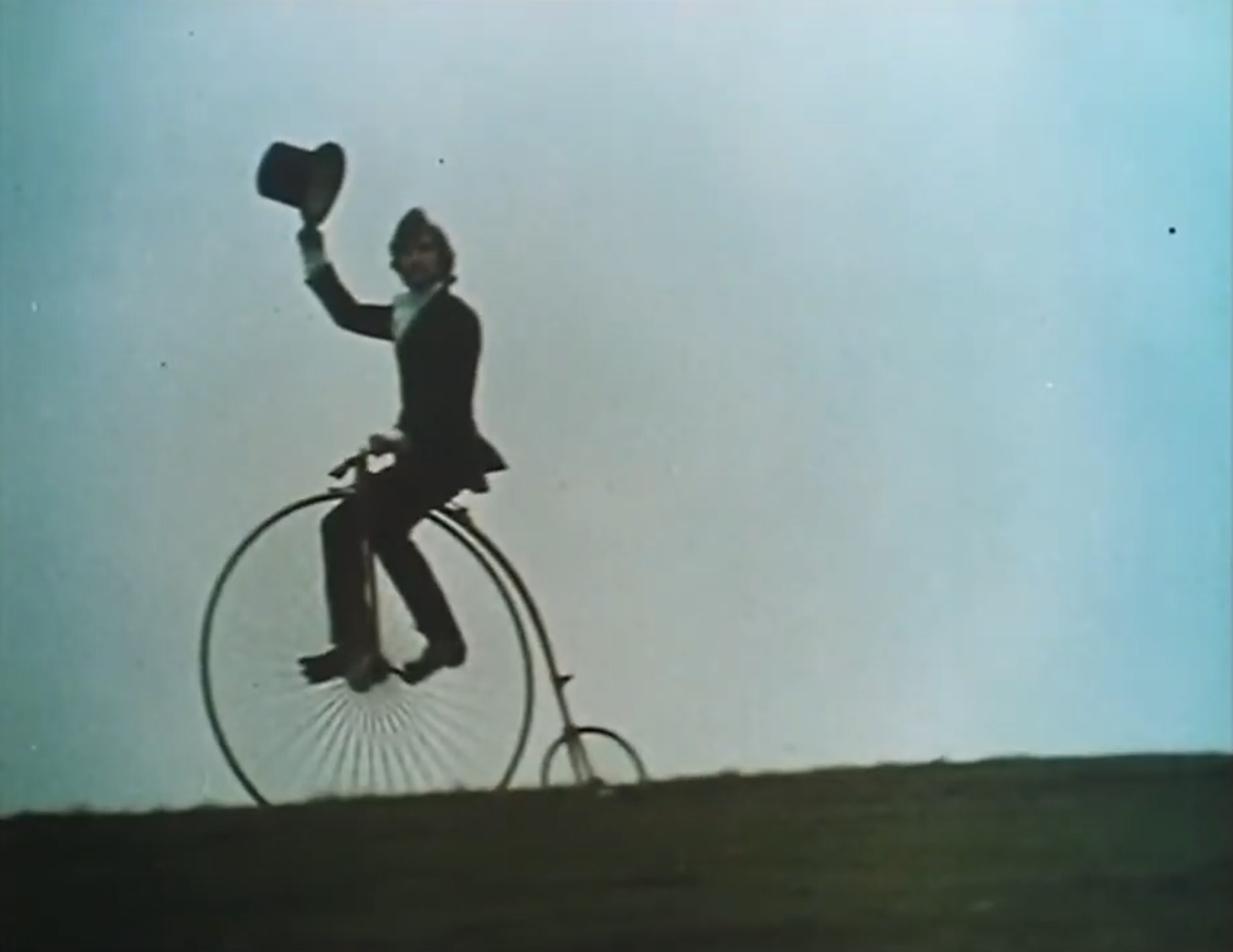
[The End]
Phew! That took a long time! Teacher Frog was recapping the story while taking screenshots one by one; my hands are aching and Im exhausted! I figured just looking at screenshots wouldnt be enough for you dancers, so lets go watch the movie instead! Its a vintage film, so please dont be too picky about the video quality.
Lets watch the movie!
Next, lets talk about the songs. Back then, there were two prominent versions released simultaneously: one in French and one in English. The French version was recorded by Mireille Mathieu. The original version, sung by Mathieu, reached the Top 10 on the UK singles chart and the Top 40 on the US Billboard charts.
English Lyrics:
1.
Turning and turning
The world goes on
We cant change it, my friend
Let us go riding now through the days
Together to the end
To the end
Chorus:
Les bicyclettes de Belsize
Carry us side by side
And hand in hand we will ride
Over Belsize
Turn your magical eyes
Round and around
Looking at all weve found
Carry us through the skies
Les bicyclettes de Belsize
2.
Spinning and spinning
The dreams I know
Rolling on through my head
Let us enjoy them before they go
Come the dawn, they all are dead
Yes, theyre dead
Chorus:
Les bicyclettes de Belsize
Carry us side by side
And hand in hand we will ride
Over Belsize
Turn your magical eyes
Round and around
Lookin at all weve found
Carry us through the skies
Les bicyclettes de Belsize
Now, lets enjoy a 1970 live performance of "Bicycle Waltz" by the young Engelbert Humperdinck. Its rare to see him looking so innocent and youthful!
Since we are more accustomed to the English version, lets listen to the other one: the French version of "Bicycle Waltz," which was also a massive hit across Europe back then, performed by the well-known French songstress Mireille Mathieu. (If you recall, the original version of "Corsica" that we dance to is also sung by Mireille Mathieu! https://blog.udn.com/frankflin01/9289556)
Next, lets talk about the dance itself. This routine belongs to the American Round Dance (Phase III Waltz), choreographed by Charlie and Marge Carter. The exact year it was written remains unknown, but Teacher Frog estimates it to be between 1968 and 1970, right around the time the song was released.
The original cue sheet introduction for this dance reads as follows: (The original introductory text contains many proper nouns, abbreviations, and acronyms. Teacher Frog wont break them down here but will explain them later.)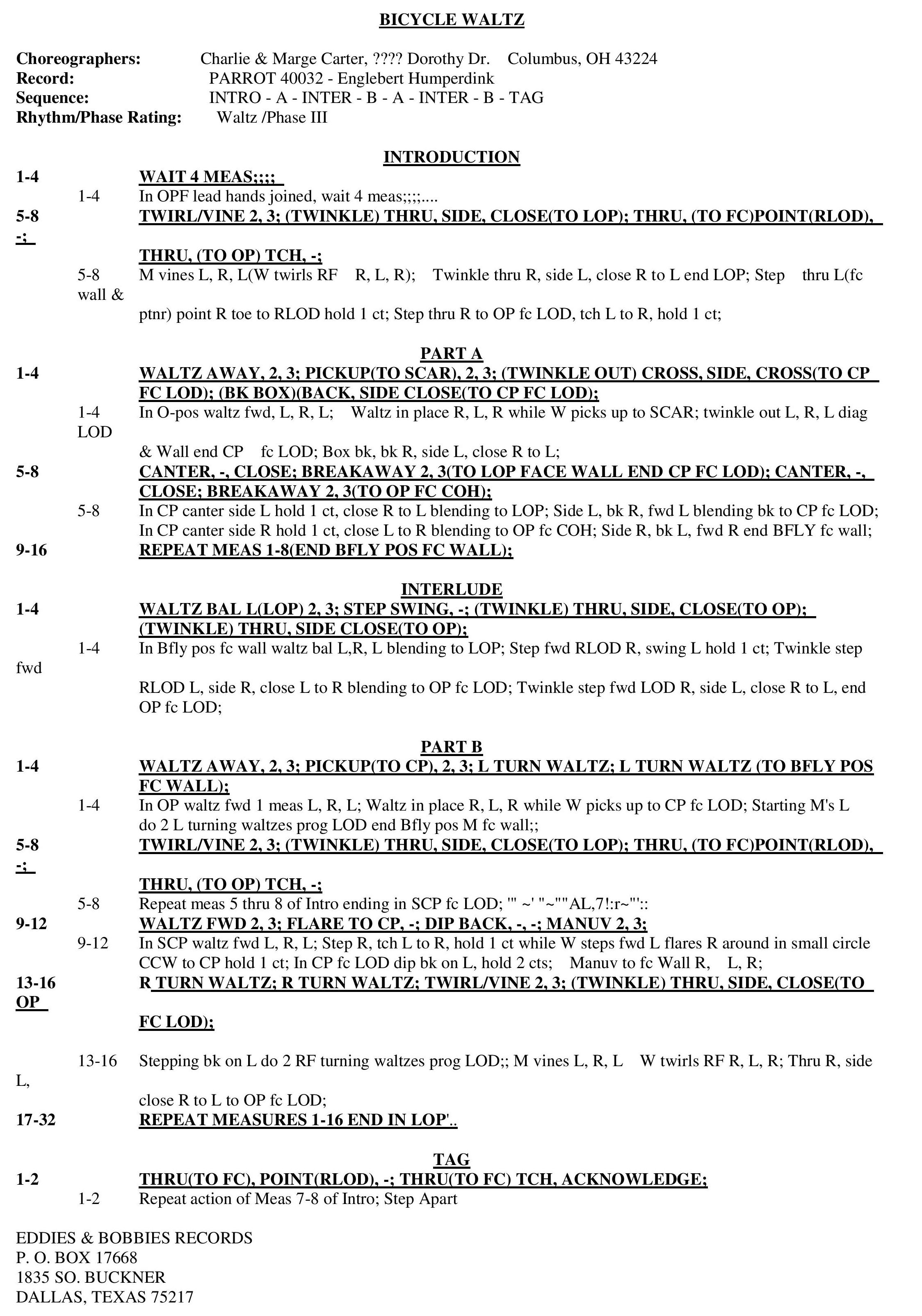
To help fellow dancers navigate the routine, Teacher Frog has compiled a glossary of common abbreviations found in the English cue sheet:
M = Man
W = Woman
R = Right
L = Left
RF = Right Foot
LF = Left Foot
LOD = Line of Direction
fc = Face
ptnr = Partner
Bfly pos = Butterfly Position
ct = Count
Fwd = Forward
bk = Back
The rest of the cues are written out as full words, so Teacher Frog doesnt need to explain them further.
After reading the original English cue sheet, were you surprised? It looks very similar to the Chinese dance routine weve been doing, yet its also quite different, right? Thats right—weve all been dancing it wrong! Hehe~
Here, Teacher Frog would like to introduce a demonstration video by the Japanese dance group Dance Odonya (ダンスオドニャ). Their execution is incredibly accurate and stays true to the original English cue sheet sequence. Please enjoy it first, and then we can discuss where our mistakes lie.
First, this dance features a formal Introduction (Intro). At the dance parties Ive attended, almost no one except myself executed the standard Intro sequence, which deeply surprised me. I will post the Chinese dance sequence first so everyone can review and analyze it:
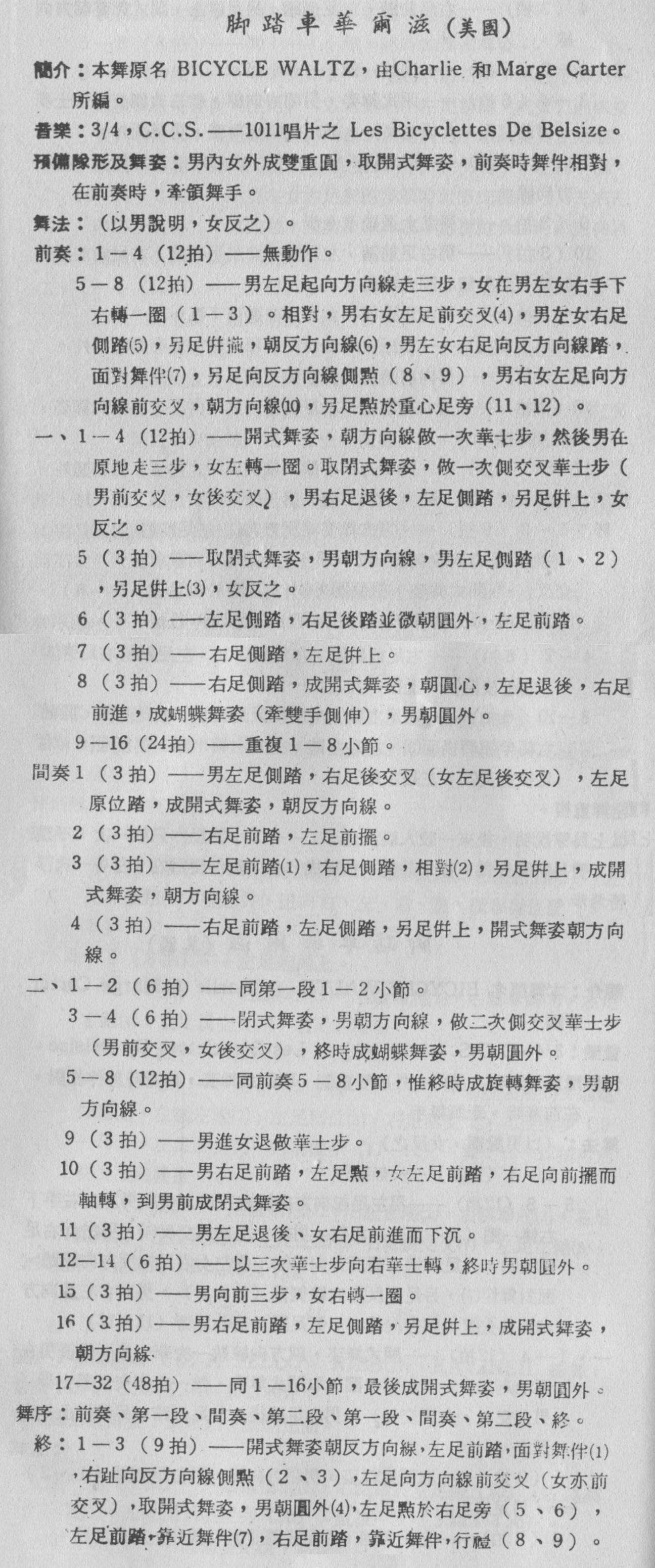
The Chinese dance sequence transitions into a Closed Position (CP) starting from the third measure (the third three-beat count) of Part A. From this point onward, our choreography diverges from the original American cue sheet, and we’ve been dancing it this way ever since. Since this local version is deeply ingrained and hard to overturn now, lets just keep enjoying it this way! However, if anyone asks about the original choreography, please refer them to the Japanese version.
Ultimately, "the boss" (Teacher Frog) highly recommends watching the demonstration video of the Taiwanese version. After all, when we are dancing at a party here in Taiwan, lets dance the Taiwanese way! Unless, of course, we are attending a folk dance party abroad—then we should definitely adapt to local customs. 
Here, Teacher Frog recommends two reference videos. Although both have minor execution flaws, they complement each other perfectly to give you a complete picture.
The first video is provided by the Kaohsiung Changchun Folk Dance Association, featuring a demonstration by instructors Lin Hsien-tang and Lü Fu-mei. Special thanks to the Kaohsiung Changchun Folk Dance Association, as well as Teachers Lin and Lü, for contributing their time and effort to make these selfless contributions for folk dance enthusiasts.
(Teacher Frogs Note: Teacher Lin and Lü executed the Intro sequence beautifully, and their overall dance sequence is correct. The only minor flaw occurs in the last two measures of the Interlude. They might have misinterpreted the phrase "Face to Face (2)" in the Chinese dance notes. In this cross-step movement, it simply means partners face each other on the second beat, without needing to hold that position. The final measure consists of a side, close, side step pattern that naturally flows with the cross-step; executing it as a continuous cross-step looks much better. This specific transition is explained very clearly in the Japanese video.)
The second reference video is provided by the Chinese Dance Promotion Association. We would like to thank Teacher Zhang Zhenchun for granting permission to provide these teaching materials to the Association. We also extend our gratitude to Teacher Zhang, as well as the demonstrators, Junyi and Xiaoping. (Teacher Frogs Note: This version from the Promotion Association shares the exact same choreography as the first video, with the only difference being the sequence of the Intro/prelude.)
References:
1.English Wikipedia
2.British Film Institute (BFI)
3.Folk Dance World II, by Chang Ching-San


