․ Ode
A formal, often ceremonious lyric poem that addresses and often celebrates a person, place, thing, or idea. Its stanza forms vary. A classic ode is structured in three major parts: the strophe, the antistrophe, and the epode.
ð "Ode on a Grecian Urn" is a poem written by the English Romantic poet John Keats in May 1819 and published anonymously in the January 1820, which are generally believed to have been written in the following order –"Ode on Indolence", "Ode on Melancholy", "Ode to a Nightingale", and "Ode to Psyche".
․ Aristotle’s evaluation of literature is imitation, mimesis and entertainment.
ð Hamartia: The term hamartia means "to miss the mark" or "to err". It is most often associated with Greek tragedy, although it is also used in Christian theology
ð Catharsis: Catharsis, which means "purification" or "cleansing", is the purification and purgation of emotions—especially pity and fear—through art or any extreme change in emotion that results in renewal and restoration.
|
* Both Hamartia and Catharsis are used by Aristotle in poetics! |
․ Flat characters v.s. Round characters (Character)
|
Flat characters |
Round characters |
|
These are the characters whose actions do not affect the plot. They may be mentioned by name, but their personalities are not fully developed. |
These are the characters who are fully developed. You get to know these characters as you read. We often know how they look, how they act, what they say, what they think, and what other think about them. |
․ Allegory (parable)
An extended metaphor in which the characters, places, and objects in a narrative carry figurative meaning. Often an allegory’s meaning is religious, moral, or historical in nature.
ð Aesop Fables: Aesop's Fables is a collection of fables credited to Aesop, a slave and storyteller believed to have lived in ancient Greece. Of diverse origins, the stories associated with Aesop's name have descended to modern times through a number of sources. They continue to be reinterpreted in different verbal registers and in popular as well as artistic media.
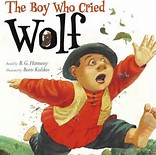
ð The Boy Who Cried Wolf : The Boy Who Cried Wolf is one of Aesop's Fables, numbered 210 in the Perry Index. The tale concerns a shepherd boy who repeatedly tricks nearby villagers into thinking a wolf is attacking his flock. When one actually does appear and the boy again calls for help, the villagers believe that it is another false alarm and the sheep are eaten by the wolf.

Foreshadowing is just a fancy term for when a book gives us hints or suggestions about what's going to happen down the road a page. Authors put this trick to use in a number of ways—by describing a similar event, by conspicuously pointing out an object that will rear its ugly head later, or by using words and imagery that hint at the future. It is used to avoid disappointment. It is also sometimes used to arouse the reader.
A flashback is a transition in a story to an earlier time, which interrupts the normal chronological order of events. A flashback in a movie might show what happened when a character was younger.
․ Vocabulary
|
|
truth |
|
|
|
ver- |
vir- |
||
the act of showing or checking that something is true or accurate
a belief or principle about life that is accepted as true |
almost or very nearly the thing described, so that any slight difference is not important |
||
|
|
to say, to tell |
|
|
|
dic- |
-dic |
||
a book that gives a list of the words of a language in alphabetical order and explains what they mean, or gives a word for them in a foreign language |
to say that something will happen in the future |
||
|
|
in favor of |
|
|
pro- |
||
the main character in a play, film/movie or book 2 antagonist (n.) a person who strongly opposes somebody/something |
||
|
|
to be parallel |
|
|
Para- |
||
a section of a piece of writing, usually consisting of several sentences dealing with a single subject. The first sentence of a paragraph starts on a new line.
a short story that teaches a moral or spiritual lesson, especially one of those told by Jesus as recorded in the Bible |
||
|
|
new |
|
|
nov- |
||
the introduction of new things, ideas or ways of doing something |
||
|
|
under |
|
|
hypo- |
||
an idea or explanation of something that is based on a few known facts but that has not yet been proved to be true or correct |
||
|
|
time |
|
|
chrono- |
||
arranged in the order in which they happened |
||


