★ Samson

Samson, meaning "of the sun," is the third to last of the judges of ancient Israel mentioned in the Hebrew Bible.
According to the biblical account, Samson was given supernatural strength by God in order to combat his enemies and perform heroic feats such as killing a lion, slaying an entire army with only the jawbone of an ass, and destroying a pagan temple. Samson had two vulnerabilities, however: his attraction to untrustworthy women and his hair, without which he was powerless. These vulnerabilities ultimately proved fatal for him.
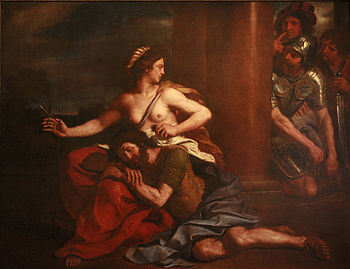
Delilah is a character in the Hebrew bible Book of Judges, where she is the "woman in the valley of Sorek" whom Samson loved, and who was his downfall. Her figure, one of several dangerous temptresses in the Hebrew Bible, has become emblematic: "Samson loved Delilah, she betrayed him, and, what is worse, she did it for money," Madlyn Kahr begins her study of the Delilah motif in European painting.
The story of Samson in Judges 13–16 portrays a man who was given great strength by God but who ultimately loses his strength when Delilah allows the Philistines to shave his hair during his slumber (Judges 16:19). Samson was born into an Israelite family, the son of Manoah and his wife who is never named. Both are visited by the Angel of the Lord and told that their child will be a Nazirite from birth.

John Milton (9 December 1608 – 8 November 1674) was an English poet, polemicist, man of letters, and a civil servant for the Commonwealth of England under Oliver Cromwell. He wrote at a time of religious flux and political upheaval, and is best known for his epic poem Paradise Lost (1667), written in blank verse.
Milton's poetry and prose reflect deep personal convictions, a passion for freedom and self-determination, and the urgent issues and political turbulence of his day. Writing in English, Latin, Greek, and Italian, he achieved international renown within his lifetime, and his celebrated Areopagitica (1644)—written in condemnation of pre-publication censorship—is among history's most influential and impassioned defences of free speech and freedom of the press.

Paradise Lost is an epic poem in blank verse by the 17th-century English poet John Milton (1608–1674). The first version, published in 1667, consisted of ten books with over ten thousand lines of verse. A second edition followed in 1674, arranged into twelve books (in the manner of Virgil's Aeneid) with minor revisions throughout and a note on the versification. It is considered by critics to be Milton's major work, and it helped solidify his reputation as one of the greatest English poets of his time.
The poem concerns the Biblical story of the Fall of Man: the temptation of Adam and Eve by the fallen angel Satan and their expulsion from the Garden of Eden. Milton's purpose, stated in Book I, is to "justify the ways of God to men".

Paradise Regained is a poem by English poet John Milton, first published in 1671 by John Macock. The volume in which it appeared also contained the poet's closet drama Samson Agonistes. Paradise Regained is connected by name to his earlier and more famous epic poem Paradise Lost, with which it shares similar theological themes; indeed, its title, its use of blank verse, and its progression through Christian history recall the earlier work. However, this effort deals primarily with the temptation of Christ as recounted in the Gospel of Luke.

Samson Agonistes (Greek for "Samson the agonist") is a tragic closet drama by John Milton. It appeared with the publication of Milton's Paradise Regain'd in 1671, as the title page of that volume states: "Paradise Regained / A Poem / In IV Books / To Which Is Added / Samson Agonistes". It is generally thought that Samson Agonistes was begun around the same time as Paradise Regained but was completed after the larger work, possibly very close to the date of publishing, but there is no agreement on this.
★ Satan-(or Lucifer or Prince of Darkness)
Satan (Hebrew: שָּׂטָן satan, meaning "adversary"; Arabic: شيطان shaitan, meaning; "astray", "distant", or sometimes "devil") is a figure appearing in the texts of the Abrahamic religions who brings evil and temptation, and is known as the deceiver who leads humanity astray. Some religious groups teach that he originated as an angel who fell out of favor with God, seducing humanity into the ways of sin, and who has power in the fallen world. In the Hebrew Bible and the New Testament, Satan is primarily an accuser and adversary, a decidedly malevolent entity, also called the devil, who possesses demonic qualities.
★ Lucifer
Lucifer is the King James Version rendering of the Hebrew word הֵילֵל in Isaiah 14:12. This word, transliterated hêlêl or heylel, occurs only once in the Hebrew Bible and according to the KJV based Strong's Concordance means "shining one, light bearer". The word Lucifer is taken from the Latin Vulgate, which translates הֵילֵל as lucifer,[Isa 14:12] meaning "the morning star, the planet Venus", or, as an adjective, "light-bringing". The Septuagint renders הֵילֵל in Greek as ἑωσφόρος (heōsphoros), a name, literally "bringer of dawn", for the morning star.
Later Christian tradition came to use the Latin word for "morning star", lucifer, as a proper name ("Lucifer") for the devil; as he was before his fall. As a result, "'Lucifer' has become a by-word for Satan/the Devil in the church and in popular literature", as in Dante Alighieri's Inferno and John Milton's Paradise Lost. However, the Latin word never came to be used almost exclusively, as in English, in this way, and was applied to others also, including Jesus. The image of a morning star fallen from the sky is generally believed among scholars to have a parallel in Canaanite mythology.

★ Goldilocks and the Three Bears

"Goldilocks and the Three Bears" and the older "The Story of the Three Bears" are two variations of an old fairy tale. The original tale tells of an ugly, old woman who enters the forest home of three bachelor bears whilst they are away. She sits in their chairs, eats some of their porridge, and falls asleep in one of their beds. When the bears return and discover her, she starts up, jumps from the window, and is never seen again. The other major version brings Goldilocks to the tale (replacing the old woman), and an even later version retained Goldilocks, but has the three bachelor bears transformed into Papa, Mama, and Baby Bear.
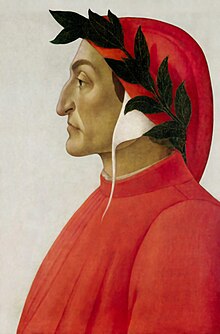
Durante degli Alighieri, simply called Dante, was a major Italian poet of the late Middle Ages. His Divine Comedy, originally called Comedìa (modern Italian: Commedia) and later christened Divina by Boccaccio, is widely considered the greatest literary work composed in the Italian language and a masterpiece of world literature.
Dante played an instrumental role in establishing the national language of Italy. Dante's significance also extends past his home country; his depictions of Hell, Purgatory, and Heaven have provided inspiration for a large body of Western art, and are cited as an influence on the works of John Milton, Geoffrey Chaucer, William Shakespeare, and Lord Alfred Tennyson, among many others.
★ Dan Brown

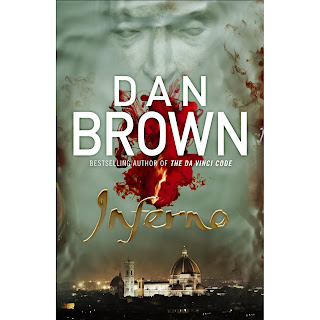
Daniel "Dan" Brown (born June 22, 1964) is an American author of thriller fiction who is best known for the 2003 bestselling novel The Da Vinci Code. Brown's novels are treasure hunts set in a 24-hour period, and feature the recurring themes of cryptography, keys, symbols, codes, and conspiracy theories. His books have been translated into 52 languages, and as of 2012, sold over 200 million copies. Three of them, Angels & Demons (2000), The Da Vinci Code (2003), and Inferno (2013), have been/are being adapted into films.
Brown's novels that feature the lead character Robert Langdon also include historical themes and Christianity as motifs, and as a result, have generated controversy. Brown states on his website that his books are not anti-Christian, though he is on a 'constant spiritual journey' himself, and says that his book The Da Vinci Code is simply "an entertaining story that promotes spiritual discussion and debate" and suggests that the book may be used "as a positive catalyst for introspection and exploration of our faith."


The Parson's Tale seems, from the evidence of its prologue, to have been intended as the final tale of Geoffrey Chaucer's poetic cycle The Canterbury Tales. The "tale", which is the longest of all the surviving contributions by Chaucer's pilgrims, is in fact neither a story nor a poem, but a long and unrelieved prose treatise on penance. Critics and readers are generally unclear what rhetorical effect Chaucer may have intended by ending his cycle in this unlikely, extra-generic fashion.
The parson divides penitence into three parts; contrition of the heart, confession of the mouth, and satisfaction. The second part about confession is illustrated by referring to the Seven Deadly Sins and offering remedies against them. The Seven Deadly Sins are pride, envy, wrath, sloth, greed, gluttony, and lust; they are "healed" by the virtues of humility, contentment, patience, fortitude, mercy, moderation, and chastity.
★ Burning bush
The burning bush is an object described by the Book of Exodus[3:1–4:17] as being located on Mount Horeb. According to the narrative, the bush was on fire, but was not consumed by the flames, hence the name. In the biblical narrative, the burning bush is the location at which Moses was appointed by Yahweh (God) to lead the Israelites out of Egypt and into Canaan.
The Hebrew word used in the narrative, that is translated into English as bush, is seneh (סנה), which refers in particular to brambles; seneh is a biblical dis legomenon, only appearing in two places, both of which describe the burning bush. It is possible that the reference to a burning bush is based on a mistaken interpretation of Sinai (סיני), a mountain described by the Bible as being on fire. Another possibility is that the use of seneh (סנה) may be a deliberate pun on Sinai (סיני), a feature common in Yahwistic texts.

★ List of most visited museums in the world
❀ Hermitage Museum-is a museum of art and culture in Saint Petersburg, Russia. One of the largest and oldest museums in the world, it was founded in 1764 by Catherine the Great and has been open to the public since 1852.

❀ Louvre-is one of the world's largest museums and a historic monument in Paris, France. A central landmark of the city, it is located on the Right Bank of the Seine in the 1st arrondissement (ward). Nearly 350,000 objects from prehistory to the 21st century are exhibited over an area of 60,600 square metres (652,300 square feet).

❀ British Museum-is a museum dedicated to human history, art, and culture, located in the Bloomsbury area of London. Its permanent collection, numbering some 8 million works, is among the largest and most comprehensive in existence and originates from all continents, illustrating and documenting the story of human culture from its beginnings to
the present.

★ Moses
Moses is a prophet in Abrahamic religions. According to the Hebrew Bible, he was a former Egyptian prince who later in life became a religious leader and lawgiver, to whom the authorship of the Torah is traditionally attributed.
According to the Book of Exodus, Moses was born in a time when his people, the Israelites, an enslaved minority, were increasing in numbers and the Egyptian Pharaoh was worried that they might ally with Egypt's enemies. Moses' Hebrew mother, Jochebed, secretly hid him when the Pharaoh ordered all newborn Hebrew boys to be killed in order to reduce the population of the Israelites.


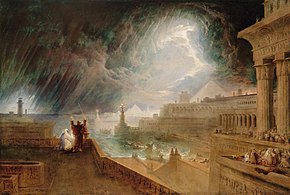
The Plagues of Egypt, also called the ten biblical plagues, were ten calamities that, according to the biblical Book of Exodus, the God of Israel inflicted upon Egypt to persuade the Pharaoh to release the ill-treated Israelites from slavery. Pharaoh capitulated after the tenth plague, triggering the Exodus of the Hebrew people. The plagues served to contrast the power of the God of Israel with the Egyptian gods, invalidating them. Some commentators have associated several of the plagues with judgment on specific gods associated with the Nile, fertility and natural phenomena. According to Exodus 12:12, all the gods of Egypt would be judged through the tenth and final plague: "On that same night I will pass through Egypt and strike down every firstborn of both people and animals, and I will bring judgment on all the gods of Egypt. I am the LORD."


The Jewish diaspora or Exile refers to the dispersion of Israelites, Judahites, and later Jews out of what is considered their ancestral homeland (the Land of Israel) and the communities built by them across the world.
In terms of the Hebrew Bible, the term "Exile" denotes the fate of the Israelites who were taken into exile from the Kingdom of Israel during the 8th century BCE, and the Judahites from the Kingdom of Judah who were taken into exile during the 6th century BCE. While in exile, the Judahites became known as "Jews"- "Mordecai the Jew" from the Book of Esther being the first biblical mention of the term.
★ Manna
Manna or al-Mann wa al-Salwa, sometimes or archaically spelled mana, is an edible substance that, according to the Bible and the Quran, God provided for the Israelites during their travels in the desert. Exodus states that the Israelites consumed the manna for forty years, starting from the fifteenth day of the second month (Iyar 15), but that it then ceased to appear once they had reached a settled land, and once they had reached the borders of Canaan (inhabited by the Canaanites).
★
❀ Parable
A parable is a short simple story which teaches or explains an idea, especially a moral or religious idea.
g Didacticism: is a philosophy that emphasizes instructional and informative qualities in literature and other types of art. The term has its origin in the Ancient Greek word διδακτικός (didaktikos), "related to education and teaching", and signified learning in a fascinating and intriguing manner.
❀ Fable 
A fable is a short simple story which tells a general truth or is only partly based on fact, or literature of this type.
Also, fables are often anthropomorphized (given human qualities, such as verbal communication) and that illustrates or leads to an interpretation of a moral lesson (a "moral"), which may at the end be added explicitly as a pithy maxim.
❀ Allegory
An allegory is a story, play, poem, picture or other work in which the characters and events represent particular qualities or ideas, related to moral, religion or politics.


