1.
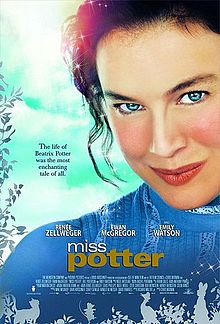
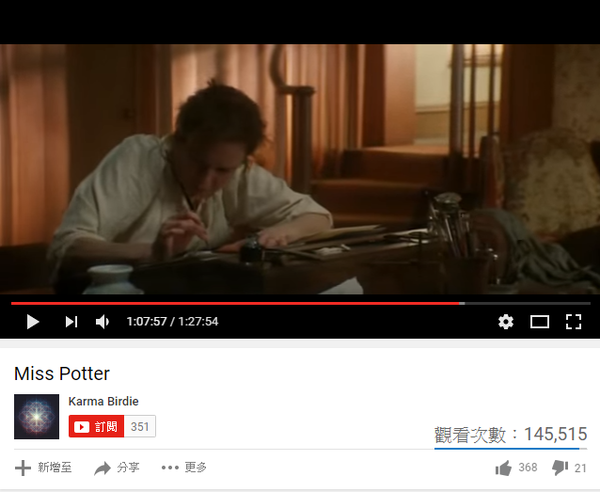
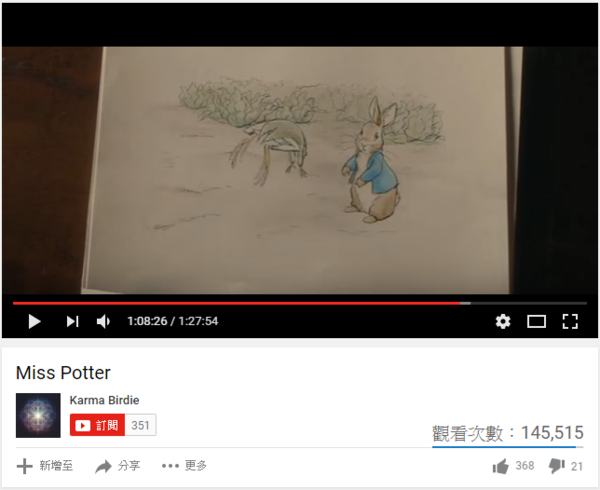
A biographical film of Beatrix Potter- Miss Potter
- is a 2006 Anglo-American biographical fiction family drama film directed by Chris Noonan. It is a biographical film of children's author and illustrator Beatrix Potter, and combines stories from her own life with animated sequences featuring characters from her stories, such as Peter Rabbit. Scripted by Richard Maltby, Jr., the director of the Tony-winning Broadway revue, Fosse, the film stars Renée Zellweger in the title role; Ewan McGregor as her publisher and fiancé, Norman Warne; and Lloyd Owen as solicitor William Heelis. Emily Watson stars as Warne's sister, Millie. Lucy Boynton also stars as the young Beatrix Potter.
Storyline:
In 1902, in London, the spinster Beatrix Potter lives with her bourgeois parents. Her snobbish mother, Helen Potter, had introduced several bachelors to Beatrix until she was twenty years old, but she had turned them all down. Beatrix Potter has been drawing animals and making up stories about them since she was a child, but her parents have never recognized her as an artist. One day, Miss Potter offers her stories to a print house, and a rookie publisher, Norman Warne, who is delighted with her tales, publishes her first children's book. This success leads Norman to publish two other books, and Miss Potter meanwhile becomes the best friend of his single sister Millie Warne. Soon Beatrix and Norman fall in love with each other, but Helen does not accept that her daughter would marry a "trader". However, Beatrix's father Rupert Potter proposes that his daughter spend the summer with his wife and him in their country house in Lake District, and if she is still interested in Norman after... ( Written by Claudio Carvalho, Rio de Janeiro, Brazil, IMBD)
2. Term Explanation and Vocabulary
(1) tomboy- is a girl who exhibits characteristics or behaviors considered typical of a boy, including wearing masculine clothing and engaging in games and activities that are physical in nature and are considered in many cultures to be unfeminine or the domain of boys. Tomboy, according to the Oxford English Dictionary (OED), "has been connected with connotations of rudeness and impropriety" throughout its use.
(2) Bildungsroman- in literary criticism, a Bildungsroman, novel of formation, novel of education, or coming-of-age story is a literary genre that focuses on the psychological and moral growth of the protagonist from youth to adulthood (coming of age), in which character change is extremely important.
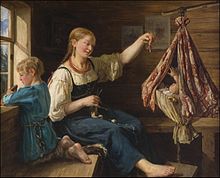
(3) lullaby- or cradle song, is a soothing song or piece of music, usually played for or sung to children. The purposes of lullabies vary. In some societies they are used to pass down cultural knowledge or tradition. In addition, lullabies are often used for the developing of communication skills, indication of emotional intent, maintenance of infants' undivided attention, modulation of infants' arousal, and regulation of behavior. Perhaps one of the most important uses of lullabies is as a sleep aid for infants. As a result, the music is often simple and repetitive. Lullabies can be found in many countries, and have existed since ancient times.
(4) arbitrary- is the quality of being "determined by chance, whim, or impulse, and not by necessity, reason, or principle". Arbitrary decisions are not necessarily the same as random decisions. (For example, during the 1973 oil crisis, Americans were allowed to purchase gasoline only on odd-numbered days if their license plate was odd, and on even-numbered days if their license plate was even. The system was well-defined and not random in its restrictions; however, since license plate numbers are completely unrelated to a person's fitness to purchase gasoline, it was still an arbitrary division of people.) Similarly, schoolchildren are often organized by their surname in alphabetical order, a non-random yet still arbitrary method, at least in cases where surnames are irrelevant.
(5)
protagonist- the leading character or one of the major characters in a play, film, novel, etc or an advocate or champion of a particular cause or idea.
antagonist- a person who actively opposes or is hostile to someone or something; an adversary.
3.
(1) fairy tale- is a type of short story that typically features folkloric fantasy characters, such as dwarves, elves, fairies, giants, gnomes, goblins, mermaids, trolls, unicorns, or witches, and usually magic or enchantments. Fairy tales may be distinguished from other folk narratives such as legends (which generally involve belief in the veracity of the events described) and explicitly moral tales, including beast fables. The term is mainly used for stories with origins in European tradition and, at least in recent centuries, mostly relates to children's literature.
(2) once upon a time- is a stock phrase used to introduce a narrative of past events, typically in fairy tales and folk tales. It has been used in some form since at least 1380 in storytelling in the English language and has opened many oral narratives since 1600. These stories often then end with "and they all lived happily ever after", or, originally, "happily until their deaths". The phrase is particularly common in fairy tales for younger children, where it is almost always the opening line of a tale. It was commonly used in the original translations of the stories of Charles Perrault as a translation for the French "il était une fois". The phrase is also frequently used in such oral stories as retellings of myths, fables, folklore and children's literature.
4.
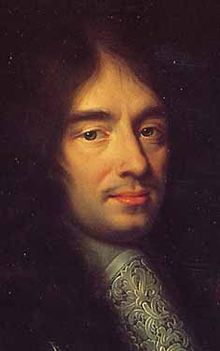
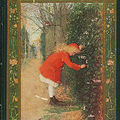
Charles Perrault- was a French author and member of the Académie Française. He laid the foundations for a new literary genre, the fairy tale, with his works derived from pre-existing folk tales. The best known of his tales include Le Petit Chaperon Rouge (Little Red Riding Hood), Cendrillon (Cinderella), Le Chat Botté (Puss in Boots), La Belle au bois Dormant (The Sleeping Beauty), and Barbe Bleue (Bluebeard). Some of Perrault's versions of old stories have influenced the German versions published by the Brothers Grimm more than 100 years later. The stories continue to be printed and have been adapted to opera, ballet, theatre, and film. Perrault was an influential figure in the 17th-century French literary scene, and was the leader of the Modern faction during the Quarrel of the Ancients and the Moderns.