1.
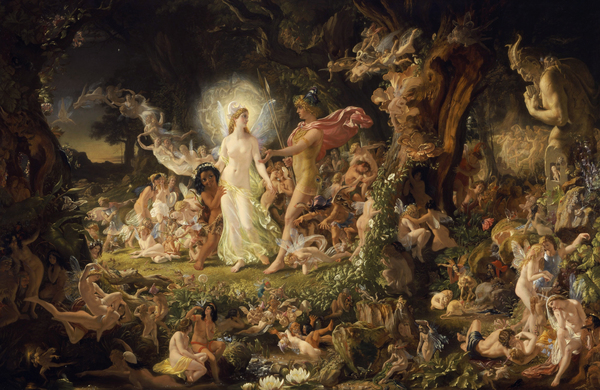
'' A Midsummer Night Dream''- is a comedy written by William Shakespeare sometime between 1590 and 1597. It portrays the events surrounding the marriage of Theseus, the Duke of Athens, to Hippolyta. These include the adventures of four young Athenian lovers and a group of six amateur actors (the mechanicals) who are controlled and manipulated by the fairies who inhabit the forest in which most of the play is set. The play is one of Shakespeare's most popular works for the stage and is widely performed across the world.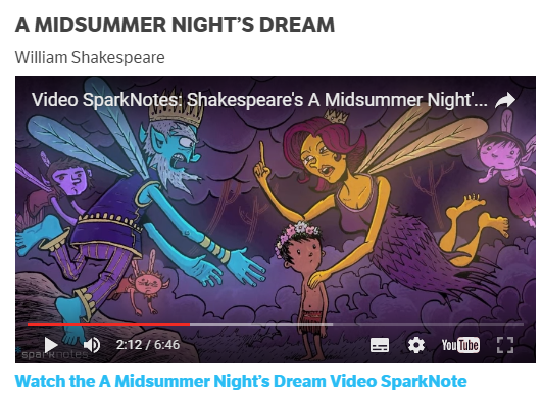
William Shakespeare- was an English poet, playwright, and actor, widely regarded as the greatest writer in the English language and the world's pre-eminent dramatist. He is often called England's national poet, and the "Bard of Avon". His extant works, including collaborations, consist of approximately 38 plays, 154 sonnets, two long narrative poems, and a few other verses, some of uncertain authorship. His plays have been translated into every major living language and are performed more often than those of any other playwright.
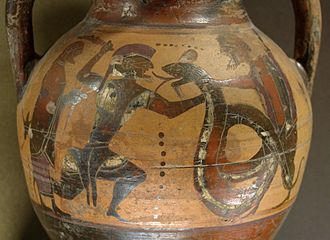
Theseus- was the mythical king of Athens and was the son of Aethra by two fathers: Aegeus and Poseidon. Theseus was a founder-hero, like Perseus, Cadmus, or Heracles (Hercules), all of whom battled and overcame foes that were identified with an archaic religious and social order. As Heracles was the Dorian hero, Theseus was a founding hero, considered by Athenians as their own great reformer: his name comes from the same root as θεσμός ("thesmos"), Greek for "The Gathering". The myths surrounding Theseus—his journeys, exploits, and family—have provided material for fiction throughout the ages.
potion- is a magical medicine, drug or poison in liquid form. In mythology and literature, a potion is usually made by a magician, dragon, fairy or witch and has magical properties. It is used for various motives including the healing, bewitching or poisoning of people. For example, love potions for those who wish to fall in love (or become deeply infatuated) with another; sleeping potions to cause long-term or eternal sleep; and elixirs heal/cure any wound/malady.
2. Term Explanation
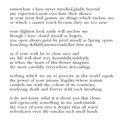
(1) stanza- is a grouped set of lines within a poem, usually set off from other stanzas by a blank line or indentation. Stanzas can have regular rhyme and metrical schemes, though stanzas are not strictly required to have either. There are many unique forms of stanzas. Some stanza forms are simple, such as four-line quatrains. Other forms are more complex, such as the Spenserian stanza. Fixed verse poems, such as sestinas, can be defined by the number and form of their stanzas. The term stanza is similar to strophe, though strophe is sometimes used to refer to irregular set of lines, as opposed to regular, rhymed stanzas. The stanza in poetry is analogous with the paragraph that is seen in prose; related thoughts are grouped into units. In music, groups of lines are typically referred to as verses.
(2) syllogism- is a kind of logical argument that applies deductive reasoning to arrive at a conclusion based on two or more propositions that are asserted or assumed to be true. In its earliest form, defined by Aristotle, from the combination of a general statement (the major premise) and a specific statement (the minor premise), a conclusion is deduced.
(3) locale- is the geographic place at which there is or was human activity. It does not include populated places, mines, and dams. Locale indicates locations of present more dispersed, periodic or temporary human activity, such as an crossroad, a camp, a farm, a landing, a railroad siding, a ranch, a windmill or one of any of the various types of agricultural, communication, infrastructure or transport stations where human activities are carried out.
(4) Demigod- is a divine or supernatural being in classical mythology. The term has been used in various ways at different times and can refer to a figure who has attained divine status after death, a minor deity, or a mortal who is the offspring of a god and a human being.
3.
'' To His Coy Mistress''- is a metaphysical poem written by the English author and politician Andrew Marvell (1621–1678) either during or just before the English Interregnum (1649–60). This poem is considered one of Marvell's finest and is possibly the best recognized carpe diem poem in English. Although the date of its composition is not known, it may have been written in the early 1650s. At that time, Marvell was serving as a tutor to the daughter of the retired commander of the New Model Army, Sir Thomas Fairfax.
4.
aero- air
aerate - to let air reach something.
aerial - relating to the air.
aerospace - the air space.