Three types of literature:
Novel
A novel is any relatively long piece of written narrative fiction, normally in prose, and typically published as a book.
The genre has also been described as possessing, "a continuous and comprehensive history of about two thousand years". This view sees the novel's origins in Classical Greece and Rome, medieval, early modern romance, and the tradition of the novella. The latter, an Italian word used to describe short stories, supplied the present generic English term in the 18th century. Ian Watt, however, in The Rise of the Novel (1957) suggests that the novel first came into being in the early 18th century.
Poetry
Poetry (the term derives from a variant of the Greek term, poiesis, "making") is a form of literature that uses aesthetic and rhythmic qualities of language—such as phonaesthetics, sound symbolism, and metre—to evoke meanings in addition to, or in place of, the prosaic ostensible meaning.
Drama
Drama is the specific mode of fiction represented in performance. The term comes from a Greek word meaning "action", which is derived from "I do". The two masks associated with drama represent the traditional generic division between comedy and tragedy. They are symbols of the ancient Greek Muses, Thalia, and Melpomene. Thalia was the Muse of comedy (the laughing face), while Melpomene was the Muse of tragedy (the weeping face). Considered as a genre of poetry in general, the dramatic mode has been contrasted with the epic and the lyrical modes ever since Aristotle's Poetics (c. 335 BCE)—the earliest work of dramatic theory.
Situational Irony
Situational irony is a literary device that you can easily identify in literary works. Simply, it occurs when incongruity appears between expectations of something to happen, and what actually happens instead. Thus, entirely different happens from what audience may be expecting or the final outcome is opposite to what the audience is expecting. It is also known as irony of situations that generally include sharp contrasts and contradictions. The purpose of ironic situations is to allow the readers to make a distinction between appearances and realities, and eventually associate them to the theme of a story.
Example:
Romeo strives to bring out peace between Tybalt and Mercutio, and eventually between the Capulets and the Montagues. However, Mercutio’s death and subsequently Romeo’s pledge to kill Tybalt escalates a situation leading to his banishment and finally to the death of both Romeo and Juliet.
(Romeo and Juliet by William Shakespeare)
Shakespeare in Love
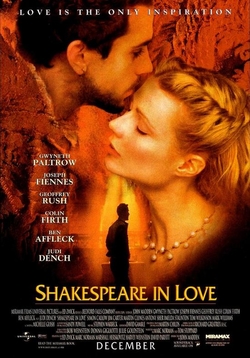
Shakespeare in Love is a 1998 British-American romantic comedy-drama film directed by John Madden, written by Marc Norman and playwright Tom Stoppard. The film depicts an imaginary love affair involving Viola de Lesseps (Gwyneth Paltrow) and playwright William Shakespeare (Joseph Fiennes) while he was writing Romeo and Juliet. Several characters are based on historical figures, and many of the characters, lines, and plot devices allude to Shakespeare's plays.
Doctor Faustus (play)
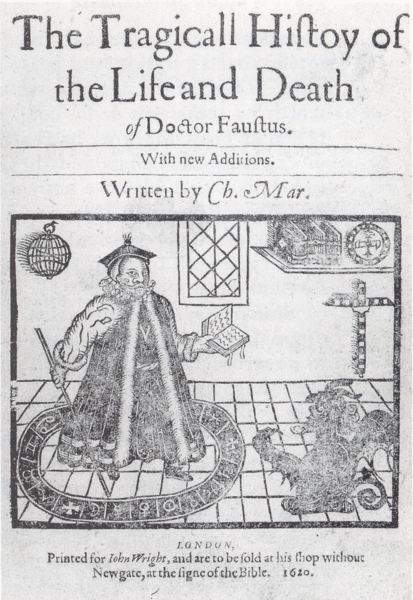
The Tragical History of the Life and Death of Doctor Faustus, commonly referred to simply as Doctor Faustus, is an Elizabethan tragedy by Christopher Marlowe, based on German stories about the title character Faust, that was first performed sometime between 1588 and Marlowe's death in 1593. Two different versions of the play were published in the Jacobean era, several years later.
The powerful effect of early productions of the play is indicated by the legends that quickly accrued around them—that actual devils once appeared on the stage during a performance, "to the great amazement of both the actors and spectators", a sight that was said to have driven some spectators mad.
A Midsummer Night's Dream
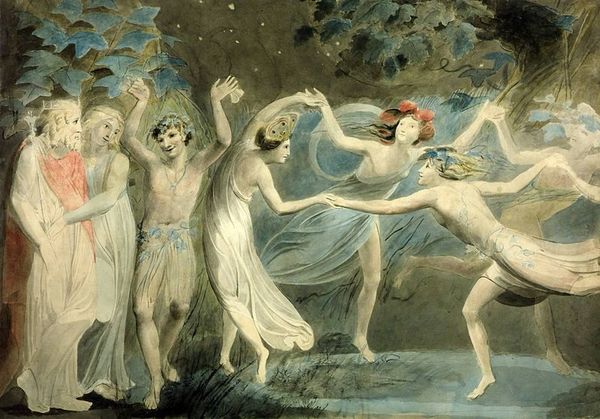
A Midsummer Night's Dream is a comedy written by William Shakespeare in 1595. It portrays the events surrounding the marriage of Theseus, the Duke of Athens, to Hippolyta. These include the adventures of four young Athenian lovers and a group of six amateur actors (the mechanicals) who are controlled and manipulated by the fairies who inhabit the forest in which most of the play is set. The play is one of Shakespeare's most popular works for the stage and is widely performed across the world.
Aesop's Fables
Aesop's Fables or the Aesopica is a collection of fables credited to Aesop, a slave and storyteller believed to have lived in ancient Greece between 620 and 564 BCE. Of diverse origins, the stories associated with his name have descended to modern times through a number of sources and continue to be reinterpreted in different verbal registers and in popular as well as artistic media.
The fables originally belonged to the oral tradition and were not collected for some three centuries after Aesop’s death. By that time a variety of other stories, jokes and proverbs were being ascribed to him, although some of that material was from sources earlier than him or came from beyond the Greek cultural sphere. The process of inclusion has continued until the present, with some of the fables unrecorded before the later Middle Ages and others arriving from outside Europe. The process is continuous and new stories are still being added to the Aesop corpus, even when they are demonstrably more recent work and sometimes from known authors.
Manuscripts in Latin and Greek were important avenues of transmission, although poetical treatments in European vernaculars eventually formed another. On the arrival of printing, collections of Aesop’s fables were among the earliest books in a variety of languages. Through the means of later collections, and translations or adaptations of them, Aesop’s reputation as a fabulist was transmitted throughout the world.
Initially the fables were addressed to adults and covered religious, social and political themes. They were also put to use as ethical guides and from the Renaissance onwards were particularly used for the education of children. Their ethical dimension was reinforced in the adult world through depiction in sculpture, painting and other illustrative means, as well as adaptation to drama and song. In addition, there have been reinterpretations of the meaning of fables and changes in emphasis over time.
限會員,要發表迴響,請先登入


