Yellow Peril
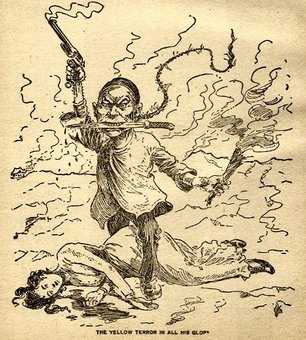
The Yellow Peril (also Yellow Terror and Yellow Spectre) is a racist color-metaphor that is integral to the xenophobic theory of colonialism: That the peoples of East Asia are a danger to the Western world. As a psycho-cultural perception of menace from the East, fear of the Yellow Peril was more racial than national, a fear derived, not from concern with a specific source of danger, from any one country or people, but from a vaguely ominous, existential fear of the vast, faceless, nameless horde of yellow people opposite the Western world. As a form of xenophobia, the Yellow Terror is the white race’s fear of the rising tide of colored people from the Orient.
Feeding the multitude
The first miracle, "the Feeding of the 5,000", is the only miracle (apart from Jesus' resurrection) which is recorded in all four canonical Gospels: Matthew 14:13-21, Mark 6:31-44, Luke 9:10-17 and John 6:5-15. The second miracle, The "Feeding of the 4,000", with seven loaves of bread and fish, is reported by Matthew 15:32-16:10 and Mark 8:1-9, but not by Luke or John.

1. Well meaning and kindly
Ex: he was something of a benevolent despot
Ex: a benevolent smile
Origin :
Late Middle English: from Old French benivolent, from Latin bene volent- well wishing, from bene well + velle to wish.
* pariah (n.)
1. An outcast
Ex: they were treated as social pariahs
2. historical
A member of an indigenous people of southern India originally functioning as ceremonial drummers but later having a low caste.
Origin :
Early 17th century: from Tamil paṛaiyar, plural of paṛaiyan (hereditary) drummer, from paṛai a drum.
* guise (n.)
1. An external form, appearance, or manner of presentation, typically concealing the true nature of something
Ex: he visited in the guise of an inspector
Ex: sums paid under the guise of consultancy fees
Origin :
Middle English: from Old French, of Germanic origin; related to wise.
* iniquity (n.)
1. Immoral or grossly unfair behaviour
Ex: a den of iniquity
Ex: the iniquities of British taxation
Origin :
Middle English: from Old French iniquite, from Latin iniquitas, from iniquus, from in- not + aequus equal, just.
*ameliorate (v.)
1. Make (something bad or unsatisfactory) better
Ex: the reform did much to ameliorate living standards
Origin :
Mid 18th century: alteration of meliorate, influenced by French améliorer, from meilleur better.
限會員,要發表迴響,請先登入


