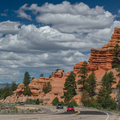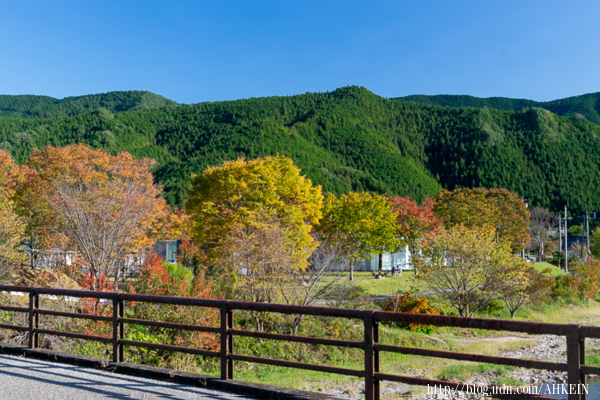
熊野古道的第一天,抵達近露時已過午後兩點。清晨七點半開始爬山,尤其是頭90分鐘的古道爬升了近800公尺;之後,不知道又翻越了幾個山頭,才到達近露。跟腳下的碎石樹根奮戰了7個小時之後,我們的精神體力都已有點不濟了;尤其是箸折峠下來的陡坡,我的膝蓋幾乎要爆裂,大腿真的抽筋了。雖然距離野中,本日行程預定的徒步終點,還有一個多小時;但是擔心腳力不濟,趕不上四點二十的巴士;於是決定,留在近露等巴士,並略作休息。十一月的山區,天黑得早;偏鄉野村,公車班次疏落,錯過四點的車,就得摸黑等六點多的下一班車,旅店還在一個小時車程之外呢!
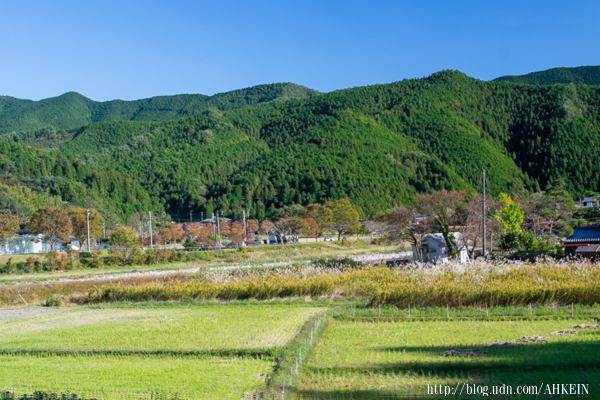 跟一位年輕人問路。年輕人見我日語不太輪轉,所幸帶我們在馬路上走了一段,直到看到巴士站牌才轉回。
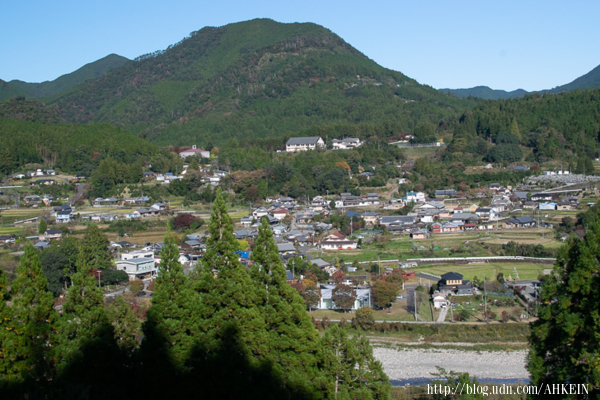
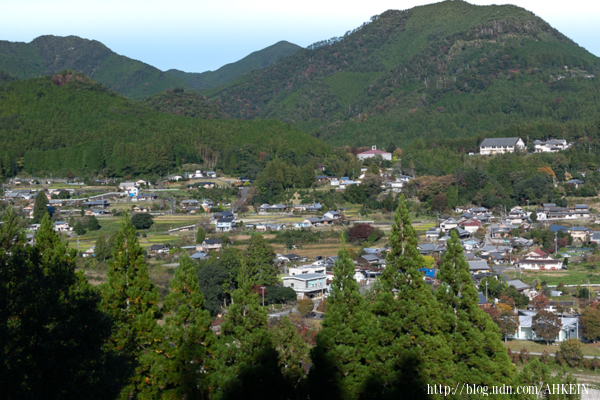
到了站牌,確定還要等近一個小時半才有班巴士。我們決定從容地逛逛這座美麗的村落。村童在大馬路上騎車玩耍的風景,已經好多年沒看過了;大叔大嬸看得出神。竟不約而同地說出相同的話:【我們小時候都是這樣在馬路上玩的!】
話說,兩個中年人,趕了一個早晨的山路,也確實有點累;想起方才報路的年輕人,身後是家咖啡店,人家那麼熱心相助,我們想喝咖啡時,自然回去找他的咖啡店;其實,我們也不確定他跟咖啡店的關係。
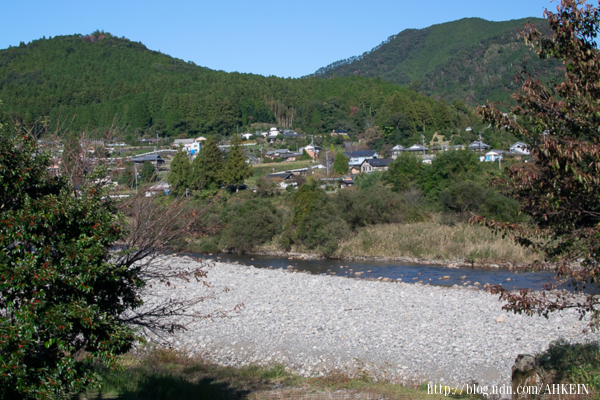
年輕人這會兒,在這家叫CABELO Coffee的店裡整理東西,見我們轉回頭,又點了兩杯咖啡,有點錯愕。回神過後,匆促轉身,認真地磨咖啡豆,煮咖啡。他的緊張的神色,好像不完全是因為我們回頭,倒像是完全沒料到今天會有生意。
偌大的開放空間前端是咖啡店,和咖啡烘培坊;後半抬升地板的空間有個像是起居室的角落,因為有沙發,書架,地上散落著小孩的玩具;此外就是個廚房的角落,地板上幾個籮筐,裝著剛採摘的青菜。咖啡店就是一張大大的原木長桌,和圍著長桌的長條板凳;烘培坊佔據店門旁的角落,有烤爐和幾袋咖啡豆。
瘦而高的年輕人,約莫三十來歲。眼神有點靦腆。為了主我們的兩杯咖啡,手忙腳亂。為了緩和他的緊張,我用三腳貓的日語,嘗試跟他攀談。
「你的店嗎?」
「是的。」
「當地人?」
「不是。我在大阪出生長大。」
「ooosaka?」太訝異他的回答,我把原本就是長音的『大』拉了三倍長!
瘦長的年輕人露出了靦腆的微笑。
「為什麼來鄉下呢?多久了?」我的日語問得直接;原諒大叔,記不得日語敬語的繁文縟節,實在委婉不起來,只有用英文解釋我的好奇。
「我不喜歡大都市的嘈雜和擁擠,所以8年前搬來這山村。」
「那你在大阪就開咖啡店?」我想,年輕人應當適應了我的美式直白,索性直搗黃龍。
「沒有,我原來作音樂的。」
「原來是音樂家喔!玩搖滾樂?」
「不是,我演奏雅樂。」他怕我沒聽懂『雅樂』是啥碗糕,從桌上的資料夾翻出一張雅樂團的照片。殊不知,大叔的日文是教科書學的,口語不行,古典文化以及日本歷史倒是略有涉略。年輕人稱讚起大叔的三流日語。
「你彈奏什麼樂器?」
他指了照片裡的一人,手中捧著各像「笙」的樂器。我問他,是不是用吹的?叫什麼?
「適用吹的,叫shyo」我想,應是「笙」的日語發音。今天長知識了。
「你在這小村莊,奏雅樂給誰聽?」大叔年紀一把,卻是好奇寶寶一名。
「在這裡就不太有機會了。偶而神社有祭典時會需要有人奏樂。」
「那平常呢?開咖啡店?」他手忙腳亂的樣子,不像是經常接待上門的客人;那他靠什麼過活?
「我有種些地,供我們家人自己食用;在山上生活,沒什麼其他的開銷,我太太一星期做三天的美髮,加上咖啡店的收入,打零工的收入,還過得去...」
「喔-」
他看大叔像時還有疑問的樣子,又補充:「我喜歡爬山健行,喜歡大自然,我喜歡小孩子在自然的環境下長大,可以四處遊玩,所以放棄都市生活,到鄉下來。」
「なるほど」大叔終於找到機會用這個詞彙了。「原來如此」的意思。
原來我遇到了山村隱居的音樂家。
熱騰騰的咖啡端上來了,真是濃郁好喝!記得十五年前東京很多餐廳都沒有咖啡可以點.即使有,也是即溶咖啡沖出來的;曾幾何時,連這樣的偏鄉也有咖啡店,還是現磨現煮的手工咖啡。日本人頂真的精神放到咖啡上,即使便利商店的咖啡都不錯喝...讓我覺得美式咖啡實在太粗糙了...。
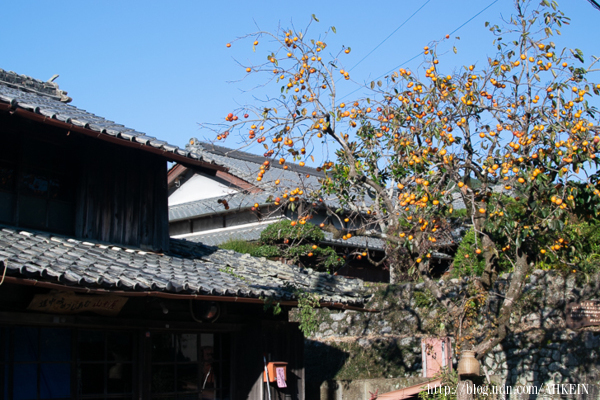
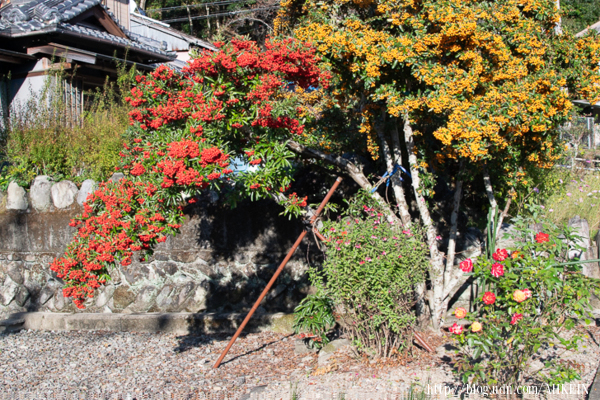
走出咖啡店,遇上方才在馬路上騎車的孩子之一,把腳踏車丟在店門口,衝進店裡;後方傳來年輕的聲音,大概是要求小孩把車放好...。午後三點鐘的陽光已略帶金黃,照得橙紅的柿子在樹葉就要落盡的樹上閃閃發亮,綠草上罩著薄薄的金輝,秋天的和歌山天空澄清透明,我突然覺得,年輕人完全不需解釋,為何放下十里紅塵的大阪,移居到人口不到千人的小山村。
啊--近露,不論是漢字,或是日文發音Chikatsuyu都很美麗的名字,美麗的山村。
以下是當初的筆記,有興趣的人,繼續看下去。
 It has been past Two O’clock as we arrived in Chikatsuyu. Although we were only 50 minutes behind our scheduled arrival time, we really doubted our abilities to make up the lost time and catch the bus at that day’s scheduled hike endpoint—Nanoka, due to exhaustion and my recurring muscle cramps at my right thigh. We had been hiking tortuous mountain paths for 7 hours at that point. We decided to shorten that day’s hike and catch the bus at Chikatsuy instead. Afterall, Nanoka is a hill away—never underestimate these hills—that’s the lesson I learnt that day.
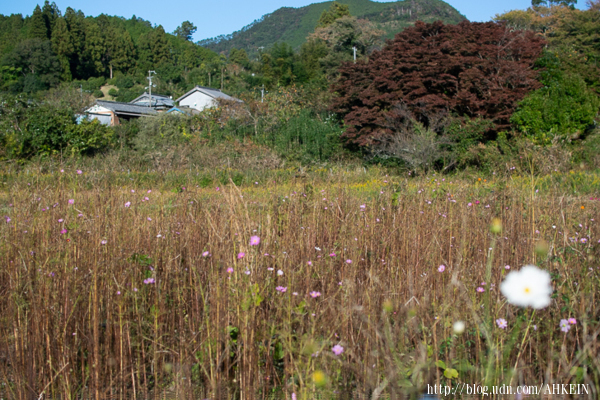
The name Chikatsuyu, meaning ‘close to dew’ in kanji, arouse poetic imagination. The pronunciation also sounds rhythmic and pretty to me. The bucolic scenery surrounding the village and the sleepy village itself under the crystal-blue autumn sky were very enjoyable, to say the least. We were a bit drunk mentally by the beauty and physically by the exhaustion, and decided to get a cup of coffee.
We backtracked a few hundred yards to this coffee shop where we had asked a thirty-something guy for directions on our way to the bus stop. As we came to the door of Cabelo Coffee, the name of the coffee shop, the 30-ish man was now working on some chores in the shop. He seemed a bit surprised at seeing our return or at our order of two coffee, or both, because although very polite as most Japanese were, as opposed to his ease earlier when giving directions, his haste somehow implied that he was not expected any guests in his shop.
It was not a typical coffee shop in Japan. First of all, it was quite spacious by Japanese standard. But, there is only one long table. Japanese are a private people. This type of big communal table was rare in a Japanese eatery. Second, Japanese shops tend to meticulously neat, a bit on the control-freak side. This shop was neat but on the relax side. The few books and binders on table are only neatly bookended by two logs not in a short-to-high arrangement or in any color coordination.
As a matter of a fact, the shop appeared to be the owner’s living space as well. The ground floor has an open design with no partitions. The space was however divided by three sections: the rear half on raised floor appeared to be their family’s living quarter with sofa, a rocking chair and a few futons on the floor. The front area, which is about one third of the space can be described as the shop. Right on the right-hand side as I walked in the entrance was a smaller roastary with bags of coffee beans on shelves and a roaster in the center. To the left of the entrance there was a huge log-table with long benches and rustic-looking chairs. I took this area to be the sitting area of the coffee shop, because the man signaled us to sit there.
As we waited, the man was busy preparing our orders. Not only did he appear busy but also a bit nervous. I had no idea how to interpret his mannerism: Was it because he was new to this coffee business or because he was too excited to see guests from a foreign country?
In order to ease his nervousness, I started some small talks:
“Chikamoto?” A person’s origin weighs heavily in Japanese culture. If you were born and brought up in the same place, then you are a ‘chikamoto’ (a hometown-boy/girl or a ‘local’) and are considered to be in the innermost circle of a place. It was somewhat rude for me to probe about his origin. A majority of Japanese can tell if you are a chikamoto by your accent and mannerism. But, I couldn’t, so I had to be bold!
“No. I was born and brought up in Osaka.”
“OOOOOsaka?” His answer took me by surprise. “Why did you a city boy move to this mountain village, if you don’t mind my curiosity.”
“That’s OK. I moved here 8 years ago because I love trekking and the country life.”
“Naruhoto (I see)! But, can you make a living here? I mean, what did you do in Osaka?”
At this time, we hold up a tray with two cups of freshly ground and brewed coffee to us. I
“I played Gagaku.” He was unsure if I knew what Gagaku is, he hurried to fetch out a folder on the table and flipped to a page with a photo of Gagaku orchestra. Gagaku is Japanese orchestral court music dated back 500 to 600 A.D. These days, gagaku almost entirely faded out from Japanese life except during religious ceremonies and special occasions. I had learned about Gagaku from reading but have never seen a live performance myself.
“So, you are a musician. What do you play?”
“Yes, I play “Shō, do you know it?” He pointed the instrument in the photo. It was too small and blur to recognize it. I guess it was equivalent to an wind-pipe instrument in Chinese classical orchestra. It produces a sound similar to what a clarinet or an oboe. By the kanji he pointed to be the name of the instrument, my speculation was confirmed.
“Do you still play here?”
“Yes, when there is a ceremony or a festival at shinto shrine, there will need a gagaku orchestra. Our orchestra leader would call me up.”
“How often does that happen? How far do you have to travel to play?”
“A few times a year. Not very often. Oh, sometimes several hours away! But, you see, I have the choice. If am free, I will go. If am busy, I don’t go.”
“So, when you don’t play, you tend the shop? This is your major source of income?” I guess I can be forgiven for asking such a direct question being a foreigner.
“Kind of. The shop doesn’t bring in much. Only tourists from outside would buy coffee from us. But there are highs and lows in the tourist flow. In the rainy seas, we see very few tourists. But, I also farm.”
“Yeh, what do you grow?”
“Oh, just rice and some vegetables for our family. I don’t grow enough to sell.”
“So, you support your family by the gags, the shop and farming.”
“Yes, pretty much, plus, my wife works at a beauty salon three days a week. That also brings in some income. Living cost in a small village is low. We can get by with little income here.”
“I am APPY here. I don’t miss Osaka.” In English, He added.
“Naruhoto!”
I scanned their living quarter. Besides the space, there wasn’t much. But, I assumed they needed need much. His kid just entered the door. I recognized him as one of the boys in a gang of elementary school kids chasing each other on the main street after school. On the raised floor near the long table, there are two bamboo containers with fresh vegetables in them. There was still dirt on the root of the veggie.
That cup of coffee was surprisingly delicious. I never expect to have such tasty coffee in such a remote mountain village. Rather than the dark roast style prevailing in the US, the coffee tasted mildly fruity with a note of crispiness. It was more like a cup of strong tea than conventional coffee. It might be different from the coffee flavor I was used to, but in that cup I tasted Japanese dedication.
As we stepped out of the coffee shop into the crispy autumn air outside, the 3pm sun had shown some weakness. Bright orange-color persimmons shone in golden hue under the blue deep sky. Somehow, the awkward utterance of the shop owner’s words echoed in my head.
I am APPY here. I don’t miss Osaka.