Class Notes:
1. Dover Beach
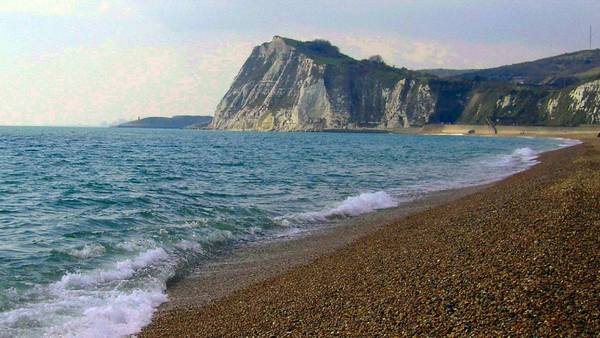
"Dover Beach" is a lyric poem by the English poet Matthew Arnold.[1] It was first published in 1867 in the collection New Poems, but surviving notes indicate its composition may have begun as early as 1849. The most likely date is 1851.
The title, locale and subject of the poem's descriptive opening lines is the shore of the English ferry port of Dover, Kent, facing Calais, France, at the Strait of Dover, the narrowest part (21 miles) of the English Channel, where Arnold honeymooned in 1851.
* Analysis
In Stefan Collini's opinion, "Dover Beach" is a difficult poem to analyse, and some of its passages and metaphors have become so well known that they are hard to see with "fresh eyes". Arnold begins with a naturalistic and detailed nightscape of the beach at Dover in which auditory imagery plays a significant role ("Listen! you hear the grating roar"). The beach, however, is bare, with only a hint of humanity in a light that "gleams and is gone". Reflecting the traditional notion that the poem was written during Arnold's honeymoon (see composition section), one critic notes that "the speaker might be talking to his bride".
The sea is calm to-night.
The tide is full, the moon lies fair
Upon the straits; —on the French coast the light
Gleams and is gone; the cliffs of England stand,
Glimmering and vast, out in the tranquil bay.
Come to the window, sweet is the night-air!
Only, from the long line of spray
Where the sea meets the moon-blanch'd land,
Listen! you hear the grating roar
Of pebbles which the waves draw back, and fling,
At their return, up the high strand,
Begin, and cease, and then again begin,
With tremulous cadence slow, and bring
The eternal note of sadness in.
Arnold looks at two aspects of this scene, its soundscape (in the first and second stanzas) and the retreating action of the tide (in the third stanza). He hears the sound of the sea as "the eternal note of sadness". Sophocles, a 5th-century BC Greek playwright who wrote tragedies on fate and the will of the gods, also heard this sound as he stood upon the shore of the Aegean Sea. Critics differ widely on how to interpret this image of the Greek classical age. One sees a difference between Sophocles interpreting the "note of sadness" humanistically, while Arnold, in the industrial nineteenth century, hears in this sound the retreat of religion and faith. A more recent critic connects the two as artists, Sophocles the tragedian, Arnold the lyric poet, each attempting to transform this note of sadness into "a higher order of experience".
Sophocles long ago
Heard it on the Ægæan, and it brought
Into his mind the turbid ebb and flow
Of human misery; we
Find also in the sound a thought,
Hearing it by this distant northern sea.
Having examined the soundscape, Arnold turns to the action of the tide itself and sees in its retreat a metaphor for the loss of faith in the modern age,[13] once again expressed in an auditory image ("But now I only hear / Its melancholy, long, withdrawing roar"). This fourth stanza begins with an image not of sadness, but of "joyous fulness" similar in beauty to the image with which the poem opens.
The Sea of Faith
Was once, too, at the full, and round earth's shore
Lay like the folds of a bright girdle furl'd.
But now I only hear
Its melancholy, long, withdrawing roar,
Retreating, to the breath
Of the night-wind, down the vast edges drear
And naked shingles of the world.
The final stanza begins with an appeal to love, then moves on to the famous ending metaphor. Critics have varied in their interpretation of the first two lines; one calls them a "perfunctory gesture ... swallowed up by the poem's powerfully dark picture", while another sees in them "a stand against a world of broken faith". Midway between these is one of Arnold's biographers, who describes being "true / To one another" as "a precarious notion" in a world that has become "a maze of confusion".
The metaphor with which the poem ends is most likely an allusion to a passage in Thucydides's account of the Peloponnesian War (Book 7, 44). He describes an ancient battle that occurred on a similar beach during the Athenian invasion of Sicily. The battle took place at night; the attacking army became disoriented while fighting in the darkness and many of their soldiers inadvertently killed each other. This final image has also been variously interpreted by the critics. Culler calls the "darkling plain" Arnold's "central statement" of the human condition. Pratt sees the final line as "only metaphor" and thus susceptible to the "uncertainty" of poetic language.
Ah, love, let us be true
To one another! for the world, which seems
To lie before us like a land of dreams,
So various, so beautiful, so new,
Hath really neither joy, nor love, nor light,
Nor certitude, nor peace, nor help for pain;
And we are here as on a darkling plain
Swept with confused alarms of struggle and flight,
Where ignorant armies clash by night.
"The poem's discourse", Honan tells us, "shifts literally and symbolically from the present, to Sophocles on the Aegean, from Medieval Europe back to the present—and the auditory and visual images are dramatic and mimetic and didactic. Exploring the dark terror that lies beneath his happiness in love, the speaker resolves to love—and exigencies of history and the nexus between lovers are the poem's real issues. That lovers may be 'true / To one another' is a precarious notion: love in the modern city momentarily gives peace, but nothing else in a post-medieval society reflects or confirms the faithfulness of lovers. Devoid of love and light the world is a maze of confusion left by 'retreating' faith."
Critics have questioned the unity of the poem, noting that the sea of the opening stanza does not appear in the final stanza, while the "darkling plain" of the final line is not apparent in the opening. Various solutions to this problem have been proffered. One critic saw the "darkling plain" with which the poem ends as comparable to the "naked shingles of the world". "Shingles" here means flat beach cobbles, characteristic of some wave-swept coasts. Another found the poem "emotionally convincing" even if its logic may be questionable. The same critic notes that "the poem upends our expectations of metaphor" and sees in this the central power of the poem. The poem's historicism creates another complicating dynamic. Beginning in the present it shifts to the classical age of Greece, then (with its concerns for the sea of faith) it turns to Medieval Europe, before finally returning to the present. The form of the poem itself has drawn considerable comment. Critics have noted the careful diction in the opening description, the overall, spell-binding rhythm and cadence of the poem and its dramatic character. One commentator sees the strophe-antistrophe of the ode at work in the poem, with an ending that contains something of the "cata-strophe" of tragedy. Finally, one critic sees the complexity of the poem's structure resulting in "the first major 'free-verse' poem in the language".
2. Walt Whitman
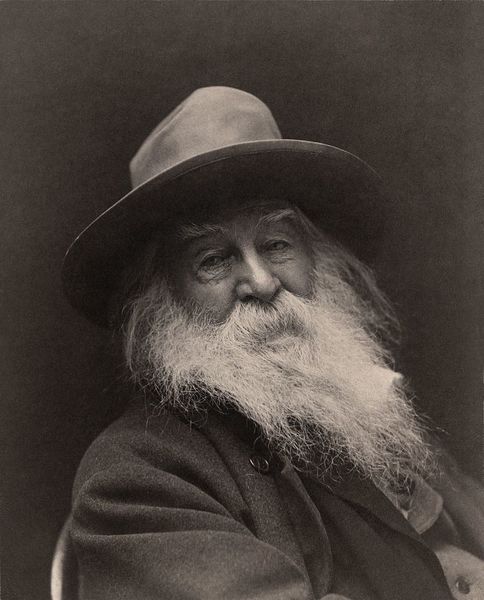
Walter Whitman was an American poet, essayist, and journalist. A humanist, he was a part of the transition between transcendentalism and realism, incorporating both views in his works. Whitman is among the most influential poets in the American canon, often called the father of free verse. His work was very controversial in its time, particularly his poetry collection Leaves of Grass, which was described as obscene for its overt sexuality.
Born in Huntington on Long Island, Whitman worked as a journalist, a teacher, a government clerk, and—in addition to publishing his poetry—was a volunteer nurse during the American Civil War. Early in his career, he also produced a temperance novel, Franklin Evans (1842). Whitman's major work, Leaves of Grass, was first published in 1855 with his own money. The work was an attempt at reaching out to the common person with an American epic. He continued expanding and revising it until his death in 1892. After a stroke towards the end of his life, he moved to Camden, New Jersey, where his health further declined. When he died at age 72, his funeral became a public spectacle.
* Writing
Whitman's work breaks the boundaries of poetic form and is generally prose-like. He also used unusual images and symbols in his poetry, including rotting leaves, tufts of straw, and debris. He also openly wrote about death and sexuality, including prostitution. He is often labeled as the father of free verse, though he did not invent it.
Poetic theory
Whitman wrote in the preface to the 1855 edition of Leaves of Grass, "The proof of a poet is that his country absorbs him as affectionately as he has absorbed it." He believed there was a vital, symbiotic relationship between the poet and society. This connection was emphasized especially in "Song of Myself" by using an all-powerful first-person narration. As an American epic, it deviated from the historic use of an elevated hero and instead assumed the identity of the common people. Leaves of Grass also responded to the impact that recent urbanization in the United States had on the masses.
3. Emily Dickinson
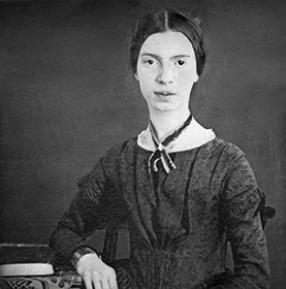
Emily Elizabeth Dickinson was an American poet. With the possible exception of Walt Whitman, Dickinson is now recognized as the most important American poet of the 19th century.
Dickinson was born in Amherst, Massachusetts. Although part of a prominent family with strong ties to its community, Dickinson lived much of her life in reclusive isolation. After studying at the Amherst Academy for seven years in her youth, she briefly attended the Mount Holyoke Female Seminary before returning to her family's house in Amherst. Considered an eccentric by locals, she developed a noted penchant for white clothing and became known for her reluctance to greet guests or, later in life, to even leave her bedroom. Dickinson never married, and most friendships between her and others depended entirely upon correspondence. Dickinson was a recluse for the later years of her life.
While Dickinson was a prolific private poet, fewer than a dozen of her nearly 1,800 poems were published during her lifetime. The work that was published during her lifetime was usually altered significantly by the publishers to fit the conventional poetic rules of the time. Dickinson's poems are unique for the era in which she wrote; they contain short lines, typically lack titles, and often use slant rhyme as well as unconventional capitalization and punctuation. Many of her poems deal with themes of death and immortality, two recurring topics in letters to her friends.
Although Dickinson's acquaintances were most likely aware of her writing, it was not until after her death in 1886—when Lavinia, Dickinson's younger sister, discovered her cache of poems—that the breadth of her work became apparent to the public. Her first collection of poetry was published in 1890 by personal acquaintances Thomas Wentworth Higginson and Mabel Loomis Todd, though both heavily edited the content. A complete, and mostly unaltered, collection of her poetry became available for the first time when scholar Thomas H. Johnson published The Poems of Emily Dickinson in 1955. Despite some unfavorable reception and skepticism over the late 19th and early 20th centuries regarding her literary prowess, Dickinson is now almost universally considered to be one of the most significant of all American poets.
4. The Great Gatsby

The Great Gatsby is a 1925 novel written by American author F. Scott Fitzgerald that follows a cast of characters living in the fictional town of West Egg on prosperous Long Island in the summer of 1922. The story primarily concerns the young and mysterious millionaire Jay Gatsby and his quixotic passion and obsession for the beautiful former debutante Daisy Buchanan. Considered to be Fitzgerald's magnum opus, The Great Gatsby explores themes of decadence, idealism, resistance to change, social upheaval, and excess, creating a portrait of the Jazz Age or the Roaring Twenties that has been described as a cautionary tale regarding the American Dream.
Fitzgerald—inspired by the parties he had attended while visiting Long Island's north shore—began planning the novel in 1923, desiring to produce, in his words, "something new—something extraordinary and beautiful and simple and intricately patterned." Progress was slow, with Fitzgerald completing his first draft following a move to the French Riviera in 1924. His editor, Maxwell Perkins, felt the book was vague and persuaded the author to revise over the next winter. Fitzgerald was repeatedly ambivalent about the book's title and he considered a variety of alternatives, including titles that referenced the Roman character Trimalchio; the title he was last documented to have desired was Under the Red, White, and Blue.
First published by Scribner's in April 1925, The Great Gatsby received mixed reviews and sold poorly; in its first year, the book sold only 20,000 copies. Fitzgerald died in 1940, believing himself to be a failure and his work forgotten. However, the novel experienced a revival during World War II, and became a part of American high school curricula and numerous stage and film adaptations in the following decades. Today, The Great Gatsby is widely considered to be a literary classic and a contender for the title "Great American Novel." In 1998, the Modern Library editorial board voted it the 20th century's best American novel and second best English-language novel of the same time period.
* Chapter 6
She blossomed for him like a flower.
限會員,要發表迴響,請先登入


