Class Notes
1. What is genre?
Genre, from French genre [ʒɑ̃r(ə)], is any form or type of communication in any mode (written, spoken, digital, artistic, etc.) with socially-agreed upon conventions developed over time. Genre is most popularly known as a category of literature, music, or other forms of art or entertainment, whether written or spoken, audio or visual, based on some set of stylistic criteria, yet genres can be aesthetic, rhetorical, communicative, or functional. Genre began as an absolute classification system for ancient Greek literature.
Last semester, we talked about literature from period, such as Homer's Epics and Bible. In this semester, we talk literature from genre--fiction, poetry and drama.
2. Richard Cory
Whenever Richard Cory went down town,
We people on the pavement looked at him:
He was a gentleman from sole to crown,
Clean favored, and imperially slim.
And he was always quietly arrayed,
And he was always human when he talked;
But still he fluttered pulses when he said,
"Good-morning," and he glittered when he walked.
And he was rich—yes, richer than a king—
And admirably schooled in every grace:
In fine, we thought that he was everything
To make us wish that we were in his place.
So on we worked, and waited for the light,
And went without the meat, and cursed the bread;
And Richard Cory, one calm summer night,
Went home and put a bullet through his head.
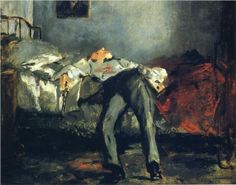
"Richard Cory" is a very simple poem: three stanzas describe the subject, Richard Cory, and the fourth stanza shocks the reader with Cory's act of suicide.
This narrative poem is written in the first person plural, where the "we" refers to the citizens of a small town. These poor townsfolk think Richard Cory too rich and well-educated to befriend.
It's evident from the way Cory walks around town, trying to strike up conversations with its citizens, that he's lonely and wants to make a human connection.
The townsfolk don't understand that Cory is searching for common ground between them. They are hyperaware of the differences between them and treat him like royalty. Finally, Cory can't take the isolation and puts a bullet in his head.
Therefore, everyone has his sufferings and pains that are not known to others.
3. Romanticism
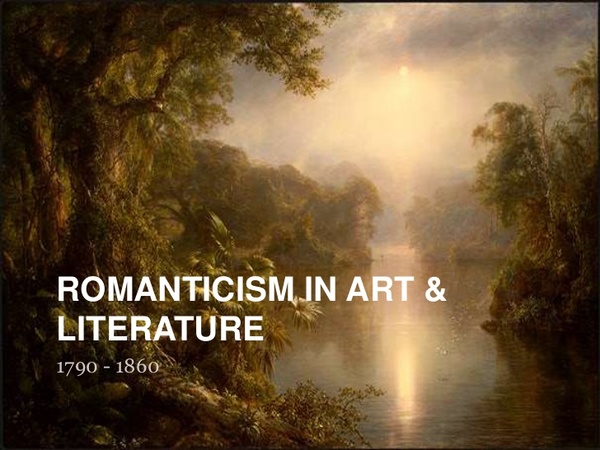
Romanticism (also the Romantic era or the Romantic period) was an artistic, literary, musical and intellectual movement that originated in Europe toward the end of the 18th century and in most areas was at its peak in the approximate period from 1800 to 1850. Romanticism was characterized by its emphasis on emotion and individualism as well as glorification of all the past and nature, preferring the medieval rather than the classical. In literary, one of the representative work in romantic period is " I Wandered Lonely as a Cloud" by William Wordsworth.
4. Leda and Swan
A sudden blow: the great wings beating still
Above the staggering girl, her thighs caressed
By the dark webs, her nape caught in his bill,
He holds her helpless breast upon his breast.
How can those terrified vague fingers push
The feathered glory from her loosening thighs?
And how can body, laid in that white rush,
But feel the strange heart beating where it lies?
A shudder in the loins engenders there
The broken wall, the burning roof and tower
And Agamemnon dead. Being so caught up,
So mastered by the brute blood of the air,
Did she put on his knowledge with his power
Before the indifferent beak could let her drop?
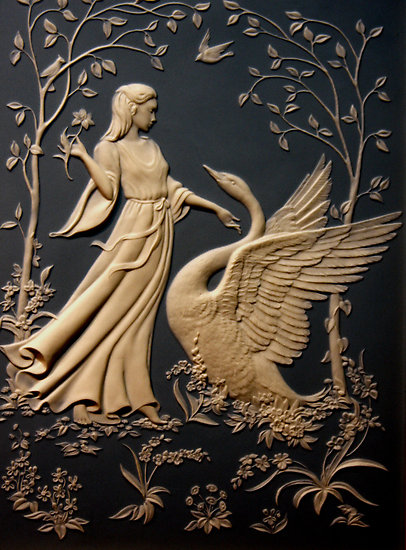
"Leda and the Swan" is a sonnet that focuses on the story from Greek myth in which Zeus, having adopted the form of a swan, rapes the girl Leda and impregnates her with the child who will become Helen of Troy. This single act, Yeats tells us, brings about the Trojan War and, with it, the end of Greek civilization and the dawn of a new (largely Christian) age. Because in raping Leda, Zeus made her conceive Helen of Troy, whose beauty would bring about the outbreak of the Trojan War. This is a great cataclysmic moment in history for Yeats.
Yeats was interested in such momentous events. He believed that civilization progressed on a cycle, where each epoch lasted roughly two millennia. In 2,000 BC, the rape of Leda by Zeus (as a swan) inaugurated the next epoch; 2,000 years later, the Annunciation of the Virgin Mary would signal the arrival of a new era.
5. Gutenberg Bible
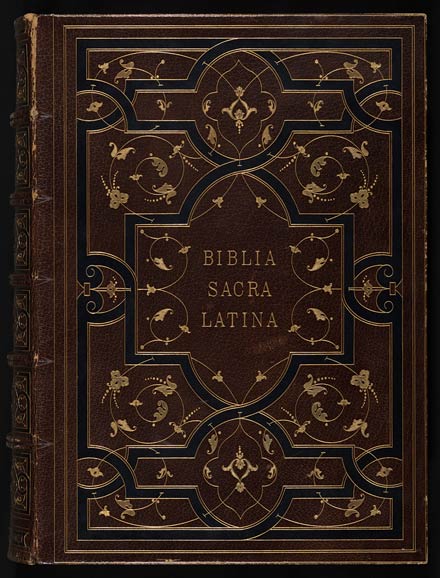
The Gutenberg Bible was the first major book printed using mass-produced movable metal type in Europe. It marked the start of the "Gutenberg Revolution" and the age of the printed book in the West. Widely praised for its high aesthetic and artistic qualities, the book has an iconic status. Written in Latin, the Catholic Gutenberg Bible is an edition of the Vulgate, printed by Johannes Gutenberg, in Mainz, in present-day Germany, in the 1450s.
* 7 Things You May Not Know About the Gutenberg Bible.
(1) It wasn’t the world’s first printed book.
(2) Johannes Gutenberg didn’t make any money off the Bibles.
(3) The print run was surprisingly small.
(4) There are several different variations of the Gutenberg Bible.
(5) The Soviet Red Army looted two copies from Germany During WWII.
(6) A thief once tried to steal a Gutenberg Bible from Harvard University’s library.
(7) Only 49 copies have survived to today.
6. Prefix
(1) post-
詞根含義:後;次
詞根來源:來源於拉丁語post.
postwar: 戰后的
(2) pre-
詞根含義: …前的,預先
詞根來源:來源於拉丁語prae
prescription: 規定,處方
(3) de-
詞根含義:向下
詞根來源:來源於拉丁語前綴de-
description: 描述,形容
* Renaissance= post classicism
Romanticism= post renaissance
Modernism= post romanticism
限會員,要發表迴響,請先登入


