Class Notes:
1. A Midesummer Night's Dream
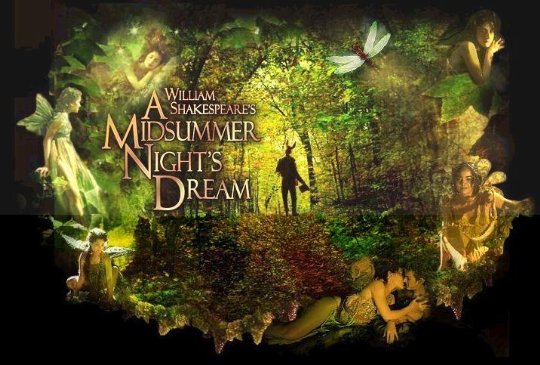
* Plot Overview
Theseus, duke of Athens, is preparing for his marriage to Hippolyta, queen of the Amazons, with a four-day festival of pomp and entertainment. He commissions his Master of the Revels, Philostrate, to find suitable amusements for the occasion. Egeus, an Athenian nobleman, marches into Theseus’s court with his daughter, Hermia, and two young men, Demetrius and Lysander. Egeus wishes Hermia to marry Demetrius (who loves Hermia), but Hermia is in love with Lysander and refuses to comply. Egeus asks for the full penalty of law to fall on Hermia’s head if she flouts her father’s will. Theseus gives Hermia until his wedding to consider her options, warning her that disobeying her father’s wishes could result in her being sent to a convent or even executed. Nonetheless, Hermia and Lysander plan to escape Athens the following night and marry in the house of Lysander’s aunt, some seven leagues distant from the city. They make their intentions known to Hermia’s friend Helena, who was once engaged to Demetrius and still loves him even though he jilted her after meeting Hermia. Hoping to regain his love, Helena tells Demetrius of the elopement that Hermia and Lysander have planned. At the appointed time, Demetrius stalks into the woods after his intended bride and her lover; Helena follows behind him.
In these same woods are two very different groups of characters. The first is a band of fairies, including Oberon, the fairy king, and Titania, his queen, who has recently returned from India to bless the marriage of Theseus and Hippolyta. The second is a band of Athenian craftsmen rehearsing a play that they hope to perform for the duke and his bride. Oberon and Titania are at odds over a young Indian prince given to Titania by the prince’s mother; the boy is so beautiful that Oberon wishes to make him a knight, but Titania refuses. Seeking revenge, Oberon sends his merry servant, Puck, to acquire a magical flower, the juice of which can be spread over a sleeping person’s eyelids to make that person fall in love with the first thing he or she sees upon waking. Puck obtains the flower, and Oberon tells him of his plan to spread its juice on the sleeping Titania’s eyelids. Having seen Demetrius act cruelly toward Helena, he orders Puck to spread some of the juice on the eyelids of the young Athenian man. Puck encounters Lysander and Hermia; thinking that Lysander is the Athenian of whom Oberon spoke, Puck afflicts him with the love potion. Lysander happens to see Helena upon awaking and falls deeply in love with her, abandoning Hermia. As the night progresses and Puck attempts to undo his mistake, both Lysander and Demetrius end up in love with Helena, who believes that they are mocking her. Hermia becomes so jealous that she tries to challenge Helena to a fight. Demetrius and Lysander nearly do fight over Helena’s love, but Puck confuses them by mimicking their voices, leading them apart until they are lost separately in the forest.
When Titania wakes, the first creature she sees is Bottom, the most ridiculous of the Athenian craftsmen, whose head Puck has mockingly transformed into that of an ass. Titania passes a ludicrous interlude doting on the ass-headed weaver. Eventually, Oberon obtains the Indian boy, Puck spreads the love potion on Lysander’s eyelids, and by morning all is well. Theseus and Hippolyta discover the sleeping lovers in the forest and take them back to Athens to be married—Demetrius now loves Helena, and Lysander now loves Hermia. After the group wedding, the lovers watch Bottom and his fellow craftsmen perform their play, a fumbling, hilarious version of the story of Pyramus and Thisbe. When the play is completed, the lovers go to bed; the fairies briefly emerge to bless the sleeping couples with a protective charm and then disappear. Only Puck remains, to ask the audience for its forgiveness and approval and to urge it to remember the play as though it had all been a dream.
* Theme
LOVE’S DIFFICULTY
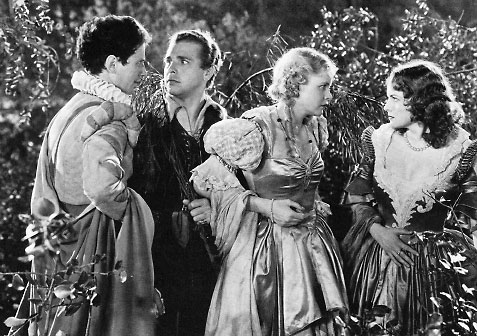
Though most of the conflict in the play stems from the troubles of romance, and though the play involves a number of romantic elements, it is not truly a love story; it distances the audience from the emotions of the characters in order to poke fun at the torments and afflictions that those in love suffer. The tone of the play is so lighthearted that the audience never doubts that things will end happily, and it is therefore free to enjoy the comedy without being caught up in the tension of an uncertain outcome.
The theme of love’s difficulty is often explored through the motif of love out of balance—that is, romantic situations in which a disparity or inequality interferes with the harmony of a relationship. The prime instance of this imbalance is the asymmetrical love among the four young Athenians: Hermia loves Lysander, Lysander loves Hermia, Helena loves Demetrius, and Demetrius loves Hermia instead of Helena—a simple numeric imbalance in which two men love the same woman, leaving one woman with too many suitors and one with too few. The play has strong potential for a traditional outcome, and the plot is in many ways based on a quest for internal balance; that is, when the lovers’ tangle resolves itself into symmetrical pairings, the traditional happy ending will have been achieved. Somewhat similarly, in the relationship between Titania and Oberon, an imbalance arises out of the fact that Oberon’s coveting of Titania’s Indian boy outweighs his love for her. Later, Titania’s passion for the ass-headed Bottom represents an imbalance of appearance and nature: Titania is beautiful and graceful, while Bottom is clumsy and grotesque.
MAGIC
The fairies’ magic, which brings about many of the most bizarre and hilarious situations in the play, is another element central to the fantastic atmosphere of A Midsummer Night’s Dream. Shakespeare uses magic both to embody the almost supernatural power of love and to create a surreal world. Although the misuse of magic causes chaos, as when Puck mistakenly applies the love potion to Lysander’s eyelids, magic ultimately resolves the play’s tensions by restoring love to balance among the quartet of Athenian youths. Additionally, the ease with which Puck uses magic to his own ends, as when he reshapes Bottom’s head into that of an ass and recreates the voices of Lysander and Demetrius, stands in contrast to the laboriousness and gracelessness of the craftsmen’s attempt to stage their play.
DREAMS
As the title suggests, dreams are an important theme in A Midsummer Night’s Dream; they are linked to the bizarre, magical mishaps in the forest. Hippolyta’s first words in the play evidence the prevalence of dream. The theme of dreaming recurs predominantly when characters attempt to explain bizarre events in which these characters are involved: “I have had a dream, past the wit of man to say what / dream it was. Man is but an ass if he go about t’expound this dream,” Bottom says, unable to fathom the magical happenings that have affected him as anything but the result of slumber.
Shakespeare is also interested in the actual workings of dreams, in how events occur without explanation, time loses its normal sense of flow, and the impossible occurs as a matter of course; he seeks to recreate this environment in the play through the intervention of the fairies in the magical forest. At the end of the play, Puck extends the idea of dreams to the audience members themselves, saying that, if they have been offended by the play, they should remember it as nothing more than a dream. This sense of illusion and gauzy fragility is crucial to the atmosphere of A Midsummer Night’s Dream, as it helps render the play a fantastical experience rather than a heavy drama.
* Symbols
THESEUS AND HIPPOLYTA
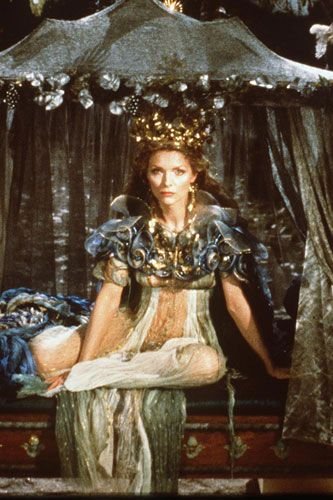
Theseus and Hippolyta bookend A Midsummer Night’s Dream, appearing in the daylight at both the beginning and the end of the play’s main action. They disappear, however, for the duration of the action, leaving in the middle of Act I, scene i and not reappearing until Act IV, as the sun is coming up to end the magical night in the forest. Shakespeare uses Theseus and Hippolyta, the ruler of Athens and his warrior bride, to represent order and stability, to contrast with the uncertainty, instability, and darkness of most of the play. Whereas an important element of the dream realm is that one is not in control of one’s environment, Theseus and Hippolyta are always entirely in control of theirs. Their reappearance in the daylight of Act IV to hear Theseus’s hounds signifies the end of the dream state of the previous night and a return to rationality.
THE LOVE POTION
The love potion is made from the juice of a flower that was struck with one of Cupid’s misfired arrows; it is used by the fairies to wreak romantic havoc throughout Acts II, III, and IV. Because the meddling fairies are careless with the love potion, the situation of the young Athenian lovers becomes increasingly chaotic and confusing (Demetrius and Lysander are magically compelled to transfer their love from Hermia to Helena), and Titania is hilariously humiliated (she is magically compelled to fall deeply in love with the ass-headed Bottom). The love potion thus becomes a symbol of the unreasoning, fickle, erratic, and undeniably powerful nature of love, which can lead to inexplicable and bizarre behavior and cannot be resisted.
THE CRAFTSMEN’S PLAY
The play-within-a-play that takes up most of Act V, scene i is used to represent, in condensed form, many of the important ideas and themes of the main plot. Because the craftsmen are such bumbling actors, their performance satirizes the melodramatic Athenian lovers and gives the play a purely joyful, comedic ending. Pyramus and Thisbe face parental disapproval in the play-within-a-play, just as Hermia and Lysander do; the theme of romantic confusion enhanced by the darkness of night is rehashed, as Pyramus mistakenly believes that Thisbe has been killed by the lion, just as the Athenian lovers experience intense misery because of the mix-ups caused by the fairies’ meddling. The craftsmen’s play is, therefore, a kind of symbol for A Midsummer Night’s Dream itself: a story involving powerful emotions that is made hilarious by its comical presentation.
2. Farce
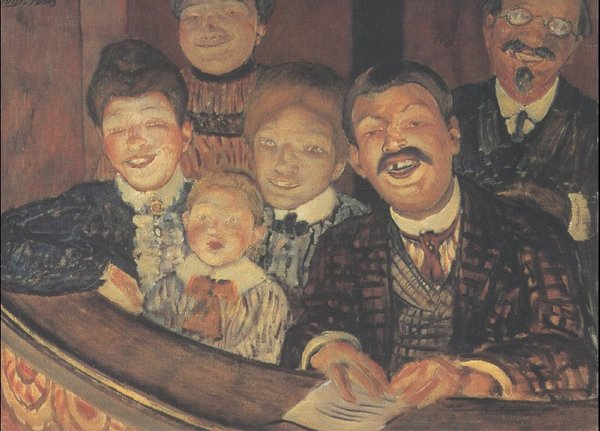
A literay work, especially drama, characterized by broad humor, wild antics, and often slapstick, pratfalls, or other physical humor.
3. Vocabulary
-ant: a person or a thing
participant, assisstnant, applicant, Protestant
4. The Bridges of County Madison
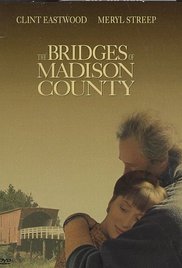
The Bridges of Madison County is a 1995 American romantic drama film. The film is about an Italian war bride, Francesca, who lives with her husband and two children on a farm in Iowa. In 1965, she meets a National Geographic photographer named Robert and has a four-day extramarital affair with him that changes both their lives forever.
the trailer: https://www.youtube.com/watch?v=Up-oN4NtvbM
5. Greyhounds

* Love looks not with the eyes, but with the mind.
Advertisement: https://www.youtube.com/watch?v=Z2bIWScs1V4
限會員,要發表迴響,請先登入


