Anxiety

Anxiety is an emotion characterized by an unpleasant state of inner turmoil, often accompanied by nervous behavior, such as pacing back and forth, somatic complaints, and rumination. It is the subjectively unpleasant feelings of dread over anticipated events, such as the feeling of imminent death.Anxiety is not the same as fear, which is a response to a real or perceived immediate threat, whereas anxiety is the expectation of future threat.Anxiety is a feeling of uneasiness and worry, usually generalized and unfocused as an overreaction to a situation that is only subjectively seen as menacing.
Xerox corporation

Xerox Corporation is an American global corporation that sells business services and document technology products. Xerox is headquartered in Norwalk, Connecticut ,though its largest population of employees is based around Rochester, New York, the area in which the company was founded. The company purchased Affiliated Computer Services for $6.4 billion in early 2010. As a large developed company, it is consistently placed in the list of Fortune 500 companies.
Tampon

A tampon is a mass of absorbent material, primarily used as a feminine hygiene product. Historically, the word "tampon" originated from the medieval French word "tampion", meaning a piece of cloth to stop a hole, a stamp, plug, or stopper. At present, tampons are designed to be easily inserted into the vagina during menstruation and absorb the menstrual flow.Several countries regulate tampons as medical devices. In the United States, they are considered to be a Class II medical device by the Food and Drug Administration (FDA). They are sometimes used for hemostasis in surgery.
Sanitary napkin
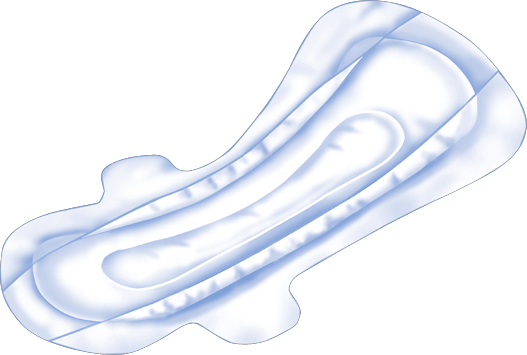
A sanitary napkin, sanitary towel, sanitary pad, menstrual pad, or pad is an absorbent item worn by a woman while she is menstruating, while she is recovering from vaginal surgery, for lochia (post-birth bleeding), after an abortion, or in any other situation where it is necessary to absorb a flow of blood from the vagina.
Tuberculosis
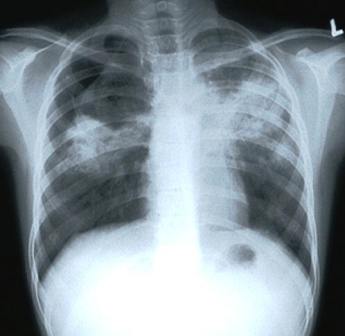
Tuberculosis (TB) is an infectious disease caused by the bacterium Mycobacterium tuberculosis (MTB). Tuberculosis generally affects the lungs, but can also affect other parts of the body. Most infections do not have symptoms; in which case it is known as latent tuberculosis. About 10% of latent infections progress to active disease which, if left untreated, kills about half of those infected. The classic symptoms of active TB are a chronic cough with blood-containing sputum, fever, night sweats, and weight loss.
Depreciation

In several fields, deprecation is the discouragement of use of some feature, design or practice; typically because it has been superseded or is no longer considered safe.
1. Lexicographer(n)
Definition:One who writes, compiles, or edits a dictionary.
A lexicographer's job is to describe the language.
2. Anxious(adj)
Definition:Uneasy and apprehensive about an uncertain event or matter.
They were anxious to bring the washing in before it rained.
Abound(v)
Definition:To be great in number or amount
The ship abounds with rats.
Technology(n)

Definition:The application of science, especially to industrial or commercial objectives.
Our superior technology is our ace in the hole.
Prognosticate(v)
Definition:To predict according to present indications or signs.
The coma duration prognostication model can prognosticate the duration of coma.
Automaton(n)

Definition:A self-operating machine or mechanism, especially a robot.
Automation has resulted in people losing their jobs.
Matron(n)
Definition:A married woman or a widow, especially a mother of dignity, mature age, and established social position
The Matron at the nursing home expressed a wish to attend.
raconteur (n.)
"storyteller, person skilled in relating anecdotes," 1828, from French raconteur, from raconter "to recount, tell, narrate," from re- (see re-) + Old French aconter "to count, render account" (see account (v.); and compare recount (v.1)). Related: Raconteuse (fem.).
sullen (adj.)
1570s, alteration of Middle English soleyn "unique, singular," from Anglo-French *solein, formed on the pattern of Old French solain "lonely," from soul "single," from Latin solus "by oneself, alone" (see sole (adj.)). The sense shift in Middle English from "solitary" to "morose" (i.e. "remaining alone through ill-humor") occurred late 14c. Related: Sullenly; sullenness.
rift (n.)
early 14c., "a split, act of splitting," from a Scandinavian source (compare Danish and Norwegian rift "a cleft," Old Icelandic ript (pronounced "rift") "breach;" related to Old Norse ripa "to break a contract" (see riven). Figurative use from 1620s. Geological sense from 1921. As a verb, c. 1300.
emissary (n.)
1620s, from French émissaire (17c.) or directly from Latin emissarius "a scout, a spy," literally "that is sent out," from emissus, past participle of emittere "send forth" (see emit).
ruminate (v.)
1530s, "to turn over in the mind," also "to chew cud" (1540s), from Latin ruminatus, past participle of ruminare "to chew the cud; turn over in the mind," from rumen (genitive ruminis) "gullet," of uncertain origin. Related: Ruminated; ruminating.
ruminant (n.)
1660s, from Latin ruminantem (nominative ruminans), present participle of ruminare "to chew the cud" (see ruminate). As an adjective from 1670s.
rumination (n.)
c. 1600, "act of ruminating; act of meditating," from Latin ruminationem (nominative ruminatio) "a chewing the cud," noun of action from past participle stem of ruminare (see ruminate).
taut (adj.)
mid-13c., tohte "stretched or pulled tight," possibly from tog-, past participle stem of Old English teon "to pull, drag," from Proto-Germanic *tugn, from PIE *deuk- "to lead" (see duke (n.)), which would connect it to tow (v.) and tie. Related: Tautness.
tauten (v.)
"to make taut," 1814, from taut + -en (1). Intransitive meaning "become taut" is from 1849. Related: Tautened; tautening.
livid (adj.)
early 15c., "of a bluish-leaden color," from Old French livide (13c.) and directly from Latin lividus "of a bluish color, black-and-blue," figuratively "envious, spiteful, malicious," from livere "be bluish," earlier *slivere, from PIE *sliwo-, suffixed form of root *(s)leie- "bluish" (source also of Old Church Slavonic and Russian sliva "plum;" Lithuanian slywas "plum;" Old Irish li, Welsh lliw "color, splendor," Old English sla "sloe"). Somehow it has come to be associated with "pale, colorless." The sense of "furiously angry" (1912) is from the notion of being livid with rage.
lividity (n.)
early 15c., "bluish or leaden color," from Old French lividite and Medieval Latin lividitatem (nominative lividitas), noun of state from past participle stem of Latin livere "be bluish" (see livid).
martinet (n.)
1670s, "system of strict discipline," from the name of Jean Martinet (killed at siege of Duisburg, 1672), lieutenant colonel in the Régiment du Roi, who in 1668 was appointed inspector general of the infantry. "It was his responsibility to introduce and enforce the drill and strict discipline of the French regiment of Guards across the whole infantry." [Olaf van Minwegen, "The Dutch Army and the Military Revolutions 1588-1688," 2006] The meaning "an officer who is a stickler for strict discipline" is first attested 1779 in English. The surname is a diminutive of Latin Martinus (see Martin).
yen (n.2)
"sharp desire, hunger," 1906, earlier yen-yen (1900), yin (1876) "intense craving for opium," from Chinese (Cantonese) yan "craving," or from a Beijing dialect word for "smoke." Reinforced in English by influence of yearn.
yen (n.1)
Japanese monetary unit, 1875, from Japanese yen, from Chinese yuan "round, round object, circle, dollar."
bagatelle (n.)
1630s, "a trifle," from French bagatelle "knick-knack, bauble, trinket" (16c.), from Italian bagatella "a trifle," diminutive of Latin baca "berry." As "a piece of light music," it is attested from 1827.
callow (adj.)
Old English calu "bare, bald," from Proto-Germanic *kalwa- (source also of Middle Dutch calu, Dutch kaal, Old High German kalo, German Kahl), from PIE root *gal- (1) "bald, naked" (source also of Russian golyi "smooth, bald"). From young birds with no feathers, meaning extended to any young inexperienced thing or creature (1570s). Apparently not related to Latin calvus "bald."
appalled (adj.)
1570s, "enfeebled;" c. 1600, "dismayed;" past participle adjective from appall.
appall (v.)
also appal, early 14c., "to fade;" c. 1400, "to grow pale," from Old French apalir "become or make pale," from a- "to" (see ad-) + palir "grow pale," from Latin pallere (see pallor). Meaning "cause dismay or shock," is 1530s. Related: Appalled; appalling.
penchant (n.)
1670s, from French penchant, noun use of present participle of Old French pencher "to incline," from Vulgar Latin *pendicare, a frequentative formed from Latin pendere "to hang" (see pendant (n.)).
decapitate (v.)
1610s, from French décapiter (14c.), from Late Latin decapitatus past participle of decapitare, from Latin de- "off" (see de-) + caput (genitive capitis) "head" (see capitulum). Related: Decapitated; decapitating.
decapitation (n.)
1640s, from French décapitation, from Medieval Latin decapitationem (nominative decapitatio), noun of action from past participle stem of Late Latin decapitare (see decapitate).
termagant (n.)
c. 1500, "violent, overbearing person" (especially of women), from Teruagant, Teruagaunt (c. 1200), name of a fictitious Muslim deity appearing in medieval morality plays, from Old French Tervagant, a proper name in Chanson de Roland (c. 1100), of uncertain origin. As an adjective from 1590s.


