St Francis of Assisi

ALSO LISTED IN : Spiritual & Religious Leaders
FAMOUS AS : A friar and founder of the Order of Friars Minor (Franciscans)
NATIONALITY : Italian Famous Italian Men
RELIGION: Roman Catholic


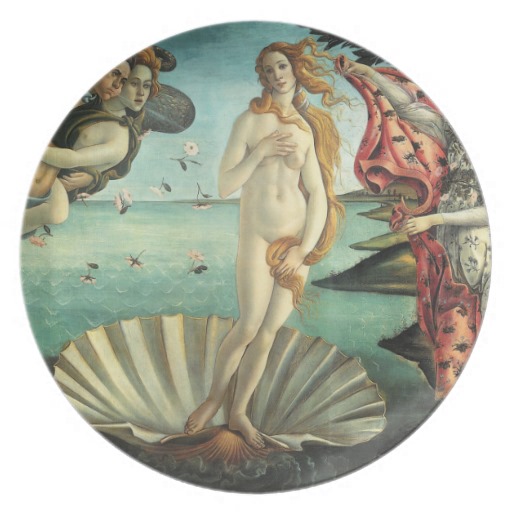
The Birth of Venus is a painting by Sandro Botticelli generally thought to have been painted in the mid 1480s. It has long been suggested that Botticelli was commissioned to paint the work by the Medici family of Florence, specifically Lorenzo di Pierfrancesco de' Medici under the influence of his cousin Lorenzo de' Medici, close patron to Botticelli. It depicts the goddess Venus, having emerged from the sea as an adult woman, arriving at the shore (which is related to the Venus Anadyomene motif). The painting is on display at the Uffizi Gallery in Florence, Italy.


The Pietà is a subject in Christian art depicting the Virgin Mary cradling the dead body of Jesus, most often found in sculpture. As such, it is a particular form of the Lamentation of Christ, a scene from the Passion of Christ found in cycles of the Life of Christ. When Christ and the Virgin are surrounded by other figures from the New Testament, the subject is strictly called a Lamentation in English, although Pietà is often used for this as well, and is the normal term in Italian.
Sibling rivalry is a type of competition or animosity among siblings, whether blood related or not.
Siblings generally spend more time together during childhood than they do with parents. The sibling bond is often complicated and is influenced by factors such as parental treatment, birth order, personality, and people and experiences outside the family. Sibling rivalry is particularly intense when children are very close in age and of the same gender and/or where one or both children are intellectually gifted.

As nouns the difference between opponent and enemy is that opponent is an individual or group who is a rival of another while enemy is someone who is hostile to, feels hatred towards, opposes the interests of, or intends injury to someone else.
1. Fervor(n)熱情
Definition:Great warmth and intensity of emotion.
The speech aroused nationalist fervor.
2. Congenital(adj)天生的
Definition:A congenital disease or medical condition is one that a person has had from birth, but is not inherited.
A congenital inability to tell the truth
3. Delegate(vt)委派……為代表
Definition: A person authorized to act as representative for another; a deputy or agent.
Many employers find it hardto delegate duties.
4. Amphibian(n)
Definition:An animal capable of living both on land and in water.
Both the toad and frog are amphibian.
Definition:Professing belief in Jesus as Christ or following the religion based on the life and teachings of Jesus.
He ignores the traditional Christian dualism between body and soul.
Definition:One who attempts to equal or surpass another, or who pursues the same object as another;
She is his rival in sarcasm.
7. Nemesis(n)
Definition:A source of harm or ruin:
Uncritical trust is my nemesis.
8. Synonym(n)同義字
Definition:A word having the same or nearly the same meaning as another word or other words in a language.
Zhuge Liang is a synonym for wisdom in folklore
exploit (n.)
late 14c., "outcome of an action," from Old French esploit "a carrying out; achievement, result; gain, advantage" (12c., Modern French exploit), a very common word, used in senses of "action, deed, profit, achievement," from Latin explicitum "a thing settled, ended, or displayed," noun use of neuter of explicitus, past participle of explicare "unfold, unroll, disentangle" (see explicit).
Meaning "feat, achievement" is c. 1400. Sense evolution is from "unfolding" to "bringing out" to "having advantage" to "achievement." Related: Exploits.
(v.)
c. 1400, espleiten, esploiten "to accomplish, achieve, fulfill," from Old French esploitier, espleiter "carry out, perform, accomplish," from esploit (see exploit (n.)). The sense of "use selfishly" first recorded 1838, from a sense development in French perhaps from use of the word with reference to mines, etc. (compare exploitation). Related: Exploited; exploiting.
propinquity (n.)
late 14c., "nearness in relation, kinship," later also "physical nearness" (early 15c.), from Old French propinquite (13c.) and directly from Latin propinquitatem (nominative propinquitas) "nearness, vicinity; relationship, affinity," from propinquus "near, neighboring," from prope "near" (enlarged from PIE *pro "before;" see pro-) + suffix -inquus.
Nothing propinks like propinquity [Ian Fleming, chapter heading, "Diamonds are Forever," 1956; phrase popularized 1960s by U.S. diplomat George Ball]
disgruntled (adj.)
past participle adjective from disgruntle.
infallible (adj.)
"exempt from error in judgment, knowledge, or opinion," early 15c., from Medieval Latin infallibilis, from in- "not, opposite of" (see in- (1)) + Late Latin fallibilis (see fallible). In reference to Popes, attested from 1870, hence infallibilism, the doctrine of this; infallibilist. Related: Infallibly.
panacea (n.)
"universal remedy," 1540s, from Latin panacea, a herb (variously identified) that would heal all illnesses, from Greek panakeia "cure-all," from panakes "all-healing," from pan- "all" (see pan-) + akos "cure," from iasthai "to heal" (see -iatric). Earlier in English as panace (1510s).
eradicate (v.)
early 15c., "destroy utterly," literally "pull up by the roots," from Latin eradicatus, past participle of eradicare "to root out, annihilate" (see eradication). Related: Eradicated; eradicating; eradicable.
impede (v.)
c. 1600, back-formation from impediment, or else from Latin impedire "impede, be in the way, hinder, detain," literally "to shackle the feet." Related: Impeded; impedes; impeding; impedient.
sedate (adj.)
"calm, quiet," 1660s, from Latin sedatus "composed, moderate, quiet, tranquil," past participle of sedare "to settle, calm," causative of sedere "to sit" (see sedentary). Related: Sedately
(v.)
"treat with sedatives," 1945, a back-formation from the noun derivative of sedative (adj.). The word also existed 17c. in a sense "make calm or quiet." Related: Sedated; sedating.
equanimity (n.)
c. 1600, "fairness, impartiality," from French quanimit, from Latin aequanimitatem (nominative aequanimitas) "evenness of mind, calmness; good-will, kindness," from aequanimis "mild, kind," literally "even-minded," from aequus "even, level" (see equal (adj.)) + animus "mind, spirit" (see animus). Meaning "evenness of temper" in English is from 1610
compatible (adj.)
mid-15c., from Middle French compatible (15c.), from Medieval Latin compatibilis, from Late Latin compati (see compassion). Related: Compatibility.
serenity (n.)
1530s, of weather, 1590s, of persons, from Middle French srnit, from Latin serenitatem (nominative serenitas) "clearness, serenity," from serenus (see serene). Earliest use (mid-15c.) was as a title of honor for kings, probably from the similar use of Latin serenitas, applied to Roman emperors, later popes.
revere (v.)
1660s, from French rvrer, from Latin revereri "revere, fear" (see reverence (n.), which also was the earlier form of the verb). Related: Revered; revering.
irrational (adj.) Look up irrational at Dictionary.com
late 15c., "not endowed with reason" (of beasts, etc.), from Latin irrationalis/inrationalis "without reason, not rational," from assimilated form of in- "not, opposite of" (see in- (1)) + rationalis "of or belonging to reason, reasonable" (seerational (adj.)).
Meaning "illogical, absurd" is attested from 1640s. Related: Irrationally. The mathematical sense "inexpressible in ordinary numbers" is from late 14c. in English, from use of the Latin word as a translation of Greek alogon in Euclid.
avarice (n.)
c. 1300, from Old French avarice "greed, covetousness" (12c.), from Latin avaritia "greed," from avarus "greedy," adjectival form of avere "crave, long for."
insatiable (adj.)
early 15c., insaciable, from Old French insaciable "ravenous" (15c., Modern French insatiable), or directly from Latin insatiabilis "not to be satisfied," from in- "not, opposite of" (see in- (1)) + satiabilis, from satiare (see satiate). Related: Insatiably; insatiableness.
nadir (n.)
late 14c., in astronomical sense, from Medieval Latin nadir, from Arabic nazir "opposite to," in nazir as-samt, literally "opposite direction," from nazir "opposite" + as-samt "road, path" (see zenith
moribund (adj.)
1721, "about to die," from Middle French moribund (16c.), from Latin moribundus "dying, at the point of death," from mori "to die" (see mortal (adj.)). Figurati
lithe (adj.)
Old English lie "soft, mild, gentle, calm, meek," also, of persons, "gracious, kind, agreeable," from Proto-Germanic *linthja- (source also of Old Saxon lithi "soft, mild, gentle," Old High German lindi, German lind, Old Norse linr "soft to the touch, gentle, mild, agreeable," with characteristic loss of "n" before "th" in English), from PIE root *lento- "flexible" (source also of Latin lentus "flexible, pliant, slow," Sanskrit lithi).
In Middle English, used of the weather. Current sense of "easily flexible" is from c. 1300. Related: Litheness. Old and Middle English had the related verb lin "to cease doing (something)," also used of the wind dying down.
obese (adj.)
1650s, back-formation from obesity and in part from Latin obesus "fat, stout, plump," past participle of obedere "that has eaten itself fat" (see obesity). According to OED, "Rare before 19th c." Related: Obeseness. Latin obesus was translated in Old English as oferft "overfat."
adherent (adj.)
late 14c., "sticking, clinging to, adhesive," from Old French adherent or directly from Latin adhaerentem (nominative adhaerens), present participle of adhaerere "stick to," from ad- "to" (see ad-) + haerere "to stick" (past participle haesus; see hesitation).
(n.)
early 15c., "follower, supporter, one who upholds (a leader, cause, etc.)," from Old French adherent or directly from Latin adhaerentem (nominative adhaerens), present participle of adhaerere "stick to," from ad "to" (see ad-) + haerere "to stick" (see hesitation). Meaning "adhesive substance" is from 1912.
限會員,要發表迴響,請先登入


