In Greek mythology, Achilles was a Greek hero of the Trojan War and the central character and greatest warrior of Homer's Iliad. His mother was the immortal nymph Thetis, and his father, the mortal Peleus, was the king of the Myrmidons.
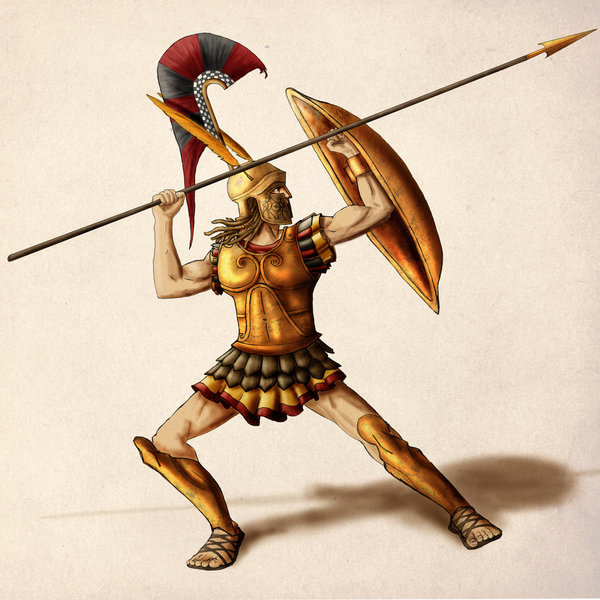
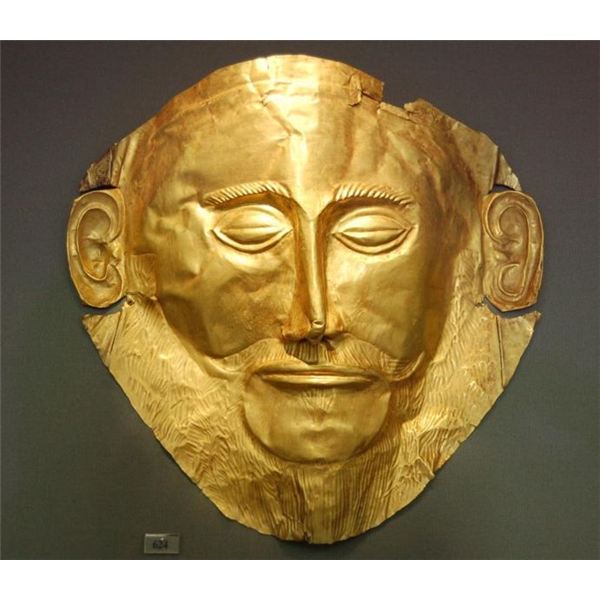
In Greek mythology, Agamemnon was the son of King Atreus and Queen Aerope of Mycenae, the brother of Menelaus, the husband of Clytemnestra and the father of Iphigenia, Electra or Laodike, Orestes and Chrysothemis.Mythical legends make him the king of Mycenae or Argos, thought to be different names for the same area. When Helen, the wife of Menelaus, was taken to Troy by Paris, Agamemnon commanded the united Greek armed forces in the ensuing Trojan War.
In poetry, a stanza is a grouped set of lines within a poem, usually set off from other stanzas by a blank line or indentation. Stanzas can have regular rhyme and metrical schemes, though stanzas are not strictly required to have either. There are many unique forms of stanzas. Some stanzaic forms are simple, such as four-line quatrains.
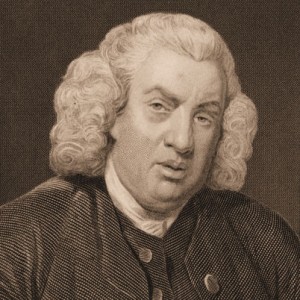
Samuel Johnson , often referred to as Dr. Johnson, was an English writer who made lasting contributions to English literature as a poet, essayist, moralist, literary critic, biographer, editor and lexicographer. Johnson was a devout Anglican and committed Tory, and is described by the Oxford Dictionary of National Biography as "arguably the most distinguished man of letters in English history".[1] He is also the subject of perhaps the most famous biography in English literature, namely The Life of Samuel Johnson by James Boswell.[2]

In geometry, a diameter of a circle is any straight line segment that passes through the center of the circle and whose endpoints lie on the circle. It can also be defined as the longest chord of the circle. Both definitions are also valid for the diameter of a sphere.
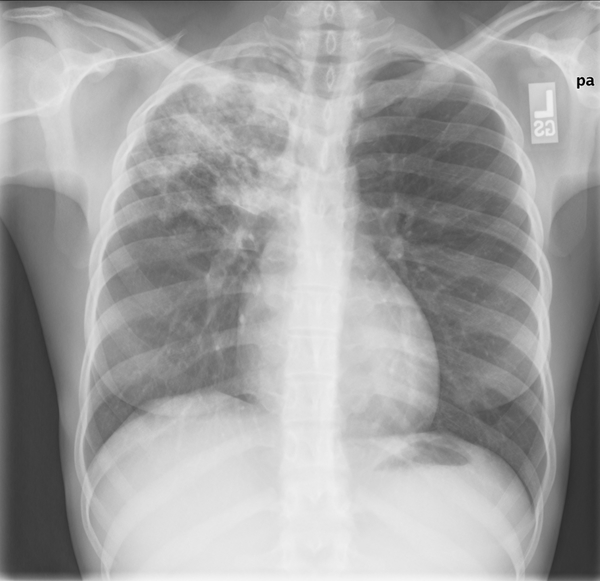
Tuberculosis (TB) is an infectious disease caused by the bacterium Mycobacterium tuberculosis (MTB). Tuberculosis generally affects the lungs, but can also affect other parts of the body. Most infections do not have symptoms; in which case it is known as latent tuberculosis. About 10% of latent infections progress to active disease which, if left untreated, kills about half of those infected. The classic symptoms of active TB are a chronic cough with blood-containing sputum, fever, night sweats, and weight loss.

A fire hydrant, also called fireplug, is a connection point by which firefighters can tap into a water supply. It is a component of active fire protection.
A prefix is an affix which is placed before the stem of a word. Adding it to the beginning of one word changes it into another word. For example, when the prefix un- is added to the word happy, it creates the word unhappy. Particularly in the study of languages, a prefix is also called a preformative, because it alters the form of the words to which it is affixed.
|
Greek name |
Roman name |
Image |
Functions and attributes |
|
|
|
|
|||
|
|
Queen of the gods and the goddess of marriage and family. Symbols include the peacock, cuckoo, and cow. Youngest daughter of Cronus and Rhea. Wife and sister of Zeus. Being the goddess of marriage, she frequently tried to get revenge on Zeus' lovers and their children. |
|
||
|
|
God of the seas, earthquakes, and tidal wave. Symbols include the horse, bull, dolphin, and trident. Middle son of Cronus and Rhea. Brother of Zeus and Hades. Married to the Nereid Amphitrite, although, like most male Greek Gods, he had many lovers. |
|
||
|
|
Goddess of fertility, agriculture, nature, and the seasons. Symbols include the poppy, wheat, torch, cornucopia, and pig. Middle daughter of Cronus and Rhea. |
|
||
|
|
Goddess of wisdom, reason, intelligent activity, literature, handicrafts and science, defense and strategic warfare. Symbols include the owl and the olive tree. Daughter of Zeus and the Oceanid Metis, she rose from her father's head fully grown and in full battle armor. |
|
||
|
href="https://en.wikipedia.org/wiki/Apollo" Apollo |
Apollo |
|
God of light, prophecy, inspiration, poetry, music and arts, medicine and healing. Son of Zeus and Leto. Symbols include the sun, lyre, swan, and mouse. Twin brother of Artemis. |
|
|
|
Goddess of the hunt, virginity, archery, the moon, and all animals. Symbols include the moon, deer, hound, she-bear, snake, cypress tree, and bow and arrow. Daughter of Zeus and Leto and twin sister of Apollo. |
|
||
|
|
|
|||
|
|
Goddess of love, beauty, and desire. Symbols include the dove, bird, apple, bee, swan, myrtle, and rose. Daughter of Zeus and the Oceanid Dione, or perhaps born from the sea foam after Uranus' semen dripped into the sea after being castrated by his youngest son, Cronus, who then threw his father's genitals into the sea. Married to Hephaestus, although she had many adulterous affairs, most notably with Ares. Her name gave us the word "aphrodisiac", while her Latin name, Venus, gave us the word "venereal".[B] |
|
||
|
|
|
|||
|
|
|
|||
|
|
Goddess of the hearth and of the right ordering of domesticity and the family; she was born into the first Olympian generation and was one of the original twelve Olympians. Some lists of the Twelve Olympians omit her in favor of Dionysus, but the speculation that she gave her throne to him in order to keep the peace seems to be modern invention. She is the first child of Cronus and Rhea, eldest sister of Hades, Demeter, Poseidon, Hera, and Zeus. |
|
||
|
|
God of wine, celebrations, and ecstasy. Patron god of the art of theatre. Symbols include the grapevine, ivy, cup, tiger, panther, leopard, dolphin, goat, and pinecone. Son of Zeus and the mortal Theban princess Semele. Married to the Cretan princess Ariadne. The youngest Olympian god, as well as the only one to have a mortal mother. |
|
限會員,要發表迴響,請先登入


