* Bull Market & Bear Market
.
* Russian church architecture

The Russian Orthodox churches are distinguished by their verticality, bright colors and multiple domes which provide a striking contrast with the flat Russian landscape often covered in snow.
.
* The Twelve Days of Christmas (song)
https://www.youtube.com/watch?v=YpuNU3y1KAk

"The Twelve Days of Christmas" is an English Christmas carol that enumerates in the manner of a cumulative song a series of increasingly grand gifts given on each of the twelve days of Christmas.
.
* Bethlehem
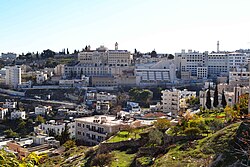
Bethlehem overlook
Bethlehem is a Palestinian city located in the central West Bank, about 10 kilometers south of Jerusalem.
The New Testament identifies Bethlehem as the birthplace of Jesus. The city is inhabited by one of the oldest Christian communities in the world[citation needed], although the size of the community has shrunk due to emigration.
.
* Australians say to Muslims "I'll ride with you"
http://www.bbc.com/news/blogs-trending-30479306
As a gunman holds people hostage in a cafe in Sydney, thousands of messages of support have been posted online for Muslims in Australia who are afraid of an Islamophobic backlash.

Thousands of people have now joined the spontaneous campaign, offering to meet Muslim people at their local stations and to ride with them on their journey.
.
Islamophobic = Islam + phobic
.
* cumulative (adj.) Increasing or enlarging by successive addition.
.
* O Come Ye Faithful
https://www.youtube.com/watch?v=-JSF9Uz20PY
O come ye, O come ye to Bethlehem.
Sing all that hear in heaven God's holy word.
Give to our Father glory in the Highest;
All Hail! Lord, we greet Thee,
O Jesus! for evermore be Thy name adored.
.
* Twelfth Night (holiday)
Twelfth Night is a festival, in some branches of Christianity marking the coming of the Epiphany. There is disagreement as to whether the Twelfth Night falls on 6th January or the 5th; the Church of England insists that it is on the 5th and "refers to the night before Epiphany, the day when the nativity story tells us that the three wise men visited the infant Jesus" In Western Church traditions the Twelfth Night concludes the Twelve Days of Christmas, although in others the Twelfth Night can precede the Twelfth Day. Bruce Forbes wrote that " "In 567 the Council of tours proclaimed that the entire period between Christmas and Epiphany should be considered part of the celebration, creating what became known as the twelve days of Christmas, or what the English called Christmastide. On the last of the twelve days, called Twelfth Night, various cultures developed a wide range of additional special festivities. The variation extends even to the issue of how to count the days. If Christmas Day is the first of the twelve days, then Twelfth Night would be on January 5, the eve of Epiphany. If December 26, the day after Christmas, is the first day, then Twelfth Night falls on January 6, the evening of Epiphany itself."
.
* Business
A business, also known as an enterprise or a firm, is an organization involved in the trade of goods, services, or both to consumers. Businesses are prevalent in capitalist economies, where most of them are privately owned and provide goods and services to customers in exchange for other goods, services, or money. Businesses may also be not-for-profit or state-owned. A business owned by multiple individuals may be referred to as a company.
Business can refer to a particular organization or, more generally, to an entire market sector, e.g. "the music business". Compound forms such as agribusiness represent subsets of the word's broader meaning, which encompasses all activity by suppliers of goods and services.
.
* Etymology
bene- : good
e.g., benefit: Something that promotes or enhances well-being; an advantage: The nurse explained the benefits of regular exercise.

Vocabulary from Text Book & The Great Gatsby WEEK15
.
l awareness (n.) /əˈweə(r)nəs/
knowledge or understanding of a subject, issue, or situation
e.g., There was a general lack of awareness about safety issues.
Origin of AWARE
Middle English iwar, from Old English gewær, from ge- (associative prefix) + wær wary
.
l brand (n.) /brænd/
a product or group of products that has its own name and is made by one particular company. The word for a machine or vehicle made by one particular company is a make
e.g., We stock all leading brands.
Origin of BRAND
Middle English, torch, sword, from Old English; akin to Old English bærnan to burn
.
l disregard (n.) /ˌdɪsrɪˈɡɑː(r)d/
the attitude of someone who does not respect something or consider it important
e.g., This decision shows a blatant disregard for the current residents.
.
l likewise (adv.) /ˈlaɪkwaɪz/
in the same way, or in a similar way
e.g., The character of the lake has changed and the character of the surrounding area likewise.
.
l method (n.) /ˈmeθəd/
a way of doing something, especially a planned or established way
e.g., It was a handmade rug produced by traditional methods.
Origin of METHOD
Middle English, prescribed treatment, from Latin methodus, from Greek methodos, from meta- + hodos way
.
l standard (n.) /ˈstændə(r)d/
a level of quality or achievement, especially one that people generally consider normal or acceptable
e.g., What can be done to raise standards in schools?
Origin of STANDARD
Middle English, from Anglo-French estandard banner, standard, of Germanic origin; akin to Old English standan to stand and probably to Old High German hart hard
.
l setting (n.) /ˈsetɪŋ/
the place where someone or something is, and all the things, people, or emotions that are part of that place
e.g., We provide health care outside any kind of institutional setting.
.
l prime (adj.) /praɪm/
most important
e.g., Our prime concern was the safety of our customers.
Origin of PRIME
Middle English, from Old English prīm, from Latin prima hora first hour
.
l bribe (v.) /braɪb/
to give money or presents to someone so that they will help you by doing something dishonest or illegal
e.g., They were found guilty of trying to bribe officials.
Origin of BRIBE
Middle English, morsel given to a beggar, bribe, from Anglo-French, morsel
.
l essential (adj.) /ɪˈsenʃ(ə)l/
completely necessary
e.g., Light is absolutely essential for the healthy development of plants.
.
l ethics (n.) /ˈeθɪks/
a set of principles that people use to decide what is right and what is wrong
e.g., the ethics of filming people without their permission
.
l expertise (n.) /ˌekspə(r)ˈtiːz/
special skill or knowledge that you get from experience, training, or study
e.g., His expertise on defense will help the team.
Origin of EXPERTISE
French, from Middle French, expertness, from expert
.
l innovation (n.) /ˌɪnəʊˈveɪʃ(ə)n/
a new idea, method, piece of equipment etc
e.g., the latest technological innovations
.
l mission (n.) /ˈmɪʃ(ə)n/
an important piece of work that a person or group of people has to do for a government or large organization, especially one that involves travel
e.g., The President leaves for a trade mission to the Middle East.
Origin of MISSION
New Latin, Medieval Latin, & Latin; New Latin mission-, missio religious mission, from Medieval Latin, task assigned, from Latin, act of sending, from mittere to send
.
l operation (n.) /ˌɒpəˈreɪʃ(ə)n/
a planned activity involving a lot of people, especially soldiers or police officers
e.g., Undercover operations led to the arrest of the gang.
Origin of OPERATION
Middle English operacioun, from Middle French operation, from Latin operation-, operatio, from operari
.
l potential (adj.) /pəˈtenʃ(ə)l/
possible or likely in the future
e.g., The disease is a potential killer.
.
l refuse (v.) /rɪˈfjuːz/
to say you will not do something that someone has asked you to do
e.g., Mum asked him to apologize, but he refused.
Origin of REFUSE
Middle English, from Anglo-French refuser, from Vulgar Latin *refusare, perhaps blend of Latin refutare to refute and recusare to demur
.
l turnover (n.) /ˈtɜː(r)nˌəʊvə(r)/
the value of the goods and services that a company sells in a particular period of time
e.g., a company with an annual turnover of over £150 million
.
l unstable (adj.) /ʌnˈsteɪb(ə)l/
an unstable person becomes angry or upset often and very suddenly
e.g., My father wasn't a bad man, but he was emotionally unstable.
.
l mindset (n.) /ˈmaɪn(d)ˌset/
a way of thinking about things
e.g., The company will have to change its whole mindset if it is to survive.
.
l corporation (n.) /ˌkɔː(r)pəˈreɪʃ(ə)n/
a large company or business organization
e.g., He works as a consultant for several large corporations.
.
l multinational (adj.) /ˌmʌltiˈnæʃ(ə)nəl/
involving people from many different countries, especially soldiers
e.g., a multinational peacekeeping force
.
l benefit (n.) /ˈbenɪfɪt/
an advantage you get from a situation
e.g., The new sports centre will bring lasting benefit to the community.
Origin of BENEFIT
Middle English, from Anglo-French benfet, from Latin bene factum, from neuter of bene factus, past participle of bene facere
.
l individual (n.) /ˌɪndɪˈvɪdʒuəl/
a person considered separately from their society or community
e.g., The colleges were usually built with donations from private individuals.
.
l hyperactive (adj.) /ˌhaɪpərˈæktɪv/
very active and finding it difficult to concentrate or relax
e.g., The hyperactive toddler is a real handful.
.
Origin of INDIVIDUAL
Medieval Latin individualis, from Latin individuus indivisible, from in- + dividuus divided, from dividere to divide
限會員,要發表迴響,請先登入


