| Sun, T. S. “The Everlasting Childhood in a Picaresque Bildungsroman: Understanding Mark Twain’s The Adventures of Tom Sawyer,”(童年是心中永遠的一首歌─導讀馬克•吐溫的《湯姆歷險記》) Annotated Preface to the Chinese Translation Edition. Taipei: Sitak, March 2007. |
在《湯姆歷險記》裏,我們看到無論孩童主角(child protagonist)湯姆和他的死黨哈克或是反角(antagonist)印第安喬,都是主流社會下的弱勢族群,呼應了小孩原本在智識體能和經濟權威方面的無力。這也是許多兒童文學經典的共同點:這些主角們不是孤兒單親就是窮苦無依,要不然就是些極度孤絕的心靈,舉凡像哈利波特(Harry Potter)、《綠野仙蹤》的桃樂絲(Dorothy)、《秘密花園》的瑪麗(Mary Lenox)、爸爸命喪隔壁Mr. McGregor 菜園的彼得兔(Peter Rabbit) 、《小婦人》中的馬爾屈女孩(March girls)或是《漫遊奇境》的愛麗思(Alice)。小孩子最怕的荒涼和孤單,不被認同與沒有反應(unfair and ignore),這本小說也多所著墨:譬如第三章「戰爭與愛情」中被冤枉打破糖罐的湯姆,「遠離那些男孩常聚集的地方,故意走到人煙罕至的荒涼處,以配合他當時尋求孤獨的心情。」

《湯姆歷險記》雖然是本男性成長小說(male bildungsroman),但是從前述湯姆的角色型塑來看,和狄更斯式的(Charles Dickens, 1812-1870)勵志主角卻又不盡相同。美語文學中的男主角,不管大人小孩,大多是逸逃避世的反英雄形象(run-away anti-hero),這多少和美國人是那批逃離母國的清教徒後代有關。例如《李伯大夢》(Rip Van Winkle, 1819)中閃惡妻而逃到後山睡二十年的李伯,躲在華騰湖(Walden, 1862又譯《湖濱散記》)邊思考兩年的梭羅(Henry David Thoreau, 1817-1862),《玻璃動物園》(The Glass Menagerie, 1944)中,窩在電影院裏逃離現實的Tom Wingfield,還是阿普戴克(John Updike, 1932- )的《兔子快跑》系列(Rabbit, Run, 1960)。這種非傳統典型的情節與角色,一如馬克·吐溫的生平,卻是典型的美國故事。
.
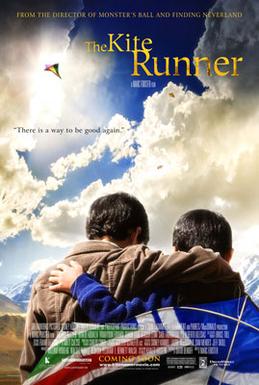
Bildungsroman
In literary criticism, a Bildungsroman, novel of formation, novel of education, or coming of age story (though it may also be known as a subset of the coming-of-age story) is a literary genre that focuses on the psychological and moral growth of the protagonist from youth to adulthood (coming of age), in which character change is extremely important.

.
Initiation
Initiation is a rite of passage marking entrance or acceptance into a group or society. It could also be a formal admission to adulthood in a community or one of its formal components. In an extended sense it can also signify a transformation in which the initiate is 'reborn' into a new role. Examples of initiation ceremonies might include Hindu diksha, Christian baptism or confirmation, Jewish bar or bat mitzvah, acceptance into a fraternal organization, secret society or religious order, or graduation from school or recruit training. A person taking the initiation ceremony in traditional rites, such as those depicted in these pictures, is called an initiate.

.
Quest
In mythology and literature, a quest, a journey towards a goal, serves as a plot device and (frequently) as a symbol. Quests appear in the folklore of every nation and also figure prominently in non-national cultures. In literature, the objects of quests require great exertion on the part of the hero, and the overcoming of many obstacles, typically including much travel. The aspect of travel also allows the storyteller to showcase exotic locations and cultures (an objective of the narrator, not of the character).
.
Picaresque novel
The picaresque novel is a genre of prose fiction which depicts the adventures of a roguish hero of low social class who lives by his wits in a corrupt society. Picaresque novels typically adopt a realistic style, with elements of comedy and satire. This style of novel originated in 16th-century Spain and flourished throughout Europe in the 17th and 18th centuries. It continues to influence modern literature.
According to the traditional view of Thrall and Hibbard (first published in 1936), seven qualities distinguish the picaresque novel or narrative form, all or some of which may be employed for effect by the author. (1) A picaresque narrative is usually written in first person as an autobiographical account. (2) The main character is often of low character or social class. He or she gets by with wit and rarely deigns to hold a job. (3) There is no plot. The story is told in a series of loosely connected adventures or episodes. (4) There is little if any character development in the main character. Once a picaro, always a picaro. His or her circumstances may change but they rarely result in a change of heart. (5) The picaro's story is told with a plainness of language or realism. (6) Satire might sometimes be a prominent element. (7) The behavior of a picaresque hero or heroine stops just short of criminality. Carefree or immoral rascality positions the picaresque hero as a sympathetic outsider, untouched by the false rules of society.
Etymology
pri- : first
e.g., primary, pristine, principle
.
a- : not, without
e.g., amoral, amateur, anarchy
What is Literature?
https://drive.google.com/file/d/0B1wsHtM8Gc8ZQ2lHbUJsZkprbXc/view
for pleasure, understanding, and show human motive
Detective fiction
Detective fiction is a subgenre of crime fiction and mystery fiction in which an investigator or a detective—either professional or amateur—investigates a crime, often murder.
The period of the 1920s and 1930s is generally referred to as the Golden Age of Detective Fiction. During this period, a number of very popular writers emerged, mostly British but with a notable subset of American and New Zealand writers.
.
Sherlock Holmes

Sherlock Holmes is a fictional character created by British author and physician Sir Arthur Conan Doyle. A London-based "consulting detective" whose abilities border on the fantastic, Holmes is known for his astute logical reasoning, his ability to adopt almost any disguise, and his use of forensic science to solve difficult cases.
.
Arthur Conan Doyle

Sir Arthur Ignatius Conan Doyle KStJ, DL (22 May 1859 – 7 July 1930) was a Scottish writer and physician, most noted for his fictional stories about the detective Sherlock Holmes, which are generally considered milestones in the field of crime fiction.
.
Conan Edogawa, devised from the names of Arthur Conan Doyle.

The Catcher in the Rye
The Catcher in the Rye is a 1951 novel by J. D. Salinger. A controversial novel originally published for adults, it has since become popular with adolescent readers for its themes of teenage angst and alienation.
.
At chapter 24, while Mr. Antolini and Holden were talking, Mr. Antolini said, "The mark of the immature man is that he wants to die nobly for a cause, while the mark of the mature man is that he wants to live humbly for one."
.
"Youth is not a time of life; it is a state of mind; it is not a matter of rosy cheeks, red lips and supple knees; it is a matter of the will, a quality of the imagination, a vigor of the emotions; it is the freshness of the deep springs of life." Quoted by Samuel Ullman.
"Youth (青春之詩)": http://soullost.pixnet.net/blog/post/26003340-%3C%3Cyouth-%E9%9D%92%E6%98%A5%E4%B9%8B%E8%A9%A9%3E%3E
.
Rye (Secale cereale) is a grass grown extensively as a grain, a cover crop and as a forage crop.
.
Charles Dickens
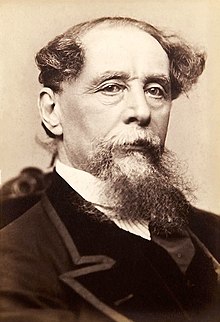
Charles John Huffam Dickens (7 February 1812 – 9 June 1870) was an English writer and social critic. He created some of the world's best-known fictional characters and is regarded as the greatest novelist of the Victorian era. His works enjoyed unprecedented popularity during his lifetime, and by the twentieth century critics and scholars had recognised him as a literary genius. His novels and short stories enjoy lasting popularity.
The Secret Garden
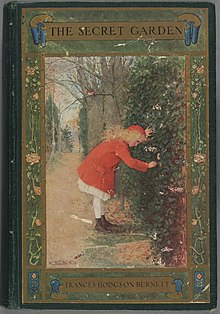
1. Archetypes in Children’s Literature: child protagonist, lost & found, dream & adventures, defiance & authority, the weak & the minor, friendship & companionship, leadership & brotherhood/sisterhood, etc.
2. Children’s Literate is so predictable that the resolution always comes as the expectation.
3. Character:
a. Protagonist: Number 43, Mary Lennox, 10 years old (friendless, isolating, “quite contrary, minor, alone, lonesome, see the archetypes)
b. Antagonist: Mrs. Medlock (independent, self-sufficient women like housekeeper, governess are witchlike, “good” women/mothers die off the scenes.)
c. Supporting characters: the mother of Martha and Dickon, Lord Craven and Colin Craven as the contrast to Mary Lennox
4. Themes:
a. Feminism, imperialism, colonialism, orientalism
b. Friendship—trust and betrayal
c. Life & death, lost & found (of Eden), vegetation & growth, filthy dirt(y) garden & the mother nature, women/working-class bring salvations
d. Bildungsroman, adult woman model of growth (“The robin knows the time/key/way/door—she is fertilized, blooming, blossomed.)
5. Setting: gothic castle and attic (dark, mysterious, mystic, supernatural, ghostlike, magic, and spell)
下一則: WEEK 16 英文兒童文學筆記 (English Children's Literature)
限會員,要發表迴響,請先登入


