* prey: an animal that is caught by another animal and eaten
* predator: an animal that kills and eats other animals

.
* Midnight Mass of Christmas - 2014.12.24
https://www.youtube.com/watch?v=YTCU9qgzHi0
.
pope (n.): the leader of the Roman Catholic Church
List of Popes (21st century)

.
* Etymology
1. con- : with, together
e.g. confer, contend, contemporary
2. inter- : between, among
e.g. interact, interfere, international
.

Boxing Day is a holiday traditionally celebrated the day following Christmas Day, when servants and tradesmen would receive gifts, known as a "Christmas box", from their bosses or employers, in the United Kingdom, Barbados, Canada, Hong Kong, Australia, New Zealand, Kenya, South Africa, Guyana, Trinidad and Tobago, Jamaica and other former British colonies. Today, Boxing Day is the bank holiday that generally takes place on 26 December.
.
receipt (n.): a document that you get from someone showing thatyou have given them money or goods
refund (n.): money that was yours that you get again, especially because you havepaid too much for something or have decided you do not want it
.
* Mass (liturgy)

The Catholic Church sees the Mass or Eucharist as "the source and summit of the Christian life", to which the other sacraments are oriented. The Catholic Church believes that the Mass is exactly the same sacrifice that Jesus Christ offered on the Cross at Calvary. The term "Mass" is generally used only in the Latin Church, while the Byzantine Rite Eastern Catholic Churches use the analogous term "Divine Liturgy" and other Eastern Catholic Churches have terms such as Holy Qurbana.
.
* Book of Exodus
The book tells how the Israelites leave slavery in Egypt through the strength of Yahweh, the God who has chosen Israel as his people. Led by their prophet Moses they journey through the wilderness to Mount Sinai, where Yahweh promises them the land of Canaan (the "Promised Land") in return for their faithfulness. Israel enters into a covenant with Yahweh who gives them their laws and instructions for the Tabernacle, the means by which he will dwell with them and lead them to the land, and give them peace.
related movie: Exodus: Gods and Kings (2014)

.
* Moses
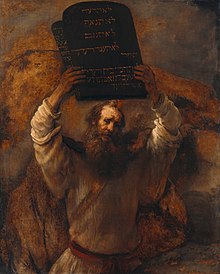
According to the Book of Exodus, Moses was born in a time when his people, the Children of Israel, were increasing in numbers and the Egyptian Pharaoh was worried that they might ally with Egypt's enemies. Moses' Hebrew mother, Jochebed, secretly hid him when the Pharaoh ordered all newborn Hebrew boys to be killed upon the circulating prophecy among Egyptian priests of a messianic deliverer among the Hebrew slaves. Through the Pharaoh's sister Queen Bithia, the child was adopted as a foundling from the Nile river and grew up with the Egyptian royal family. After killing an Egyptian slavemaster, Moses fled across the Red Sea to Midian, where he encountered the God of Israel speaking to him from within a "burning bush".
God sent Moses back to Egypt to demand the release of the Israelites from slavery. Moses said that he could not speak with assurance or eloquence, so God allowed Aaron, his brother, to become his spokesperson. After the Ten Plagues, Moses led the Exodus of the Israelites out of Egypt and across the Red Sea, after which they based themselves at Mount Sinai, where Moses received the Ten Commandments. After 40 years of wandering in the desert, Moses died within sight of the Promised Land.
.
* Eucharist

The Eucharist has been a key theme in the depictions of the Last Supper in Christian art, as in this 16th-century Juan de Juanes painting.
The Eucharist , also called Holy Communion, the Lord's Supper, and other names, is a Christian sacrament. According to some New Testament books, it was instituted by Jesus Christ during his Last Supper. Giving his disciples bread and wine during the Passover meal, Jesus commanded his followers to "do this in memory of me," while referring to the bread as "my body" and the wine as "my blood."

Vocabulary from Text Book & The Great Gatsby WEEK16
.
l astonish (v.) /əˈstɒnɪʃ/
to surprise someone very much
e.g. Beth astonished her by refusing to help.
Origin of ASTONISH
probably from earlier astony (from Middle English astonen, astonien, from Anglo-French estoner to stun, from Vulgar Latin *extonare, from Latin ex- + tonare to thunder) + -ish (as in abolish)
.
l classification (n.) /ˌklæsɪfɪˈkeɪʃ(ə)n/
1. the process of putting people or things into particular groups according to the features that they have
e.g. the collection and classification of data
2. a group into which someone or something is put because of the features that they have
e.g. Hotels within this classification offer only basic facilities.
.
l concept (n.) /ˈkɒnsept/
an idea of something that exists
e.g. Some students failed to grasp even the simplest mathematical concepts.
Origin of CONCEPT
Latin conceptum, neuter of conceptus, past participle of concipere to conceive
.
l dizzying (adj.) /ˈdɪziɪŋ/
making you feel confused or dizzy
e.g. My studies continued at a dizzying pace.
.
l interactive (adj.) /ˌɪntərˈæktɪv/
involving people communicating with each other and reacting to each other
e.g. A child's development is an interactive process.
.
l maintain (v.) /meɪnˈteɪn/
to make something stay the same
e.g. It's sometimes hard to maintain the right balance between your work and your home life.
Origin of MAINTAIN
Middle English mainteinen, from Anglo-French maintenir, maynteiner, from Medieval Latin manutenēre, from Latin manu tenēre to hold in the hand
.
l organism (n.) /ˈɔː(r)ɡəˌnɪz(ə)m/
a living thing such as a person, animal, or plant, especially an extremely small living thing
e.g. tests to identify the organism that causes the disease
.
l predator (n.) /ˈpredətə(r)/
an animal that kills and eats other animals
e.g. The birds have to be protected from foxes and other predators.
.
l reproduce (v.) /ˌriːprəˈdjuːs/
to make a copy of something such as a picture, a piece of writing, or a musical sound
e.g. Darwin's original Introduction is reproduced on page 6.
.
l shelter (n.) /ˈʃeltə(r)/
a place where people are protected from bad weather or from danger
e.g. We built a temporary shelter out of branches.
.
l striped (adj.) /straɪpt/
with a pattern of stripes
e.g. a blue-and-white striped dress
.
l tail (n.) /teɪl/
e.g. The animal sprays liquid from a gland under its tail.
Origin of TAIL
Middle English, from Old English tægel; akin to Old High German zagal tail, Middle Irish dúal lock of hair
.
l eliminate (v.) /ɪˈlɪmɪneɪt/
to get rid of something that is not wanted or needed
e.g. Many infectious diseases have been virtually eliminated.
Origin of ELIMINATE
Latin eliminatus, past participle of eliminare, from e- + limin-, limen threshold
.
l intestine (n.) /ɪnˈtestɪn/
the long tube in your body that processes food and carries waste out of your body
e.g. This innervate the adjacent region of the fore and middle intestine.
Origin of INTESTINE
Middle English, from Middle French intestin, from Latin intestinum, from neuter of intestinus
.
l enchanted (adj.) /ɪnˈtʃɑːntɪd/
affected by special magic powers
e.g. At the enchanted metropolitan twilight I felt a haunting loneliness sometimes.
.
l exotic (adj.) /ɪɡˈzɒtɪk/
introduced from another country
e.g. Fancy chocolates, exotic flowers-you name it, we had it.
Origin of EXOTIC
Latin exoticus, from Greek exōtikos, from exō
.
l hybrid (n.) /ˈhaɪbrɪd/
an animal or plant that has been produced from two different types of animal or plant
e.g. This hybrid seemed to combine the properties of both parental species.
Origin of HYBRID
Latin hybrida
.
l itch (v.) /ɪtʃ/
if your skin itches, you have an unpleasant feeling that makes you want to scratch it (=rub your skin with your nails)
e.g. He could hardly sit still and itch to have a go.
Origin of ITCH
Middle English icchen, from Old English giccan; akin to Old High German jucchen to itch
.
l offspring (n.) /ˈɒfˌsprɪŋ/
someone's child or children
e.g. conflicts between parents and offspring
Origin of OFFSPRING
Middle English ofspring, from Old English, from of off + springan to spring
.
l soul (n.) /səʊl/
the part of a person that is capable of thinking and feeling
e.g. Harmony was the soul of our companionship.
Origin of SOUL
Middle English soule, from Old English sāwol; akin to Old High German sēula soul
.
l technique (n.) /tekˈniːk/
a method of doing something using a special skill that you have developed
e.g. statistical/analytical/surgical techniques
Origin of TECHNIQUE
French, from technique technical, from Greek technikos
.
l litter (n.) /ˈlɪtə(r)/
things such as pieces of paper that people have dropped on the ground in a public place, making it untidy
e.g. The park and river are full of litter.
Origin of LITTER
Middle English, from Anglo-French litere, from lit bed, from Latin lectus
.
l delicate (adj.) /ˈdelɪkət/
something that is delicate can easily be damaged or broken
e.g. Delicate skin must be protected from the sun.
Origin of DELICATE
Middle English delicat, from Latin delicatus given to self-indulgence, fastidious, subtly pleasing, not robust; akin to Latin delicere to allure
.
l snuggle (v.) /ˈsnʌɡ(ə)l/
to put yourself into a warm, comfortable, safe position, for example by sitting with your body against someone else's body or by sliding your body down under the covers on a bed
e.g. an evening snuggling together on the couch
Origin of SNUGGLE
frequentative of 1snug
.
l withdraw (v.) /wɪðˈdrɔː/
to no longer take part in something, or to stop someone or something from taking part
e.g. Two candidates threatened to withdraw.
Origin of WITHDRAW
Middle English, from with from + drawen to draw
限會員,要發表迴響,請先登入


