Initiation

Initiation is a rite of passage marking entrance or acceptance into a group or society. It could also be a formal admission to adulthood in a community or one of its formal components. In an extended sense it can also signify a transformation in which the initiate is 'reborn' into a new role. Examples of initiation ceremonies might include Hindu diksha, Christian baptism or confirmation, Jewish bar or bat mitzvah, acceptance into a fraternal organization, secret society or religious order, or graduation from school or recruit training. A person taking the initiation ceremony in traditional rites, such as those depicted in these pictures, is called an initiate.
Vocabularies
invertebrate (n.)
a small animal without a backbone, for example an insect or a worm
.
-cide: killer, act of killing
e.g., insecticide: a chemical for killing insects, especially those that damage plants or crops
e.g., homicide: the crime of killing someone
e.g., genecticide: 種族大屠殺
.
parrot (n.)
a brightly coloured tropical bird that is often kept as a pet and can be taught to say a few words
pirate (n.)
someone who attacks ships while they are sailing in order to steal things from them

There was a parrot on a pirate's shoulder.
.
pain in the ass/pain in the neck 機車、討厭鬼
That guy is a real pain in the ass.
Bildungsroman
In literary criticism, a Bildungsroman , novel of formation, novel of education, or coming of age story (though it may also be known as a subset of the coming-of-age story) is a literary genre that focuses on the psychological and moral growth of the protagonist from youth to adulthood (coming of age), in which character change is extremely important.
.
Origin
The birth of the Bildungsroman is normally dated to the publication of Wilhelm Meister's Apprenticeship by Johann Wolfgang Goethe in 1795–96. Although the Bildungsroman arose in Germany, it has had extensive influence first in Europe and later throughout the world. Thomas Carlyle translated Goethe’s novel into English, and after its publication in 1824, many British authors wrote novels inspired by it. In the 20th century, it spread to Germany, Britain, France, and several other countries around the globe.
Johann Wolfgang von Goethe

Johann Wolfgang von Goethe (28 August 1749 – 22 March 1832) was a German writer and statesman. His body of work includes epic and lyric poetry written in a variety of metres and styles; prose and verse dramas; memoirs; an autobiography; literary and aesthetic criticism; treatises on botany, anatomy, and colour; and four novels. In addition, numerous literary and scientific fragments, more than 10,000 letters, and nearly 3,000 drawings by him are extant. A literary celebrity by the age of 25, Goethe was ennobled by the Duke of Saxe-Weimar, Karl August in 1782 after first taking up residence there in November 1775 following the success of his first novel, The Sorrows of Young Werther.
.
The Sorrows of Young Werther
The Sorrows of Young Werther is an epistolary, loosely autobiographical novel by Johann Wolfgang von Goethe, first published in 1774. A revised edition appeared in 1787. It was an important novel of the Sturm und Drang period in German literature, and influenced the later Romantic movement in literature.
Goethe, 24 years old at the time, finished Werther in six weeks of intensive writing in January–March 1774. It instantly put him among the first international literary celebrities, and remains the best known of his works to the general public. Towards the end of Goethe's life, a personal visit to Weimar became a crucial stage in any young man's Grand Tour of Europe.
.
Goethe's Faust
Johann Wolfgang von Goethe's Faust is a tragic play in two parts usually known in English as Faust, Part One and Faust, Part Two. Although rarely staged in its entirety, it is the play with the largest audience numbers on German-language stages. Faust is Goethe's magnum opus and considered by many to be one of the greatest works of German literature.
.
Doctor Faustus

The Tragical History of the Life and Death of Doctor Faustus, commonly referred to simply as Doctor Faustus, is a play by Christopher Marlowe, based on the German story Faust. Doctor Faustus was first published in 1604, eleven years after Marlowe's death and at least 10 years after the first performance of the play. It is the most controversial Elizabethan play outside of Shakespeare, with few critics coming to any agreement as to the date or the nature of the text.
"Was this the face that launched a thousand ships." (Scene XIII)
The Adventures of Tom Sawyer

The Adventures of Tom Sawyer by Mark Twain is an 1876 novel about a young boy growing up along the Mississippi River. It is set in the fictional town of St. Petersburg, inspired by Hannibal, Missouri, where Twain lived.
Original text: en.wikisource.org/wiki/The_Adventures_of_Tom_Sawyer
Sparknotes: www.sparknotes.com/lit/tomsawyer/quiz.html
.
Mark Twain

Samuel Langhorne Clemens (November 30, 1835 – April 21, 1910), better known by his pen name Mark Twain, was an American author and humorist. He wrote The Adventures of Tom Sawyer (1876) and its sequel, Adventures of Huckleberry Finn (1885), the latter often called "The Great American Novel".
Arthropod
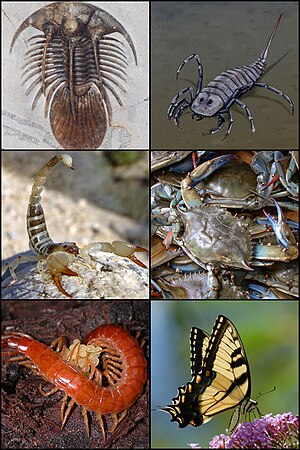
An arthropod (from Greek arthro-, joint + podos, foot) is an invertebrate animal having an exoskeleton (external skeleton), a segmented body, and jointed appendages. Arthropods form the phylum Arthropoda, and include the insects, arachnids, myriapods, and crustaceans. Arthropods are characterized by their jointed limbs and cuticle made of chitin, often mineralised with calcium carbonate. The arthropod body plan consists of segments, each with a pair of appendages. The rigid cuticle inhibits growth, so arthropods replace it periodically by moulting. Their versatility has enabled them to become the most species-rich members of all ecological guilds in most environments. They have over a million described species, making up more than 80% of all described living animal species, some of which, unlike most animals, are very successful in dry environments.
Sibling rivalry

Sibling rivalry is a type of competition or animosity among siblings, whether blood related or not.
Siblings generally spend more time together during childhood than they do with parents. The sibling bond is often complicated and is influenced by factors such as parental treatment, birth order, personality, and people and experiences outside the family. Sibling rivalry is particularly intense when children are very close in age and of the same gender and/or where one or both children are intellectually gifted.
下一則: WEEK 15 英文兒童文學筆記 (English Children's Literature)
限會員,要發表迴響,請先登入


