The Great Gatsby (2000 film)
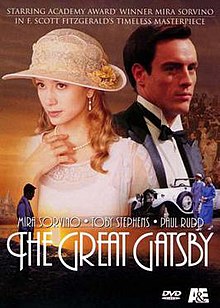
In my younger and more vulnerable years my father gave me some advice that I've been turning over in my mind ever since. "Whenever you feel like criticizing any one," he told me, "just remember that all the people in this world haven't had the advantages that you've had." ......
.
* Plot

* Green Lights
Green lights stands for hope on his (Gatsby) dream and love, as well as the corruption of the East Egg.
.
* Myrtle: "You can't live forever. " (carpe diem 及時行樂)
* Nick: "You can't repeat the past! "
* Gatsby: "Surely you can! "
.
* Valley of Ashes
the dumping ground
(Doctor T. J. Eckleburg's spectacles )
┌───────────────────┐
Jay Gatsby Tom Buchanan
(bootlegging) Daisy Buchanan
Nick Carraway Jordan Baker
(from Midwest)
West Egg East Egg
.
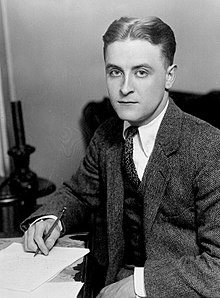
Francis Scott Key Fitzgerald (September 24, 1896 – December 21, 1940) was an American author of novels and short stories, whose works are the paradigmatic writings of the Jazz Age. He is widely regarded as one of the greatest American writers of the 20th century.

Vocabulary from Text Book & The Great Gatsby WEEK11
.
01. bound (adj.) /baʊnd/
something that is bound to happen will almost certainly happen
e.g. The kids are out late, so of course she's bound to worry.
Origin of BOUND
Middle English boun, from Old Norse būinn, past participle of būa to dwell, prepare; akin to Old High German būan to dwell
.
02. admiration (n.) /ˌædməˈreɪʃ(ə)n/
a feeling of respect and approval
e.g. I gazed at her in admiration.
.
03. reward (n.) /rɪˈwɔː(r)d/
something good that happens or that you receive because of something that you have done
e.g. Rewards for appropriate behaviour can be successful in teaching children.
Origin of REWARD
Middle English, from Anglo-French regarder, rewarder to look back at, regard, care for, recompense
.
04. affair (n.) /əˈfeə(r)/
[COUNTABLE]a sexual relationship between two people, especially when one of them is married to someone else
e.g. Her husband denied that he was having an affair.
Origin of AFFAIR
Middle English afere, from Anglo-French afaire, from a faire to do
.
05. trend (v.) /trend/
to be a very popular subject discussed on the microblogging service Twitter
e.g. What's trending on Twitter today?
Origin of TREND
Middle English, to turn, revolve, from Old English trendan; akin to Middle High German trendel disk, spinning top
.
06. amulet (n.) /ˈæmjʊlət/
a small object that some people wear around their neck as a protection against evil, bad luck, disease etc
e.g. A small cross made of goat bone was worn in the Middle Ages as an amulet to ward off evil.
Origin of AMULET
Latin amuletum
.
07. amusement (n.) /əˈmjuːzmənt/
a feeling of being amused
e.g. Much to everyone's amusement, someone hid his clothes while he was swimming.
.
08. ancient (adj.) /ˈeɪnʃ(ə)nt/
relating to people who lived thousands of years ago, and to their way of life
e.g. recently discovered remains of an ancient civilization
Origin of ANCIENT
Middle English ancien, from Anglo-French, from Vulgar Latin *anteanus, from Latin ante before
.
09. antic (n.) \ˈan-tik\
an attention-drawing often wildly playful or funny act or action
e.g. We'll have no more of your antics, so just settle down.
Origin of ANTIC
Italian antico ancient thing or person, from antico ancient, from Latin antiquus
.
10. recite (v.) /rɪˈsaɪt/
to say a poem or story that you have learnt to an audience
e.g. He recited his poem in front of the whole school.
Origin of RECITE
Middle English, to relate, state, from Anglo-French or Latin; Anglo-French reciter, from Latin recitare to recite, from re- + citare to summon
.
11. basin (n.) /ˈbeɪs(ə)n/
a large area of land whose surface water all flows into a particular river or lake
e.g. the Colorado River Basin
Origin of BASIN
Middle English, from Anglo-French bacin, from Late Latin bacchinon
.
12. unique (adj.) /juːˈniːk/
very special, unusual, or good
e.g. You will be given the unique opportunity to study with one of Europe's top chefs.
Origin of UNIQUE
French, from Latin unicus, from unus one
.
13. booty (n.) /ˈbuːti/
HUMOROUS valuable goods that you have obtained, for example by shopping
e.g. She couldn't wait to get her booty home and try it on.
Origin of BOOTY
modification of Middle French butin, from Middle Low German būte exchange
.
14. promote (v.) /prəˈməʊt/
to support or encourage something
e.g. The Government is committed to promoting the development and use of public transport.
Origin of PROMOTE
Middle English, from Latin promotus, past participle of promovēre, literally, to move forward, from pro- forward + movēre to move
.
15. clime (n.) /klaɪm/
a place with a particular type of weather
e.g. A nonconformist who left his jerkwater hometown for the more welcoming clime of the big city.
Origin of CLIME
Late Latin clima
.
16. clown (n.) /klaʊn/
a performer in a circus who wears funny clothes and makes people laugh by doing silly things
e.g. Those big shoes make you look like a clown!
Origin of CLOWN
probably of Low German origin; akin to Frisian klönne clumsy fellow, Old English clyne lump of metal
.
17. feigned (adj.) /fend/
not genuine or real
e.g. The feigned looks of innocence I got when I asked who had broken the lamp.
.
18. flip (v.) /flɪp/
to cause to turn and especially to turn over
e.g. flipping the pages of a book
Origin of FLIP
probably imitative
.
19. humbug (n.) /ˈhʌmbʌɡ/
nonsense
e.g. Tests showed that the “old” map of America was a cleverly made humbug.
.
20. impressive (adj.) /ɪmˈpresɪv/
if something is impressive, you admire it, for example because it is very good, large, or shows great skill
e.g. The list of their achievements is pretty impressive.
.
21. officious (adj.) /əˈfɪʃəs/
showing an annoying tendency to take your position or status too seriously
e.g. An officious traffic warden had decided to give me a parking ticket.
Origin of OFFICIOUS
Latin officiosus, from officium service, office
.
22. certain (adj.) /ˈsɜː(r)t(ə)n/
having no doubts that something is true
e.g. I'm not absolutely certain, but I think I'm right.
Origin of CERTAIN
Middle English, from Anglo-French, from Vulgar Latin *certanus, from Latin certus, from past participle of cernere to sift, discern, decide; akin to Greek krinein to separate, decide, judge, Old Irish criathar sieve
.
23. extraordinary (adj.) /ɪkˈstrɔː(r)d(ə)n(ə)ri/
very unusual and surprising
e.g. It's an extraordinary story.
Origin of EXTRAORDINARY
Middle English extraordinarie, from Latin extraordinarius, from extra ordinem out of course, from extra + ordinem, accusative of ordin-, ordo order
.
24. tune (n.) /tjuːn/
a song or piece of music
e.g. the station that plays all your favourite tunes
Origin of TUNE
Middle English, from Anglo-French tun, tuen tone
.
25. gloom (n.) /ɡluːm/
the feeling of having no hope
e.g. a time of high unemployment and economic gloom
Origin of GLOOM
Middle English gloumen
限會員,要發表迴響,請先登入


