Introduction – Company Background
GuangXin Industrial Co., Ltd. is a specialized manufacturer dedicated to the development and production of high-quality insoles.
With a strong foundation in material science and footwear ergonomics, we serve as a trusted partner for global brands seeking reliable insole solutions that combine comfort, functionality, and design.
With years of experience in insole production and OEM/ODM services, GuangXin has successfully supported a wide range of clients across various industries—including sportswear, health & wellness, orthopedic care, and daily footwear.
From initial prototyping to mass production, we provide comprehensive support tailored to each client’s market and application needs.
At GuangXin, we are committed to quality, innovation, and sustainable development. Every insole we produce reflects our dedication to precision craftsmanship, forward-thinking design, and ESG-driven practices.
By integrating eco-friendly materials, clean production processes, and responsible sourcing, we help our partners meet both market demand and environmental goals.
Core Strengths in Insole Manufacturing
At GuangXin Industrial, our core strength lies in our deep expertise and versatility in insole and pillow manufacturing. We specialize in working with a wide range of materials, including PU (polyurethane), natural latex, and advanced graphene composites, to develop insoles and pillows that meet diverse performance, comfort, and health-support needs.
Whether it's cushioning, support, breathability, or antibacterial function, we tailor material selection to the exact requirements of each project-whether for foot wellness or ergonomic sleep products.
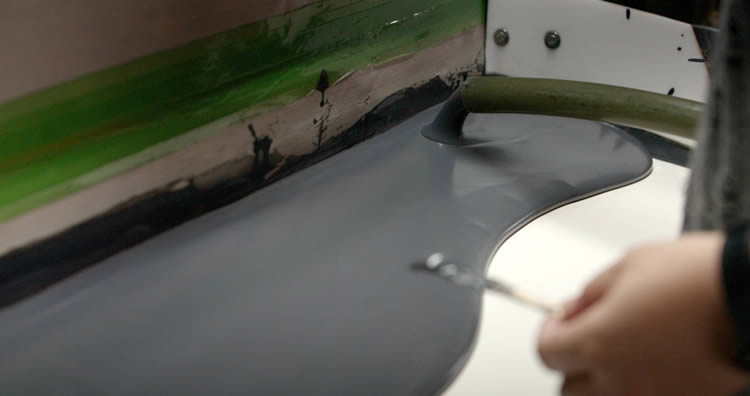
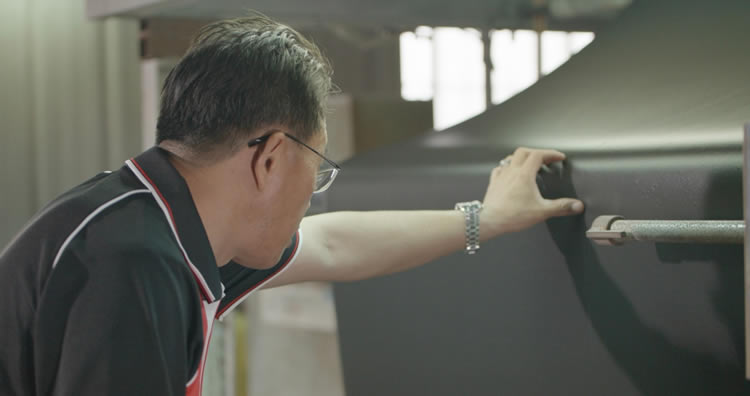
We provide end-to-end manufacturing capabilities under one roof—covering every stage from material sourcing and foaming, to precision molding, lamination, cutting, sewing, and strict quality control. This full-process control not only ensures product consistency and durability, but also allows for faster lead times and better customization flexibility.
With our flexible production capacity, we accommodate both small batch custom orders and high-volume mass production with equal efficiency. Whether you're a startup launching your first insole or pillow line, or a global brand scaling up to meet market demand, GuangXin is equipped to deliver reliable OEM/ODM solutions that grow with your business.
Customization & OEM/ODM Flexibility
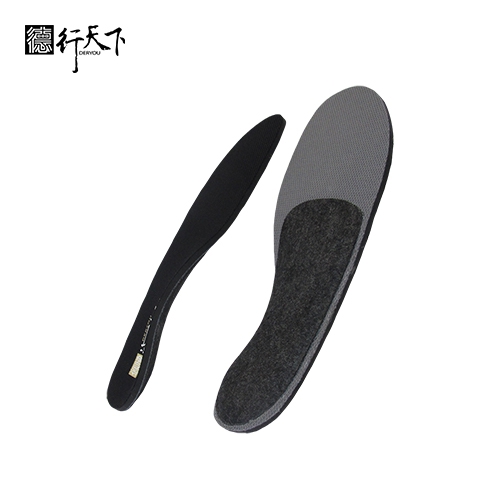
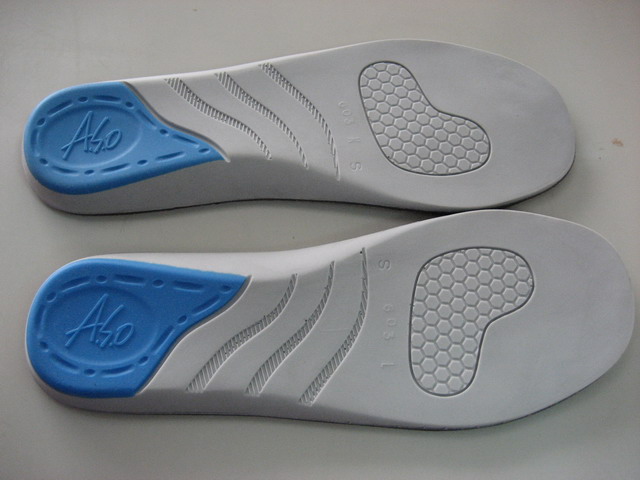
GuangXin offers exceptional flexibility in customization and OEM/ODM services, empowering our partners to create insole products that truly align with their brand identity and target market. We develop insoles tailored to specific foot shapes, end-user needs, and regional market preferences, ensuring optimal fit and functionality.
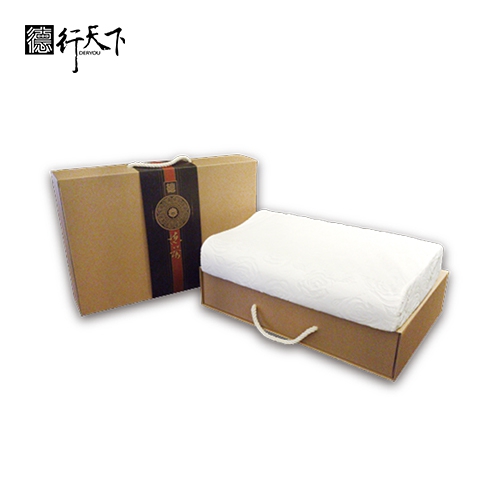
Our team supports comprehensive branding solutions, including logo printing, custom packaging, and product integration support for marketing campaigns. Whether you're launching a new product line or upgrading an existing one, we help your vision come to life with attention to detail and consistent brand presentation.
With fast prototyping services and efficient lead times, GuangXin helps reduce your time-to-market and respond quickly to evolving trends or seasonal demands. From concept to final production, we offer agile support that keeps you ahead of the competition.
Quality Assurance & Certifications
Quality is at the heart of everything we do. GuangXin implements a rigorous quality control system at every stage of production—ensuring that each insole meets the highest standards of consistency, comfort, and durability.
We provide a variety of in-house and third-party testing options, including antibacterial performance, odor control, durability testing, and eco-safety verification, to meet the specific needs of our clients and markets.
Our products are fully compliant with international safety and environmental standards, such as REACH, RoHS, and other applicable export regulations. This ensures seamless entry into global markets while supporting your ESG and product safety commitments.
ESG-Oriented Sustainable Production
At GuangXin Industrial, we are committed to integrating ESG (Environmental, Social, and Governance) values into every step of our manufacturing process. We actively pursue eco-conscious practices by utilizing eco-friendly materials and adopting low-carbon production methods to reduce environmental impact.
To support circular economy goals, we offer recycled and upcycled material options, including innovative applications such as recycled glass and repurposed LCD panel glass. These materials are processed using advanced techniques to retain performance while reducing waste—contributing to a more sustainable supply chain.
We also work closely with our partners to support their ESG compliance and sustainability reporting needs, providing documentation, traceability, and material data upon request. Whether you're aiming to meet corporate sustainability targets or align with global green regulations, GuangXin is your trusted manufacturing ally in building a better, greener future.
Let’s Build Your Next Insole Success Together
Looking for a reliable insole manufacturing partner that understands customization, quality, and flexibility? GuangXin Industrial Co., Ltd. specializes in high-performance insole production, offering tailored solutions for brands across the globe. Whether you're launching a new insole collection or expanding your existing product line, we provide OEM/ODM services built around your unique design and performance goals.
From small-batch custom orders to full-scale mass production, our flexible insole manufacturing capabilities adapt to your business needs. With expertise in PU, latex, and graphene insole materials, we turn ideas into functional, comfortable, and market-ready insoles that deliver value.
Contact us today to discuss your next insole project. Let GuangXin help you create custom insoles that stand out, perform better, and reflect your brand’s commitment to comfort, quality, and sustainability.
🔗 Learn more or get in touch:
🌐 Website: https://www.deryou-tw.com/
📧 Email: shela.a9119@msa.hinet.net
📘 Facebook: facebook.com/deryou.tw
📷 Instagram: instagram.com/deryou.tw
ODM ergonomic pillow solution factory Taiwan
Are you looking for a trusted and experienced manufacturing partner that can bring your comfort-focused product ideas to life? GuangXin Industrial Co., Ltd. is your ideal OEM/ODM supplier, specializing in insole production, pillow manufacturing, and advanced graphene product design.
With decades of experience in insole OEM/ODM, we provide full-service manufacturing—from PU and latex to cutting-edge graphene-infused insoles—customized to meet your performance, support, and breathability requirements. Our production process is vertically integrated, covering everything from material sourcing and foaming to molding, cutting, and strict quality control.Private label insole and pillow OEM Vietnam
Beyond insoles, GuangXin also offers pillow OEM/ODM services with a focus on ergonomic comfort and functional innovation. Whether you need memory foam, latex, or smart material integration for neck and sleep support, we deliver tailor-made solutions that reflect your brand’s values.
We are especially proud to lead the way in ESG-driven insole development. Through the use of recycled materials—such as repurposed LCD glass—and low-carbon production processes, we help our partners meet sustainability goals without compromising product quality. Our ESG insole solutions are designed not only for comfort but also for compliance with global environmental standards.Breathable insole ODM innovation factory Taiwan
At GuangXin, we don’t just manufacture products—we create long-term value for your brand. Whether you're developing your first product line or scaling up globally, our flexible production capabilities and collaborative approach will help you go further, faster.China insole OEM manufacturer
📩 Contact us today to learn how our insole OEM, pillow ODM, and graphene product design services can elevate your product offering—while aligning with the sustainability expectations of modern consumers.ODM pillow for sleep brands Taiwan
Psilocybe maluti was found growing in pastureland on cow manure in the Free State and Kwa-Zulu Natal provinces of South Africa, as well as the highlands of Lesotho. Credit: Cullen Taylor Clark Researchers have described two new psychoactive mushroom species in southern Africa, enhancing the documented biodiversity of the region. In a new study published in Mycologia, researchers from Stellenbosch University (SU) have described two new species of psychoactive mushrooms in the genus Psilocybe. The two species, named Psilocybe ingeli and Psilocybe maluti, were discovered in southern Africa. Although Psilocybe species are perhaps the most well-known and well-studied species of psychoactive mushrooms in the world, with around 140 described species, only six, including the new species, are indigenous to Africa. Discovery and Identification Psilocybe ingeli was first found in 2023 growing in pastureland in KwaZulu-Natal by Talan Moult, a self-taught citizen mycologist. Psilocybe maluti was first found on a Free State small holding in 2021 by Daniella Mulder, who sent photos of the mushrooms for identification to Andrew Killian, one of South Africa’s leading citizen mycologists based in Somerset West. In both instances, the unusual-looking specimens were sent to Breyten van der Merwe for DNA sequencing and analysis in the lab of Prof. Karin Jacobs in SU’s Department of Microbiology. Van der Merwe, now a postgraduate student in chemical engineering at SU, is a trained mycologist, and the first author of the paper. A single collection of Psilocybe ingeli was found in KwaZulu-Natal, growing in pasture land. Credit: Talan Moult Cultural Significance and Traditional Use The paper also contains information on the traditional use of P. maluti by Basotho traditional healers from the mountain kingdom of Lesotho. According to the researchers, this appears to be the only recorded first-hand report of hallucinogenic mushrooms being used traditionally in Africa. Cullen Taylor Clark, a citizen mycologist and co-author, worked with Mamosebetsi Sethathi, a Mosotho traditional healer, to document the use of P. maluti (locally known as koae-ea-lekhoaba) in traditional healing practices. This forms part of a larger effort, led by Clark, to document the use of mushrooms by indigenous groups in southern Africa. Future Research and Collaboration in African Mycology Van der Merwe says there are very likely more southern African species in this genus, and that more citizen scientists need to become involved: “These two species were sent to me by citizen scientists. It would be impossible for a single researcher to cover a fraction of an area these mushroom enthusiasts have access to. This is the only way we will be able to further studies in African mycology.” Prof. Jacobs echoes this sentiment: “There are only a handful of mycologists in Africa documenting local biodiversity. Considering the vast mycological diversity on the continent, it is a daunting task. Collaborating with citizen mycologists is therefore hugely beneficial. In addition to more material, collaboration also opens avenues for conversation and exploration, which can lead to documenting mycophilia (the love of mushrooms) on the African continent.” Reference: “A description of two novel Psilocybe species from southern Africa and some notes on African traditional hallucinogenic mushroom use” by B. van der Merwe, A. Rockefeller, A. Kilian, C. Clark, M. Sethathi, T. Moult and K. Jacobs, 2 July 2024, Mycologia. DOI: 10.1080/00275514.2024.2363137
British Antarctic Survey camera traveling down the 900-meter-long borehole in the Filchner-Ronne Ice Shelf. (The marine creature pictured is unrelated to the discovery). Credit: Dr. Huw Griffiths/British Antarctic Survey Far underneath the ice shelves of the Antarctic, there’s more life than expected, finds a recent study in the journal Frontiers in Marine Science. During an exploratory survey, researchers drilled through 900 meters (3,000 feet) of ice in the Filchner-Ronne Ice Shelf, situated on the south eastern Weddell Sea. At a distance of 260 km (160 mi) away from the open ocean, under complete darkness and with temperatures of -2.2°C (28°F), very few animals have ever been observed in these conditions. But this study is the first to discover the existence of stationary animals — similar to sponges and potentially several previously unknown species — attached to a boulder on the seafloor. “This discovery is one of those fortunate accidents that pushes ideas in a different direction and shows us that Antarctic marine life is incredibly special and amazingly adapted to a frozen world,” says biogeographer and lead author, Dr. Huw Griffiths of British Antarctic Survey. More Questions Than Answers “Our discovery raises so many more questions than it answers, such as how did they get there? What are they eating? How long have they been there? How common are these boulders covered in life? Are these the same species as we see outside the ice shelf or are they new species? And what would happen to these communities if the ice shelf collapsed?” Floating ice shelves represent the greatest unexplored habitat in the Southern Ocean. They cover more than 1.5m km² of the Antarctic continental shelf, but only a total area similar in size to a tennis court has been studied through eight prior boreholes. Stationary animals — similar to sponges and potentially several previously unknown species — attached to a boulder on the seafloor. Credit: Dr. Huw Griffiths/British Antarctic Survey Current theories on what life could survive under ice shelves suggest that all life becomes less abundant as you move further away from open water and sunlight. Past studies have found some small mobile scavengers and predators, such as fish, worms, jellyfish, or krill, in these habitats. But filter-feeding organisms — which depend on a supply of food from above — were expected to be amongst the first to disappear further under the ice. So, it came as a surprise when the team of geologists, drilling through the ice to collect sediment samples, hit a rock instead of mud at the bottom of the ocean below. They were even more surprised by the video footage, which showed a large boulder covered in strange creatures. New Antarctic Expedition Needed This is the first-ever record of a hard substrate (ie a boulder) community deep beneath an ice shelf and it appears to go against all previous theories of what types of life could survive there. Given the water currents in the region, the researchers calculate that this community may be as much as 1,500 km (900 mi) upstream from the closest source of photosynthesis. Other organisms are also known to collect nutrients from glacial melts or chemicals from methane seeps, but the researchers won’t know more about these organisms until they have the tools to collect samples of these organisms–a significant challenge in itself. “To answer our questions we will have to find a way of getting up close with these animals and their environment — and that’s under 900 meters of ice, 260km away from the ships where our labs are,” continues Griffiths. “This means that as polar scientists, we are going to have to find new and innovative ways to study them and answer all the new questions we have.” Griffiths and the team also note that with the climate crisis and the collapse of these ice shelves, time is running out to study and protect these ecosystems. Reference: “Breaking All the Rules: The First Recorded Hard Substrate Sessile Benthic Community Far Beneath an Antarctic Ice Shelf” by Huw J. Griffiths, Paul Anker, Katrin Linse, Jamie Maxwell, Alexandra L. Post, Craig Stevens, Slawek Tulaczyk and James A. Smith, 15 February 2021, Frontiers in Marine Science. DOI: 10.3389/fmars.2021.642040
Biological condensates, membrane-less structures within cells, influence cellular electrochemistry and antibiotic resistance by altering electrical charge. A recent study reveals their far-reaching impact, suggesting they regulate important processes beyond their local environment. Researchers have found that a previously underestimated aspect of our cells has a significant impact by completing a gap in electrochemical processes. Historically, biological chemistry research has primarily concentrated on the most apparent components driving life’s processes. Proteins folding, genetic activity, and electrical signaling pathways have been the main areas of focus, as they offer the clearest targets for identifying abnormalities that cause disease. Recent research, however, has pointed to a different type of cellular structure that may play an equally important role. Called biological condensates, these structures exist because of differences in density, like oil droplets floating in water, and form compartments inside of cells without needing the physical boundary of a membrane. Previous studies have shown that these blobs can separate or trap together certain proteins and molecules, either hindering or promoting their activity. They have also revealed that these structures provide an alternative energy source that might power some aspects of biological chemistry. Beyond Local Impacts These results, however, have focused on impacts created in the immediate vicinity of the condensates themselves. Researchers had not yet identified ways in which they might affect biochemistry far from their physical structures. Now, in a new study published on September 10 in the journal Cell, researchers from Duke University and the Washington University in St. Louis have shown that the formation of biological condensates affects cellular activity far beyond their immediate vicinity. The results show that they may be a previously missing mechanism by which cells modulate their internal electrochemistry. And those internal controls, in turn, affect the cellular membrane, which allows these unassuming blobs to affect global traits and outcomes such as resistance to antibiotics. Biological condensates within cells – the yellow masses seen within these long cylinders – provide cells with a way to control their internal electrostatic biochemistry. Credit: Yifan Dai, Washington University of St. Louis “Our research shows that condensates influence cells well beyond direct physical contact, almost like they have a wireless connection to how cells interact with the environment,” said Lingchong You, the James L. Meriam Distinguished Professor of Biomedical Engineering at Duke. “Beyond demonstrating the electrical mechanisms behind this connection, we’ve proven that condensate formation can make cells more tolerant to certain types of antibiotics and more susceptible to others.” “This is likely just the tip of the iceberg,” added Ashutosh Chilkoti, the Alan L. Kaganov Distinguished Professor of Biomedical Engineering at Duke. “We expect that these electric potential effects express themselves in a wide variety of ways through cellular behaviors.” Electrostatic Mechanism of Condensates Condensates act sort of like a sponge, soaking up various proteins, enzymes, ions, and other biomolecules when they form, while excluding others. And if they trap enough ions in their compartment to become positively or negatively charged, that imbalance must be reflected in the cellular environment around them. This electrostatic activity provides a handle for the formation of biological condensates to affect the electrical potential of the cellular membrane and the electrochemical environment within the cell. And because these environmental factors are crucial to many biological processes, it provides a mechanism for these unassuming blobs to directly affect how cells interact with the world around them. Widespread Impact of Condensates “Even a tiny number of these condensates centrally distributed well away from the cell membrane can create a chain reaction that can change this global property,” explained Yifan Dai, an assistant professor of biomedical engineering and a member of the Center for Biomolecular Condensates at Washington University in St. Louis, who conducted the research as a postdoctoral researcher at Duke. “This paper shows there is no escape from these effects. As long as these tiny blobs form, many things are influenced, even gene regulation in a global scale. When I saw that, it was quite shocking to me.” To prove this point, the researchers worked to show that this phenomenon can affect how well bacteria survive interactions with certain antibiotics. The researchers caused colonies of E. coli bacteria to form internal condensates either by stressing them in just the right way or by manipulating the gene expression of the condensate-forming proteins. They then tested the resulting electrical charge in their cellular membranes and exposed them to antibiotics. The results showed that condensate formation caused some cellular membranes to become more negatively charged, which directly affected whether or not the cells reacted to the antibiotics, since they are also charged particles. But this is just the beginning of this line of research, the researchers say, as many biochemical processes depend on the electric potential held within the cellular membrane. “Our work uncovers a role of condensates in regulating global cellular physiology,” You said. “While we don’t yet have a concrete mechanistic understanding of how cells are deploying this activity to regulate their functionality, it’s a major discovery that it’s happening at all.” Reference: “Biomolecular condensates regulate cellular electrochemical equilibria” by Yifan Dai, Zhengqing Zhou, Wen Yu, Yuefeng Ma, Kyeri Kim, Nelson Rivera, Javid Mohammed, Erica Lantelme, Heileen Hsu-Kim, Ashutosh Chilkoti and Lingchong You, 10 September 2024, Cell. DOI: 10.1016/j.cell.2024.08.018 This work was supported by the Air Force Office of Scientific Research (FA9550-20-1-0241) and the National Institutes of Health (R35-GM127042).
DVDV1551RTWW78V
Taiwan neck support pillow OEM factory 》trusted by clients across wellness, footwear, and bedding industriesInnovative pillow ODM solution in Vietnam 》performance-first thinking from development to deliveryFlexible manufacturing OEM & ODM factory Taiwan 》perfect for brands looking to scale with low-MOQ flexibility
限會員,要發表迴響,請先登入


