Introduction – Company Background
GuangXin Industrial Co., Ltd. is a specialized manufacturer dedicated to the development and production of high-quality insoles.
With a strong foundation in material science and footwear ergonomics, we serve as a trusted partner for global brands seeking reliable insole solutions that combine comfort, functionality, and design.
With years of experience in insole production and OEM/ODM services, GuangXin has successfully supported a wide range of clients across various industries—including sportswear, health & wellness, orthopedic care, and daily footwear.
From initial prototyping to mass production, we provide comprehensive support tailored to each client’s market and application needs.
At GuangXin, we are committed to quality, innovation, and sustainable development. Every insole we produce reflects our dedication to precision craftsmanship, forward-thinking design, and ESG-driven practices.
By integrating eco-friendly materials, clean production processes, and responsible sourcing, we help our partners meet both market demand and environmental goals.
Core Strengths in Insole Manufacturing
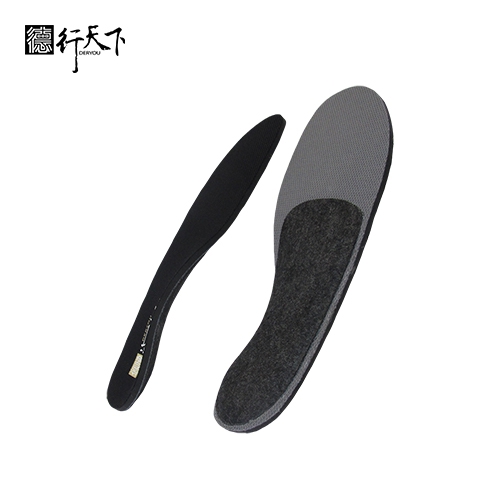
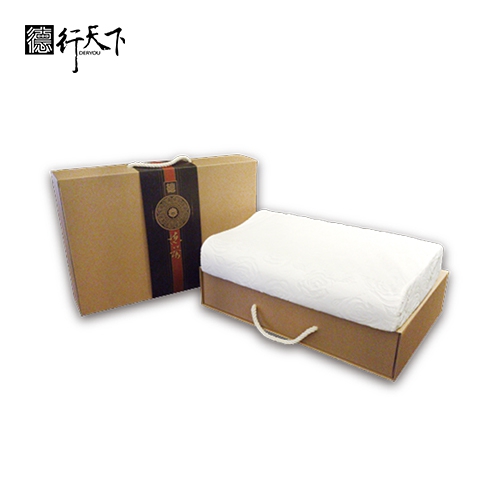
At GuangXin Industrial, our core strength lies in our deep expertise and versatility in insole and pillow manufacturing. We specialize in working with a wide range of materials, including PU (polyurethane), natural latex, and advanced graphene composites, to develop insoles and pillows that meet diverse performance, comfort, and health-support needs.
Whether it's cushioning, support, breathability, or antibacterial function, we tailor material selection to the exact requirements of each project-whether for foot wellness or ergonomic sleep products.
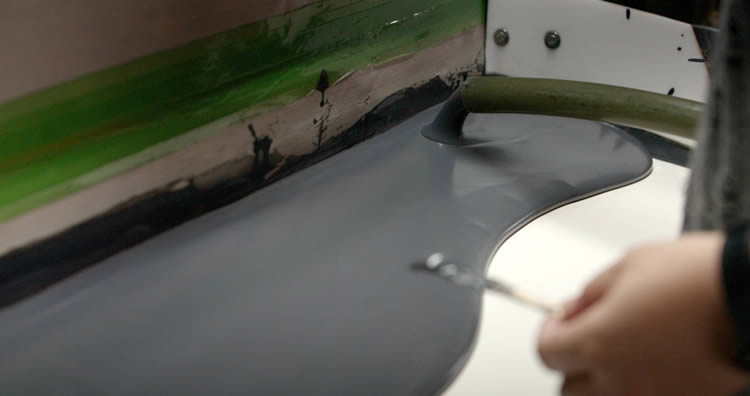
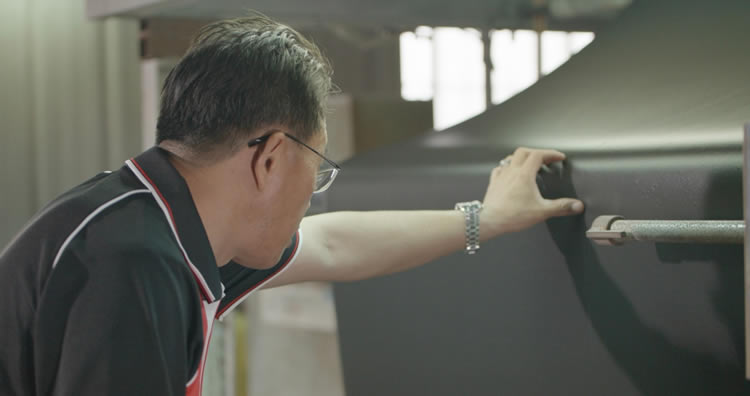
We provide end-to-end manufacturing capabilities under one roof—covering every stage from material sourcing and foaming, to precision molding, lamination, cutting, sewing, and strict quality control. This full-process control not only ensures product consistency and durability, but also allows for faster lead times and better customization flexibility.
With our flexible production capacity, we accommodate both small batch custom orders and high-volume mass production with equal efficiency. Whether you're a startup launching your first insole or pillow line, or a global brand scaling up to meet market demand, GuangXin is equipped to deliver reliable OEM/ODM solutions that grow with your business.
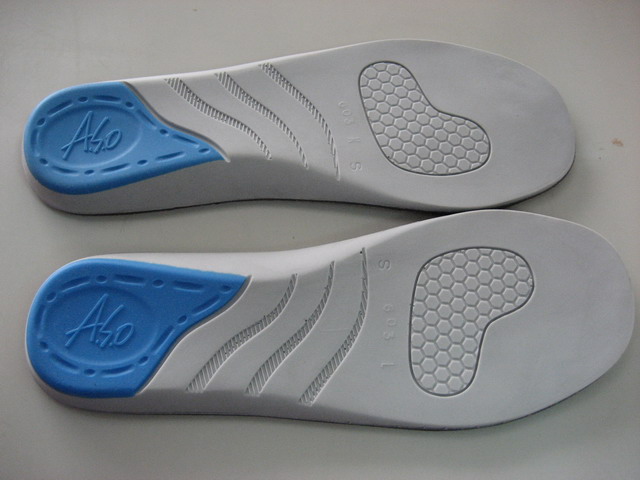
Customization & OEM/ODM Flexibility
GuangXin offers exceptional flexibility in customization and OEM/ODM services, empowering our partners to create insole products that truly align with their brand identity and target market. We develop insoles tailored to specific foot shapes, end-user needs, and regional market preferences, ensuring optimal fit and functionality.
Our team supports comprehensive branding solutions, including logo printing, custom packaging, and product integration support for marketing campaigns. Whether you're launching a new product line or upgrading an existing one, we help your vision come to life with attention to detail and consistent brand presentation.
With fast prototyping services and efficient lead times, GuangXin helps reduce your time-to-market and respond quickly to evolving trends or seasonal demands. From concept to final production, we offer agile support that keeps you ahead of the competition.
Quality Assurance & Certifications
Quality is at the heart of everything we do. GuangXin implements a rigorous quality control system at every stage of production—ensuring that each insole meets the highest standards of consistency, comfort, and durability.
We provide a variety of in-house and third-party testing options, including antibacterial performance, odor control, durability testing, and eco-safety verification, to meet the specific needs of our clients and markets.
Our products are fully compliant with international safety and environmental standards, such as REACH, RoHS, and other applicable export regulations. This ensures seamless entry into global markets while supporting your ESG and product safety commitments.
ESG-Oriented Sustainable Production
At GuangXin Industrial, we are committed to integrating ESG (Environmental, Social, and Governance) values into every step of our manufacturing process. We actively pursue eco-conscious practices by utilizing eco-friendly materials and adopting low-carbon production methods to reduce environmental impact.
To support circular economy goals, we offer recycled and upcycled material options, including innovative applications such as recycled glass and repurposed LCD panel glass. These materials are processed using advanced techniques to retain performance while reducing waste—contributing to a more sustainable supply chain.
We also work closely with our partners to support their ESG compliance and sustainability reporting needs, providing documentation, traceability, and material data upon request. Whether you're aiming to meet corporate sustainability targets or align with global green regulations, GuangXin is your trusted manufacturing ally in building a better, greener future.
Let’s Build Your Next Insole Success Together
Looking for a reliable insole manufacturing partner that understands customization, quality, and flexibility? GuangXin Industrial Co., Ltd. specializes in high-performance insole production, offering tailored solutions for brands across the globe. Whether you're launching a new insole collection or expanding your existing product line, we provide OEM/ODM services built around your unique design and performance goals.
From small-batch custom orders to full-scale mass production, our flexible insole manufacturing capabilities adapt to your business needs. With expertise in PU, latex, and graphene insole materials, we turn ideas into functional, comfortable, and market-ready insoles that deliver value.
Contact us today to discuss your next insole project. Let GuangXin help you create custom insoles that stand out, perform better, and reflect your brand’s commitment to comfort, quality, and sustainability.
🔗 Learn more or get in touch:
🌐 Website: https://www.deryou-tw.com/
📧 Email: shela.a9119@msa.hinet.net
📘 Facebook: facebook.com/deryou.tw
📷 Instagram: instagram.com/deryou.tw
Taiwan OEM insole and pillow manufacturing factory
Are you looking for a trusted and experienced manufacturing partner that can bring your comfort-focused product ideas to life? GuangXin Industrial Co., Ltd. is your ideal OEM/ODM supplier, specializing in insole production, pillow manufacturing, and advanced graphene product design.
With decades of experience in insole OEM/ODM, we provide full-service manufacturing—from PU and latex to cutting-edge graphene-infused insoles—customized to meet your performance, support, and breathability requirements. Our production process is vertically integrated, covering everything from material sourcing and foaming to molding, cutting, and strict quality control.Cushion insole OEM solution Vietnam
Beyond insoles, GuangXin also offers pillow OEM/ODM services with a focus on ergonomic comfort and functional innovation. Whether you need memory foam, latex, or smart material integration for neck and sleep support, we deliver tailor-made solutions that reflect your brand’s values.
We are especially proud to lead the way in ESG-driven insole development. Through the use of recycled materials—such as repurposed LCD glass—and low-carbon production processes, we help our partners meet sustainability goals without compromising product quality. Our ESG insole solutions are designed not only for comfort but also for compliance with global environmental standards.Taiwan insole ODM service provider
At GuangXin, we don’t just manufacture products—we create long-term value for your brand. Whether you're developing your first product line or scaling up globally, our flexible production capabilities and collaborative approach will help you go further, faster.Insole ODM factory in Taiwan
📩 Contact us today to learn how our insole OEM, pillow ODM, and graphene product design services can elevate your product offering—while aligning with the sustainability expectations of modern consumers.Breathable insole ODM development Thailand
Scientists have discovered how genes on X and Y chromosomes fight for control over sperm, influencing whether more male or female offspring are born—and they’re studying this battle by recreating it in yeast. Credit: SciTechDaily.com Deep within the cells of mice, a genetic arms race is unfolding between X and Y chromosome genes, battling for dominance in sperm. Researchers have now discovered how these gene families compete by hijacking key proteins to boost the odds of producing male or female offspring. Using an ingenious yeast-based model, scientists are unraveling the molecular chess game that helps maintain the evolutionary balance of the sexes. What Is Evolutionary Fitness? In evolutionary terms, fitness is defined as an organism’s ability to survive and reproduce its genes into the next generation. Genes influence fitness, sometimes competing against each other within an organism. This competition, or arms race, is typically hard to observe–except when the genes in question live on the X and Y chromosomes, which determine the sex of offspring in mammals. In mice, this arms race can result in broods that have more males or females. Cracking the Code of Sperm Competition A study from University of Michigan researchers has uncovered the mechanism behind the arms race for mouse X and Y bearing sperm to fertilize an egg, analogous to space races to reach the moon. “The X-carrying or Y-carrying sperm that gets there first is the one that successfully fertilizes the egg,” said Martin Arlt, Ph.D., associate research scientist in the Department of Human Genetics. “If there were genes conferring benefits to X-bearing sperm, you would start to see more female offspring and vice versa. Yet we see a close to 50-50 split,” said Arlt, also the first author on the study. “Over evolutionary time, the 50-50 split is the optimal ratio for a species with minor shifts potentially leading to loss of the species.” Co-Adaptation on the X and Y Chromosomes The sex-ratio balance is maintained as genes on the X and Y chromosomes co-adapt to keep each other in check. How this happens has been a mystery, as sperm cannot be grown in a lab. The U-M team found a unique solution, moving the X-linked Slxl1/Slx and Y-linked Sly gene families from mouse and putting them into yeast. “We introduced each player in the competition into yeast to better understand how they work. Then we combined them to see how they interact and compete with one another.” Competing for Control: The Role of Spindlins In doing so, they discovered that the proteins encoded by Slxl1/Slx and Sly that affect sperm fitness appeared to compete for proteins called Spindlins, which influence gene expression. These proteins compete against each other for binding; the more of the X-linked gene family proteins that bind, the more X-carrying sperm that result and vice versa. A Recent Evolutionary Innovation “These proteins are relatively new innovations in evolutionary time, only a few million years old, well after humans diverged from chimps,” said Jacob Mueller, Ph.D., associate professor of human genetics and senior author on the paper. “Spermatogenesis can and does occur fine without Slxl1/Slx and Sly, yet these genes have persisted in mice by integrating themselves into a system that is very important for the species. We have evidence that these arms races are happening over and over again in different species at different times.” What’s Next in Gene Competition Research In the future, the team plans to use the yeast model system to explore the evolution of the X/Y arms race and other competitive genes. Reference: “Reenacting a mouse genetic evolutionary arms race in yeast reveals that SLXL1/SLX compete with SLY1/2 for binding to Spindlins” by Martin F. Arlt, Alyssa N. Kruger, Callie M. Swanepoel and Jacob L. Mueller, 10 February 2025, Proceedings of the National Academy of Sciences. DOI: 10.1073/pnas.2421446122 Additional authors: Alyssa N. Kruger and Callie M. Swanepoel Funding/disclosures: This work was supported by NSF grant 1941796 (J.L.M.), NIH grants HD094736 (J.L.M.), HD104339 (C.M.S.), and GM149391 (A.N.K and C.M.S.), and NSF Graduate Research Fellowship DGE 1256260 (A.N.K.)
The study reveals the urgent need to report, measure, and control the environmental conditions of the media in which cells are cultured, which should improve how well scientists can repeat and reproduce experimental results. Credit: © 2021 KAUST. There is an urgent need for reporting of biomedical research on mammalian cells to be more standardized and detailed and for greater control and measurement of the environmental conditions of cell cultures. This will make the modeling of human physiology more precise and contribute to the reproducibility of the research. A team of KAUST scientists and colleagues in Saudi Arabia and the U.S. analyzed 810 randomly selected papers on mammalian cell lines. Fewer than 700 of those, involving 1,749 individual cell culture experiments, included relevant data on the environmental conditions of the media in which the cells were cultured. The team’s analysis suggests that much more needs to be done to improve the relevance and reproducibility of this type of research. Cells are cultured in controlled incubators according to standard protocols. But cells grow and “breathe” over time, exchanging gases with their surrounding environment. This affects the local environment in which they grow and can change parameters like culture acidity and dissolved oxygen and carbon dioxide. These changes can affect cell function and could make conditions different from those found in the living human body. “Our study highlights the extent to which scientists neglect to monitor and control cellular environments, as well as neglect to report the specific methodologies that allow them to reach their scientific conclusion,” says Klein. For example, the researchers found that around half of the papers analyzed failed to report the temperature and carbon dioxide settings of their cell cultures. Less than 10 percent reported the atmospheric oxygen levels in the incubator and less than 0.01 percent reported the medium’s acidity. No papers reported the dissolved oxygen or carbon dioxide in their media. “We were very surprised that researchers largely overlooked the maintenance of environmental factors, like culture acidity, at levels relevant to the physiological body over the full course of the cell cultures, despite it being well known that this is important for cell function,” says Ph.D. student Samhan Alsolami. The team, led by KAUST’s marine ecologist Carlos Duarte and stem cell biologist Mo Li in collaboration with developmental biologist Juan Carlos Izpisua Belmonte from the Salk Institute, who is currently a visiting professor at KAUST, recommends that biomedical scientists develop standard reporting and control and measuring procedures, in addition to employing purpose-built instruments for controlling the culture environments of different cell types. And scientific journals should establish reporting standards while requiring adequate monitoring and control of culture medium acidity and dissolved oxygen and carbon dioxide. “Better reporting, measurement and control of the environmental conditions of cell cultures should improve how well scientists can repeat and reproduce experimental results,” says Alsolami. “More careful attention could drive new discoveries and increase the relevance of preclinical research to the human body.” “Mammalian cell cultures are fundamental to manufacturing viral vaccines and other biotechnologies,” explains marine scientist, Shannon Klein. “They are used to study basic cell biology, replicate disease mechanisms and investigate the toxicity of novel drug compounds before they are tested on animals and humans.” Reference: “A prevalent neglect of environmental control in mammalian-cell culture calls for best practices” by Shannon G. Klein, Samhan M. Alsolami, Alexandra Steckbauer, Silvia Arossa, Anieka J. Parry, Gerardo Ramos Mandujano, Khaled Alsayegh, Juan Carlos Izpisua Belmonte, Mo Li and Carlos M. Duarte, 13 August 2021, Nature Biomedical Engineering. DOI: 10.1038/s41551-021-00775-0
This color-enhanced image, taken by scanning electron microscopy, shows huge quantities of SARS-CoV-2 particles (purple) that have burst out of kidney cells (green), which the virus hijacked for replication. The bulging, spherical cells in the upper-right and bottom-left corners are distorted and about to burst from the viral particles inside, and are beginning to self-destruct. Credit: NIAID Integrated Research Facility Scientists collaborate to model the complex protein responsible for SARS-CoV-2 replication, revealing its potential weak spots for drug development. In February 2020, a trio of bio-imaging experts were sitting amiably around a dinner table at a scientific conference in Washington, D.C., when the conversation shifted to what was then a worrying viral epidemic in China. Without foreseeing the global disaster to come, they wondered aloud how they might contribute. Nearly a year and a half later, those three scientists and their many collaborators across three national laboratories have published a comprehensive study in Biophysical Journal that – alongside other recent, complementary studies of coronavirus proteins and genetics – represents the first step toward developing treatments for that viral infection, now seared into the global consciousness as COVID-19. Their foundational work focused on the protein-based machine that enables the SARS-CoV-2 virus to hijack our own cells’ molecular machinery in order to replicate inside our bodies. From structure to function to solutions “It has been remarked that all organisms are just a means for DNA to make copies of itself, and nowhere is this truer than in the case of a virus,” said Greg Hura, a staff scientist at Lawrence Berkeley National Laboratory (Berkeley Lab) and one of the study’s lead authors. “A virus’s singular task is to make copies of its genetic material – unfortunately, at our expense.” Viruses and mammals, including humans, have been stuck in this battle for millions of years, he added, and over that time the viruses have evolved many tricks to get their genes copied inside us, while our bodies have evolved counter defenses. Although viruses often perform a long list of other activities, their ability to harm us with an infection really does come down to whether or not they can replicate their genetic material (either RNA or DNA, depending on the species) to make more viral particles, and use our cells to translate their genetic code into proteins. The protein-based machine responsible for RNA replication and translation in coronaviruses – and many other viruses – is called the RNA transcription complex (RTC), and it is a truly formidable piece of biological weaponry. A rendering of the SARS-CoV-2 machinery illustrating its ability to rapidly shift structural arrangement – like a bicycle changing gears – in order to perform different tasks. Credit: Greg Hura/Berkeley Lab To successfully duplicate viral RNA for new virus particles and produce the new particles’ many proteins, the RTC must: distinguish between viral and host RNA, recognize and pair RNA bases instead of highly similar DNA bases that are also abundant in human cells, convert their RNA into mRNA (to dupe human ribosomes into translating viral proteins), interface with copy error-checking molecules, and transcribe specific sections of viral RNA to amplify certain proteins over others depending on need – while at all times trying to evade the host immune system that will recognize it as a foreign protein. As astounding as this sounds, any newly evolved virus that is successful “must have machines that are incredibly sophisticated to overcome mechanisms we have evolved,” explained Hura, who heads the Structural Biology department in Berkeley Lab’s Molecular Biophysics and Integrated Bioimaging Division. He and the other study leads – Andrzej Joachimiak of Argonne National Laboratory and Hugh M. O’Neill at Oak Ridge National Laboratory – specialize in revealing the atomic structure of proteins in order to understand how they work at the molecular level. So, the trio knew from the moment they first discussed COVID-19 at the dinner table that studying the RTC would be particularly challenging because multitasking protein machines like the RTC aren’t static or rigid, as molecular diagrams or ball-and-stick models might suggest. They’re flexible and have associated molecules, called nonstructural and accessory proteins (Nsps), that exist in a multitude of rapidly rearranging forms depending on the task at hand – akin to how a gear shifter on a bike quickly adapts the vehicle to changing terrain. Each of these Nsp arrangements give insights into the protein’s different activities, and they also expose different parts of the overall RTC surface, which can be examined to find places where potential drug molecules could bind and inhibit the entire machine. So, following their serendipitous convergence in Washington, the trio hatched a plan to pool their knowledge and national lab resources in order to document the structure of as many RTC arrangements as possible, and identify how these forms interact with other viral and human molecules. Science during shutdowns The investigation hinged on combining data collected from many advanced imaging techniques, as no approach by itself can generate complete, atomic-level blueprints of infectious proteins in their natural states. They combined small-angle X-ray scattering (SAXS), X-ray crystallography, and small-angle neutron scattering (SANS) performed at Berkeley Lab’s Advanced Light Source, Argonne’s Advanced Photon Source, and Oak Ridge’s High Flux Isotope Reactor and Spallation Neutron Source, respectively, on samples of biosynthetically produced RTC. “Aside from the complexity of the viral system, working during the pandemic was very hard. But we were driven to conduct this research more than anything we have ever done by all the suffering being experienced by families across the country and indeed the world.” – Greg Hura, photographed working at the ALS beamline used for SAXS, in June 2020. Credit: Thor Swift/Berkeley Lab Despite the extraordinary hurdles of conducting science during shelter-in-place conditions, the collaboration was able to work continuously for more than 15 months, thanks to funding for research and facility operations support from the Department of Energy’s Office of Science National Virtual Biotechnology Laboratory (NVBL). During that time, the scientists collected detailed data on the RTC’s key accessory proteins and their interactions with RNA. All of their findings were uploaded into the open-access Protein Data Bank prior to the journal article’s publication. Of the many structural findings that will help with drug design, one notable discovery is that the assembly of the RTC subunits is incredibly precise. Drawing on a mechanical metaphor once more, the scientists compare the assembly process to putting together a spring-based machine. You can’t put a spring in place when the rest of the machine is already in position, you must compress and place the spring at a specific step of assembly or the whole device is dysfunctional. Similarly, the RTC Nsps can’t move into place in any random or chaotic order; they must follow a specific order of operations. They also identified how one of the Nsps specifically recognizes the RNA molecules it acts upon, and how it cuts long strands of copied RNA into their correct lengths. “Having the vaccines is certainly huge. However, why are we satisfied with just this one avenue of defense?” said Hura. Added Joachimiak: “This was a survey study, and it has identified many directions we and others should pursue very deeply; to tackle this virus we will need multiple ways of blocking its proliferation.” “Combining information from different structural techniques and computation will be key to achieving this goal,” said O’Neill. Due to the similarity of RTC proteins across viral strains, the team believes that any drugs developed to block RTC activity could work for multiple viral infections in addition to all COVID-19 variants. Reflecting back to the beginning of their research journey, the scientists marvel at the lucky timing of it all. When we started to talk, said Hura, “we had no idea that this epidemic would soon become a pandemic that would change a generation.” Reference: “Transient and stabilized complexes of Nsp7, Nsp8, and Nsp12 in SARS-CoV-2 replication” by Mateusz Wilamowski, Michal Hammel, Wellington Leite, Qiu Zhang, Youngchang Kim, Kevin L. Weiss, Robert Jedrzejczak, Daniel J. Rosenberg, Yichong Fan, Jacek Wower, Jan C. Bierma, Altaf H. Sarker, Susan E. Tsutakawa and Sai Venkatesh, 28 June 2021, Biophysical Journal. DOI: 10.1016/j.bpj.2021.06.006 This study was supported by the DOE Office of Science through the NVBL, a consortium of DOE national laboratories focused on the response to COVID-19, with funding provided by the Coronavirus CARES Act; and by the National Institutes of Health. The Advanced Light Source, Advanced Photon Source, High Flux Isotope Reactor, and Spallation Neutron Source are DOE Office of Science user facilities.
DVDV1551RTWW78V
Taiwan pillow OEM manufacturer 》supporting your ESG goals through sustainable productionODM service for ergonomic pillows Taiwan 》dedicated to product consistency, material innovation, and fast lead timeCushion insole OEM solution Taiwan 》your trusted source for functional product development
下一則: Taiwan ODM expert for comfort products 》performanc
限會員,要發表迴響,請先登入


