Ya da kalinushku lomala
(Russia)

Song Title: Я да калинушку ломала (Transliteration: Ya da kalinushku lomala)
Lyrics: Cossack Folk Song
Composer: Cossack Folk Song
Dance Name: Same as the song title
Choreographer: Hennie Konings
Chinese Dance Name: 哥薩克雪球樹
Formation: Group dance, single circle, all holding hands down (V-position), facing CCW.
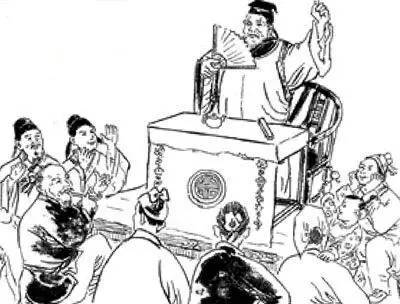
First, Teacher Frog would like to explain that in Taiwans folk dance community, there are two dances related to the snowball tree, both of which come from Russia. One is Oi, Tsvetyot Kalina, which originally means: The snowball tree is in bloom, and we translate its Chinese dance name as "雪球樹"(Snowball Tree). This one, which is this very dance, Ya da kalinushku lomala, means: I was breaking the snowball tree, and to make a distinction, we translate the dance name as "哥薩克雪球樹"(Cossack Snowball Tree). Dance friends, please do not get confused just because both of these dances have "Snowball Tree" in their Chinese names. As for why the word "Cossack" is added to the front of this dances Chinese name, please let Teacher Frog slowly tell you the story. As per the old rule, dance friends, please bring your small stools and sit down properly, Teacher Frog is about to start the lecture!
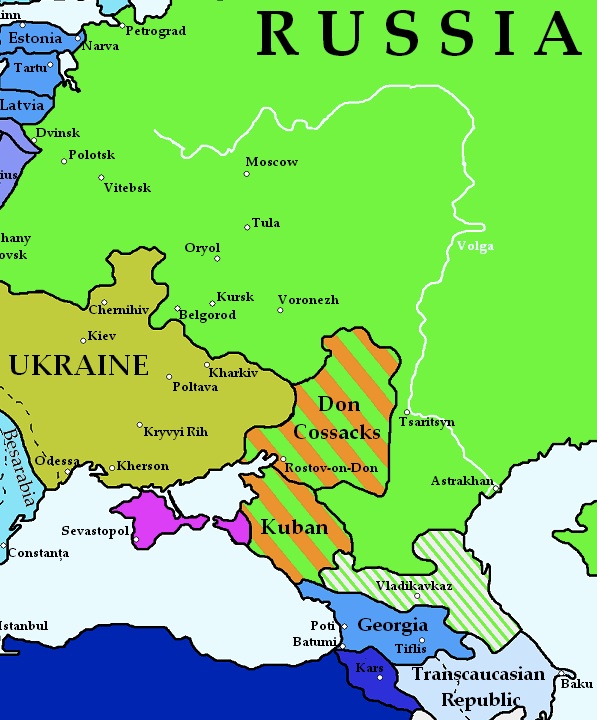
The Cossacks, a people who cannot be called an "ethnic group", fled as early as the late 13th century AD to escape the rule of the Kipchak Khanate within the Mongol Empire, arriving in what is now southern Russia, the eastern foothills of the Caucasus Mountains, and the Ukraine area. Customarily, different names are given according to their respective regions:
Ukrainian Cossacks
1. Zaporozhian Cossacks
2. Registered Cossacks
3. Black Sea, Azov and Danubian Sich Cossacks
Russian Cossacks
1. Don Cossacks
2. Kuban Cossacks
3. Terek Cossacks
4. Yaik Cossacks
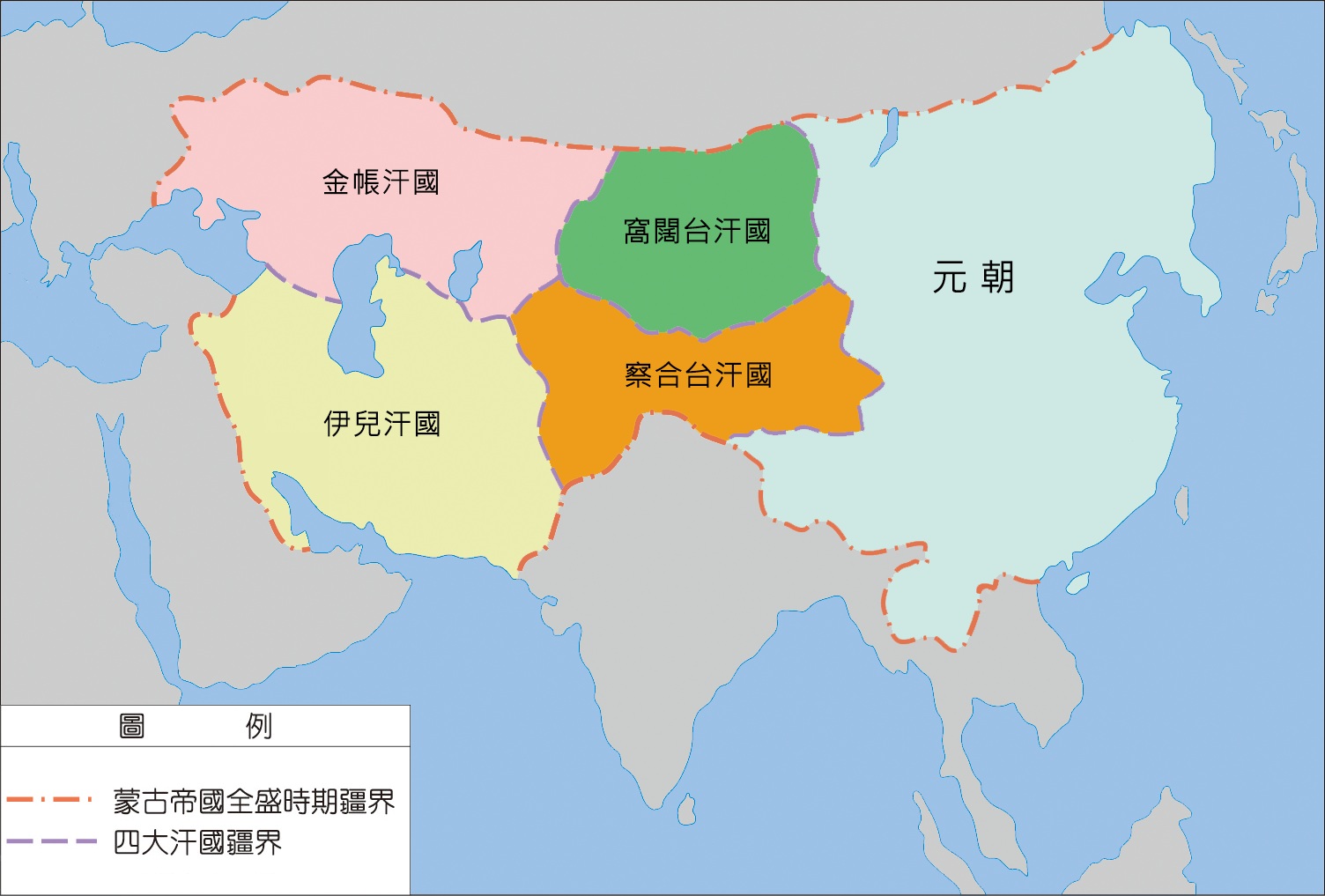
There are probably still many dance friends who are not quite sure what the Cossacks are? Why are the Cossacks not an "ethnic group"? Teacher Frog will explain it briefly here so that dance friends can have an initial concept. Cossack in English is Cossack, and the origin of the name comes from the Turkic word Kazak, which means "free man", "adventurer", or "brave person". In the 13th century AD, the Mongols launched their second western campaign, which is the historically famous Batus western campaign. Batu was the grandson of Genghis Khan; in the year 1236 AD, Batu led his army all the way to Bilär in the east, at the confluence of the Volga and Kama rivers in Europe, and subsequently captured Moscow in Russia; in 1240 AD they captured Kyiv, in 1241 AD they invaded Poland and Hungary, with the main force crossing the Carpathian Mountains to crush the allied forces of Poland and Germany, and defeating the Hungarian army in the Battle of Mohi (Battle of the Sajó River). In 1242 AD, due to the death of Ögedei Khan, Batu led his army back to the east and subsequently established his capital at Sarai on the lower reaches of the Volga River, founding the Kipchak Khanate (also known as the "Golden Horde").
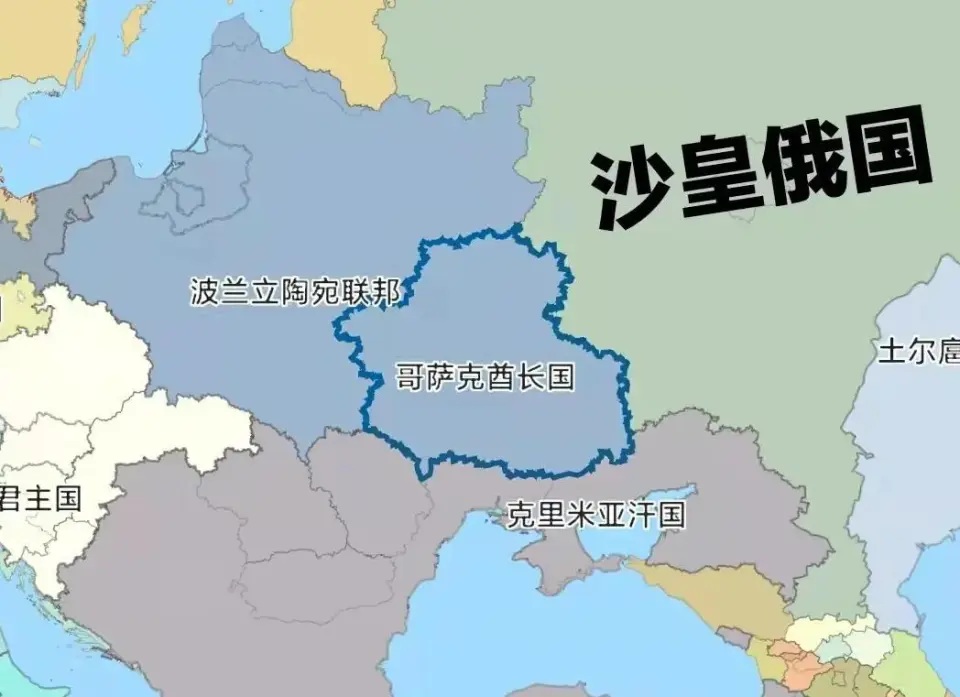
During the early period of the establishment of the Kipchak Khanate, a large number of Slavic peasants and urban poor who originally resided in the Principalities of Rus (now the area of Russia, Ukraine, and Belarus) began to flee outward to escape the brutal rule, heavy taxation, and frequent conscription for slave soldiery by the Mongols. Up until the 15th and 16th centuries AD, over these two to three hundred years, there was a continuous influx of large numbers of serfs, exiles, adventurers, deserters, as well as surrounding Tatars, Turkic people, and Slavic people (Russians, Ukrainians, Poles, etc.) converging in this wilderness steppe region (the "Cossack Hetmanate" region in the illustration below), which was a no-mans-land between the Principality of Moscow (Tsardom of Russia), the Polish-Lithuanian Commonwealth, and the Crimean Khanate (a vassal of the Ottoman Empire).
This folk song comes from the Nekrasov Cossacks. Huh? Teacher Frog is fooling us, among the Ukrainian Cossacks and Russian Cossacks introduced earlier by Teacher Frog, which total 7 Cossack groups, the "Nekrasov Cossacks" mentioned here by Teacher Frog is simply not in there! Haha~, Teacher Frog is very happy, as dance friends who ask this question have indeed read closely what Teacher Frog wrote, and Teacher Frog gives you a big round of applause . That is right, the Nekrasov Cossacks did not appear among the 7 Cossack groups above, and the reason is that the Nekrasov Cossacks is a group name that only appeared in the early 18th century AD-to be more precise, after the year 1707 AD-so it was not included in the list above.
In the early 18th century AD, Tsar Peter the Great vigorously implemented religious and church reforms, and among the Don Cossacks (Cossacks living in the Don River basin), there was a group of clansmen with a strong free will, most of whom believed in the Old Believers traditional rituals of the Russian Orthodox Church, who strongly opposed them, and an uprising even broke out between the years 1707 and 1708 AD. Ultimately, it was brutally suppressed by the Tsarist army and ended in failure. The uprising leader Bulavin died, and his deputy Ignat Nekrasov refused to surrender to the Tsar; he led about 2,000 close followers and their families to flee southward, and later this group of people took his name as the name of this group: the "Nekrasov Cossacks". Therefore, it is very clear that the Nekrasov Cossacks are actually a branch of the Don Cossacks.
Nekrasov Cossacks, Turkey (Before the Great Patriotic War)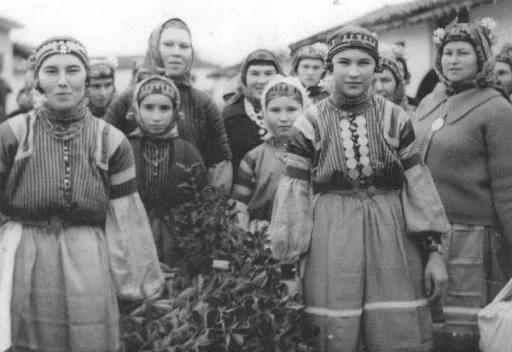
Image Source: https://www.reddit.com/
Regarding the migration route of the Nekrasov Cossacks, they first moved from the Cossack villages (Stanitsas) along the Don River to the lower reaches of the Kuban River at the junction of the Sea of Azov and the Black Sea in southern Russia; this was the territory of the Crimean Khanate, the Tsars arch-nemesis, so fleeing here was relatively safer. However, as the Tsarist army advanced toward the Kuban, they only lived in the Kuban River basin for about 30 years and were forced to migrate again in the year 1740 AD.
This time, they moved to the coast of the Black Sea and the mouth of the Danube River, which is the Danube Delta and Dobruja. This place belonged to the territory of the Ottoman Turkish Empire, so Tsarist Russia still had some reservations more or less. This group of Cossacks mainly settled in the Dobruja region near Constanța, making a living by fishing and farming.
Nekrasov Cossacks, Turkey (Before the Great Patriotic War)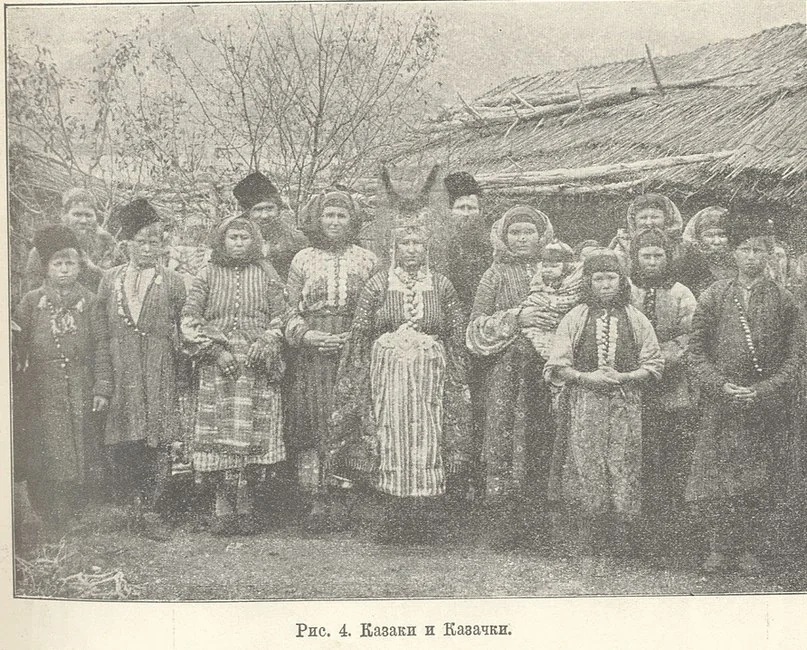
Image Source: https://www.reddit.com/
When speaking of the year 1740 AD above, besides the Danube Delta and Dobruja, a part of the Cossacks also migrated to Kocagöl village by Lake Manyas in what is now northwestern Turkey. In the year 1883 AD, the Cossacks living in the Danube Delta and Dobruja, in order to escape the oppression of the local government, all went south to this place, and the whole tribe gathered to live together. Here, they wore ancient 18th-century AD clothing and strictly practiced communal democracy, living here for as long as 220 years until the mid-20th century AD.
Migration route map of the Nekrasov Cossacks: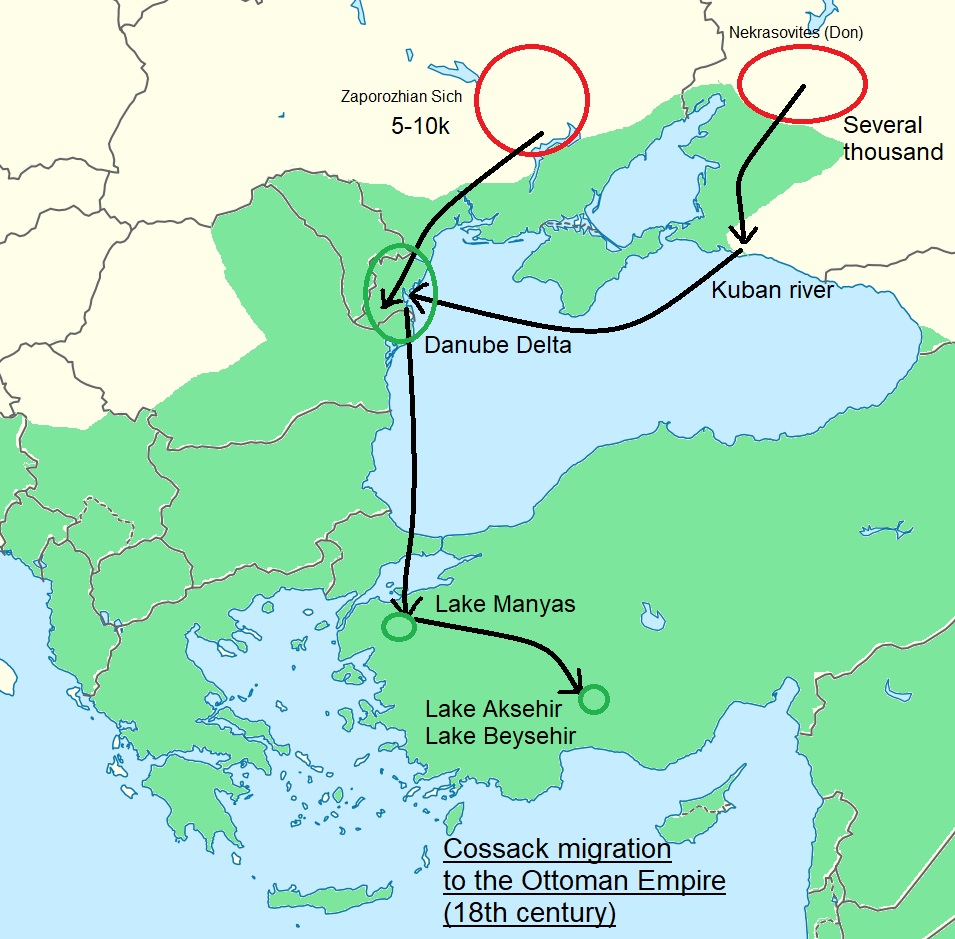
Image source:
In the early 20th century AD, these descendants of the Nekrasov Cossacks who steadfastly adhered to the old rituals and teachings returned to the Soviet Union by ship one after another, until the year 1962 AD when the last batch of Nekrasov Cossacks clansmen also returned to the Soviet Union; the Nekrasov Cossacks were arranged to live in Stavropol north of the Caucasus, which finally ended the more than two hundred years of exile of the Nekrasov Cossacks.
Stavropol location: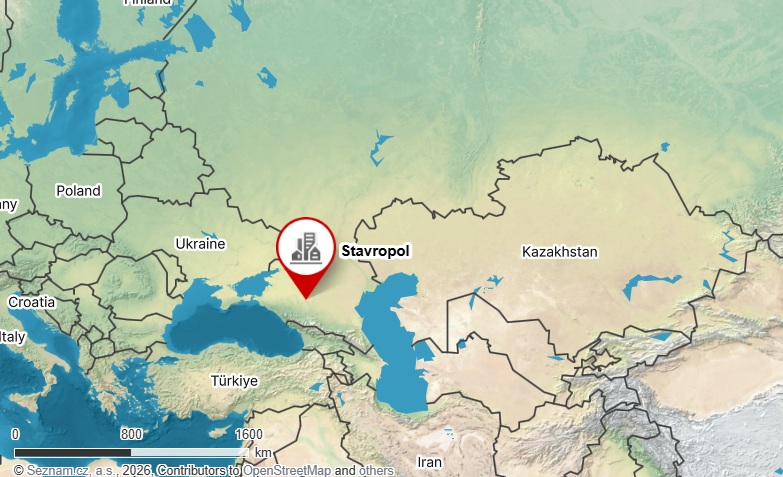
Now back to this folk song. This folk song comes from the Nekrasov Cossacks, and its origin and the writer of the lyrics and music are currently untraceable; judging from the origin and history of the Nekrasov Cossacks mentioned earlier, this folk song should have a history of around 250 to 300 years. From the 1910s to the 1960s AD, after the Nekrasov Cossacks clansmen returned to Russia one after another, some ethnologists were shocked upon hearing this folk song Ya da kalinushku lomala; this folk song undoubtedly preserved the precious culture of the 18th-century AD Don Cossacks, just like a gem hidden in a time capsule, blossoming in 20th-century AD Russia.
In the mid-20th century AD, Russian composer Mikhail Matveev organized this ancient oral folk song that spans three centuries, which is the version we hear now. The song title Ya da kalinushku lomala is the very first line of lyrics of this folk song. Many folk songs that have been sung for hundreds of years do not have a specific song title, and using the first line of lyrics as the song title is very common among many ancient foreign folk songs.
Next, please dance friends enjoy the version performed by the top Russian Cossack Kuren State Dance Ensemble (The State Ensemble of Russian Cossacks "Cossack Kuren" / Государственный Ансамбль Российского Казачества «Казачий курень»):
Next, the source of the music accompaniment for this dance will be introduced. The folk dance music version comes from an international folk dance CD released by a niche Dutch traditional folk dance music label, catalog number: Syncoop 5766 CD 293. This label "Syncoop" is actually a music label established by Teacher Hennie Konings specifically for producing international folk dance teaching music, just like the Hsian-Ger Records established by Teacher Chang Ching-san.
Below is the highly rare information that Teacher Frog went through thousands of hardships to find; not only do the California Stockton Folk Dance Camp and other major folk dance camps around the world have no further detailed information on this CD, but even the vast majority of AIs cannot retrieve it; Teacher Frog does not keep it a secret and shares this precious information here with all dance friends, including foreign dance friends.
The source of the folk dance version song is sung by the Donetsk "Volushka" (Волюшка) Ensemble from Ukraine, included in the CD album titled "Ах ты, степь широкая!" (English: "What a Wide Steppe") released by Syncoop in the year 2006 AD (Teacher Frogs note: The Chinese meaning of the album title is: Ah! The Wide Steppe, which is another famous Russian folk song). Cossack Snowball Tree is included as the 11th track of this album.
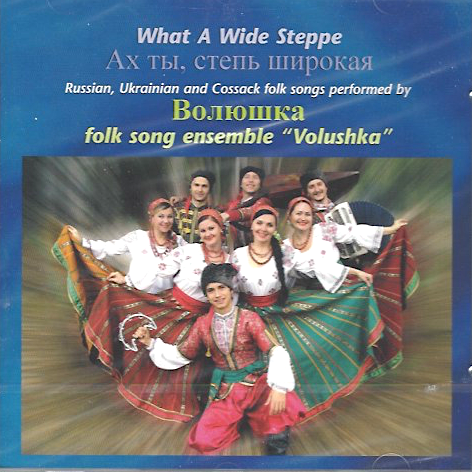
Image source: Folk Arts Center of New England: https://facone.org/
"Ах ты, степь широкая!" CD Album _ Table of Contents: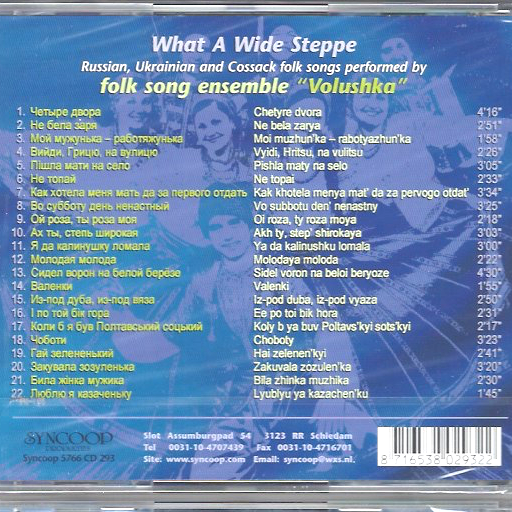
Image source: Folk Arts Center of New England: https://facone.org/
Song Title: Я да калинушку ломала, which means: I was breaking the snowball tree.
The boss (It’s me, Teacher Frog) treats you to the sheet music of this song, including lyrics: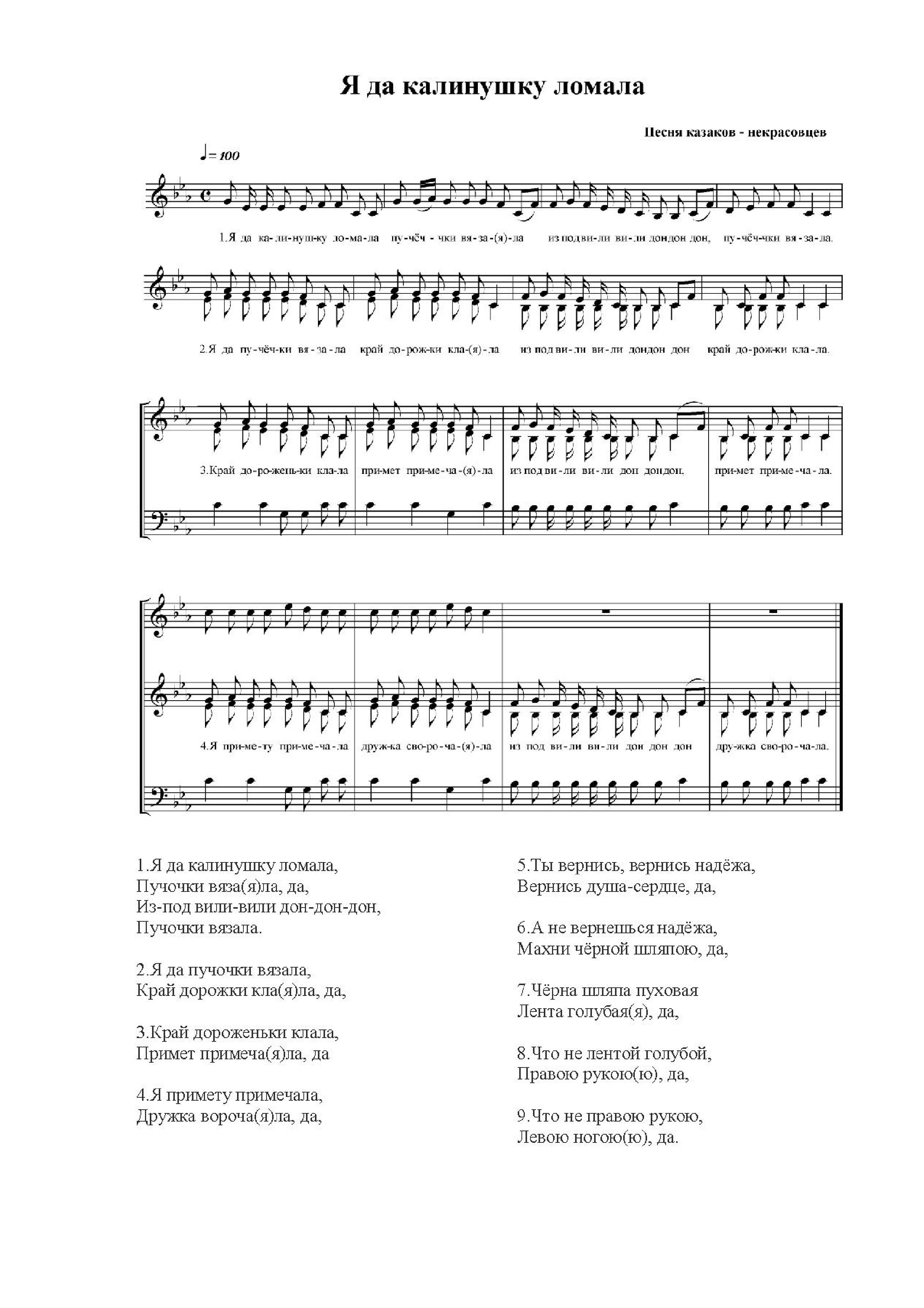
Original Russian lyrics:
1.
Я да калинушку ломала,
Пучочки вяза(я)ла, да,
Из-под вили-вили дон-дон-дон,
Пучочки вязала.
2.
Я да пучочки вязала,
Край дорожки кла(я)ла, да,
Из-под вили-вили дон-дон-дон,
Край дорожки клала.
3.
Край дороженьки клала,
Примет примеча(я)ла, да
Из-под вили-вили дон-дон-дон,
Примет примечала.
4.
Я примету примечала,
Дружка вороча(я)ла, да,
Из-под вили-вили дон-дон-дон,
Дружка ворочала.
5.
Ты вернись, вернись надёжа,
Вернись душа-сердце, да,
Из-под вили-вили дон-дон-дон,
Вернись душа-сердце.
6.
А не вернешься надёжа,
Махни чёрной шляпою, да,
Из-под вили-вили дон-дон-дон,
Махни чёрной шляпой.
7.
Чёрна шляпа пуховая
Лента голубая(я), да,
Из-под вили-вили дон-дон-дон,
Лента голубая.
8.
Что не лентой голубой,
Правою рукою(ю), да,
Из-под вили-вили дон-дон-дон,
Правою рукою.
9.
Что не правою рукою,
Левою ногою(ю), да,
Из-под вили-вили дон-дон-дон,
Левою ногою.
Lyrics transliteration:
1.
Ya da kalinushku lamala
V puchochiki vyazala, da
Izpad vili vili don don don
Skray darozhki klala, da
Izpad vili vili don don don
Skray darozhki klala
2.
Skray darozhen’ki klala
Primet primechala, da
Izpad vili vili don don don
Primet primechala, da
Izpad vili vili don don don
Primet primechala
3.
Ya primetu primechala
Druzhka varachala, da
Izpad vili vili don don don
Druzhka varachala, da
Izpad vili vili don don don
Druzhka varachala
4.
Vernis’,vernis’ya nadyozha
Dusha maya serdtse, da
Izpad vili vili don don don
Dusha maya serdtse, da
Izpad vili vili don don don
Dusha maya serdtse
5.
A ne vernesh’ya nadyozha
Makhni chornay shlyapay, da
Izpad vili vili don don don
Makhni chornay shlyapay, da
Izpad vili vili don don don
Makhni chornay shlyapay
6.
Chorna shlyapa pukhavaya
Lenta galubaya, da
Izpad vili vili don don don
Lenta galubaya, da
Izpad vili vili don don don
Lenta galubaya
7.
Shto ni shlyapay pukhavoyu
Levayu rukoyu, da
Izpad vili vili don don don
Levayu rukoyu, da
Izpad vili vili don don don
Levayu rukoyu
8.
Ya da kalinushku lomala
V puchochiki vyazala, da
Izpad vili vili don don don
Skray darozhki klala, da
Izpad vili vili don don don
Skray darozhki klala
English translation of the lyrics:
1.
I have picked the snowball-tree
Bundled them up
Izpad vili vili don don don
(From under vili-vili [flows] the mighty Don River, Don, Don)
Put them beside the road
Izpad vili vili don don don
Put them beside the road
2.
Put them beside the road
I looked out for the sign
Izpad vili vili don don don
(From under vili-vili [flows] the mighty Don River, Don, Don)
Looked out for the sign
Izpad vili vili don don don
Looked out for the sign
3.
I look out for the sign
I called bace my friend
Izpad vili vili don don don
(From under vili-vili [flows] the mighty Don River, Don, Don)
I called bace my friend
Izpad vili vili don don don
I called bace my friend
4.
Come back, come back, my love
My soul, my heart
Izpad vili vili don don don
(From under vili-vili [flows] the mighty Don River, Don, Don)
My soul, my heart
Izpad vili vili don don don
My soul, my heart
5.
If you don’t return, my love
Wave your black hat
Izpad vili vili don don don
(From under vili-vili [flows] the mighty Don River, Don, Don)
Wave your black hat
Izpad vili vili don don don
Wave your black hat
6.
Black downy hat
Light blue ribbon
Izpad vili vili don don don
(From under vili-vili [flows] the mighty Don River, Don, Don)
Light blue ribbon
Izpad vili vili don don don
Light blue ribbon
7.
If not with your downy hat
Then with your left hand
Izpad vili vili don don don
(From under vili-vili [flows] the mighty Don River, Don, Don)
Then with your left hand
Izpad vili vili don don don
Then with your left hand
8.
I have picked the snowball-tree
Bundled them up
Izpad vili vili don don don
(From under vili-vili [flows] the mighty Don River, Don, Don)
Put them beside the road
Izpad vili vili don don don
Put them beside the road
Chinese translation of the lyrics:
1.
我啊,折下了雪球樹的枝椏,
將它們牢牢扎成一束一束的,是啊.
滾滾頓河的流水,咚-咚-咚-
(Iz-pod vili-vili, Don-Don-Don)
沿著那條小路邊輕輕擺放.
滾滾頓河的流水,咚-咚-咚-
沿著那條小路邊輕輕擺放.
2.
沿著那條小路邊輕輕擺放,
沿途仔細留下了相認的標記,是啊.
滾滾頓河的流水,咚-咚-咚-
(Iz-pod vili-vili, Don-Don-Don)
沿途仔細留下了相認的標記.
滾滾頓河的流水,咚-咚-咚-
沿途仔細留下了相認的標記.
3.我一邊仔細留著這些標記,
一邊期盼能喚回我的親密愛人,是啊.
滾滾頓河的流水,咚-咚-咚-
(Iz-pod vili-vili, Don-Don-Don)
一邊期盼能喚回我的親密愛人.
滾滾頓河的流水,咚-咚-咚-
一邊期盼能喚回我的親密愛人.
4.
快回來吧,快回到我身邊,我的希望,
快回來吧,我的靈魂與心肝,是啊.
滾滾頓河的流水,咚-咚-咚-
(Iz-pod vili-vili, Don-Don-Don)
快回來吧,我的靈魂與心肝.
滾滾頓河的流水,咚-咚-咚-
快回來吧,我的靈魂與心肝.
5.
要是你真的無法回到我身邊,我的希望,
也請遠遠地向我揮動你的黑帽子,是啊.
滾滾頓河的流水,咚-咚-咚-
(Iz-pod vili-vili, Don-Don-Don)
也請遠遠地向我揮動你的黑帽子.
滾滾頓河的流水,咚-咚-咚-
也請遠遠地向我揮動你的黑帽子.
6.
那是一頂柔軟又溫暖的黑色絨帽,
上面還繫著一條湛藍色的緞帶,是啊.
滾滾頓河的流水,咚-咚-咚-
(Iz-pod vili-vili, Don-Don-Don)
上面還繫著一條湛藍色的緞帶
滾滾頓河的流水,咚-咚-咚-
上面還繫著一條湛藍色的緞帶
7.
那條湛藍色的緞帶啊,
它對我而言是如此的珍貴與親切,是啊.
滾滾頓河的流水,咚-咚-咚-
(Iz-pod vili-vili, Don-Don-Don)
它對我而言是如此的珍貴與親切.
滾滾頓河的流水,咚-咚-咚-
它對我而言是如此的珍貴與親切.
8.
湛藍的緞帶在風中輕輕飄揚旋轉,
我那親愛的人兒也正對著我溫柔微笑,是啊.
滾滾頓河的流水,咚-咚-咚-
(Iz-pod vili-vili, Don-Don-Don)
我那親愛的人兒也正對著我溫柔微笑.
滾滾頓河的流水,咚-咚-咚-
我那親愛的人兒也正對著我溫柔微笑.
Teacher Frogs notes:
1. Из-под (Iz-pod) means "from under..." or "coming out from...", describing the flowing water of the Don River.
2. вили-вили (vili-vili) describes the sound of the flowing water when the water of the Don River moves.
3. дон-дон-дон (don-don-don) is a pun; besides imitating the sound of flowing water falling, on the other hand, it is a pun on the mother river of the Cossacks: the Don River.
Following, please dance friends enjoy this song:
Next, the dance section will be introduced. This dance was choreographed by Teacher Hennie Konings using elements of the traditional womens round dance (Russian: хорово́д, transliteration: Khorovod, English translation: round dance), first presented in Switzerland in 2006, and later promoted and taught by Teacher Radboud Koop at the Stockton Folk Dance Camp in the United States in 2008.
Songs of the traditional Russian womens round dance (Khorovod):
Teacher Hennie Konings: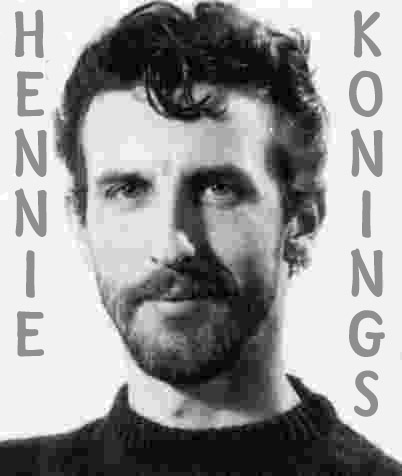
Teacher Hennie Konings, who specializes in Russian dance, is of mixed heritage; his father is Dutch and his mother is Russian. He grew up from childhood in an environment filled with Russian music and dance. When he was 10 years old, he could already accompany his mothers singing with the Russian triangular string instrument Balalaika, and during his teenage years, he deeply loved Russian dance, which led him to study dance at the Dance Department of the Rotterdam Dance Academy in the Netherlands; after graduating in the year 1968 AD, he became a professional dancer and dance teacher.
Later, Teacher Hennie Konings received a scholarship from the cultural exchange agreement between the former Soviet Union and the Netherlands to continue his advanced dance studies in Moscow. This time, he not only went to the Piatnitsky Folk Dance School to study Russian folk dance under two famous teachers, Tatyana Ustinova and Olga Zolotova, but afterwards, he went to the world-famous Russian Beryozka Folk Dance Ensemble to undergo even deeper training courses. (Teacher Frog has previously introduced some classic masterpieces of the Russian Beryozka Folk Dance Ensemble to dance friends, and all dance friends can go back to Teacher Frogs Nest blog to savor them again.) Later, even after Hennie Konings returned to the Netherlands, he continuously went to Russia to study dance, and his scope of learning included not only stage performance dances but also village folk dances.
Teacher Hennie Konings: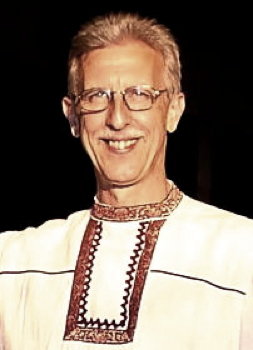
In the year 1986 AD, he decided to end his status as a professional dancer and focus on being a professional Russian folk dance educator. Due to his deep dance background combined with his continuous learning in Russia, he became a leading authority on Russian folk dance; during his tours around the world across the Americas, Europe, and Asia, besides teaching dance, his specialized lectures on Russian culture and the history and development of dance received even greater critical acclaim. The participants attending his courses included not only beginners or veteran dancers, but even teachers from school dance departments came to attend his dance camps drawn by his reputation. In the 85th year of the Republic (1996 AD), Teacher Hennie Konings also came to Taiwan to teach dance, and veteran dance friends should not be unfamiliar with him:
Teacher Hennie Konings: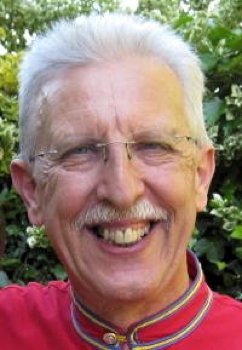
Cover of the 61st Annual Stockton Folk Dance Camp Syllabus in the United States, 2008 AD: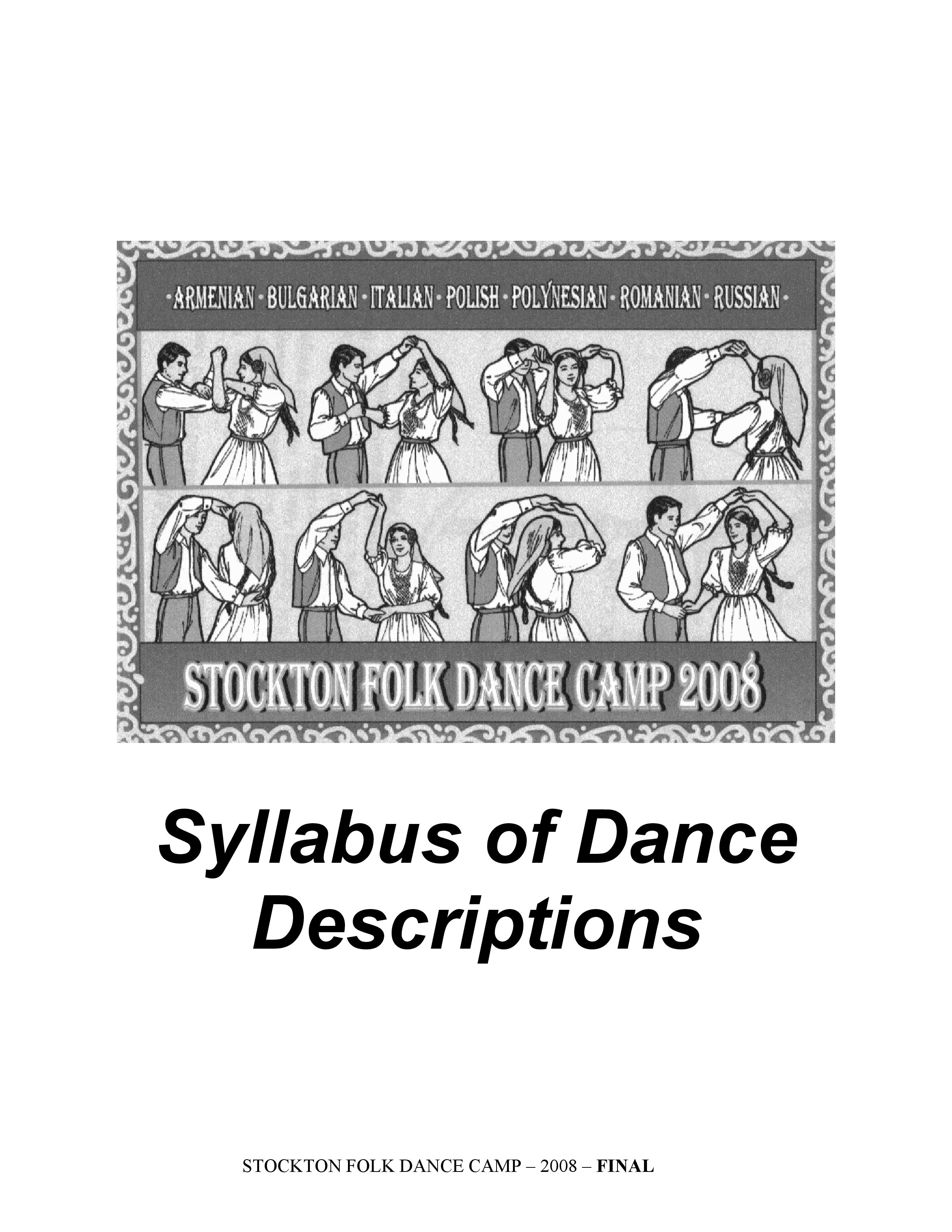
Table of Contents by teacher of the 61st Annual Stockton Folk Dance Camp Syllabus in the United States, 2008 AD: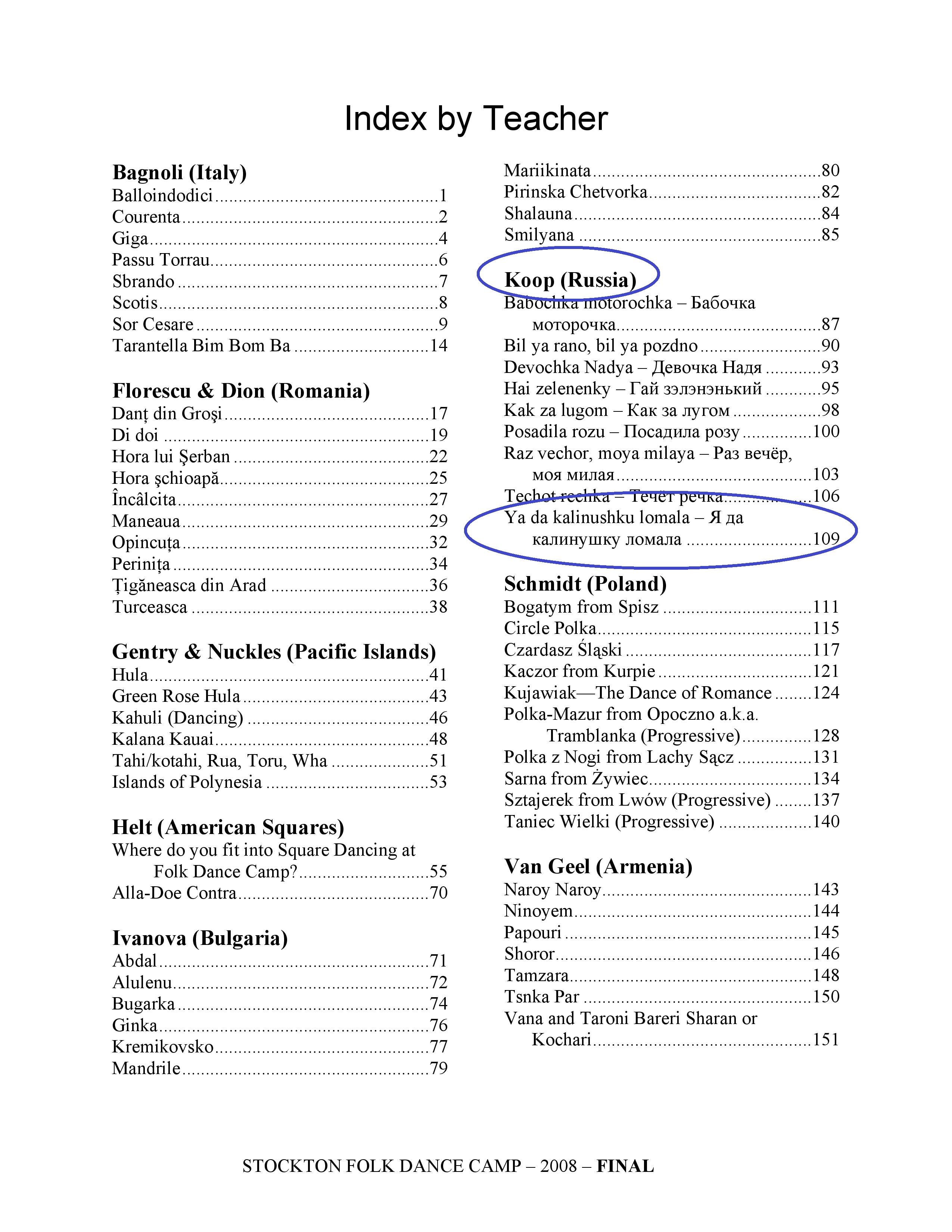
The boss treats you to the original dance description of this dance: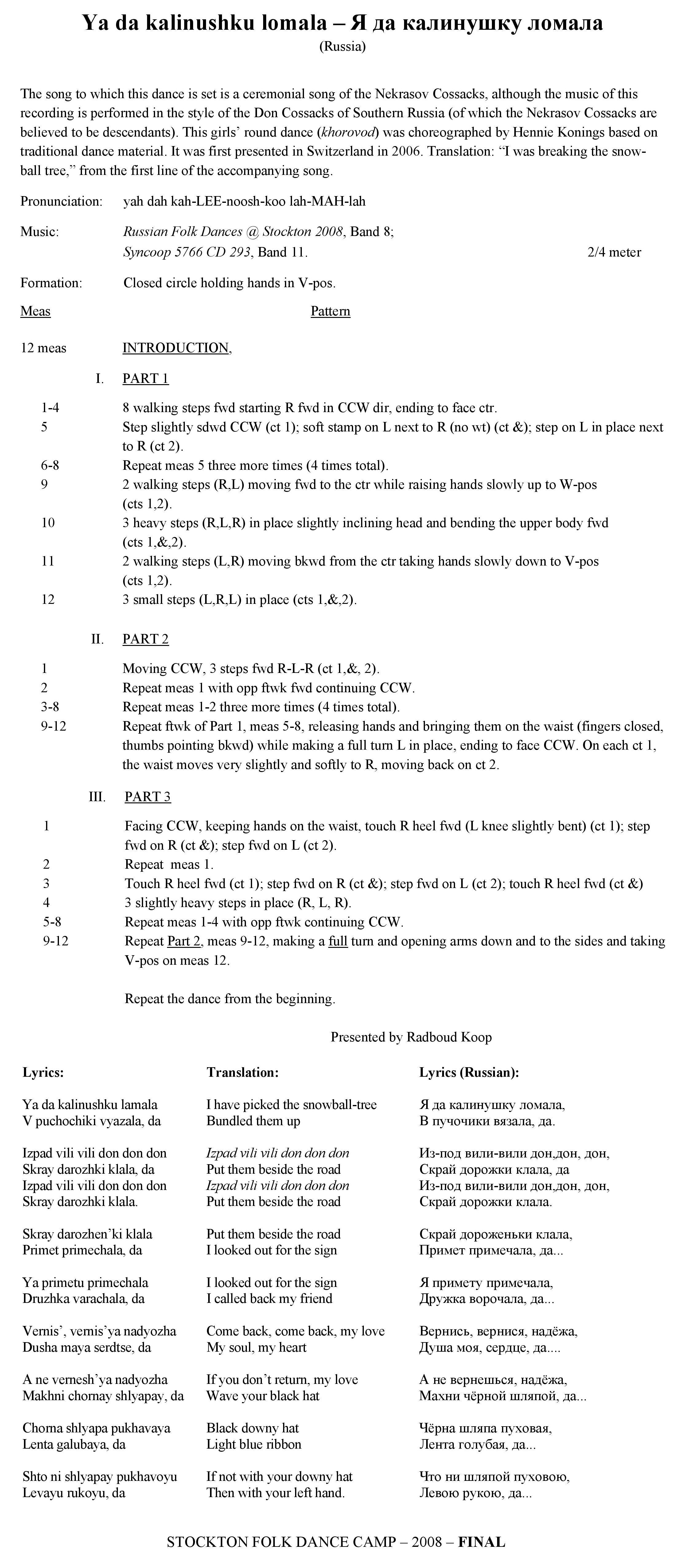
Although this dance is simple, to dance it well and to bring out the true flavor of Russian folk dance, there are truly quite a lot of details to watch out for; here, Teacher Frog does not keep secrets and will fully impart all the skills from my own level as the nameless sweeping monk of the Shaolin Temples Scripture Library. Let us speak sequentially by cross-referencing with the original English dance description.
Part 1
Measures 1-4, counts 1-4: Starting with the right foot, take 8 slow steps along the line of direction.
The walking steps here must not be like our usual aimless strolling or wandering around after a meal. The key is that the waist must be kept straight, the head held high with the chest out, eyes looking straight ahead or slightly upward, and the chin slightly raised. When walking, the upper body remains almost motionless. Maintain a noble and elegant posture.
Reference demonstration video (turning the head straight forward is the direction we want):
Measure 2, counts 5-8: Starting with the right foot, perform 4 step-close-steps along the line of direction. What needs to be noted here is that almost no one in Taiwan performs this movement correctly. For every first step here, the right foot must move along the line of direction (Step slightly sdwd CCW. Here sdwd=sideward, CCW=counter clockwise=line of direction), yet everyone dances it stepping in place, which is incorrect.
Measure 3, measures 9-12: Starting with the right foot, take two slow steps forward, with hands held with neighbors gradually raising to shoulder height (W-position); 3 heavy stamp steps, with the head and upper body slightly inclining forward; reverse direction and back up with 2 slow steps, lowering hands back to a natural drop (V-position), and 3 light stamp steps in place.
Part 2
Measure 1, counts 1-8: Starting with the right foot, perform 4 quick, quick, slow walking steps along the line of direction. This is the key point that Teacher Frog wants to emphasize the most. The dance posture here is the same as in Part 1, Measure 1, with the upper body kept straight and the chin raised high. Here comes the important part: taking 3 steps over 4 counts, but the center of gravity moves forward evenly across all 4 continuous counts! The original dance description states: Moving CCW, 3 steps fwd R-L-R (ct 1 & 2). Fwd=forward; ct=count. 1 & 2 = 1, and, 2. Teacher Frog feels that Teacher Hennie Konings did not write this with enough detail here. This should be broken down into 4 half-counts: 1 & 2 & (1, and, 2, and). The first 3 half-counts are naturally taking 3 steps forward, but the movement on the final "and" count is very subtle. Dance friends, please listen carefully: the bodys center of gravity still moves forward evenly, and the free foot is slightly lifted (in the air), making a preparatory movement before stepping out for the first step of the next measure. Dance friends, absolutely do not think Teacher Frog is nitpicking; you can see it clearly in the teaching demonstration video Teacher Frog has prepared for everyone below. Here, Teacher Frog wants to correct a mistake made by many dance friends, because nobody knows they are supposed to do a movement on the second "and" count, so many people end up dancing it as step, step, stop, and some eccentric ones even dance it as a "change step"?! That is an even bigger fallacy!!
Measure 2: The dance steps repeat the movements of Part 1, Measure 2, but the dance posture changes to hands on hips (bring them on the waist), with both hands in fists and thumbs pointing backward (with fingers closed into fists and thumbs pointing bkwd=backward). Teacher Frog adds an extra explanation: the hand gesture for hands on hips in Russian dance usually involves making a fist with all five fingers, and the technical term in Russian dance is ”Руки в боки”; the posture with thumbs pointing backward is usually used much more when dancing Polish dances. I do not know why Teacher Hennie Konings adopted the Polish way of making a fist here instead of using the traditional fist-making movement in Russian dance, and we might have to ask Teacher Hennie Konings himself to find out. Additionally, at this time, both elbows are drawn forward. If drawing the elbows forward cannot be achieved, at the very least, the elbows must be parallel to the body. Remember, the elbows must absolutely not point backward, looking just like an old hen going cluck, cluck, cluck... completely lacking the imposing manner of the Russian fighting nation, let alone resembling the fierce Cossack cavalry.
Teacher Frogs Note: When dancing Russian dances, the posture with both hands making fists on the hips is called "Руки в боки" in Russian. First, speaking of the movement, it is a posture with both hands making fists, the backs of the hands facing forward, and the elbows widely opened to both sides. The body must be straight, with both hands in fists on the hips, showcasing confidence and majesty. Especially for men, it emphasizes a powerful fist, which is called "Кулак" in Russian. The back of the hand faces forward, with the thumb side or the inner side of the fist pressed against the waist, and the back of the hand and the wrist joint facing the audience. The elbows are in a straight line with the shoulders, and both elbows must be forcefully pushed out to the sides (called "Локти в стороны" in Russian), with the shoulders naturally pressed down, making the entire person look extremely imposing.
Demonstration of the hands-on-hips movement in Russian dance: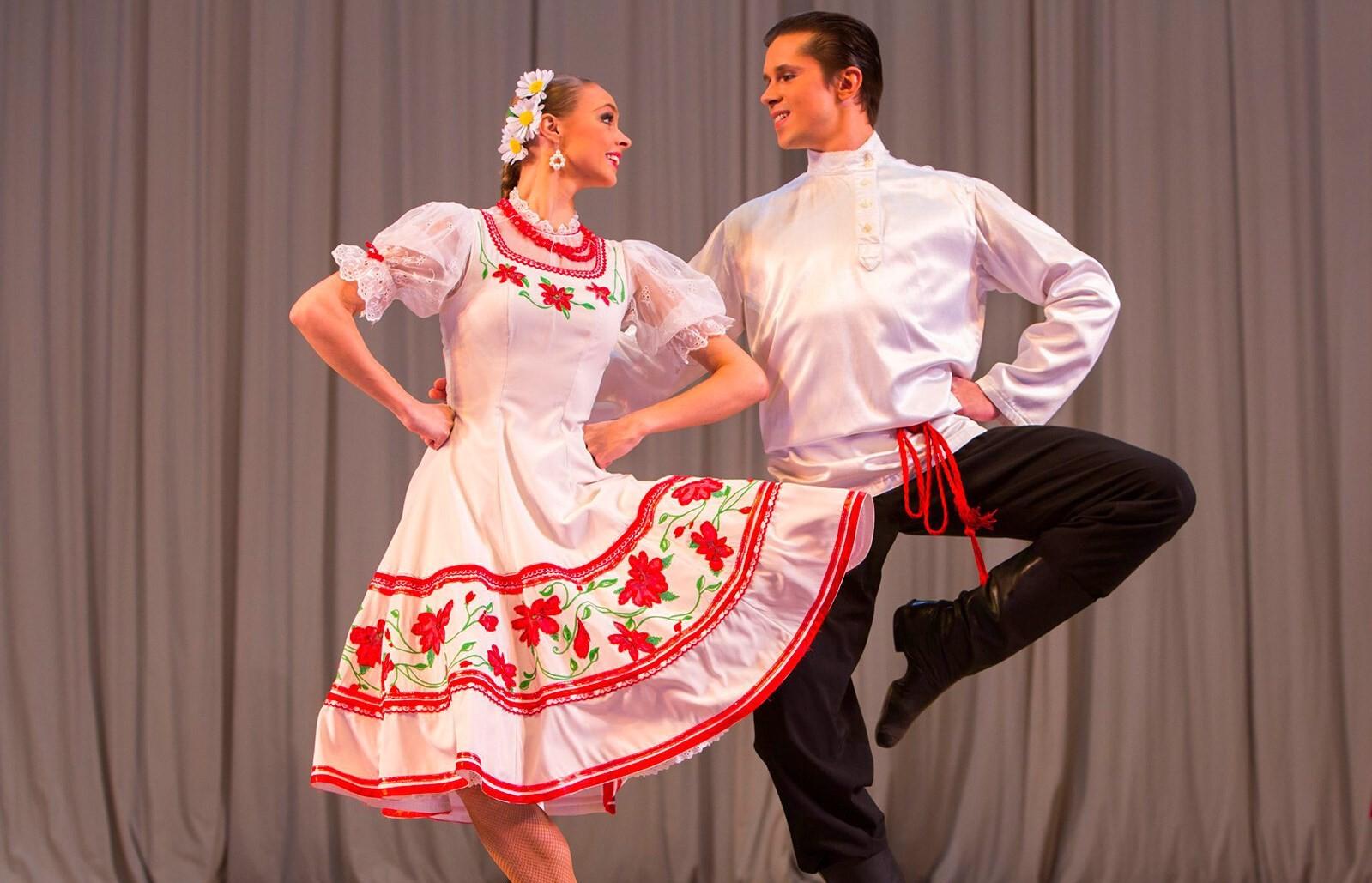
Image source: Russian travel website: https://travel.orb.ru/
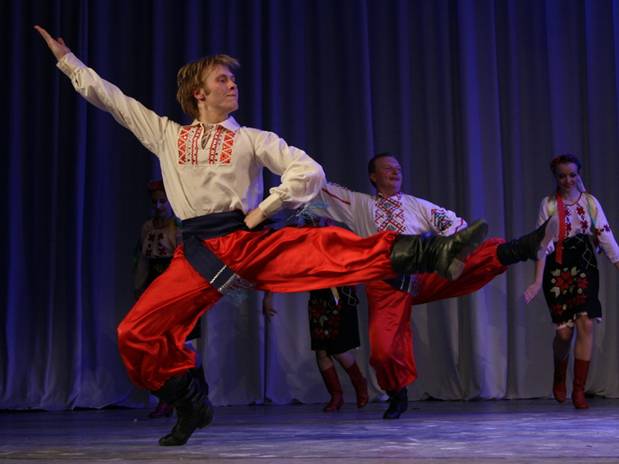
Data source: Russian student archives and learning materials sharing website: https://studfile.net/
Part 3
Measure 1, starting with the right foot, the dance posture remains as the Russian Руки в боки posture, and the mnemonic for the dance steps is: heel, step, step; heel, step, step; heel, step, step, heel; step, step, step. There is nothing difficult about the movements here, but there are two areas to watch out for. One is that the supporting leg must be slightly bent (knee slightly bent). The other, which is even more important, is that the entire sequence of dance steps moves forward along the line of direction, and only the final 3 steps—step, step, step—are danced in place. Many people dance all of them in place, which is incorrect (original dance description: step fwd. fwd=forward; opp=opposite footwork; ftwk=footwork).
Counts 9-12, repeat Measure 2 of Part 2, and finally return to a single circle with everyone holding hands dropping naturally (V-position).
Finally, the boss treats you to the teaching demonstration video by the instructor couple Randi and Murray Spiegel, uploaded by the friendly association Tucson Folk Dance Club, which is a teaching video from the University of Arizona in the United States.
References:
1. Fu Jen Historical Journal, Issue 11 (2000/06), Airiti Library: Author Hsien-Fang Chou: On the Formation of the Cossacks
2. Folk Arts Center of New England:https://facone.org/
3. Syllabus of the 61st Annual Stockton Folk Dance Camp in the United States, 2008 AD


