Improving efficiency methods of a CNC motion controller
2026/04/23 17:11
瀏覽57
迴響0
推薦0
引用0
1.A straight talk definition of CNC motion controller
A CNC motion controller is an electronic device that converts high level machining instructions into precise, time coordinated electrical signals that drive the machine’s actuators. It continuously monitors actual positions through sensors and adjusts its commands to minimise errors, ensuring that the cutting tool follows the intended path with micron level fidelity.The motion controller is the brain that reads a drawing, plans every tiny step of the journey, and tells the muscles exactly what to do,while keeping its eyes on the feedback to correct any missteps.
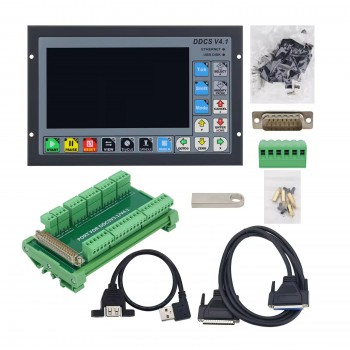
2.Main structure of CNC motion controller
1.Housing/Body: Provides a rigid structure that supports all internal components and keeps the axis stable, often mounted on the machine bed.
2.Rotary motor/Servo motor: A closed loop servo or high precision stepper motor provides the driving power and rotational speed control.
3.Transmission system: Includes components like gearboxes or harmonic drives that convert high speed motor movement into high torque, precise low speed rotation, preventing backlash.
4.Spindle/Chuck/Collet: The rotating part that secures the workpiece, allowing it to be rotated during machining.
5.Rotary encoder: A key feedback sensor that feeds back exact rotational position and velocity to the controller for high precision.
6.Bearings: High precision bearings are necessary to ensure concentricity and reduce runout when rotating heavy loads.
7.Tailstock: In horizontal setups, a tailstock provides support for the end of long workpieces to prevent deflection.
3.The importance of a CNC motion controller
1.It acts as the command center of the entire machine:The first reason a CNC motion controller matters so much is simple: it organizes movement. A CNC machine does not rely on one single motion, but on several axes moving together in a controlled relationship.
2.It directly shapes machining accuracy:A CNC machine may have strong motors and rigid mechanics, but final accuracy still depends heavily on how motion is controlled. The motion controller interprets commands, calculates trajectories, and sends signals that guide each axis toward the required position.
3.It determines how smoothly the machine behaves:There is a noticeable difference between a CNC machine that merely functions and one that feels refined. The refined machine moves with confidence. It accelerates without jerking, corners without hesitation, and stops without leaving the impression that it is fighting itself.
4.It connects programming with real machine behavior:A machining program on its own is only an instruction set. It becomes real only when the controller translates it into actual movement. This translation is not as simple as reading one line and moving one axis. The controller must interpret commands, calculate the intended path, manage speeds, handle coordinate systems, and deal with dynamic changes during operation.
5.It has a major influence on machining efficiency:People often connect machining efficiency with spindle power or cutting parameters, but motion control plays a major role here as well. A capable controller can optimize travel paths, support faster interpolation, reduce unnecessary pauses, and maintain stable feed motion even in complex geometry.
6.It improves reliability by managing complexity:Modern CNC machines are far more demanding than older systems. They often include multiple axes, tool changers, probes, rotary tables, compensation systems, and sometimes real-time monitoring features. The motion controller plays a central role in keeping these functions coordinated.
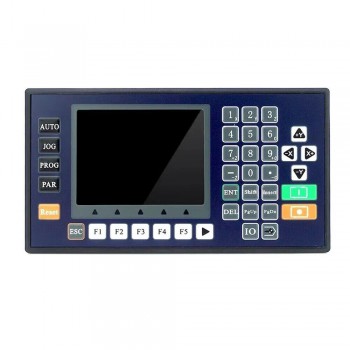
4.Improving efficiency methods of a CNC motion controller
1.Optimize interpolation performance for smoother path execution:One of the most direct ways to improve controller efficiency is to strengthen interpolation performance. A CNC motion controller must constantly calculate how multiple axes should move together to follow the programmed path.
2.Refine acceleration and deceleration control:Many machines lose efficiency not during cutting itself, but during repeated starts, stops, and direction changes. If acceleration and deceleration are not well managed, the controller may force the machine into overly cautious motion, which extends machining time.
3.Reduce unnecessary command processing delays:In a real machining cycle, small delays inside the control system can accumulate into noticeable time loss. These delays may come from slow command reading, inefficient data handling, or poor communication between the controller and drive system.
4.Strengthen look ahead capability for better motion planning:A motion controller becomes far more efficient when it can “see ahead” in the program rather than responding only to the current line of code. Look ahead capability allows the controller to examine upcoming toolpath changes and plan axis behavior in advance.
5.Improve servo coordination and response matching:Even a capable motion controller cannot work efficiently if its commands and the servo system do not match well. A controller may generate excellent motion instructions, but if the servo response is slow, uneven, or poorly tuned, the machine still loses time and smoothness.
6.Simplify toolpath output to reduce control burden:Efficiency is not determined by the controller alone; it is also influenced by the quality of the motion data sent to it. If a CAM generated toolpath contains too many tiny segments, abrupt geometry changes, or unnecessary point density, the controller must process an excessive amount of information in a very short time.
7.Minimize idle motion and non cutting travel:A motion controller contributes to efficiency not only during cutting but also during non cutting movement. Long positioning moves, repeated return paths, and poorly planned transfer motions can consume a large portion of cycle time, especially in production work.
你可能會有興趣的文章:
- How a Pancake Stepper Motor Works and its Applications
- How to maintain an integrated stepper motor?
- Working principle and design requirements of worm gear reducer gearbox
- Main advantages and selection criteria of servo motors
- Characteristics and application fields of DC gear motors
- Some important information about stepper motor encoders
限會員,要發表迴響,請先登入


