Design challenges of manual linear stage
2026/04/15 17:02
瀏覽51
迴響0
推薦0
引用0
1.Manual linear stage definitions introduction
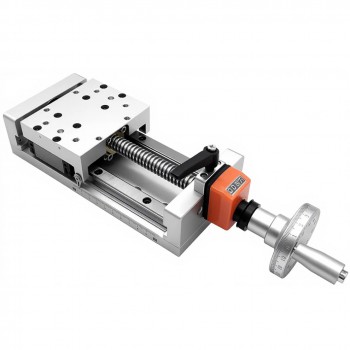
A manual linear stage is a precision mechanical device that restricts motion to a single, straight axis while allowing the user to adjust and lock the position by hand. Unlike motorised stages, it relies entirely on human input to achieve controlled linear displacement.Manual linear stages are fundamental building blocks in laboratory setups, optical benches, inspection fixtures, and light manufacturing. They provide an economical, reliable, and intuitive way to position components such as lenses, sensors, probes, or workpieces with accuracies down to a few micrometres.
2.Working principles of manual linear stage
1.Mounting:The stage base is bolted to a stable surface. The surface must be flat and rigid to avoid distorting the stage.
2.Payload attachment:The workpiece or component is screwed onto the carriage. The load should be centred to minimise tilting moments.
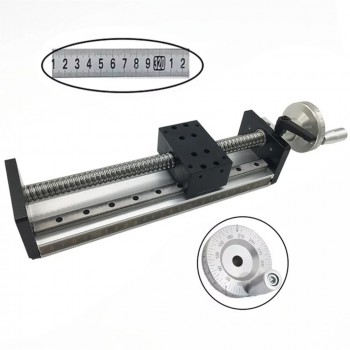
3.Positioning:The user turns the drive knob or micrometer thimble. For a leadscrew, one full rotation typically moves the carriage by 0.5 mm or 1 mm. For a micrometer, the barrel and thimble scales indicate displacement directly.
4.Backlash management:Because mechanical clearances exist, the user must always approach the target position from the same direction. If overshoot occurs, one backs up beyond the target and reapproaches to eliminate lost motion.
5.Locking:Once the desired position is reached, the locking screw is tightened to prevent accidental movement. On precision stages, the lock clamps the carriage directly to the guide rail to avoid shifting the drive mechanism.
6.Verification:For critical work, an external dial indicator or digital readout is used to confirm the position, bypassing any scale error.
3.Importance os manual linear stage
1.High precision and control:Manual linear stages provide exceptionally fine control over movement, allowing users to adjust position with micrometer-level accuracy. This level of precision is critical in applications such as microscopy, optics alignment, and semiconductor inspection, where even the smallest deviation can affect results.
2.Cost effectiveness:Compared to motorized or automated stages, manual linear stages are significantly more affordable. They do not require complex electronic components or control systems, making them an ideal choice for laboratories and industries operating under budget constraints while still requiring reliable positioning solutions.
3.Simplicity and reliability:The mechanical design of manual linear stages is straightforward, which reduces the likelihood of failure. Without reliance on motors, software, or electrical power, these stages offer consistent performance and are less prone to technical issues, making them dependable in both routine and critical tasks.
4.Ease of maintenance:Maintenance requirements for manual linear stages are minimal. Their simple construction allows for easy cleaning, lubrication, and part replacement. This not only reduces downtime but also extends the operational lifespan of the equipment.
5.Versatility across applications:Manual linear stages are widely used in various fields, including research laboratories, manufacturing, medical device assembly, and educational settings. Their adaptability makes them suitable for tasks such as sample positioning, alignment of optical components, and calibration processes.
6.Reduced complexity in system integration:Integrating a manual linear stage into an existing system is straightforward. There is no need for software integration, wiring, or programming, which simplifies setup and reduces the time required for implementation.
4.Design challenges of manual linear stage
1.Achieving high precision and repeatability:Designing a manual linear stage that consistently delivers precise positioning is a major challenge. Mechanical tolerances, backlash in lead screws, and minute manufacturing imperfections can reduce repeatability. Engineers must carefully select components and apply precision machining techniques to minimize positioning errors.
2.Minimizing backlash and hysteresis:Backlash, the small gap between mechanical components such as screws and nuts, can lead to positioning inaccuracies when reversing direction. Reducing backlash without increasing friction requires advanced design solutions.
3.Balancing smooth motion and stability:Ensuring smooth, low-friction motion while maintaining high stiffness is difficult. Excessively low friction may compromise stability, while too much friction can make fine adjustments difficult.
4.Load capacity vs compact size:Manual linear stages often need to support significant loads while remaining compact. Increasing load capacity typically requires stronger materials and larger structures, which can conflict with size and portability requirements.
5.Material selection and thermal stability:Materials must be chosen not only for strength and durability but also for thermal stability. Temperature changes can cause expansion or contraction, leading to positioning errors. Selecting materials with low thermal expansion coefficients or designing compensation mechanisms is essential in high-precision environments.
6.Wear resistance and long term durability:Repeated manual operation causes wear on moving components such as guide rails, screws, and bearings. Ensuring long-term durability requires high-quality materials, surface treatments, and proper lubrication strategies, all of which can increase cost and complexity.
7.Alignment and assembly accuracy:Precise alignment of components during assembly is critical to ensure straight-line motion without deviation or binding. Even slight misalignment can introduce errors, increase wear, or cause uneven motion.
8.Environmental resistance:Manual linear stages may operate in environments with dust, humidity, or vibration. Protecting internal components from contamination while maintaining smooth motion is challenging.
自訂分類:不分類
上一則: Improving efficiency methods of a CNC motion controller下一則: Maintenance skills of magnetic particle clutch
你可能會有興趣的文章:
- Maintenance skills of magnetic particle clutch
- How a Pancake Stepper Motor Works and its Applications
- 7 Key Points to Consider When Choosing a Servo Motor
- What are the precautions for using linear guide rail?
- How to maintain an integrated stepper motor?
- What are the installation precautions for helical planetary gearboxes?
限會員,要發表迴響,請先登入


