7 Key Points to Consider When Choosing a Servo Motor
2025/07/15 17:11
瀏覽103
迴響0
推薦0
引用0
1.Basic definition of servo motor
A servo motor is an electric motor that enables precise control of angular or linear position, velocity, and acceleration within a mechanical system. It's a core component of a servomechanism, often including a motor, position sensor, and control circuit, all housed together. Servo motors are crucial in applications requiring accurate and controlled movement, like robotics, automation, and CNC machinery.
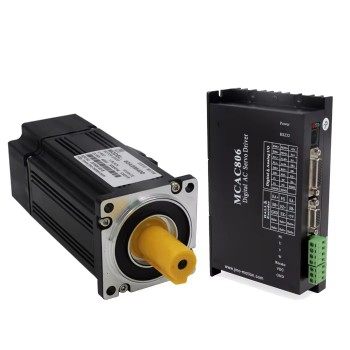
2.Main components of servo motor
1.A motor: This can be either a DC motor or an AC motor depending on the power source and the application requirements. The motor provides the mechanical power to rotate or move the output shaft.
2.A sensor: This can be either a potentiometer, an encoder, a resolver, or another device that measures the position, speed, or torque of the output shaft and sends feedback signals to the controller.
3.A controller: This can be either an analog or a digital circuit that compares the feedback signals from the sensor with the desired setpoint signals from an external source (such as a computer or a joystick) and generates control signals to adjust the motor’s voltage or current accordingly.
3. Main advantages of servo motor
1.High Efficiency:Servo motors are designed to operate at high efficiencies, often reaching up to 90% under light load conditions. This efficiency is crucial in reducing energy consumption and operational costs, making servo motors a preferred choice in industries focusing on sustainability and cost-efficiency.
2.Quiet Operation:One of the significant advantages of servo motors is their ability to operate quietly at high speeds. This quiet operation is essential in environments where noise reduction is critical, such as in laboratory or medical equipment.
3.Short Period Management:Servo motors excel in managing high-performance demands over short periods. They can quickly ramp up to high speeds and manage sudden stops with minimal wear and tear, thanks to their robust design and precise control features.
4.Highly Reliable:Servo motors are celebrated for their high reliability, which ensures minimal downtime and maintenance costs. This reliability stems from their sophisticated design, which includes durable materials and advanced engineering techniques.
5.High-speed Performance:Servo motors are renowned for their ability to operate at high speeds while maintaining precision and efficiency. This high-speed performance is crucial in applications like packaging lines and assembly processes where the speed of operation directly correlates with productivity levels.
6.Smooth Running:The smooth operation of servo motors is essential for applications that require stability and precision. Servo motors are designed to operate without the vibrations and noise associated with many other motor types, such as DC or stepper motors.
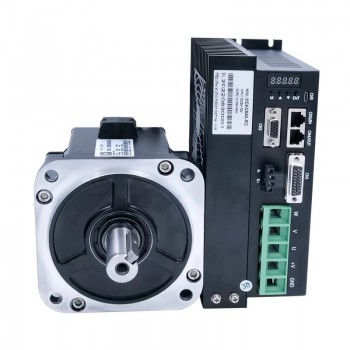
4.Key points to consider when choosing a servo motor
1. Load inertia:When choosing a motor, you need to consider the inertia of the load it needs to drive. The greater the inertia, the greater the motor torque required, and the more powerful the motor needs to be selected.Knowing the load specific inertia of your application is the key to choosing the right servo motor.
2. Range of speed:The choice of servo motor speed range depends on the application. If high-speed movement is required, high-speed motors need to be selected. If precise control and low speed movement are required, a low speed motor needs to be selected.
3. Peak torque:Peak torque is the most torque required at any one point throughout the cycle. Ideally, peak torque is in the intermittent region of the torque curve because it's not as sustainable. If the peak torque required by the application falls in the motor's continuous region, it's likely oversized.
4. Control mode:The servo motor can be controlled by open loop or closed loop. Open loop control is simple and suitable for low precision applications. High precision closed-loop control for high precision applications.
5. Reliability and lifespan:The selection of the motor needs to consider its reliability and life. Under normal circumstances, brand awareness and good after-sales service motor quality is more reliable.
6. Cost:Cost is also one of the factors to consider when choosing a motor. High-cost motors may perform better, but may not be the most appropriate choice, and need to be considered according to the specific application needs. You need to find a solution that strikes a balance between performance and price.
7. Environmental Conditions:Consider the environmental conditions in which the servo motor will operate. Factors such as temperature, humidity, and exposure to dust or liquids can impact motor performance. Choose a servo motor with the appropriate environmental protection ratings for your application.
自訂分類:不分類
上一則: How a Pancake Stepper Motor Works and its Applications下一則: What are the precautions for using linear guide rail?
你可能會有興趣的文章:
- What are the precautions for using linear guide rail?
- How to maintain an integrated stepper motor?
- Working principle and design requirements of worm gear reducer gearbox
- Debugging steps and optimization methods of closed-loop stepper motors
- Design features and operation steps of geared stepper motors
- How to realize the motor-driven slider movement on the linear slide
限會員,要發表迴響,請先登入


