1.
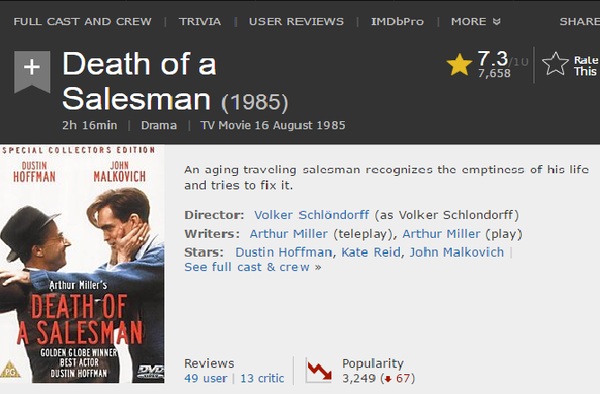
Death of a Salesman- is a 1949 play written by American playwright Arthur Miller. It was the recipient of the 1949 Pulitzer Prize for Drama and Tony Award for Best Play. The play premiered on Broadway in February 1949, running for 742 performances, and has been revived on Broadway four times, winning three Tony Awards for Best Revival. It is widely considered to be one of the greatest plays of the 20th century.
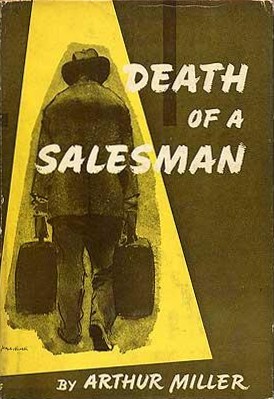
Arthur Miller- was a prolific American playwright, essayist, and prominent figure in twentieth-century American theatre. Among his most popular plays are All My Sons (1947), Death of a Salesman (1949), The Crucible(1953) and A View from the Bridge (1955, revised 1956). He also wrote several screenplays and was most noted for his work on The Misfits (1961). The drama Death of a Salesman is often numbered on the short list of finest American plays in the 20th century alongside Long Day's Journey into Night and A Streetcar Named Desire.

2.
Term Explanation
(1) foil- In fiction, a foil is a character who contrasts with another character (usually the protagonist) in order to highlight particular qualities of the other character. In some cases, a subplot can be used as a foil to the main plot. This is especially true in the case of met fiction and the "story within a story" motif. The word foil comes from the old practice of backing gems with foil in order to make them shine more brightly. A foil usually either differs dramatically or is extremely similar but with a key difference setting them apart. The concept of a foil is also more widely applied to any comparison that is made to contrast a difference between two things.
(2) verbal irony-is distinguished from situational irony and dramatic irony in that it is produced intentionally by speakers. For instance, if a man exclaims, "I'm not upset!" but reveals an upset emotional state through his voice while truly trying to claim he's not upset, it would not be verbal irony by virtue of its verbal manifestation (it would, however, be situational irony). But if the same speaker said the same words and intended to communicate that he was upset by claiming he was not, the utterance would be verbal irony. This distinction illustrates an important aspect of verbal irony—speakers communicate implied propositions that are intentionally contradictory to the propositions contained in the words themselves. There are, however, examples of verbal irony that do not rely on saying the opposite of what one means, and there are cases where all the traditional criteria of irony exist and the utterance is not ironic.
3.
Vocabulary
(1) suffix standing for profession
→actor, artist teacher, applicant, protestant
applicant- a person who applies, as for a job, grant, support, etc; candidate.
protestant-a member of a Western Christian church whose faith and practice are founded on the principles of the Reformation,especially in the acceptance of the Bible as the sole source of revelation, in
justification by faith alone, and in theuniversal priesthood of all the believers.
(2)
approve(v.)/approval(n.)
propose(v.)/proposal(n.)
→ -al is suffix standing for noun.
4.
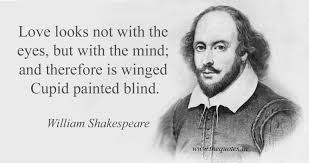
'' Love looks not with the eyes, but with the mind.'' - Helena
quote from Shakespeare A Midsummer Night Dream
''HELENA
He will not know what all but he do know.
And as he errs, doting on Hermia's eyes,
So I, admiring of his qualities.
Things base and vile, holding no quantity,
Love can transpose to form and dignity.
Love looks not with the eyes, but with the mind;
And therefore is winged Cupid painted blind. (1.1.235-241)''
Here, Helena admits that she loves many of Demetrius's "base and vile" qualities. It seems that love has the capacity to blind us (figuratively speaking) to the truth. This idea comes up again when Titania literally falls in love with Bottom—a "base and vile" creature.