1.
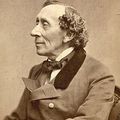
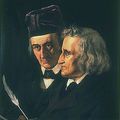
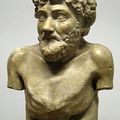
Edith Wharton- was a Pulitzer Prize-winning American novelist, short story writer, and designer. She was nominated for the Nobel Prize in Literature in 1927, 1928 and 1930. Wharton combined her insider's view of America's privileged classes with a brilliant, natural wit to write humorous, incisive novels and short stories of social and psychological insight.
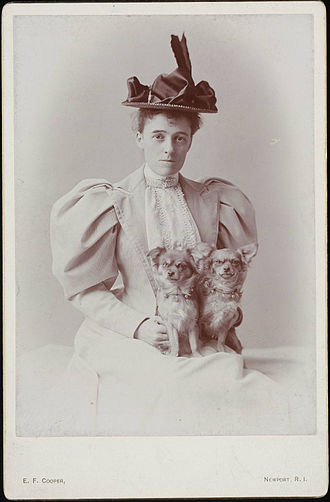
''Roman Fever''- is a short story by American writer Edith Wharton. It was first published in the magazine Liberty in 1934, and was later included in Wharton's last short-story collection, The World Over. The protagonists are Grace Ansley and Alida Slade, two middle-aged American women who are visiting Rome with their daughters, Barbara Ansley and Jenny Slade. The elder women grew up in Manhattan, New York, and were friends from childhood. A youthful and romantic rivalry led Mrs. Slade to nurture feelings of jealousy and hatred against Mrs. Ansley.
2.
Charles Dickens- was an English writer and social critic. He created some of the world's best-known fictional characters and is regarded as the greatest novelist of the Victorian era. His works enjoyed unprecedented popularity during his lifetime, and by the twentieth century critics and scholars had recognized him as a literary genius. His novels and short stories enjoy lasting popularity.
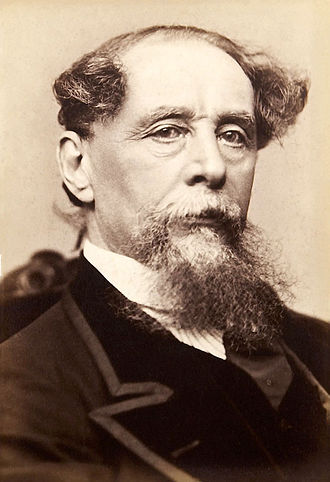
'' A Christmas Carol''- is a novella by Charles Dickens, first published in London by Chapman & Hall on 19 December 1843. The novella met with instant success and critical acclaim. A Christmas Carol tells the story of a bitter old miser named Ebenezer Scrooge and his transformation into a gentler, kindlier man after visitations by the ghost of his former business partner Jacob Marley and the Ghosts of Christmas Past, Present and Yet to Come.
'' A Tale of Two Cities''- is a novel by Charles Dickens, set in London and Paris before and during the French Revolution. The novel depicts the plight of the French peasantry demoralized by the French aristocracy in the years leading up to the revolution, the corresponding brutality demonstrated by the revolutionaries toward the former aristocrats in the early years of the revolution, and many unflattering social parallels with life in London during the same period.
Dickens' famous sentence:
"It was the best of times, it was the worst of times, it was the age of wisdom, it was the age of foolishness, it was the epoch of belief, it was the epoch of incredulity, it was the season of Light, it was the season of Darkness, it was the spring of hope, it was the winter of despair, we had everything before us, we had nothing before us, we were all going direct to Heaven, we were all going direct the other way - in short, the period was so far like the present period, that some of its noisiest authorities insisted on its being received, for good or for evil, in the superlative degree of comparison only.
3.
'' The Western Canon'' (西方正典)
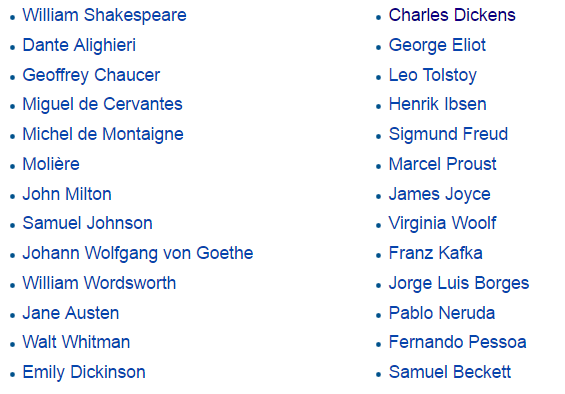
- is a 1994 book by Harold Bloom on Western literature, in which he defends the concept of the Western canon by discussing 26 writers whom he sees as central to the canon. The Western Canon is Bloom's best-known book alongside The Anxiety of Influence, and was a surprise bestseller upon its release in the United States.
discussing 26 writers whom he sees as central to the canon:
Harold Bloom- is an American literary critic and Sterling Professor of Humanities at Yale University. Since the publication of his first book in 1959, Bloom has written more than 20 books of literary criticism, several books discussing religion, and a novel. He has edited hundreds of anthologies concerning numerous literary and philosophical figures for the Chelsea House publishing firm. Bloom's books have been translated into more than 40 languages.
4.
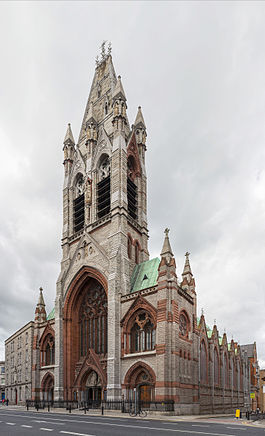
chapel/ cathedral/ church
chapel- is a religious place of fellowship, prayer and worship that is attached to a larger, often nonreligious institution or that is considered an extension of a primary religious institution. It may be part of a larger structure or complex, such as a college, hospital, palace, prison, funeral home, church, synagogue or mosque, located on board a military or commercial ship, or it may be an entirely free-standing building, sometimes with its own grounds.
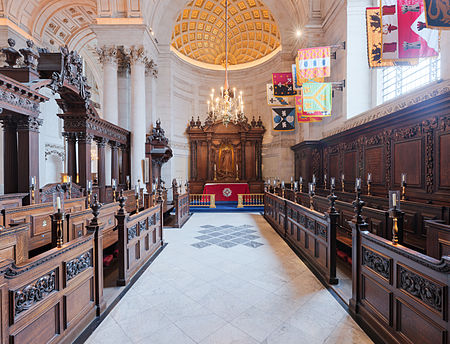
cathedral- is a Christian church which contains the seat of a bishop, thus serving as the central church of a diocese, conference, or episcopate. Churches with the function of "cathedral" are usually specific to those Christian denominations with an Episcopal hierarchy, such as the Roman Catholic, Anglican, Orthodox, and some Lutheran and Methodist churches.
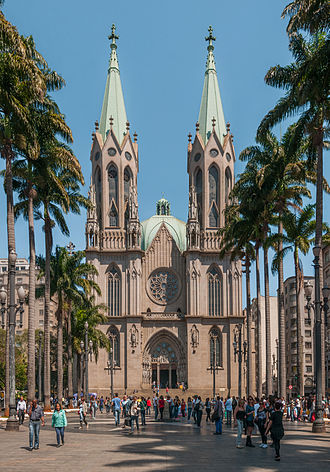
church- is a building used for religious activities, particularly worship services. The term in its architectural sense is most often used by Christians to refer to their religious buildings; they can be used by other religions. In traditional Christian architecture, the church is often arranged in the shape of a Christian cross. When viewed from plan view the longest part of a cross is represented by the aisle and the junction of the cross is located at the altar area.
5.
Vocabulary and Term Explanation
(1)overrate- to overestimate the merits of; rate too highly.
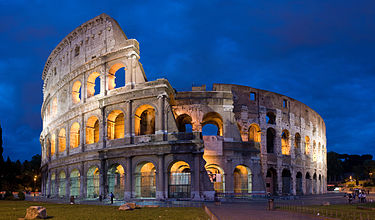
(2)Colosseum(=coliseum)- is an oval amphitheatre in the centre of the city of Rome, Italy. Built of concrete and sand, it is the largest amphitheatre ever built. The Colosseum is situated just east of the Roman Forum. Construction began under the emperor Vespasian in AD 72, and was completed in AD 80 under his successor and heir Titus. Further modifications were made during the reign of Domitian (81–96).