1.
para- beside, beyond
paragraph-a distinct division of written or printed matter that begins on a new,
usually indented line, consists of one or more sentences, andtypically deals with
a single thought or topic or quotes one speaker's continuous words.
parasol- a light, usually small umbrella carried as protection from the sun.
parachute-an apparatus used to retard free fall from an aircraft, consisting of a light,
usually hemispherical canopy attached by cords to aharness and worn or stored foldeduntil deployed in descent.
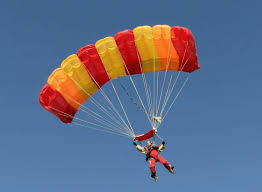
(the golden parachute- is an agreement between a company and an employee specifying that the employee will receive certain significant benefits if employment is terminated. Most definitions specify the employment termination is as a result of a merger or takeover, also known as "Change-in-control benefits", but more recently the term has been used to describe perceived excessive CFO severance packages unrelated to change in ownership. The benefits may include severance pay, cash bonuses, stock options, or other benefits.)
parasite-Biology An organism that lives and feeds on or in an organism of a different
species and causes harm to its host.
2.
fate- the supposed force, principle, or power that predetermines events: have no choice.
destiny-a predetermined course of events considered as something beyond human
power or control.
3.
a lock of hair- is a piece or pieces of hair that has been cut from, or remains singly on, a human head, most commonly bunched or tied together in some way.

powerlessness- lacking strength or power; helpless and totally ineffectual.
-lacking legal or other authority.
allegory-the representation of abstract ideas or principles by characters, figures, or
events in narrative, dramatic, or pictorial form.
4.
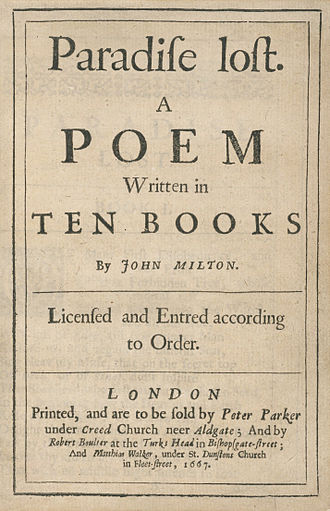
John Milton- was an English poet, polemicist, man of letters, and a civil servant for the Commonwealth of England under Oliver Cromwell. He wrote at a time of religious flux and political upheaval, and is best known for his epic poem Paradise Lost (1667), written in blank verse. Milton's poetry and prose reflect deep personal convictions, a passion for freedom and self-determination, and the urgent issues and political turbulence of his day. Writing in English, Latin, Greek, and Italian, he achieved international renown within his lifetime, and his celebrated Areopagitica (1644)—written in condemnation of pre-publication censorship—is among history's most influential and impassioned defences of free speech and freedom of the press.
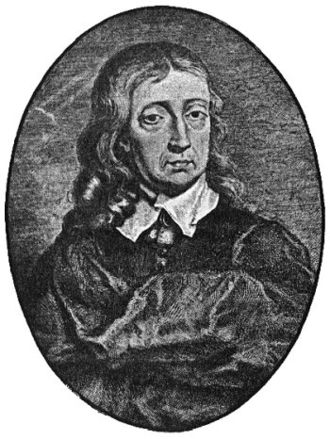
Paradise Lost- is an epic poem in blank verse by the 17th-century English poet John Milton(1608–1674). The first version, published in 1667, consisted of ten books with over ten thousand lines of verse. A second edition followed in 1674, arranged into twelve books (in the manner of Virgil's Aeneid) with minor revisions throughout and a note on the versification. It is considered by critics to be Milton's major work, and it helped solidify his reputation as one of the greatest English poets of his time. The poem concerns the Biblical story of the Fall of Man: the temptation of Adam and Eve by the fallen angel Satan and their expulsion from the Garden of Eden. Milton's purpose, stated in Book I, is to "justify the ways of God to men".
5.
Dante Alighieri- was a major Italian poet of the late Middle Ages. His Divine Comedy, originally called Comedìa (modern Italian: Commedia) and later christened Divina by Boccaccio, is widely considered the greatest literary work composed in the Italian language and a masterpiece of world literature.
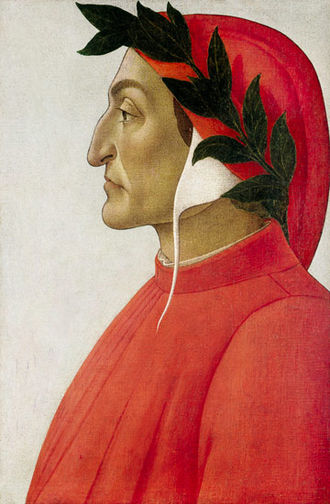
Divine Comedy- is an epic poem by Dante Alighieri, begun c. 1308 and completed 1320, a year before his death in 1321. It is widely considered the preeminent work of Italian literature and is seen as one of the greatest works of world literature. The poem's imaginative vision of the afterlife is representative of the medieval world-view as it had developed in the Western Church by the 14th century. It helped establish the Tuscan language, in which it is written, as the standardized Italian language. It is divided into three parts: Inferno, Purgatorio, and Paradiso.
6.
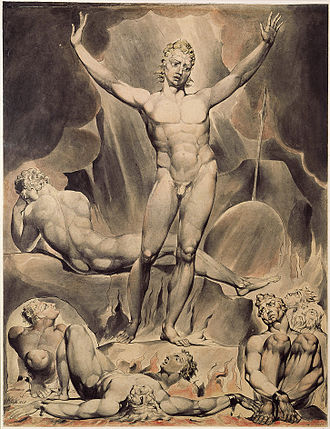
Satan- is a figure appearing in the texts of the Abrahamic religions who brings evil and temptation, and is known as the deceiver who leads humanity astray. Some religious groups teach that he originated as an angel who fell out of favor with God, seducing humanity into the ways of sin, and who has power in the fallen world. In the Hebrew Bible and the New, Satan is primarily an accuser and adversary, a decidedly malevolent entity, also called the devil, who possesses demonic qualities.
7.
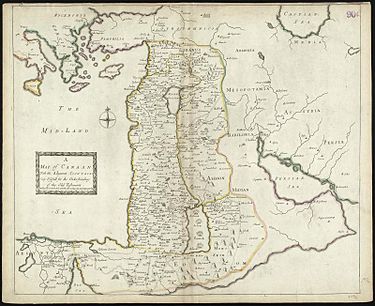
Canaan- during the late 2nd millennium BC, a region in the Ancient Near East. In the Bible it corresponds to the Levant, in particular the areas of the Southern Levant that are the main setting of the narrative of the Hebrew Bible, i.e. the area of Israel, Philistia, Phoenicia, and other nations. The name Canaan is used commonly in the Hebrew Bible, with particular definition in references Genesis 10 and Numbers 34, where the "Land of Canaan" extends from Lebanon southward to the "Brook of Egypt" and eastward to the Jordan River Valley. References to Canaan in the Bible are usually backward looking, referring to a region that had become something else.
8.
Seven deadly sins- also known as the capital vices or cardinal sins, is a Western religious grouping and classification of vices. This grouping emerged in the fourth century AD and was used for Christian ethical education and for confession. According to the Catechism of the Catholic Church, a mortal or deadly sin is believed to destroy the life of grace and charity within a person. Though the sins have fluctuated over time, the currently recognized list includes pride, greed, lust, envy, gluttony, wrath and sloth. There is a parallel tradition of seven virtues.
9.
'' Life is a game, boy. Life is game that one plays according to the rules. ''-
The Catcher in the Rye
10.
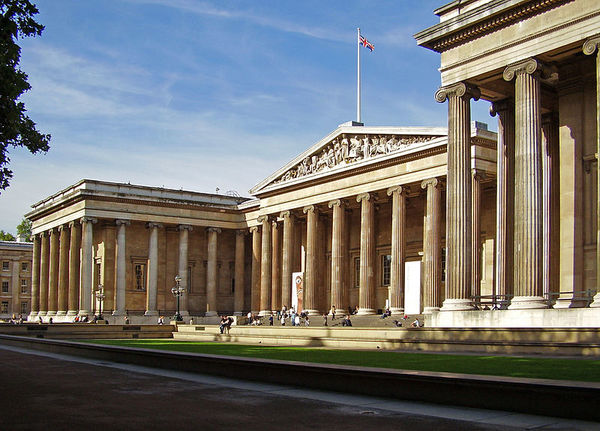
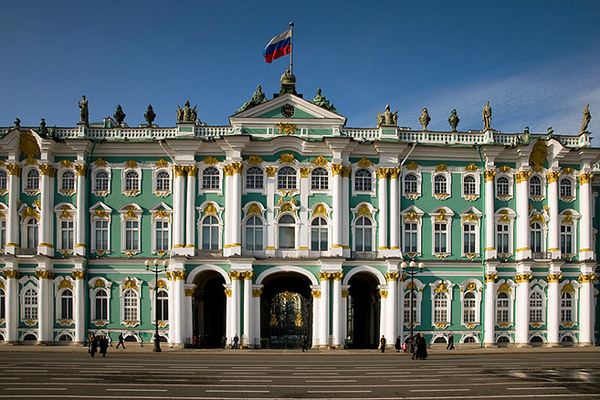
Three Best Museum:
Hermitage Museum
Louvre

British Museum