Medea
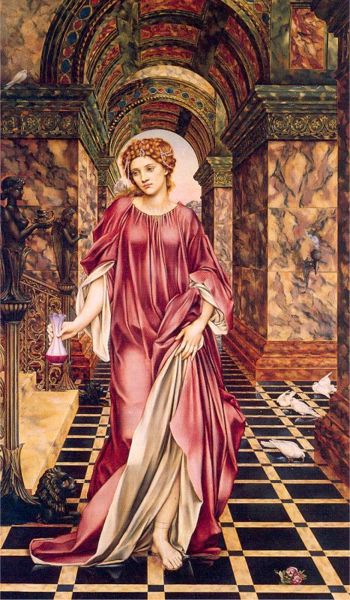
In Greek mythology, Medea is a sorceress who was the daughter of King Aeëtes of Colchis, niece of Circe, granddaughter of the sun god Helios, and later wife to the hero Jason. In Euripides's play Medea, Jason abandons Medea when Creon, king of Corinth, offers his daughter Glauce. The play tells of Medea avenging her husband's betrayal by killing their children.
Euripides
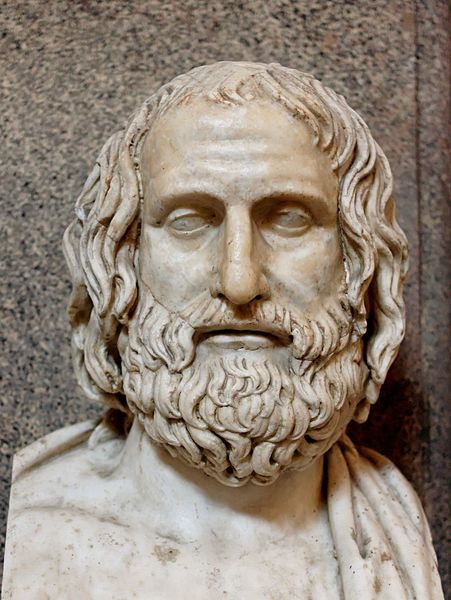
Euripides was a tragedian of classical Athens. He is one of the few whose plays have survived, with the others being Aeschylus, Sophocles, and potentially Euphorion. Some ancient scholars attributed 95 plays to him but according to the Suda it was 92 at most. Of these, 18 or 19 have survived more or less complete (there has been debate about his authorship of Rhesus, largely on stylistic grounds) and there are also fragments, some substantial, of most of the other plays. More of his plays have survived intact than those of Aeschylus and Sophocles together, partly due to mere chance and partly because his popularity grew as theirs declined—he became, in the Hellenistic Age, a cornerstone of ancient literary education, along with Homer, Demosthenes and Menander.
Golden Fleece
In Greek mythology, the Golden Fleece is the fleece of the gold-hair winged ram, which was held in Colchis. The fleece is a symbol of authority and kingship. It figures in the tale of the hero Jason and his band of Argonauts, who set out on a quest for the fleece by order of King Pelias, in order to place Jason rightfully on the throne of lolcus in Thessaly. Through the help of Medea, they acquire the Golden Fleece. The story is of great antiquity and was current in the time of Homer (eighth century BC). It survives in various forms, among which the details vary.
限會員,要發表迴響,請先登入


