A jewelry sandblaster relies on precise abrasive control to achieve consistent surface finishes, whether the goal is creating a matte texture, removing oxidation, preparing a surface for polishing, or adding decorative effects. Unlike industrial blasting applications, jewelry work requires much finer control because precious metals and delicate components can be easily damaged by excessive pressure or an unstable abrasive stream. Managing abrasive flow correctly is therefore one of the most important skills when operating a jewelry sandblasting system.
The first factor affecting abrasive flow is the condition of the abrasive material itself. Different media, such as glass beads, aluminum oxide, silicon carbide, or other fine blasting powders, behave differently inside the machine. If the abrasive becomes contaminated with moisture, metal particles, or polishing residue, it may not move evenly through the nozzle. This can create irregular blasting patterns and force the operator to compensate with unnecessary pressure adjustments. Keeping the abrasive clean and dry helps maintain a predictable flow rate.
The adjustment of the metering valve is another key point. This valve controls how much abrasive enters the airflow before reaching the nozzle. Opening the valve too far does not always improve efficiency. An excessive amount of abrasive can reduce the cutting ability of the air stream because the particles lose speed when overcrowded. On the other hand, insufficient abrasive may create weak results and require repeated passes over the same area. Finding the correct balance allows the machine to work effectively while protecting the jewelry surface.
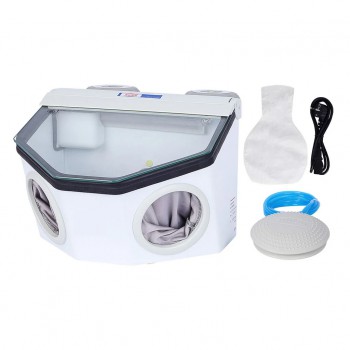
Air pressure also has a direct relationship with abrasive delivery. Higher pressure increases particle velocity, but it can also make the process more aggressive than necessary. For softer metals such as silver or delicate gold alloys, a lower pressure setting combined with a controlled abrasive feed often produces a cleaner finish. Experienced craftsmen usually adjust pressure gradually while observing how the metal reacts rather than relying on a fixed setting for every project.
The nozzle size and condition should not be overlooked. A worn nozzle can change the shape of the abrasive stream and reduce accuracy. A partially blocked nozzle may cause uneven flow, resulting in visible differences across the blasted surface. Regular inspection and timely replacement of worn components help maintain consistent performance, especially in workshops where the sandblaster is used frequently.
Another useful technique is testing the abrasive flow on a sample piece before working on a finished jewelry item. A small piece of similar metal allows the operator to check texture, depth, and coverage without risking valuable materials. This simple step is particularly helpful when changing abrasive types or preparing a new batch of media.
Proper abrasive flow control is not only about achieving a certain appearance; it also improves efficiency and reduces waste. When the abrasive stream is correctly balanced, less material is consumed, nozzle wear is reduced, and finishing results become more repeatable. For professional jewelers, this consistency can make the difference between a surface that looks professionally crafted and one that requires additional correction.
A jewelry sandblaster is a precision tool rather than just a source of compressed air and abrasive particles. By paying attention to abrasive quality, valve adjustment, air pressure, and equipment maintenance, operators can create controlled finishes while preserving the character of each piece. Mastering abrasive flow turns sandblasting from a simple surface treatment into a reliable part of the jewelry-making process.
Related articles: https://ameblo.jp/frank35/entry-12976114082.html
下一則: Improving Production Consistency with a Pearl Drilling Machine
- The Future of Small Induction Melting Furnaces in Jewelry Manufacturing
- Creating Textured Metal Sheets Using a Jewelry Rolling Mill Machine
- Preventing Cracks and Thermal Shock in Ceramic Melting Crucibles
- How Inside Ring Engraving Machines Support Small Jewelry Businesses
- The Evolution of Pearl Drilling Technology in Jewelry Making
- Cleaning and Maintenance of Clay Graphite Crucibles
限會員,要發表迴響,請先登入


