Precision is the soul of engraving. Whether you are detailing fine jewelry, customizing metal surfaces, or creating intricate artistic patterns, the quality of your work depends heavily on control and consistency. Among the various engraving tools available today, pneumatic jewelry engravers stand out for their exceptional precision. But what exactly makes them so accurate compared to traditional hand tools or electric engravers? The answer lies in a combination of mechanical design, responsiveness, and ergonomic advantages.
First, the core of a pneumatic engraver’s precision comes from how it delivers power. Instead of relying on continuous rotation like electric tools, pneumatic engravers use controlled bursts of compressed air to drive a small piston. This results in rapid, consistent impacts that are extremely easy to regulate. The engraver responds instantly to changes in hand pressure, allowing the user to vary line depth, texture, and shading in real time. This immediate feedback loop gives artists a level of control that feels almost like drawing with a pen.
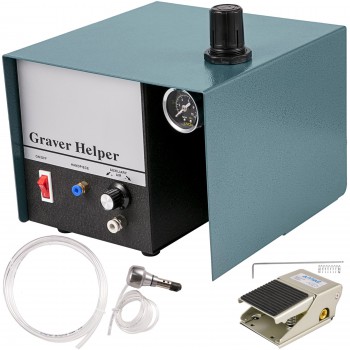
Another key factor is vibration control. Pneumatic engravers are engineered to minimize unwanted vibration while maximizing useful force at the tip. Because the internal piston moves in a straight, linear motion, energy is directed precisely where it’s needed. Less vibration means cleaner lines, sharper corners, and reduced risk of slipping—especially important when working on hard materials like steel or delicate surfaces such as gemstones and thin precious metals.
Tool balance and ergonomics also play a major role in precision. Pneumatic engravers are typically lightweight and compact, which reduces hand fatigue during long engraving sessions. A relaxed hand is a steady hand. When muscle strain is minimized, engravers can maintain consistent pressure and accuracy for much longer periods. Many professionals notice that their line quality improves simply because the tool feels like a natural extension of their hand.
Precision is further enhanced by the versatility of pneumatic systems. By adjusting air pressure, users can fine-tune the striking force to match the material and engraving style. Low pressure allows for subtle shading and fine detail work, while higher pressure provides the power needed for deep cuts and bold designs. This wide adjustment range makes pneumatic engravers suitable for everything from microscopic lettering to heavy ornamental engraving—all with the same tool.
Finally, consistency is where pneumatic engravers truly excel. Compressed air delivers uniform power stroke after stroke, ensuring that repeated lines and patterns remain even. This consistency is especially valuable in professional settings, such as jewelry workshops or industrial marking, where repeatable results are essential.
In summary, pneumatic engravers achieve their remarkable precision through controlled air-driven power, reduced vibration, ergonomic design, adjustable force, and consistent performance. For engravers who demand accuracy without sacrificing comfort or versatility, pneumatic tools are not just an upgrade—they are a game-changer.
下一則: How Faceting Machines Can Increase the Value of Your Gemstones?
限會員,要發表迴響,請先登入


