Class Notes
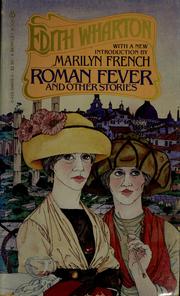
1. "Roman Fever " (Roman Fever-YouTube)
(1). Content
Roman Fever is a short story by American writer Edith Wharton. Focus on a pair of Ameriican women on a trip to Rome with their daughters, it explores a long-time rivalry between the women and the way their conflict has shaped their lives and lives of their daughters. Over the course of the trip, long-held secrets are revealed that call into question all the beliefs they've held about their conflict and their lives. The story explores themes including female relationships and tensions lurking underneath, societal norms and expectations, marriage, conflicts between generations, hypocricy, and evolution of relationship and society.
(2). Character Analysis
Crace Ansley: ● Middle aged rich american woman ● Widow of Horace Ansley ● Mother of Barbara Ansley ● Paler and thinner than Mrs Slade - Beautiful and passionate woman capable of loving deeply. - Capable of betraying her best friend for the love of a man. - Capable of lying to her loved ones and keeping important secrets.
Alida Slade: ● Middle aged rich american woman ● Widow of Delphin Slade ● Mother of Jenny Slade ● Fuller and darker in color than Grace - Loud and outstanding. - Determined and cunning woman. - Envious, jealous and resentful.
2. Irony

Irony is a literary technique or events in which what appears to be a case superficially differs radically from what actually the case is. Irony has three categories- verbal, dramatic and situational.
(1). Verbal Irony
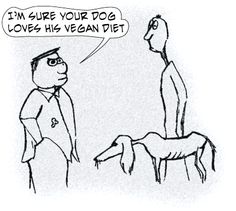
Verbal irony is a statement in which the meaning that a speaker expresses is sharply different from the meaning that is actually expressed. The ironic statement usually involves the explicit expression of one attitude or evaluation, but with indications in the overall speech-situation that the speaker intends a very different, and often opposite, attitude or evaluation.
(2). Dramatic Irony
Dramatic irony is defined as when an audience watching a play understands what's going on in a situation while the characters are unaware of what is happening. An example of dramatic irony is the last scene in Shakespeare's Romeo and Juliet, when Juliet commits suicide because she thinks Romeo has committed suicide.
(3). Situational Irony

Situational Irony occurs when actions or events have the opposite result from what is expected or what is intended.
3. Quiz About Irony and Roman Fever
(1). Why do authors use irony?
To mimic real life or to add humor.
(2). What are the four basic types of irony?
Situational, Dramatic, Verbal, Cosmic.
(3). In "Roman Fever" Mrs. Ansley and Mrs. Slade are ...
Former friends on a Roman holiday.
(4). The title "Roman Fever" is an example of ...
Verbal irony.
(5). Dramatic irony occurs when . . .
The author "winks" knowingly at the reader because of shared information.
Readers have information that characters do not.
Readers feel superior to characters who lack information the readers have.
(6). Barbara's true paternity an example of what kind of irony?
Situational—it goes against all expectations, especially of Mrs. Ansley.
(7). Which better describes the story's point of view and its effect on irony?
Because the story depends on her perspective, we identify with Alida Slade, seeing Grace Ansley as Alida sees her. We're even complicit in our dislike of Grace. But we come to see Alida as dishonest and manipulative. At the end, we join the author in a knowing, ironic wink: it serves Alida right.
(8). What type of pop culture irony does "Roman Fever" represent?
Underdog—a seemingly weaker rival defies expectations and triumphs over an outwardly stronger opponent.
(9). Verbal irony occurs when the speaker. . .
Means something other than what is said.
4. Plot
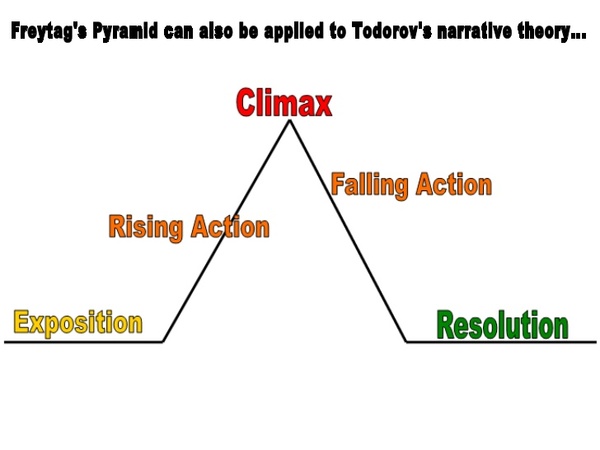
Plot refers to the sequence of events inside a story which affect other events through the principle of cause and effect.
限會員,要發表迴響,請先登入


