Christmas
advent 點燈 à Anglicized
通常用紫色當祭壇布,purple stands for royal color
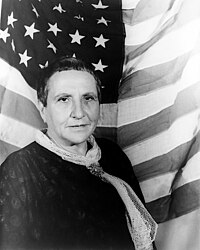 → Gertrude Stein
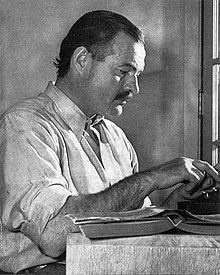 →Ernest Hemingway
Gertrude Stein has been credited with inventing the term "Lost Generation" for those whose defining moment in time and coming of age had been World War I and its aftermath. The term was popularized by Ernest Hemingway, who used it as one of two contrasting epigraphs for his novel, The Sun Also Rises.
Lost Generation: The "Lost Generation" was the generation that came of age during World War I. 'Lost means not vanished but disoriented, wandering, directionless — a recognition that there was great confusion and aimlessness among the war's survivors in the early post-war years.'
Beat Generation: The Beat Generation was a group of American post-World War II writers who came to prominence in the 1950s, as well as the cultural phenomena that they both documented and inspired. Central elements of "Beat" culture: rejection of received standards, innovations in style, use of illegal drugs, alternative sexualities, an interest in religion, a rejection of materialism, and explicit portrayals of the human condition. In the mid-1950s, the central figures (with the exception of Burroughs) ended up together in San Francisco where they met and became friends of figures associated with the San Francisco Renaissance.
The Second Coming by William Butler Yeats
Turning and turning in the widening gyre
The falcon cannot hear the falconer;
Things fall apart; the centre cannot hold;
Mere anarchy is loosed upon the world,
The blood-dimmed tide is loosed, and everywhere
The ceremony of innocence is drowned;
The best lack all conviction, while the worst
Are full of passionate intensity.
Surely some revelation is at hand;
Surely the Second Coming is at hand.
The Second Coming! Hardly are those words out
When a vast image out of Spiritus Mundi
Troubles my sight: a waste of desert sand;
A shape with lion body and the head of a man,
A gaze blank and pitiless as the sun,
Is moving its slow thighs, while all about it
Wind shadows of the indignant desert birds.
The darkness drops again but now I know
That twenty centuries of stony sleep
Were vexed to nightmare by a rocking cradle,
And what rough beast, its hour come round at last,
Slouches towards Bethlehem to be born?
節日應景歌曲”It’s the most wonderful time of the year.”
Go caroling. 報佳音,典型西方人在Christmas會做的事。
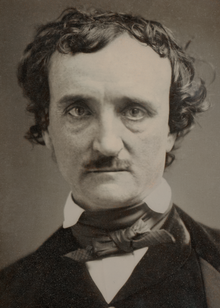
Edgar Allan Poe: Edgar Allan Poe was an American author, poet, editor, and literary critic, considered part of the American Romantic Movement. Best known for his tales of mystery and the macabre, Poe was one of the earliest American practitioners of the short story, and is generally considered the inventor of the detective fiction genre.
The Fall of the House of Usher and The Tell-Tale Heart written by Edgar Allan Poe
喜愛用第一人稱來強調authentic
The Tell-Tale Heart: "The Tell-Tale Heart" is a short story by Edgar Allan Poe first published in 1843. It is told by an unnamed narrator who endeavors to convince the reader of his sanity, while describing a murder he committed. It is widely considered a classic of the Gothic fiction genre and is one of Poe's most famous short stories.
hark, hideous (擬聲字)
“-with an utter depression of soul which I can compare to no earthly sensation more properly than to the after-dream of the reveller upon opium.” is a part of The Fall of the House of Usher. 強調孤寂
連詩都喜歡用alliteration
Gothic fiction: Gothic fiction, which is largely dominated by the subgenre of Gothic horror, is a genre or mode of literature that combines fiction, horror and Romanticism. 鬧鬼小說 → 超自然現象常出現在gothic fiction
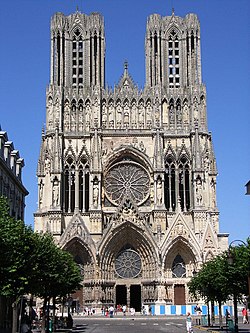 → Notre-Dame de Reims
Gothic architecture哥德式建築:高聳尖塔、內部漆黑,讓人心生害怕。
The Fall of the House of Usher: The theme of the crumbling, haunted castle is a key feature of Horace Walpole's Castle of Otranto (1764), which largely contributed in defining the Gothic genre. The presence of a capacious, disintegrating house symbolizing the destruction of the human body is a characteristic element in Poe's later work.
"The Fall of the House of Usher" shows Poe's ability to create an emotional tone in his work, specifically feelings of fear, doom, and guilt. These emotions center on Roderick Usher who, like many Poe characters, suffers from an unnamed disease. Like the narrator in "The Tell-Tale Heart", his disease inflames his hyperactive senses.
“I tell you that she now stands without door.” 站在門邊
限會員,要發表迴響,請先登入