● Literature
Imaginative or creative writing, especially of recognized artistic value.
Literature can be classified according to whether it is fiction or non-fiction and whether it is poetry or prose; it can be further distinguished according to major forms such as the novel, short story or drama; and works are often categorised according to historical periods or their adherence to certain aesthetic features or expectations (genre).
.
● Vocabulary
hypo: under
1. under, beneath, or below: hypodermic
2. lower; at a lower point: hypogastrium
3. less than: hypoploid
.
hyper: over, above
e.g., hyperactive (very active and finding it difficult to concentrate or relax)
e.g., hypersensitive (very easily upset or offended)
e.g., hyperbole (a way of emphasizing what you are saying by describing it as far more extreme than it really is)
.
mend /mend/ v.
to do something to end an argument or disagreement
e.g., The Secretary of State and Chinese Foreign Minister met in an attempt to mend strained relations.
.
amend /əˈmend/ v.
to make changes to a document, law, agreement etc, especially in order to improve it
e.g., A law amending the Chilean constitution was approved on 22nd January.
.
reprehend \ˌre-pri-ˈhend\ v.
to voice disapproval of
e.g., That denomination reprehends murder in any form, contending that the taking of life is never justified.
.
mansion /ˈmænʃən/ n.
a large house, especially a beautiful one
.
law vs. low
law /ɔ/
low /o/
Pronunciation: Law vs Low (www.youtube.com/watch?v=RRfAnwR1JaI)
.
para: beside
e.g., paradox (a person, thing, or situation that is strange because they have features or qualities that do not normally exist together)
e.g., parachute (a large piece of cloth joined to heavy strings, used by someone jumping out of a plane)
e.g., paraphrase (to express what someone else has said or written using different words, especially in order to make it shorter or clearer)
.
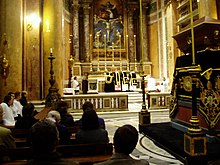
requiem /ˈrekwiəm/ n.
a Christian ceremony in which people pray for someone who has died
.
● APA and MLA Style
In academic texrs, writers often use information from other people's writing (outside sources) to support their main ideas. Unless the information is a general fact, writers need to give credit to, or cite, the source of the information.
APA Style
APA style is a format for academic documents such as journal articles and books.
in-text citation:
Air traffic controllers must retire at age 56 (Watson, 2004)
end-of-text reference:
Watson, E. (2004). The life of a controller. New York, NY: Pearson.
MLA Style
Disciplines and areas of writing outside of those listed above also sometimes use MLA guidelines. If your teacher, professor, boss or client specifies that this format is required for a written piece, you should follow all MLA guidelines. However, if you electively select to use the MLA format, there are certain types of papers that involve research that requires documentation for citing your sources.
in-text citation:
Air traffic controllers must retire at age 56 (Watson, 163).
end-of-text reference:
Watson, Emily, The Life of a Controller. New York, NY: Pearson, 2004. Print.
.
● Writing Skills: The Paragraph

Note: (academic writing or even business writing)
Note: -Paragraph
Note: -indent or skip a line
Note: -one central idea -thesis statement
Note: -one central idea -general
Note: -all other ideas directly related to main
Note: -any length
Note: -details -why important
Note: -details -reasons
Note: -details -examples
Note: -flow -bridges -key terms
Note: -end with bridge (or start with bridge)
.
● A Midsummer Night's Dream
comedy of love farce(鬧劇)
two men and two women: Helena, Demetrius
two men and two women: Hermia, Lysander
Robin = Puck concoction is applied to the eyelids of a wrong person and fix
mock, miserable, punishment
happy ending (If we shadows have offended, / Think but this, and all is mended,...)
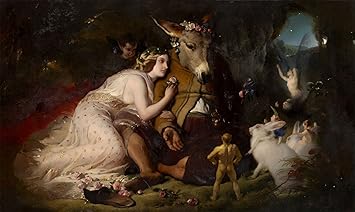
Due to an enchantment cast by Puck, Titania magically falls in love with a "rude mechanical" who has been given the head of a donkey by Puck.
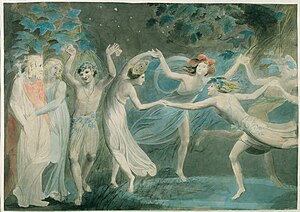
Oberon, Titania and Puck with Fairies Dancing by William Blake, c. 1786
.
p.s. Love-in-idleness

The Love-in-idleness was originally a white flower, struck by one of Cupid’s arrows, which turned it purple and gave it its magic love potion. When dripped onto someone's eyelids this love potion causes an individual to fall madly in love with the next person they see.
.
● Death of a Salesman
Death of a Salesman is a 1949 play written by American playwright Arthur Miller. It was the recipient of the 1949 Pulitzer Prize for Drama and Tony Award for Best Play.
.
contexts of Death of a Salesman: share.nanjing-school.com/dpenglisha/files/2012/12/Death-of-a-Salesman-Background-Information-21unr4d.pdf
.
Author

Arthur Miller was an American playwright whose biting criticism of societal problems defined his genius. His best known play is Death of a Salesman.
Born in Harlem, New York in 1915, Arthur Miller attended the University of Michigan before moving back east to produce plays for the stage. His first critical and popular success was Death of a Salesman, which opened on Broadway in 1949. His very colorful public life was painted in part by his rocky marriage to Marilyn Monroe, and his unwavering refusal to cooperate with the House of Un-American Activities Committee. He was married three times and died in 2005, at the age of 89.
.
● Great Depression
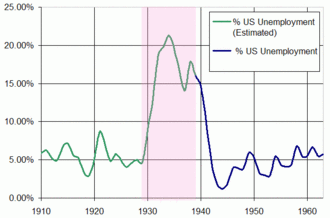
The unemployment rate in the US during 1910–60, with the years of the Great Depression (1929–39) highlighted.
.
The Great Depression was a severe worldwide economic depression in the 1930s. The timing of the Great Depression varied across nations; however, in most countries it started in 1929 and lasted until the late 1930s. It was the longest, deepest, and most widespread depression of the 20th century.
Worldwide GDP fell by 15% from 1929 to 1932. In the 21st century, the Great Depression is commonly used as an example of how far the world's economy can decline. The depression originated in the United States, after the fall in stock prices that began around September 4, 1929, and became worldwide news with the stock market crash of October 29, 1929 (known as Black Tuesday).
.
● McCarthyism
McCarthyism is the practice of making accusations of subversion or treason without proper regard for evidence. It also means "the practice of making unfair allegations or using unfair investigative techniques, especially in order to restrict dissent or political criticism." The term has its origins in the period in the United States known as the Second Red Scare, lasting roughly from 1950 to 1956 and characterized by heightened political repression against communists, as well as a campaign spreading fear of their influence on American institutions and of espionage by Soviet agents. Originally coined to criticize the anti-communist pursuits of Republican U.S. Senator Joseph McCarthy of Wisconsin, "McCarthyism" soon took on a broader meaning, describing the excesses of similar efforts. The term is also now used more generally to describe reckless, unsubstantiated accusations, as well as demagogic attacks on the character or patriotism of political adversaries.
.
● Catch Me If You Can

IMDb: www.imdb.com/title/tt0264464/
A true story about Frank Abagnale Jr., who, before his 19th birthday, successfully conned millions of dollars' worth of checks as a Pan Am pilot, doctor, and legal prosecutor.
.
● Parable vs. Fable
A fable involves (speaking) animals or other mythical creatures, while a parable does not. A moral is typical for both genres.
A fable is a succinct story, in prose or verse, that features animals, mythical creatures, plants, inanimate objects, or forces of nature which are anthropomorphized (given human qualities), and that illustrates a moral lesson (a "moral"), which may at the end be expressed explicitly in a pithy maxim.
A parable is a brief, succinct story, in prose or verse, that illustrates a moral or religious lesson. It differs from a fable in that fables use animals, plants, inanimate objects, and forces of nature as characters, while parables generally feature human characters. It is a type of analogy.
.
● Tragedy

Tragedy is a form of drama based on human suffering that invokes in its audience an accompanying catharsis or pleasure in the viewing.
下一則: WEEK 16 文導筆記 (Approaches to Literature)
限會員,要發表迴響,請先登入


