Introduction – Company Background
GuangXin Industrial Co., Ltd. is a specialized manufacturer dedicated to the development and production of high-quality insoles.
With a strong foundation in material science and footwear ergonomics, we serve as a trusted partner for global brands seeking reliable insole solutions that combine comfort, functionality, and design.
With years of experience in insole production and OEM/ODM services, GuangXin has successfully supported a wide range of clients across various industries—including sportswear, health & wellness, orthopedic care, and daily footwear.
From initial prototyping to mass production, we provide comprehensive support tailored to each client’s market and application needs.
At GuangXin, we are committed to quality, innovation, and sustainable development. Every insole we produce reflects our dedication to precision craftsmanship, forward-thinking design, and ESG-driven practices.
By integrating eco-friendly materials, clean production processes, and responsible sourcing, we help our partners meet both market demand and environmental goals.
Core Strengths in Insole Manufacturing
At GuangXin Industrial, our core strength lies in our deep expertise and versatility in insole and pillow manufacturing. We specialize in working with a wide range of materials, including PU (polyurethane), natural latex, and advanced graphene composites, to develop insoles and pillows that meet diverse performance, comfort, and health-support needs.
Whether it's cushioning, support, breathability, or antibacterial function, we tailor material selection to the exact requirements of each project-whether for foot wellness or ergonomic sleep products.
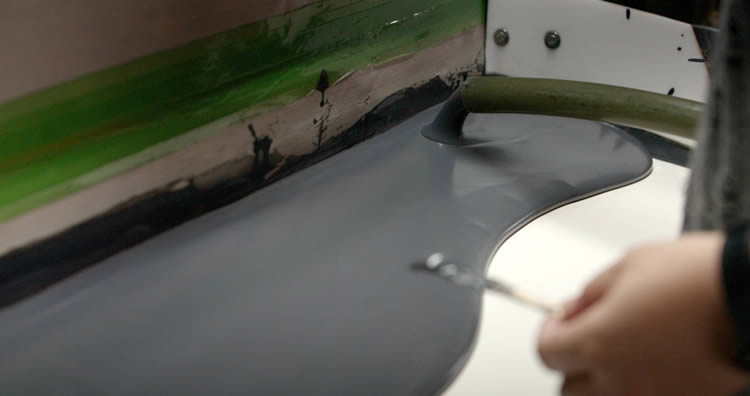
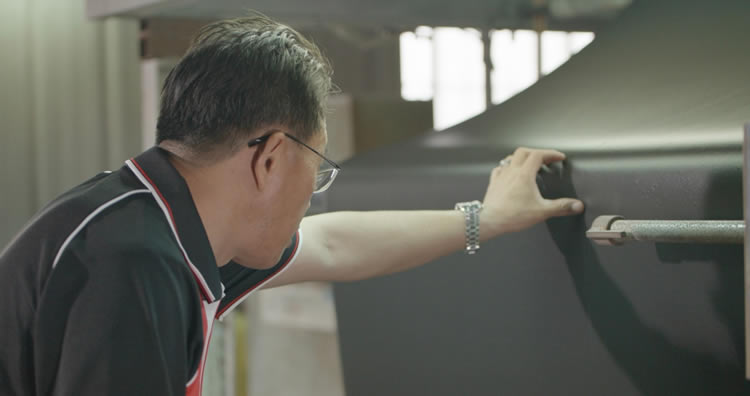
We provide end-to-end manufacturing capabilities under one roof—covering every stage from material sourcing and foaming, to precision molding, lamination, cutting, sewing, and strict quality control. This full-process control not only ensures product consistency and durability, but also allows for faster lead times and better customization flexibility.
With our flexible production capacity, we accommodate both small batch custom orders and high-volume mass production with equal efficiency. Whether you're a startup launching your first insole or pillow line, or a global brand scaling up to meet market demand, GuangXin is equipped to deliver reliable OEM/ODM solutions that grow with your business.
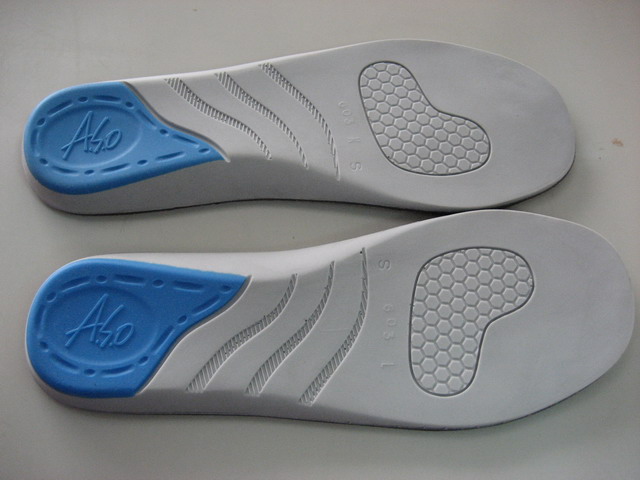
Customization & OEM/ODM Flexibility
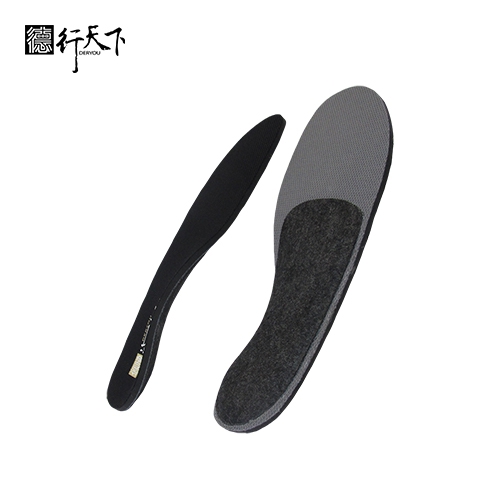
GuangXin offers exceptional flexibility in customization and OEM/ODM services, empowering our partners to create insole products that truly align with their brand identity and target market. We develop insoles tailored to specific foot shapes, end-user needs, and regional market preferences, ensuring optimal fit and functionality.
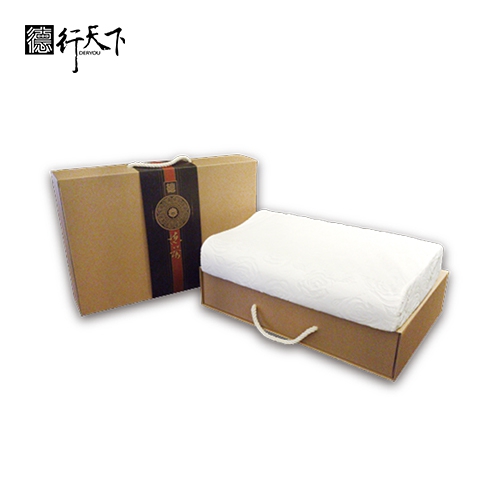
Our team supports comprehensive branding solutions, including logo printing, custom packaging, and product integration support for marketing campaigns. Whether you're launching a new product line or upgrading an existing one, we help your vision come to life with attention to detail and consistent brand presentation.
With fast prototyping services and efficient lead times, GuangXin helps reduce your time-to-market and respond quickly to evolving trends or seasonal demands. From concept to final production, we offer agile support that keeps you ahead of the competition.
Quality Assurance & Certifications
Quality is at the heart of everything we do. GuangXin implements a rigorous quality control system at every stage of production—ensuring that each insole meets the highest standards of consistency, comfort, and durability.
We provide a variety of in-house and third-party testing options, including antibacterial performance, odor control, durability testing, and eco-safety verification, to meet the specific needs of our clients and markets.
Our products are fully compliant with international safety and environmental standards, such as REACH, RoHS, and other applicable export regulations. This ensures seamless entry into global markets while supporting your ESG and product safety commitments.
ESG-Oriented Sustainable Production
At GuangXin Industrial, we are committed to integrating ESG (Environmental, Social, and Governance) values into every step of our manufacturing process. We actively pursue eco-conscious practices by utilizing eco-friendly materials and adopting low-carbon production methods to reduce environmental impact.
To support circular economy goals, we offer recycled and upcycled material options, including innovative applications such as recycled glass and repurposed LCD panel glass. These materials are processed using advanced techniques to retain performance while reducing waste—contributing to a more sustainable supply chain.
We also work closely with our partners to support their ESG compliance and sustainability reporting needs, providing documentation, traceability, and material data upon request. Whether you're aiming to meet corporate sustainability targets or align with global green regulations, GuangXin is your trusted manufacturing ally in building a better, greener future.
Let’s Build Your Next Insole Success Together
Looking for a reliable insole manufacturing partner that understands customization, quality, and flexibility? GuangXin Industrial Co., Ltd. specializes in high-performance insole production, offering tailored solutions for brands across the globe. Whether you're launching a new insole collection or expanding your existing product line, we provide OEM/ODM services built around your unique design and performance goals.
From small-batch custom orders to full-scale mass production, our flexible insole manufacturing capabilities adapt to your business needs. With expertise in PU, latex, and graphene insole materials, we turn ideas into functional, comfortable, and market-ready insoles that deliver value.
Contact us today to discuss your next insole project. Let GuangXin help you create custom insoles that stand out, perform better, and reflect your brand’s commitment to comfort, quality, and sustainability.
🔗 Learn more or get in touch:
🌐 Website: https://www.deryou-tw.com/
📧 Email: shela.a9119@msa.hinet.net
📘 Facebook: facebook.com/deryou.tw
📷 Instagram: instagram.com/deryou.tw
Arch support insole OEM from Indonesia
Are you looking for a trusted and experienced manufacturing partner that can bring your comfort-focused product ideas to life? GuangXin Industrial Co., Ltd. is your ideal OEM/ODM supplier, specializing in insole production, pillow manufacturing, and advanced graphene product design.
With decades of experience in insole OEM/ODM, we provide full-service manufacturing—from PU and latex to cutting-edge graphene-infused insoles—customized to meet your performance, support, and breathability requirements. Our production process is vertically integrated, covering everything from material sourcing and foaming to molding, cutting, and strict quality control.Graphene insole manufacturer in Thailand
Beyond insoles, GuangXin also offers pillow OEM/ODM services with a focus on ergonomic comfort and functional innovation. Whether you need memory foam, latex, or smart material integration for neck and sleep support, we deliver tailor-made solutions that reflect your brand’s values.
We are especially proud to lead the way in ESG-driven insole development. Through the use of recycled materials—such as repurposed LCD glass—and low-carbon production processes, we help our partners meet sustainability goals without compromising product quality. Our ESG insole solutions are designed not only for comfort but also for compliance with global environmental standards.Indonesia OEM factory for footwear and bedding
At GuangXin, we don’t just manufacture products—we create long-term value for your brand. Whether you're developing your first product line or scaling up globally, our flexible production capabilities and collaborative approach will help you go further, faster.Orthopedic pillow OEM development factory Taiwan
📩 Contact us today to learn how our insole OEM, pillow ODM, and graphene product design services can elevate your product offering—while aligning with the sustainability expectations of modern consumers.Memory foam pillow OEM factory China
Appearances can be deceptive: the appearance of leaf insects does not necessarily reflect their species affiliation. While Pulchriphyllium anangu (A) is a new, distinct species from India, the other two individuals (B and C) both belong to the newly described Philippine species Phyllium ortizi, despite their external differences. Credit: Vishwanath Gowda (A), Maxime Ortiz (B and C) An international team of scientists, including researchers from the University of Göttingen, has unveiled seven new species of leaf insects, commonly known as walking leaves. A team of international researchers, including experts from the University of Göttingen, has identified seven new species of leaf insects, also known as “walking leaves.” These insects are part of the stick and leaf insect order and are known for their unusual appearance: they look confusingly similar to parts of plants such as twigs, bark, or – in the case of leaf insects – leaves. Their advanced camouflage not only serves as a defense mechanism against predators but also poses a challenge for scientific study. Through genetic analysis, the scientists were able to uncover “cryptic species,” which look identical externally but are genetically distinct. This research has significant implications not only for the systematic classification of leaf insects but also for the conservation of their biodiversity. The findings were recently published journal ZooKeys. The Complexity of Taxonomy in Leaf Insects Taxonomy – meaning the naming, description, and classification of species – is difficult in the case of leaf insects: individuals of different species can be difficult to tell apart, yet there can be huge variations within a species. “Individuals of different species are often counted as belonging to the same species based on their appearance. We were only able to identify some of the new species by their genetic characteristics,” explains the Project Lead, Dr Sarah Bank-Aubin, Göttingen University’s Animal Evolution and Biodiversity Department. Some individual insects from India were previously thought to belong to a species that is widespread in Southeast Asia. But now the researchers have found out that they are a completely new species of leaf insects. Bank-Aubin emphasizes: “The finding is important for species conservation: if all the individuals die out in India, it is not just a group within a species that is reduced, as was previously thought. In fact, a whole distinct species is being wiped out. This means that the Indian species is particularly important to protect.” Other newly discovered species come from Vietnam, Borneo, Java, and the Philippines. The researchers from Göttingen University worked with leaf insect expert Royce Cumming, City University New York. This research collaboration has led to the identification of over twenty new species. The Unique Evolution of Stick and Leaf Insects Dr Sven Bradler, who has been researching the evolution of stick and leaf insects at the University of Göttingen for more than 20 years, explains: “There are around 3,500 known species of stick and leaf insects and there are currently just over 100 described species of leaf insect. Although they only make up a small fraction of this diverse family of insects, their spectacular and unexpected appearance makes them unique.” Reference: “On seven undescribed leaf insect species revealed within the recent “Tree of Leaves” (Phasmatodea, Phylliidae)” by Royce T. Cumming, Stéphane Le Tirant, Jackson B. Linde, Megan E. Solan, Evelyn Marie Foley, Norman Enrico C. Eulin, Ramon Lavado, Michael F. Whiting, Sven Bradler and Sarah Bank, 3 August 2023, ZooKeys. DOI: 10.3897/zookeys.1173.104413
Cat and catnip Silver vine triggers euphoric behavior in cats and acts as a mosquito repellent. Catnip and silver vine have been known as cat attractant plants. Cat lovers use dry leaves of these plants and toys stuffed with the leaves to give joy to their pet cats. But how does this work? What is the biological significance of the responsive behavior? A research group at Iwate University, Nagoya University, Kyoto University, and University of Liverpool found that the behavior had more practical reasons than getting euphoria. “The first appearance of silver vine (“Matatabi” in Japanese) as a cat attractant in literature in Japan dates back to more than 300 years ago. A folklore Ukiyo-e drawn in 1859 shows a group of mice trying to tempt some cats with a smell of silver vine. Still, benefits of the cats’ response had remained unknown,” says Prof. Masao Miyazaki of Iwate University, a leader of the research project. The research group first identified the active ingredient of silver vine that induces the response. They isolated substances from the extract of silver vine leaves and administered each of them to cats to examine the response. The experiment revealed that nepetalactol, a novel substance, most strongly induces the characteristic behavior. “We applied nepetalactol to laboratory paper filters and tested with eighteen laboratory and seventeen feral cats. They displayed the typical response to silver vine. We also tested the substance with larger, non-domestic cats (jaguar, Amur leopard, and Eurasian lynx). They showed a similar reaction. We concluded nepetalactol is responsible for the typical feline reaction to silver vine,” said Reiko Uenoyama, the paper’s first author. Euphoria and the Feline Nervous System The second important finding by the researchers is the biological mechanism of the response by feline animals to silver vine. They hypothesized that the μ-opioid system, which is associated with euphoric effects in humans, is activated with the plant. “We tested β-endorphin levels before and after nepetalactol-induced response in cat blood. We found that silver vine activates the nervous system that is responsible for the euphorigenic reaction,” said Miyazaki. Does this mean cats play with silver vine to get euphoria? Alternatively, does silver vine have another function for cats? The research group believed that the plant has another biologically important function as the reaction was already shown in feline animals when they evolved from other species about 10 million years ago. A cat responds to silver vine leaves. Credit: Masao Miyazaki & Reiko Uenoyama “On the basis of some reports that nepetalactone, the feline attractant in catnip, has mosquito repellent activity, we thought that the response allows cats to transfer plant’s nepetalactol or nepetalactone on their fur for protection against mosquitoes. This led to a strong hypothesis when we found the mosquito repellent activity of nepetalactol.” said Uenoyama. A Chemical Shield: Rubbing for Mosquito Defense To examine whether cats purposefully transfer nepetalactol, the research group placed paper filters with nepetalactol on different parts of the cat cage (floor, walls, and ceiling). Although cats rubbed their faces and heads on the paper regardless of the place of the nepetalactol paper, they did not show the typical rolling when the paper was placed on a wall or ceiling. When cats rubbed against the nepetalactol paper, the substance was transferred to their faces and heads, indicating that the most important function of rubbing behavior is to apply the chemical to these parts of feline fur. “Next, we tested the mosquito repellent property of nepetalactol on cats. We counted the number of mosquitoes landing on cat heads with and without application of nepetalactol. The mosquitoes landed less on the nepetalactol heads. To see whether mosquitoes react the same in a more natural setting, we compared the mosquito reaction between cats that responded to silver vine leaves and nonresponsive cats. Mosquitoes avoided the responsive cats. From these results, we found that the cats’ reaction to silver vine is chemical defense against mosquitoes, and perhaps against viruses and parasitic insects. This was the most significant finding of our study,” said Miyazaki. Miyazaki and his colleagues see many possibilities to use the findings in research and practical application. “Why is this reaction limited to cats? Why don’t non-feline animals react to the plant? To find answers, we want to identify the gene responsible for the reaction. The findings of this study may be used in various applications, including development of new mosquito repellent products.” Reference: “The characteristic response of domestic cats to plant iridoids allows them to gain chemical defense against mosquitoes” by Reiko Uenoyama, Tamako Miyazaki, Jane L. Hurst, Robert J. Beynon, Masaatsu Adachi, Takanobu Murooka, Ibuki Onoda, Yu Miyazawa, Rieko Katayama, Tetsuro Yamashita, Shuji Kaneko, Toshio Nishikawa and Masao Miyazaki, 20 January 2021, Science Advances. DOI: 10.1126/sciadv.abd9135
Humpback whale. Researchers have discovered that whales use a unique anatomical feature known as an ‘oral plug’ to prevent drowning while feeding. This mechanism, similar to human swallowing reflexes, helps lunge-feeding whales like fin whales consume large amounts of krill without water entering their lungs, supporting their large body sizes and massive energy needs. Ever wondered whether whales can burp, and why they don’t drown when they gulp down gallons of water and krill? New UBC research may just hold the answer. Researchers found that lunge-feeding whales have an ‘oral plug’, a fleshy bulb in their mouths that moves backward to seal off the upper airways during feeding, while their larynx closes to block the lower airways. This plug prevents water from entering their lungs when they feed, according to a paper published on January 20, 2022, in Current Biology. “It’s kind of like when a human’s uvula moves backward to block our nasal passages, and our windpipe closes up while swallowing food,” says lead author Dr. Kelsey Gil, a postdoctoral researcher in the department of zoology. Lunge-Feeding Mechanism Unveiled Lunge-feeding whales eat by, you guessed it, lunging at their prey, accelerating at high speed, and opening their mouths to engulf water and krill. Sometimes this amount can be larger than their own bodies, says Dr. Gil, an impressive feat given this group includes the humpback and the blue whale, the largest animal on Earth. Water is then drained via their baleen, leaving the tiny, tasty krill behind to be swallowed. The researchers investigated fin whales specifically, a type of lunge-feeding whale and found the ‘oral plug’ needed to move in order to allow food to pass to the esophagus. The only way it could was towards the back of the head, and up, blocking off the nasal passages when the whale swallows. Simultaneously, cartilage closes at the entrance to the larynx, and the laryngeal sac moves upwards to block off the lower airways, says Dr. Gil. “We haven’t seen this protective mechanism in any other animals, or in the literature. A lot of our knowledge about whales and dolphins comes from toothed whales, which have completely separated respiratory tracts, so similar assumptions have been made about lunge-feeding whales.” Comparing Whale and Human Swallowing Mechanisms It turns out humans have a similar system to swallow food without getting anything in their lungs: we have the epiglottis and soft palate, a ‘lid’ of cartilage and a flap of muscle in our throat and mouth, respectively. Humans could probably eat underwater as well, says Dr. Gil, but it would be rather like swimming at high speed towards a hamburger and opening your mouth wide as you approached – difficult not to flood your lungs. The whales’ oral plug and closing larynx are central to how lunge-feeding evolved, a key component in the enormous size of these creatures, the researchers say. “Bulk filter-feeding on krill swarms is highly efficient and the only way to provide the massive amount of energy needed to support such large body size. This would not be possible without the special anatomical features we have described,” says senior author Dr. Robert Shadwick, a professor in the UBC department of zoology. Challenges and Future Research in Whale Anatomy Investigating whale anatomy often involves trying to dissect whales that have died from stranding which comes with such challenges as trying to complete work before the tide rises. However, for this research, Dr. Gil and her colleagues dissected whales in Iceland in 2018, recovering tissue that wasn’t being used for food from a commercial whaling station. Working with whales in real-time would be wonderful, she says, but might require some advancements in technology. “It would be interesting to throw a tiny camera down a whale’s mouth while it was feeding to see what’s happening, but we’d need to make sure it was safe to eat and biodegradable.” The team will continue to explore the mechanisms related to the pharynx, and of the small esophagus that is responsible for rapidly transporting hundreds of kilograms of krill to the stomach in less than a minute. With the many human impacts that disrupt food chains, and knowing how whales feed and how much they eat, it’s good to know as much as possible about these animals in order to protect them and their ecosystems, says Dr. Gil. And there’s plenty more to find out, including whether whales cough, hiccup, and yes, burp. “Humpback whales blow bubbles out of their mouth, but we aren’t exactly sure where the air is from – it might make more sense, and be safer, for whales to burp out of their blowholes.” Reference: “Anatomical mechanism for protecting the airway in the largest animals on earth” by Kelsey N. Gil, A. Wayne Vogl and Robert E. Shadwick, 20 January 2022, Current Biology. DOI: 10.1016/j.cub.2021.12.040
DVDV1551RTWW78V
Custom graphene foam processing Indonesia 》helping brands deliver comfort and performancePrivate label insole and pillow OEM China 》the preferred OEM/ODM solution for emerging and established brandsIndonesia OEM insole and pillow supplier 》the ideal partner for high-performance, eco-friendly product lines
下一則: Thailand sustainable material ODM solutions 》empow
- Customized sports insole ODM Thailand 》where every
- One-stop OEM/ODM solution provider Vietnam 》seamle
- Flexible manufacturing OEM & ODM Thailand 》seamles
- Cushion insole OEM solution Thailand 》where crafts
- Thailand sustainable material ODM solutions 》empow
- Graphene insole OEM factory Vietnam 》your trusted
限會員,要發表迴響,請先登入


