Introduction – Company Background
GuangXin Industrial Co., Ltd. is a specialized manufacturer dedicated to the development and production of high-quality insoles.
With a strong foundation in material science and footwear ergonomics, we serve as a trusted partner for global brands seeking reliable insole solutions that combine comfort, functionality, and design.
With years of experience in insole production and OEM/ODM services, GuangXin has successfully supported a wide range of clients across various industries—including sportswear, health & wellness, orthopedic care, and daily footwear.
From initial prototyping to mass production, we provide comprehensive support tailored to each client’s market and application needs.
At GuangXin, we are committed to quality, innovation, and sustainable development. Every insole we produce reflects our dedication to precision craftsmanship, forward-thinking design, and ESG-driven practices.
By integrating eco-friendly materials, clean production processes, and responsible sourcing, we help our partners meet both market demand and environmental goals.


Core Strengths in Insole Manufacturing
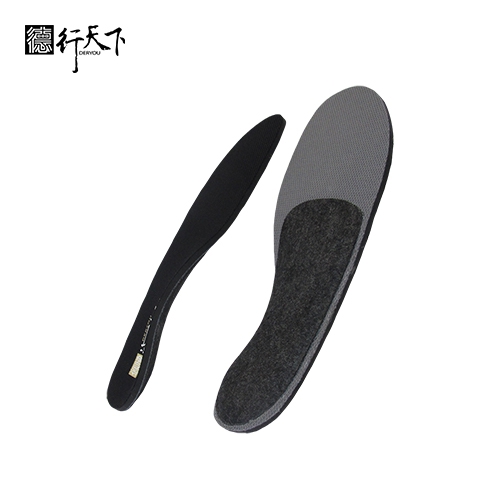
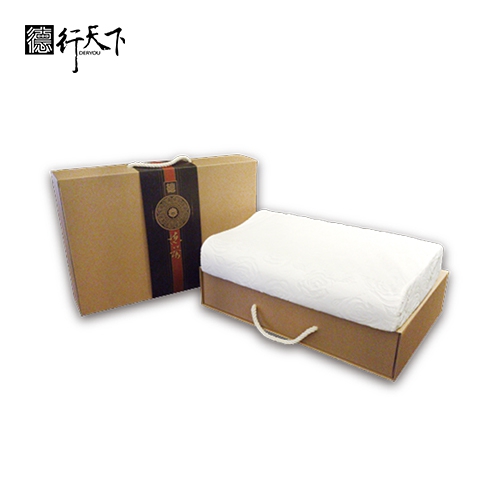
At GuangXin Industrial, our core strength lies in our deep expertise and versatility in insole and pillow manufacturing. We specialize in working with a wide range of materials, including PU (polyurethane), natural latex, and advanced graphene composites, to develop insoles and pillows that meet diverse performance, comfort, and health-support needs.
Whether it's cushioning, support, breathability, or antibacterial function, we tailor material selection to the exact requirements of each project-whether for foot wellness or ergonomic sleep products.
We provide end-to-end manufacturing capabilities under one roof—covering every stage from material sourcing and foaming, to precision molding, lamination, cutting, sewing, and strict quality control. This full-process control not only ensures product consistency and durability, but also allows for faster lead times and better customization flexibility.
With our flexible production capacity, we accommodate both small batch custom orders and high-volume mass production with equal efficiency. Whether you're a startup launching your first insole or pillow line, or a global brand scaling up to meet market demand, GuangXin is equipped to deliver reliable OEM/ODM solutions that grow with your business.
Customization & OEM/ODM Flexibility
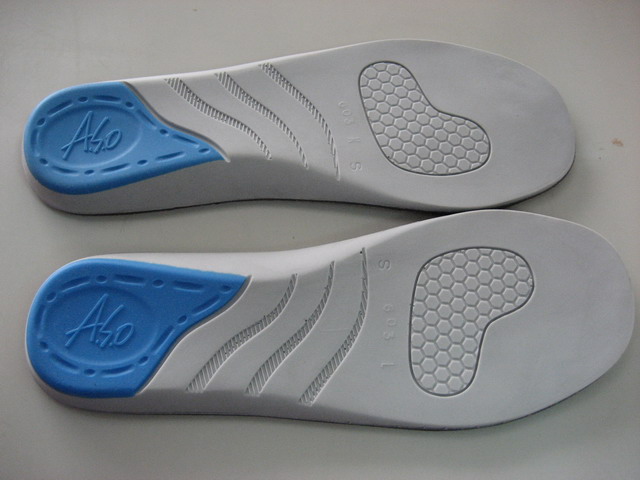
GuangXin offers exceptional flexibility in customization and OEM/ODM services, empowering our partners to create insole products that truly align with their brand identity and target market. We develop insoles tailored to specific foot shapes, end-user needs, and regional market preferences, ensuring optimal fit and functionality.
Our team supports comprehensive branding solutions, including logo printing, custom packaging, and product integration support for marketing campaigns. Whether you're launching a new product line or upgrading an existing one, we help your vision come to life with attention to detail and consistent brand presentation.
With fast prototyping services and efficient lead times, GuangXin helps reduce your time-to-market and respond quickly to evolving trends or seasonal demands. From concept to final production, we offer agile support that keeps you ahead of the competition.
Quality Assurance & Certifications
Quality is at the heart of everything we do. GuangXin implements a rigorous quality control system at every stage of production—ensuring that each insole meets the highest standards of consistency, comfort, and durability.
We provide a variety of in-house and third-party testing options, including antibacterial performance, odor control, durability testing, and eco-safety verification, to meet the specific needs of our clients and markets.
Our products are fully compliant with international safety and environmental standards, such as REACH, RoHS, and other applicable export regulations. This ensures seamless entry into global markets while supporting your ESG and product safety commitments.
ESG-Oriented Sustainable Production
At GuangXin Industrial, we are committed to integrating ESG (Environmental, Social, and Governance) values into every step of our manufacturing process. We actively pursue eco-conscious practices by utilizing eco-friendly materials and adopting low-carbon production methods to reduce environmental impact.
To support circular economy goals, we offer recycled and upcycled material options, including innovative applications such as recycled glass and repurposed LCD panel glass. These materials are processed using advanced techniques to retain performance while reducing waste—contributing to a more sustainable supply chain.
We also work closely with our partners to support their ESG compliance and sustainability reporting needs, providing documentation, traceability, and material data upon request. Whether you're aiming to meet corporate sustainability targets or align with global green regulations, GuangXin is your trusted manufacturing ally in building a better, greener future.
Let’s Build Your Next Insole Success Together
Looking for a reliable insole manufacturing partner that understands customization, quality, and flexibility? GuangXin Industrial Co., Ltd. specializes in high-performance insole production, offering tailored solutions for brands across the globe. Whether you're launching a new insole collection or expanding your existing product line, we provide OEM/ODM services built around your unique design and performance goals.
From small-batch custom orders to full-scale mass production, our flexible insole manufacturing capabilities adapt to your business needs. With expertise in PU, latex, and graphene insole materials, we turn ideas into functional, comfortable, and market-ready insoles that deliver value.
Contact us today to discuss your next insole project. Let GuangXin help you create custom insoles that stand out, perform better, and reflect your brand’s commitment to comfort, quality, and sustainability.
🔗 Learn more or get in touch:
🌐 Website: https://www.deryou-tw.com/
📧 Email: shela.a9119@msa.hinet.net
📘 Facebook: facebook.com/deryou.tw
📷 Instagram: instagram.com/deryou.tw
ODM pillow factory for sleep product brands
Are you looking for a trusted and experienced manufacturing partner that can bring your comfort-focused product ideas to life? GuangXin Industrial Co., Ltd. is your ideal OEM/ODM supplier, specializing in insole production, pillow manufacturing, and advanced graphene product design.
With decades of experience in insole OEM/ODM, we provide full-service manufacturing—from PU and latex to cutting-edge graphene-infused insoles—customized to meet your performance, support, and breathability requirements. Our production process is vertically integrated, covering everything from material sourcing and foaming to molding, cutting, and strict quality control.Ergonomic insole ODM support Vietnam
Beyond insoles, GuangXin also offers pillow OEM/ODM services with a focus on ergonomic comfort and functional innovation. Whether you need memory foam, latex, or smart material integration for neck and sleep support, we deliver tailor-made solutions that reflect your brand’s values.
We are especially proud to lead the way in ESG-driven insole development. Through the use of recycled materials—such as repurposed LCD glass—and low-carbon production processes, we help our partners meet sustainability goals without compromising product quality. Our ESG insole solutions are designed not only for comfort but also for compliance with global environmental standards.Pillow ODM design company in Thailand
At GuangXin, we don’t just manufacture products—we create long-term value for your brand. Whether you're developing your first product line or scaling up globally, our flexible production capabilities and collaborative approach will help you go further, faster.Breathable insole ODM development China
📩 Contact us today to learn how our insole OEM, pillow ODM, and graphene product design services can elevate your product offering—while aligning with the sustainability expectations of modern consumers.China ergonomic pillow OEM supplier
Manipulator arm on the HyBIS hybrid remotely operated vehicle collecting crust samples from the Rio Grande Rise. Credit: Bramley Murton Researchers conducted the first large-scale survey of the microbiota present in the seamount’s ferromanganese crusts, describing bacteria and archaea involved in the nutrient cycle and formation of metals. The abundant biological and mineral diversity of the Rio Grande Rise, a seamount in the depths of the Atlantic Ocean about 1,500 km from the coast of Brazil, is probably due to a great extent to little-known microscopic creatures. Researchers affiliated with the University of São Paulo’s Oceanographic Institute (IO-USP), collaborating with colleagues at the UK’s National Oceanography Center, investigated the microorganisms inhabiting the seamount’s ferromanganese crusts and concluded that bacteria and archaea are probably responsible for maintaining the abundant local life, besides being involved in the process of biomineralization that forms the metals present in the crusts. An article published in the journal Microbial Ecology describes the study, which was funded by FAPESP and the UK’s Natural Environment Research Council (NERC). In 2014, the International Seabed Authority (ISA) awarded Brazil a 15-year grant of mineral exploitation rights to the Rio Grande Rise. Comprising 167 member states plus the European Union, the ISA is mandated under the United Nations Convention on the Law of the Sea to organize, regulate and control all mineral-related activities in the international seabed area, which corresponds to some 50% of the total area of the world’s oceans. “Very little is known about the area’s biodiversity or about the impact of mining on its ecosystems,” said Vivian Pellizari, a professor at IO-USP and principal investigator for the study. The study was part of a Thematic Project supported by FAPESP. The article is one of the results of the PhD research of Natascha Menezes Bergo, currently a postdoctoral research intern at IO-USP. “Although the process known as microbial biomineralization is well-known, oxidation and precipitation of manganese hadn’t been proved, and we had no idea how it occurred in ocean areas. In July 2020, however, an article by US researchers was published in Nature showing for the first time that bacteria use manganese to convert carbon dioxide into biomass via a process called chemosynthesis,” said Bergo, who participated in sample collection in 2018 on the UK research vessel RRS Discovery. “One of these bacteria, which belongs to the group Nitrospirae, was present in the DNA sequences we extracted from crust samples collected at the Rio Grande Rise. This is strong evidence that the metals there are formed not just by a geological process but also by a biological process in which microorganisms play an important part,” she noted. Besides iron and manganese, the crusts are rich in cobalt, nickel, molybdenum, niobium, platinum, titanium and tellurium, among other elements. Cobalt is essential to the production of rechargeable batteries, for example, and tellurium is a key input for the production of high-efficiency solar cells. In late 2018, Brazil applied to the ISA for an extension of its continental shelf to include the Rio Grande Rise. In other parts of the world, similar areas that have been studied for longer with the same objectives include the Clarion-Clipperton Zone and the Takuyo-Daigo Seamount, both in the North Pacific, as well as the Tropic Seamount in the North Atlantic. Formation The Rio Grande Rise has an area of some 150,000 km2 (58,000 mi²), three times the size of Rio de Janeiro state, and depths ranging from 800 m to 3,000 m (2,600 ft to 9,800 ft). Formed when present-day Africa and South America separated from the supercontinent Gondwana between 146 million years ago (mya) and 100 mya, the Rise was an island that sank some 40 mya, probably owing to the weight of a volcano and its lava and the movement of tectonic plates. On one of their 2018 expeditions, the researchers collected from a part of the Rise samples of the ferromanganese crusts and of the coral skeletons that live on them, as well as calcarenite rock and biofilms on the crusts’ surfaces. These biofilms are structured microbial communities enveloped in substances they secrete to protect themselves from threats such as lack of nutrients or potential toxins. “Finding biofilm was an interesting surprise, as it’s an indicator of an incipient biomineralization process,” Bergo said. “We found the same microorganisms in our biofilm, coral, calcarenite and crust samples. The only difference was the age of the surfaces. The coral is more recent than the crusts, and the biofilm is even younger.” A total of 666,782 DNA sequences were recovered from the samples. The bacteria and archaea found by the scientists belong to groups known to be involved in the nitrogen cycle whereby ammonia is converted into nitrite and nitrate, and hence to serve as a source of energy for other microorganisms. Besides Nitrospirae, they found other prokaryotes such as the archaeon class Nitrososphaeria. Sequencing of the samples also revealed groups involved in the methane cycle such as Methylomirabilales and Deltaproteobacteria. The results amplify scientists’ understanding of the microbial diversity and potential ecological processes found on the ferromanganese crusts of the South Atlantic seabed. They will also contribute to future regulation of possible mining activities in the area of the Rio Grande Rise. “As the crusts are removed, local circulation will probably change and this, in turn, will change the available supply of organic matter and nutrients, and hence the local microbiome and all the life associated with it,” Bergo said. “Besides, the crusts grow 1 mm every 1 million years on average, so there won’t be time for recolonization. It’s no accident that so many studies have been published recently on how to assess and mitigate the impact of deep-sea mining.” Reference: “Microbial Diversity of Deep-Sea Ferromanganese Crust Field in the Rio Grande Rise, Southwestern Atlantic Ocean” by Natascha Menezes Bergo, Amanda Gonçalves Bendia, Juliana Correa Neiva Ferreira, Bramley J. Murton, Frederico Pereira Brandini and Vivian Helena Pellizari, 16 January 2021, Microbial Ecology. DOI: 10.1007/s00248-020-01670-y
Screenshot from the OneZoom tree of life explorer with leaves colored according to extinction risk and showing the ‘spiral’ view of the tree. Credit: OneZoom OneZoom is a one-stop site for exploring all life on Earth, its evolutionary history, and how much of it is threatened with extinction. The OneZoom explorer – available at onezoom.org – maps the connections between 2.2 million living species, the closest thing yet to a single view of all species known to science. The interactive tree of life allows users to zoom in to any species and explore its relationships with others, in a seamless visualization on a single web page. The explorer also includes images of over 85,000 species, plus, where known, their vulnerability to extinction. OneZoom was developed by Imperial College London biodiversity researcher Dr. James Rosindell and University of Oxford evolutionary biologist Dr. Yan Wong. In a paper published today in Methods in Ecology and Evolution, Drs Wong and Rosindell present the result of over ten years of work, gradually creating what they regard as “the Google Earth of biology.” Dr. Wong, from the Big Data Institute at the University of Oxford, said: “By developing new algorithms for visualization and data processing, and combining them with ‘big data’ gathered from multiple sources, we’ve created something beautiful. It allows people to find their favorite living things, be they golden moles or giant sequoias, and see how evolutionary history connects them together to create a giant tree of all life on Earth.” Dr. Rosindell, from the Department of Life Sciences at Imperial, said: “We have worked hard to make the tree easy to explore for everyone, and we also hope to send a powerful message: that much of our biodiversity is under threat.” The ‘leaves’ representing each species on the tree are color-coded depending on their risk of extinction: green for not threatened, red for threatened, and black for recently extinct. However, most of the leaves on the tree are grey, meaning they have not been evaluated, or scientists don’t have enough data to know their extinction risk. Even among the species described by science, only a tiny fraction have been studied or have a known risk of extinction. Dr. Wong added: “It’s extraordinary how much research there is still to be done. Building the OneZoom tree of life was only possible through sophisticated methods to gather and combine existing data – it would have been impossible to curate all this by hand.” The OneZoom explorer is configured to work with touchscreens, and the developers have made the software free to download and use by educational organizations such as museums and zoos. Dr. Rosindell commented: “Two million species can feel like a number too big to visualize, and no museum or zoo can hold all of them! But our tool can help represent all Earth’s species and allow visitors to connect with their plight. We hope that now this project is complete and available, many venues will be interested in using it to complement their existing displays.” Drs Rosindell and Wong have also set up a OneZoom charity with the aim of using their tree of life to “advance the education of the public in the subjects of evolution, biodiversity, and conservation of the variety of life on Earth.” Uniquely, to support this charity, each leaf on the tree is available for sponsorship, allowing anyone to ‘adopt’ a species and enabling OneZoom to continue its mission. More than 800 leaves have currently been sponsored by individuals and selected organizations, many with personal messages of how they feel connected to the conservation of nature. The team have also integrated the tree with data from the Wikipedia project to reveal the ‘popularity’ of every species, based on how often their Wikipedia page is viewed. Dr. Wong said: “Perhaps unsurprisingly, humans come out on top, but it has swapped places a few times with the second most popular: the grey wolf – the ‘species’ that includes all domestic dogs.” In the plant world, cannabis comes out on top, followed by cabbage, the potato, and the coconut. The most popular ray-finned fishes are sport fishing species, particularly salmon and trout. Now the tree is complete, the team hopes to create bespoke ‘tours’ and experiences of species connected in imaginative new ways – such as tours of iridescent animals, medicinal plants, or even species named after celebrities. They have created a special screen capture tool for easy saving and sharing of user-generated tours. Dr. Rosindell said: “With OneZoom, we hope to give people a completely new way to appreciate evolutionary history and the vastness of life on Earth in all its beauty.” Reference: “Dynamic visualisation of million-tip trees: The OneZoom project” by Yan Wong and James Rosindell, Methods in Ecology and Evolution. DOI: 10.1111/2041-210X.13766
Like many octopuses, the California two-spot octopus (Octopus bimaculoides) declines and dies shortly after breeding. Credit: Tom Kleindinst, Marine Biological Laboratory Changes in Cholesterol Production Lead to a Tragic Octopus Death Spiral New research finds remarkable parallels in steroid hormone biology across cephalopods, mice, and humans that can have dire consequences when disrupted. Despite their uncanny intelligence and seemingly supernatural abilities to change color and regenerate limbs, octopuses often suffer a tragic death. After laying a clutch of eggs, a mother octopus quits eating and wastes away; by the time the eggs hatch, she is dead. Some females in captivity even seem to speed up this process intentionally, mutilating themselves and twisting their arms into a tangled mess. The source of this bizarre maternal behavior seems to be the optic gland, which is an organ similar to the pituitary gland in mammals. Just how this gland triggered the gruesome death spiral has been unclear for years, but a new study by researchers from the University of Chicago, the University of Washington, and the University of Illinois Chicago (UIC) shows that the optic gland in maternal octopuses undergoes a massive shift in cholesterol metabolism, resulting in dramatic changes in the steroid hormones produced. Alterations in cholesterol metabolism in other animals, including humans, can have serious consequences on longevity and behavior, and the study’s authors believe this reveals important similarities in the functions of these steroids across the animal kingdom, in soft-bodied cephalopods and vertebrates alike. “We know cholesterol is important from a dietary perspective, and within different signaling systems in the body too,” said Z. Yan Wang, PhD, Assistant Professor of Psychology and Biology at the University of Washington and lead author of the study. “It’s involved in everything from the flexibility of cell membranes to production of stress hormones, but it was a big surprise to see it play a part in this life cycle process as well.” Self-Destruct Hormones In 1977, Brandeis University psychologist Jerome Wodinsky showed that if he removed the optic gland from Caribbean two-spot octopus (Octopus hummelincki) mothers, they abandoned their clutch of eggs, resumed feeding, and lived for months longer. At the time, cephalopod biologists concluded that the optic gland must secrete some kind of “self-destruct” hormone, but just what it was and how it worked was unclear. In 2018, Wang, then a graduate student at the University of Chicago, and Clifton Ragsdale, PhD, Professor of Neurobiology at UChicago, sequenced the RNA transcriptome of the optic gland from several California two-spot octopuses (Octopus bimaculoides) at different stages of their maternal decline. RNA carries instructions from DNA about how to produce proteins, so sequencing it is a good way to understand the activity of genes and what’s going on inside cells at a given time. As the animals began to fast and decline, there were higher levels of activity in genes that metabolize cholesterol and produce steroids, the first time the optic gland had been linked to something other than reproduction. The optic gland of mother octopuses undergoes a massive increase in cholesterol production, which may trigger its bizarre reproductive behavior. Credit: Kathryn Knight, UChicago In the new paper, published on May 12, 2022, in the journal Current Biology, Wang and Ragsdale took their studies a step further and analyzed the chemicals produced by the maternal octopus optic gland. They worked with Stephanie Cologna, PhD, Associate Professor of Chemistry at UIC, and Melissa Pergande, a former graduate student at UIC, who specializes in mass spectrometry, a technique that analyzes the chemical composition of biological samples. Since Wang’s previous research pointed to increased activity in the genes that produce steroids, they focused on cholesterol and related molecules in the optic gland tissue. They found three different pathways involved in increasing steroid hormones after reproduction. One of them produces pregnenolone and progesterone, two steroids commonly associated with pregnancy. Another produces maternal cholestanoids or intermediate components for bile acids, and the third produces increased levels of 7-dehydrocholesterol (7-DHC), a precursor to cholesterol. The new research shows that the maternal optic gland undergoes dramatic changes to produce more pregnenolone and progesterone, maternal cholestanoids, and 7-DHC during the stages of decline. While the pregnancy hormones are to be expected, this is the first time anything like the components for bile acids or cholesterol have been linked to the maternal octopus death spiral. Some of these same pathways are used for producing cholesterol in mice and other mammals as well. “There are two major pathways for creating cholesterol that are known from studies in rodents, and now there’s evidence from our study that those pathways are probably present in octopuses as well,” Wang said. “It was really exciting to see the similarity across such different animals.” Elevated levels of 7-DHC are toxic in humans; It’s the hallmark of a genetic disorder called Smith-Lemli-Opitz syndrome (SLOS), which is caused by a mutation in the enzyme that converts 7-DHC to cholesterol. Children with the disorder suffer from severe developmental and behavioral consequences, including repetitive self-injury reminiscent of octopus end-of-life behaviors. Tiny and Underappreciated The findings suggest that disruption of the cholesterol production process in octopuses has grave consequences, just as it does in other animals. So far, what Wang and her team have discovered is another step in the octopus self-destruct sequence, signaling more changes downstream that ultimately lead to the mother’s odd behavior and demise. “What’s striking is that they go through this progression of changes where they seem to go crazy right before they die,” Ragsdale said. “Maybe that’s two processes, maybe it’s three or four. Now, we have at least three apparently independent pathways to steroid hormones that could account for the multiplicity of effects that these animals show.” Unlike many octopus species, the lesser striped octopus breeds multiple times. Credit: Tim Briggs, Marine Biological Laboratory This summer, Wang will be studying at the UChicago affiliated Marine Biological Laboratory (MBL) as part of the Grass Fellowship, before she joins the faculty at the University of Washington. A major draw of MBL is their extensive cephalopod research program, in particular a new model animal, the lesser Pacific striped octopus (Ocotopus chierchiae). Among other useful features like its small, manageable size, the striped octopus doesn’t self-destruct after breeding like the animals Wang and Ragsdale have been studying so far. Wang plans to examine the striped octopus’s optic glands and compare them to her new results to look for clues as to how it avoids the tragic octopus death spiral. “The optic gland exists in all other soft-bodied cephalopods, and they have such divergent reproductive strategies,” she said. “It’s such a tiny gland and it’s underappreciated, and I think it’s going to be exciting to explore how it contributes to such a great diversity of life history trajectories in cephalopods.” Reference: “Steroid hormones of the octopus self-destruct system” by Z. Yan Wang, Melissa R. Pergande, Clifton W. Ragsdale and Stephanie M. Cologna, 12 May 2022, Current Biology. DOI: 10.1016/j.cub.2022.04.043 The study, “Steroid hormones of the octopus self-destruct system,” was supported by the National Science Foundation, the University of Illinois Chicago, the Illinois Board of Higher Education, and the Marine Biological Laboratory.
DVDV1551RTWW78V
Smart pillow ODM manufacturer Vietnam 》helping your business stand out with material and functional innovationCustom foam pillow OEM in Taiwan 》trusted by global brands for reliable quality and flexibilityThailand anti-odor insole OEM service 》expert-level OEM/ODM to support product innovation
限會員,要發表迴響,請先登入


