Introduction – Company Background
GuangXin Industrial Co., Ltd. is a specialized manufacturer dedicated to the development and production of high-quality insoles.
With a strong foundation in material science and footwear ergonomics, we serve as a trusted partner for global brands seeking reliable insole solutions that combine comfort, functionality, and design.
With years of experience in insole production and OEM/ODM services, GuangXin has successfully supported a wide range of clients across various industries—including sportswear, health & wellness, orthopedic care, and daily footwear.
From initial prototyping to mass production, we provide comprehensive support tailored to each client’s market and application needs.
At GuangXin, we are committed to quality, innovation, and sustainable development. Every insole we produce reflects our dedication to precision craftsmanship, forward-thinking design, and ESG-driven practices.
By integrating eco-friendly materials, clean production processes, and responsible sourcing, we help our partners meet both market demand and environmental goals.

Core Strengths in Insole Manufacturing
At GuangXin Industrial, our core strength lies in our deep expertise and versatility in insole and pillow manufacturing. We specialize in working with a wide range of materials, including PU (polyurethane), natural latex, and advanced graphene composites, to develop insoles and pillows that meet diverse performance, comfort, and health-support needs.
Whether it's cushioning, support, breathability, or antibacterial function, we tailor material selection to the exact requirements of each project-whether for foot wellness or ergonomic sleep products.
We provide end-to-end manufacturing capabilities under one roof—covering every stage from material sourcing and foaming, to precision molding, lamination, cutting, sewing, and strict quality control. This full-process control not only ensures product consistency and durability, but also allows for faster lead times and better customization flexibility.
With our flexible production capacity, we accommodate both small batch custom orders and high-volume mass production with equal efficiency. Whether you're a startup launching your first insole or pillow line, or a global brand scaling up to meet market demand, GuangXin is equipped to deliver reliable OEM/ODM solutions that grow with your business.
Customization & OEM/ODM Flexibility
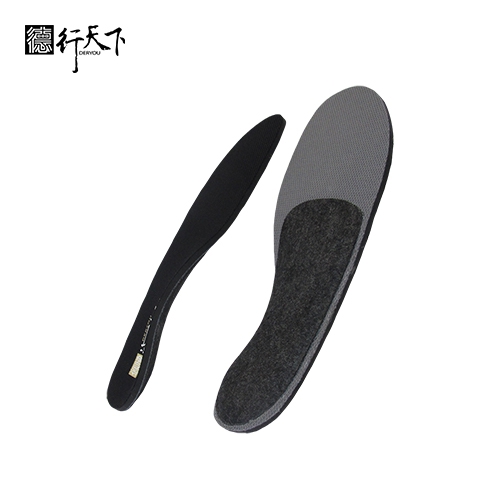
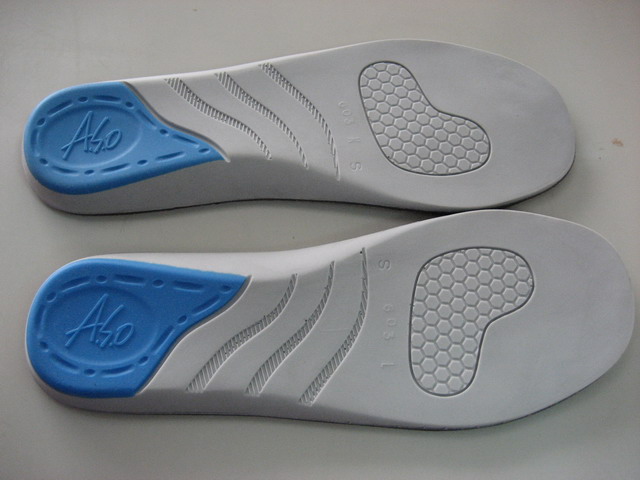
GuangXin offers exceptional flexibility in customization and OEM/ODM services, empowering our partners to create insole products that truly align with their brand identity and target market. We develop insoles tailored to specific foot shapes, end-user needs, and regional market preferences, ensuring optimal fit and functionality.
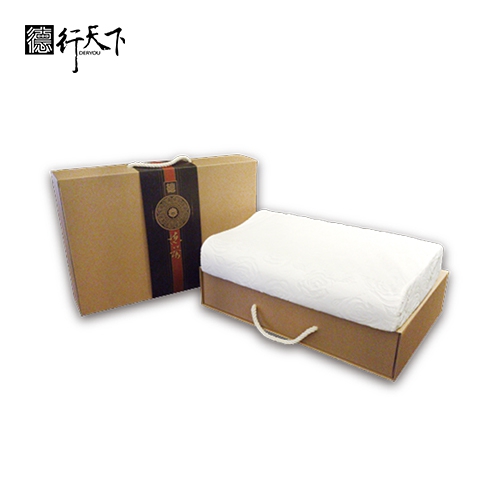
Our team supports comprehensive branding solutions, including logo printing, custom packaging, and product integration support for marketing campaigns. Whether you're launching a new product line or upgrading an existing one, we help your vision come to life with attention to detail and consistent brand presentation.
With fast prototyping services and efficient lead times, GuangXin helps reduce your time-to-market and respond quickly to evolving trends or seasonal demands. From concept to final production, we offer agile support that keeps you ahead of the competition.
Quality Assurance & Certifications
Quality is at the heart of everything we do. GuangXin implements a rigorous quality control system at every stage of production—ensuring that each insole meets the highest standards of consistency, comfort, and durability.
We provide a variety of in-house and third-party testing options, including antibacterial performance, odor control, durability testing, and eco-safety verification, to meet the specific needs of our clients and markets.
Our products are fully compliant with international safety and environmental standards, such as REACH, RoHS, and other applicable export regulations. This ensures seamless entry into global markets while supporting your ESG and product safety commitments.
ESG-Oriented Sustainable Production
At GuangXin Industrial, we are committed to integrating ESG (Environmental, Social, and Governance) values into every step of our manufacturing process. We actively pursue eco-conscious practices by utilizing eco-friendly materials and adopting low-carbon production methods to reduce environmental impact.
To support circular economy goals, we offer recycled and upcycled material options, including innovative applications such as recycled glass and repurposed LCD panel glass. These materials are processed using advanced techniques to retain performance while reducing waste—contributing to a more sustainable supply chain.
We also work closely with our partners to support their ESG compliance and sustainability reporting needs, providing documentation, traceability, and material data upon request. Whether you're aiming to meet corporate sustainability targets or align with global green regulations, GuangXin is your trusted manufacturing ally in building a better, greener future.
Let’s Build Your Next Insole Success Together
Looking for a reliable insole manufacturing partner that understands customization, quality, and flexibility? GuangXin Industrial Co., Ltd. specializes in high-performance insole production, offering tailored solutions for brands across the globe. Whether you're launching a new insole collection or expanding your existing product line, we provide OEM/ODM services built around your unique design and performance goals.
From small-batch custom orders to full-scale mass production, our flexible insole manufacturing capabilities adapt to your business needs. With expertise in PU, latex, and graphene insole materials, we turn ideas into functional, comfortable, and market-ready insoles that deliver value.
Contact us today to discuss your next insole project. Let GuangXin help you create custom insoles that stand out, perform better, and reflect your brand’s commitment to comfort, quality, and sustainability.
🔗 Learn more or get in touch:
🌐 Website: https://www.deryou-tw.com/
📧 Email: shela.a9119@msa.hinet.net
📘 Facebook: facebook.com/deryou.tw
📷 Instagram: instagram.com/deryou.tw
Graphene-infused pillow ODM China
Are you looking for a trusted and experienced manufacturing partner that can bring your comfort-focused product ideas to life? GuangXin Industrial Co., Ltd. is your ideal OEM/ODM supplier, specializing in insole production, pillow manufacturing, and advanced graphene product design.
With decades of experience in insole OEM/ODM, we provide full-service manufacturing—from PU and latex to cutting-edge graphene-infused insoles—customized to meet your performance, support, and breathability requirements. Our production process is vertically integrated, covering everything from material sourcing and foaming to molding, cutting, and strict quality control.Soft-touch pillow OEM service in Thailand
Beyond insoles, GuangXin also offers pillow OEM/ODM services with a focus on ergonomic comfort and functional innovation. Whether you need memory foam, latex, or smart material integration for neck and sleep support, we deliver tailor-made solutions that reflect your brand’s values.
We are especially proud to lead the way in ESG-driven insole development. Through the use of recycled materials—such as repurposed LCD glass—and low-carbon production processes, we help our partners meet sustainability goals without compromising product quality. Our ESG insole solutions are designed not only for comfort but also for compliance with global environmental standards.ODM pillow factory in Thailand
At GuangXin, we don’t just manufacture products—we create long-term value for your brand. Whether you're developing your first product line or scaling up globally, our flexible production capabilities and collaborative approach will help you go further, faster.Graphene cushion OEM factory in China
📩 Contact us today to learn how our insole OEM, pillow ODM, and graphene product design services can elevate your product offering—while aligning with the sustainability expectations of modern consumers.Latex pillow OEM production in Thailand
From renowned photographers Chris and Monique Fallows and co-authors on the new paper: “This image has special meaning to Monique and I as it so incredibly symbolizes the unbelievable sights we witnessed in the early mornings at Seal Island, False Bay, for over two decades – the oceans most famous super predator exhibiting the most spectacular behavior seen in its 60-million-year tenure on our planet. Today tragically the waters around Seal Island are empty of these icons.” Credit: @chrisfallowsphotography Recent study questions the idea of a steady movement of white shark populations toward the east along South Africa’s shores. A team of marine biologists, experts in shark ecology, genetics, and fisheries, has challenged the findings of a recent study which claimed that the population of white sharks in South Africa has not decreased, but simply redistributed eastwards to flee predation from orcas. In September 2023 the article titled “Decline or shifting distribution? A first regional trend assessment for white sharks (Carcharodon carcharias) in South Africa” was published in the open-access journal Ecological Indicators. This was followed by two articles in the popular media – one in Nature titled “Orcas blamed for missing great white sharks” and another in The Conversation Africa titled “South Africa’s great white sharks are changing locations – they need to be monitored for beach safety and conservation.” Critique of the Original Study’s Conclusions In a rebuttal article published in the same journal recently, titled “Uncertainty remains for white sharks in South Africa, as population stability and redistribution cannot be concluded by Bowlby et al (2023)”, the group of concerned marine biologists highlight several issues with the methods and inferences made in the study mentioned above, and argue that the data, as currently analysed and interpreted, cannot support the claims made about population stability, nor redistribution, of South Africa’s white sharks. Dr Enrico Gennari, director of the Oceans Research Institute and lead author, says they felt obliged to raise these concerns given what it means for management: “If the white shark population is stable, there is no need for concern. However, if the declines in white shark sightings seen in former hotspots are actually representative of the population, then conservation action is urgently needed.” Firstly, regarding the claim that South Africa’s white shark population has migrated eastwards, they raise two objections. The first objection has to do with the presentation of the two datasets in the 2023 study, and that one cannot infer than an increase in the number of shark sightings in one spot, in this case, Algoa Bay, is directly comparable to a reduction in shark sightings in another spot, such as False Bay. “Putting it simply, a decrease of let’s say 80% from 100 individuals at location A cannot be the same as a 80% increase from 10 individuals at location B,” they write. A significant increase in shark sightings in one spot could be due to a variety of reasons, including improved technologies such as the use of aerial drones. A 2022-study, for example, identified a 357% spike in the use of aerial drones in South African recreational fishery since 2016. Other potential factors that could have contributed to an increase in the number of white sharks in Algoa Bay include the establishment of Marine Protected Areas around Algoa Bay since 2004 and the completion of a new port in 2006. Recently, in the Western Cape, the number of shark sightings has declined to fewer than 10 per year. “If the entire population was indeed regionally stable and those observed simply moved from East to West, one would have expected the number of white sharks in Algoa Bay to be tenfold higher,” they write. Secondly, with regard to the claim that the supposed white shark redistribution eastward was driven by shark-eating orcas, they point out that the onset of white shark declines in False Bay (2012/13), Gansbaai (2013/14) and Mossel Bay (2015) predates the first appearance of those orcas in False Bay and in Gansbaai in 2015, and in Mossel Bay only in 2017. In other words, the alleged cause cannot appear two years later than its effect. “While we agree that orcas have likely influenced white shark numbers and behaviors, and at least temporarily displaced many from their historical aggregation sites, the data as currently presented do not suggest that orcas are the primary driver of the declines in white shark observed in the Western Cape,” they write in the article. Concerns Over Conservation Efforts Dr. Sara Andreotti, a marine biologist in the Department of Botany and Zoology at Stellenbosch University and one of the co-authors, says they are worried about the effect of the narrative on conservation efforts: “There is no evidence of the hundreds of white sharks counted in False Bay, Gansbaai, and Mossel Bay ten years ago to be aggregating now somewhere else along the South African coastline. Our concern is that unsupported claims of population stability could jeopardize conservation actions urgently needed for white sharks,” she warns. The group of concerned marine biologists urges authorities such as the Department of Forestry, Fisheries and Environment to take a precautionary approach in light of the declines in white shark sightings from their historical hotspots, the consequent negative impact on South Africa’s ecotourism economy, the reduction in sightings of large mature white sharks, both in the Western and Eastern Cape, the very low genetic diversity of this population, the historical and current unsustainable levels of white shark deaths from the lethal shark control program of the KwaZulu-Natal Sharks Board, and the newly exposed white shark deaths by a coastal shark longline fishery in South Africa. “Our paper highlights the importance of robust, transparent scientific inquiry in guiding conservation efforts, while taking a precautionary approach. It also serves as a critical checkpoint, urging us to re-evaluate and reinforce our commitment to preserving South Africa’s white shark population given the critical role these apex predators play in marine ecosystems and in the economy of South Africa,” they conclude. Reference: “Uncertainty remains for white sharks in South Africa, as population stability and redistribution cannot be concluded by Bowlby et al. (2023): “Decline or shifting distribution? a first regional trend assessment for white sharks (Carcharodon carcharias) in South Africa” by Enrico Gennari, Neil Hammerschlag, Sara Andreotti, Chris Fallows, Monique Fallows and Matias Braccini, 29 February 2024, Ecological Indicators. DOI: 10.1016/j.ecolind.2024.111810
New research demonstrates that the spinal cord can independently learn and remember movements, challenging traditional views of its role and potentially enhancing rehabilitation strategies for spinal injury patients. New research reveals that spinal cord neurons possess the capability to learn and retain information independently of the brain. The spinal cord is often described as merely a conduit for transmitting signals between the brain and the body. However, the spinal cord can actually learn and remember movements on its own. A team of researchers at the Leuven-based Neuro-Electronics Research Flanders (NERF) details how two different neuronal populations enable the spinal cord to adapt and recall learned behavior in a way that is completely independent of the brain. These remarkable findings, published in the journal Science, shed new light on how spinal circuits might contribute to mastering and automating movement. The insights could prove relevant in the rehabilitation of people with spinal injuries. The spinal cord’s puzzling plasticity The spinal cord modulates and finetunes our actions and movements by integrating different sources of sensory information, and it can do so without input from the brain. What’s more, nerve cells in the spinal cord can learn to adjust various tasks autonomously, given sufficient repetitive practice. How the spinal cord achieves this remarkable plasticity, however, has puzzled neuroscientists for decades. One such neuroscientist is Professor Aya Takeoka. Her team at Neuro-Electronics Research Flanders (NERF, a research institute backed by imec, KU Leuven, and VIB) studies how the spinal cord recovers from injuries by exploring how the nerve connections are wired, and how they function and change when we learn new movements. “Although we have evidence of ‘learning’ within the spinal cord from experiments dating back as early as the beginning of the 20th century, the question of which neurons are involved and how they encode this learning experience has remained unanswered,” says Prof. Takeoka. Part of the problem is the difficulty in directly measuring the activity of individual neurons in the spinal cord in animals that are not sedated but awake and moving. Takeoka’s team took advantage of a model in which animals train specific movements within minutes. In doing so, the team uncovered a cell type-specific mechanism of spinal cord learning. Two specific neuronal cell types To check how the spinal cord learns, doctoral researcher Simon Lavaud and his colleagues at the Takeoka lab built an experimental setup to measure changes in movement in mice, inspired by methods used in insect studies. “We evaluated the contribution of six different neuronal populations and identified two groups of neurons, one dorsal and one ventral, that mediate motor learning.” “These two sets of neurons take turns,” explains Lavaud. “The dorsal neurons help the spinal cord learn a new movement, while the ventral neurons help it remember and perform the movement later.” “You can compare it to a relay race within the spinal cord. The dorsal neurons act like the first runner, passing on the critical sensory information for learning. Then, the ventral cells take the baton, ensuring the learned movement is remembered and executed smoothly.” Learning and memory outside the brain The detailed results, published in Science, illustrate that neuronal activity in the spinal cord resembles various classical types of learning and memory. Further unraveling these learning mechanisms will be crucial, as they likely contribute to different ways in which we learn and automate movement, and may also be relevant in the context of rehabilitation, says Prof. Aya Takeoka: “The circuits we described could provide the means for the spinal cord to contribute to movement learning and long-term motor memory, which both help us to move, not only in normal health but especially during recovery from brain or spinal cord injuries.” Reference: “Two inhibitory neuronal classes govern acquisition and recall of spinal sensorimotor adaptation” by Simon Lavaud, Charlotte Bichara, Mattia D’Andola, Shu-Hao Yeh and Aya Takeoka, 11 April 2024, Science. DOI: 10.1126/science.adf6801 The research (team) was supported by the Research Foundation Flanders (FWO), Marie Skłodowska-Curie Actions (MSCA), a Taiwan-KU Leuven PhD fellowship (P1040), and the Wings for Life Spinal Cord Research Foundation.
Citizen scientists and researchers, collaborating through Taxon Expeditions, have discovered and documented a new beetle species, Clavicornaltica mataikanensis, in Borneo’s rainforests, showcasing the significant, yet largely uncharted, biodiversity of tropical forests. Credit: Taxon Expeditions – Holm Friedrich The undiscovered small beetles in the tropical rainforest are probably endless. But that did not discourage citizen scientists on expeditions to the Ulu Temburong forest in Borneo to keep adding them to scientific records, one at a time. Together with a team of researchers, they published a new species, Clavicornaltica mataikanensis in the open-access peer-reviewed Biodiversity Data Journal. The minute, two-mm-long leaf beetle that lives on the forest floor is the latest discovery of Taxon Expeditions, which organizes scientific field trips for teams consisting of both scientists and laypeople. Unlike other science/adventure trips, Taxon Expeditions organizes real scientific expeditions for lay people, guiding them in the discovery of new species of animals, by focusing on the thousands of ‘little things that run the world’. Citizen scientists, students, and researchers working together in the rainforest. Credit: Taxon Expeditions – Sotiris Kountouras Clavicornaltica mataikanensis, named for the stream Mata Ikan (“fish eye”) that runs in the valley where it was found, is one of a plethora of tiny beetle species that live in the leaf litter of tropical forests—and most of them have not yet been scientifically described and named. At 2 mm long, the flea beetle is actually one of the largest among its relatives – which might explain why so little is known about their ecology and diversity. The field trip, in which local students and researchers also took part, gave untrained lay people the opportunity to participate in the study of this hidden world of biodiversity and in the process of naming and publishing new species. Participant Lehman Ellis, from the US, says it was “exciting and beautiful” to be part of the discovery. Citizen scientist Eleonora Nigro in the field lab working on the publication. Credit: Taxon Expeditions – Iva Njunjić Entomologist and founder of Taxon Expeditions, Dr. Iva Njunjić, says: “We introduce the general public to all these tiny, beautiful, and completely unknown animals, and show them that there is a whole world still to be discovered.” Reference: “A new, unusually large, Clavicornaltica Scherer, 1974 flea beetle from Borneo, described and sequenced in the field by citizen scientists (Coleoptera, Chrysomelidae, Galerucinae)” by Sean Otani, Luca Bertoli, Filippo Lucchini, Tom P. G. van den Beuken, Desanne Boin, Lehman Ellis, Holm Friedrich, Brittany Jacquot, Sotiris Kountouras, Sarah Yu Rou Lim, Eleonora Nigro, Syafi’ie Su’eif, Wei Harn Tan, Ulmar Grafe, Daniele Cicuzza, Massimo Delledonne, Iva Njunjić and Menno Schilthuizen, 15 March 2024, Biodiversity Data Journal. DOI: 10.3897/BDJ.12.e119481
DVDV1551RTWW78V
China sustainable material ODM solutions 》helping your business stand out with material and functional innovationVietnam OEM/ODM hybrid insole services 》a manufacturing partner you can rely on for quality and deliveryChina eco-friendly graphene material processing 》simplifying complex ideas into market-ready products
下一則: Latex pillow OEM production in Taiwan 》meeting you
限會員,要發表迴響,請先登入


