Introduction – Company Background
GuangXin Industrial Co., Ltd. is a specialized manufacturer dedicated to the development and production of high-quality insoles.
With a strong foundation in material science and footwear ergonomics, we serve as a trusted partner for global brands seeking reliable insole solutions that combine comfort, functionality, and design.
With years of experience in insole production and OEM/ODM services, GuangXin has successfully supported a wide range of clients across various industries—including sportswear, health & wellness, orthopedic care, and daily footwear.
From initial prototyping to mass production, we provide comprehensive support tailored to each client’s market and application needs.
At GuangXin, we are committed to quality, innovation, and sustainable development. Every insole we produce reflects our dedication to precision craftsmanship, forward-thinking design, and ESG-driven practices.
By integrating eco-friendly materials, clean production processes, and responsible sourcing, we help our partners meet both market demand and environmental goals.
Core Strengths in Insole Manufacturing
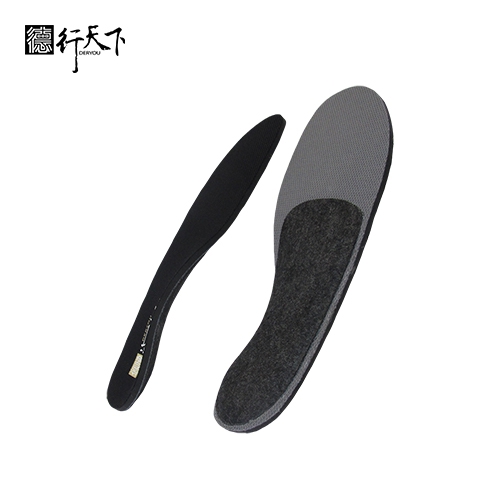
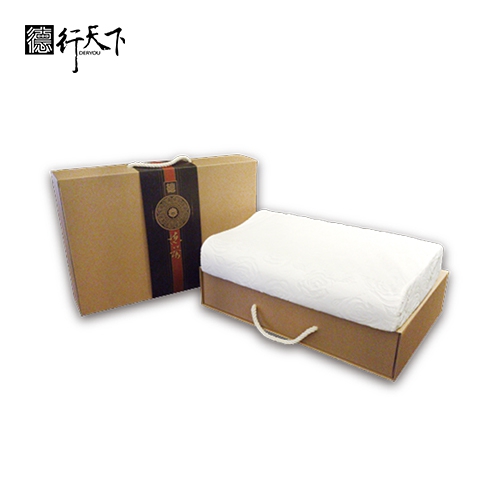
At GuangXin Industrial, our core strength lies in our deep expertise and versatility in insole and pillow manufacturing. We specialize in working with a wide range of materials, including PU (polyurethane), natural latex, and advanced graphene composites, to develop insoles and pillows that meet diverse performance, comfort, and health-support needs.
Whether it's cushioning, support, breathability, or antibacterial function, we tailor material selection to the exact requirements of each project-whether for foot wellness or ergonomic sleep products.
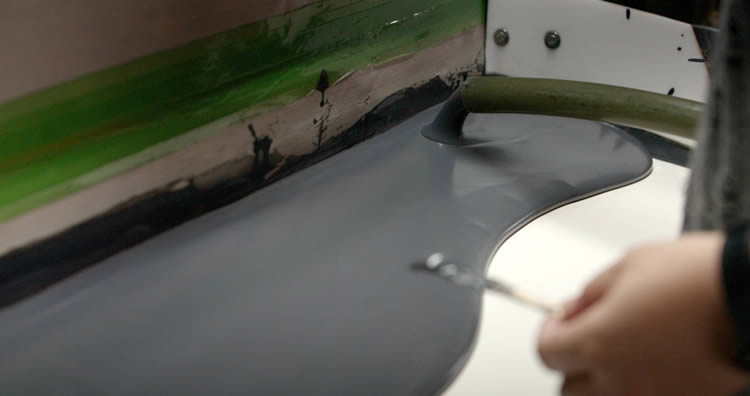
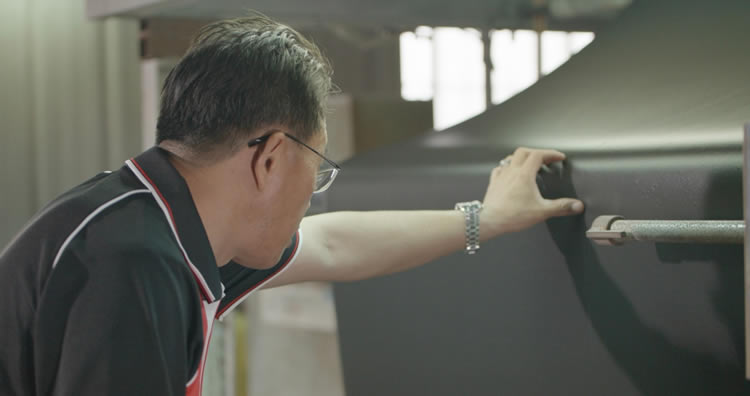
We provide end-to-end manufacturing capabilities under one roof—covering every stage from material sourcing and foaming, to precision molding, lamination, cutting, sewing, and strict quality control. This full-process control not only ensures product consistency and durability, but also allows for faster lead times and better customization flexibility.
With our flexible production capacity, we accommodate both small batch custom orders and high-volume mass production with equal efficiency. Whether you're a startup launching your first insole or pillow line, or a global brand scaling up to meet market demand, GuangXin is equipped to deliver reliable OEM/ODM solutions that grow with your business.
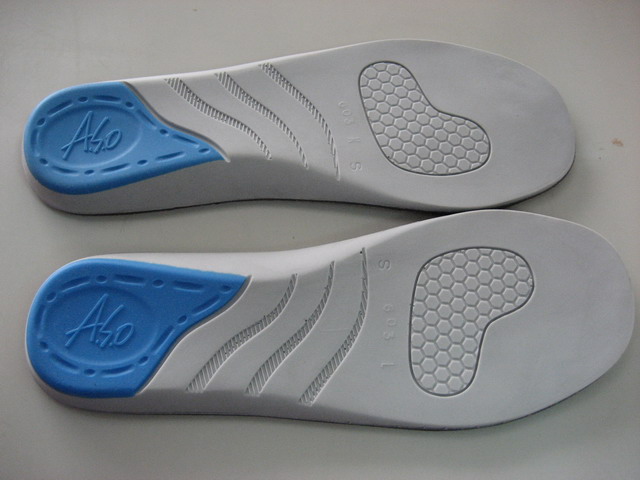
Customization & OEM/ODM Flexibility
GuangXin offers exceptional flexibility in customization and OEM/ODM services, empowering our partners to create insole products that truly align with their brand identity and target market. We develop insoles tailored to specific foot shapes, end-user needs, and regional market preferences, ensuring optimal fit and functionality.
Our team supports comprehensive branding solutions, including logo printing, custom packaging, and product integration support for marketing campaigns. Whether you're launching a new product line or upgrading an existing one, we help your vision come to life with attention to detail and consistent brand presentation.
With fast prototyping services and efficient lead times, GuangXin helps reduce your time-to-market and respond quickly to evolving trends or seasonal demands. From concept to final production, we offer agile support that keeps you ahead of the competition.
Quality Assurance & Certifications
Quality is at the heart of everything we do. GuangXin implements a rigorous quality control system at every stage of production—ensuring that each insole meets the highest standards of consistency, comfort, and durability.
We provide a variety of in-house and third-party testing options, including antibacterial performance, odor control, durability testing, and eco-safety verification, to meet the specific needs of our clients and markets.
Our products are fully compliant with international safety and environmental standards, such as REACH, RoHS, and other applicable export regulations. This ensures seamless entry into global markets while supporting your ESG and product safety commitments.
ESG-Oriented Sustainable Production
At GuangXin Industrial, we are committed to integrating ESG (Environmental, Social, and Governance) values into every step of our manufacturing process. We actively pursue eco-conscious practices by utilizing eco-friendly materials and adopting low-carbon production methods to reduce environmental impact.
To support circular economy goals, we offer recycled and upcycled material options, including innovative applications such as recycled glass and repurposed LCD panel glass. These materials are processed using advanced techniques to retain performance while reducing waste—contributing to a more sustainable supply chain.
We also work closely with our partners to support their ESG compliance and sustainability reporting needs, providing documentation, traceability, and material data upon request. Whether you're aiming to meet corporate sustainability targets or align with global green regulations, GuangXin is your trusted manufacturing ally in building a better, greener future.
Let’s Build Your Next Insole Success Together
Looking for a reliable insole manufacturing partner that understands customization, quality, and flexibility? GuangXin Industrial Co., Ltd. specializes in high-performance insole production, offering tailored solutions for brands across the globe. Whether you're launching a new insole collection or expanding your existing product line, we provide OEM/ODM services built around your unique design and performance goals.
From small-batch custom orders to full-scale mass production, our flexible insole manufacturing capabilities adapt to your business needs. With expertise in PU, latex, and graphene insole materials, we turn ideas into functional, comfortable, and market-ready insoles that deliver value.
Contact us today to discuss your next insole project. Let GuangXin help you create custom insoles that stand out, perform better, and reflect your brand’s commitment to comfort, quality, and sustainability.
🔗 Learn more or get in touch:
🌐 Website: https://www.deryou-tw.com/
📧 Email: shela.a9119@msa.hinet.net
📘 Facebook: facebook.com/deryou.tw
📷 Instagram: instagram.com/deryou.tw
Indonesia insole ODM design and production
Are you looking for a trusted and experienced manufacturing partner that can bring your comfort-focused product ideas to life? GuangXin Industrial Co., Ltd. is your ideal OEM/ODM supplier, specializing in insole production, pillow manufacturing, and advanced graphene product design.
With decades of experience in insole OEM/ODM, we provide full-service manufacturing—from PU and latex to cutting-edge graphene-infused insoles—customized to meet your performance, support, and breathability requirements. Our production process is vertically integrated, covering everything from material sourcing and foaming to molding, cutting, and strict quality control.Taiwan pillow ODM development service
Beyond insoles, GuangXin also offers pillow OEM/ODM services with a focus on ergonomic comfort and functional innovation. Whether you need memory foam, latex, or smart material integration for neck and sleep support, we deliver tailor-made solutions that reflect your brand’s values.
We are especially proud to lead the way in ESG-driven insole development. Through the use of recycled materials—such as repurposed LCD glass—and low-carbon production processes, we help our partners meet sustainability goals without compromising product quality. Our ESG insole solutions are designed not only for comfort but also for compliance with global environmental standards.Pillow OEM factory for wellness brands
At GuangXin, we don’t just manufacture products—we create long-term value for your brand. Whether you're developing your first product line or scaling up globally, our flexible production capabilities and collaborative approach will help you go further, faster.Taiwan sustainable material ODM production base
📩 Contact us today to learn how our insole OEM, pillow ODM, and graphene product design services can elevate your product offering—while aligning with the sustainability expectations of modern consumers.Graphene-infused pillow ODM China
A reconstruction of Psittacosaurus illustrating how the cloacal vent may have been used for signalling during courtship. Credit: Bob Nicholls/Paleocreations.com 2020 For the first time ever, a team of scientists, led by the University of Bristol, have described in detail a dinosaur’s cloacal or vent — the all-purpose opening used for defecation, urination, and breeding. Although most mammals may have different openings for these functions, most vertebrate animals possess a cloaca. Although we know now much about dinosaurs and their appearance as feathered, scaly, and horned creatures and even which colors they sported, we have not known anything about how the vent appears. Discovery from a Well-Preserved Psittacosaurus Fossil Dr. Jakob Vinther from the University of Bristol’s School of Earth Sciences, along with colleagues Robert Nicholls, a paleoartist, and Dr Diane Kelly, an expert on vertebrate penises and copulatory systems from the University of Massachusetts Amherst, have now described the first cloacal vent region from a small Labrador-sized dinosaur called Psittacosaurus, comparing it to vents across modern vertebrate animals living on land. Close up of the preserved cloacal vent in Psittacosaurus and the authors’ reconstruction of it. Credit: Study authors First-Ever Description of a Dinosaur’s Cloaca Dr. Vinther said: “I noticed the cloaca several years ago after we had reconstructed the color patterns of this dinosaur using a remarkable fossil on display at the Senckenberg Museum in Germany which clearly preserves its skin and color patterns. “It took a long while before we got around to finish it off because no one has ever cared about comparing the exterior of cloacal openings of living animals, so it was largely uncharted territory.” Dr. Kelly added: “Indeed, they are pretty nondescript. We found the vent does look different in many different groups of tetrapods, but in most cases, it doesn’t tell you much about an animal’s sex. “Those distinguishing features are tucked inside the cloaca, and unfortunately, they’re not preserved in this fossil.” Psittacosaurus specimen from Senckenberg museum of Natural History, preserving skin and pigmentation patterns and the first, and only known, cloacal vent. Credit: Jakob Vinther, University of Bristol and Bob Nicholls/Paleocreations.com 2020 The cloaca is unique in its appearance but exhibits features reminiscent to living crocodylians such as alligators and crocodiles, which are the closest living relatives to dinosaurs and other birds. Visual Signaling and Possible Scent Functions The researchers note that the outer margins of the cloaca are highly pigmented with melanin. They argue that this pigmentation provided the vent with a function in display and signaling, similar to living baboons and some breeding salamanders. The authors also speculate that the large, pigmented lobes on either side of the opening could have harbored musky scent glands, as seen in living crocodylians. Birds are one of the few vertebrate groups that occasionally exhibit visual signaling with the cloaca, which the scientists now can extend back to the Mesozoic dinosaur ancestors. Robert Nicholls said: “As a paleoartist, it has been absolutely amazing to have an opportunity to reconstruct one of the last remaining features we didn’t know anything about in dinosaurs. “Knowing that at least some dinosaurs were signaling to each other gives paleoartists exciting freedom to speculate on a whole variety of now plausible interactions during dinosaur courtship. It is a game changer!” Reference: “A cloacal opening in a non-avian dinosaur” by Jakob Vinther, Robert Nicholls and Diane A. Kelly, 19 January 2021, Current Biology. DOI: 10.1016/j.cub.2020.12.039
A coral-fungus-farming worker of the fungus-farming ant species Apterostigma collare, collected at La Selva Biological Station in Costa Rica in 2015, on its fungus garden. Credit: Alex Wild/Smithsonian Institution National Museum of Natural History Ants have been farming fungi since shortly after an asteroid triggered a mass extinction 66 million years ago, according to a study that analyzed genetic data to explore this ancient agriculture, potentially providing lessons for sustainable practices. Humans started farming thousands of years ago, but a new study co-authored by two LSU professors reveals that ants had us beaten by millions of years. LSU AgCenter mycologist Vinson P. Doyle and LSU Department of Biological Sciences professor Brant C. Faircloth lent their combined expertise to a study led by Smithsonian Institution entomologist Ted Schultz, which demonstrates that ants began farming fungi after an asteroid struck Earth 66 million years ago, causing a global mass extinction. In a paper published in the journal Science, scientists at the Smithsonian’s National Museum of Natural History, LSU, and other institutions analyzed genetic data from 475 species of fungi and 276 species of ants to craft detailed evolutionary trees. This allowed the researchers to pinpoint when ants began cultivating fungi millions of years ago, a behavior that some ant species still exhibit today. Ants as Early Farmers The timing of the publication is particularly noteworthy because it falls on the 150th anniversary of the co-discovery of fungus farming by ants made by Thomas Belt and Fritz Mueller. “Ants have been practicing agriculture and fungus farming for much longer than humans have existed,” Schultz said. “We could probably learn something from the agricultural success of these ants over the past 66 million years.” The researchers believe decaying leaf litter likely became the food of many of the fungi that grew during this period, which brought them in close contact with ants. The ants in turn began to use the fungi for food and have continued to rely on and domesticate this food source since the extinction event. “To really detect patterns and reconstruct how this association has evolved through time, you need lots of samples of ants and their fungal cultivars,” Schultz said. According to Faircloth, considerable amounts of DNA sequence data are needed to reconstruct the evolutionary history of both groups of organisms. Collecting these types of data from fungal cultivars and ants is where Doyle and Faircloth, who began collaborating in 2015, came in. They developed the molecular methods used to capture genetic data from both the fungi and the ants analyzed in the manuscript. Doyle said historical ideas about fungal farming by ants generally assumed there was a single origin of fungal cultivation, but what was hampering deeper insight into questions regarding how ants began farming was trying to capture sufficient DNA sequence data from the fungi that ants consumed. During the past 15 years, the cost of genome sequencing has plummeted, and the techniques for collecting many types of genomic data have significantly improved — enabling this and many other studies. DNA Sequencing and Its Challenges “If you have a mushroom, it’s relatively straightforward to sequence its genome,” Doyle said. “But when you have teeny-tiny fragments of a fungus that an ant is carrying inside of it, it’s hard to get enough fungal material to generate sufficient genome sequence data to analyze. That’s where the fungal bait sets we created come in. They allowed us to pull the DNA from minuscule bits of fungi, amplify it, sequence it, and analyze it.” According to Doyle, these “capture-based” approaches to collecting sequence data from fungi allow researchers to study symbiotic relationships between organisms and fungi in a way that they couldn’t before. He gave the example of a doctoral student, Spenser Babb-Biernacki, whom he’s co-advising with Jake Esselstyn, a mammalogist in the LSU Museum of Natural Science. Babb-Biernacki is studying a genus of fungus that occurs in the lungs of all mammals, Pneumocystis, commonly known as fungal pneumonia. “It’s hard to get DNA from the lungs of mammals when you have 100 million host cells and just a few fungal cells,” he said. “We’re using the same approach from this study to pull out genome-wide data, allowing us to start to understand the evolutionary history of the diverse group of organisms and address interactions between symbionts and their hosts. Doyle’s primary interest is in the influence of agriculture on fungi, saying that a pathogen doesn’t typically originate in agricultural populations. “It’s out there in the wild, then because of agriculture, it jumps in and starts to change in the agricultural environments,” he said. “This is similar, but it’s studying the coevolution of the ants and fungus and looking at the impact of ant agriculture on fungal evolution and vice versa.” Doyle said there are parallels between what the researchers see happening in the fungi that the ants are cultivating and crops that humans have cultivated. “The more examples you have of domestication across distantly related groups of organisms, the better you can start to develop a model for how domestication evolves and what happens to the genomes of organisms that become domesticated,” he said. “This study provides an example from millions and millions of years before humans started domesticating plants, but it seems like the process is actually rather similar.” Reference: “The coevolution of fungus-ant agriculture” by Ted R. Schultz, Jeffrey Sosa-Calvo, Matthew P. Kweskin, Michael W. Lloyd, Bryn Dentinger, Pepijn W. Kooij, Else C. Vellinga, Stephen A. Rehner, Andre Rodrigues, Quimi V. Montoya, Hermógenes Fernández-Marín, Ana Ješovnik, Tuula Niskanen, Kare Liimatainen, Caio A. Leal-Dutra, Scott E. Solomon, Nicole M. Gerardo, Cameron R. Currie, Mauricio BacciJr., Heraldo L. Vasconcelos, Christian Rabeling, Brant C. Faircloth and Vinson P. Doyle, 3 October 2024, Science. DOI: 10.1126/science.adn7179
A map illustrating the occurrence of mollusks in marine shelf environments between 1700 and 2020, with darker hexagons indicating fewer and lighter indicating more. By compiling and analyzing mollusk fossil data from the past 145 million years, Nebraska’s Will Gearty and colleagues have shown that temperature largely explains the diversity of aquatic life in the tropics. Human-driven global warming is expected to reduce that tropical biodiversity in coming centuries. Credit: Adapted from figure in Current Biology / Cell Press Findings indicate global warming could reduce biodiversity in tropics. The bulging, equator-belted midsection of Earth currently teems with a greater diversity of life than anywhere else — a biodiversity that generally wanes when moving from the tropics to the mid-latitudes and the mid-latitudes to the poles. As well-accepted as that gradient is, though, ecologists continue to grapple with the primary reasons for it. New research from the University of Nebraska-Lincoln, Yale University and Stanford University suggests that temperature can largely explain why the greatest variety of aquatic life resides in the tropics — but also why it has not always and, amid record-fast global warming, soon may not again. Published in May 2021 in the journal Current Biology, the study estimates that marine biodiversity tends to increase until the average surface temperature of the ocean reaches about 65 degrees Fahrenheit, beyond which that diversity slowly declines. During intervals of Earth’s history when the maximum surface temperature was lower than 80 degrees Fahrenheit, the greatest biodiversity was found around the equator, the study concluded. But when that maximum exceeded 80 degrees, marine biodiversity ebbed in the tropics, where those highest temperatures would have manifested, while peaking in waters at the mid-latitudes and the poles. Marine life that could travel considerable distances likely migrated north or south from the tropics during periods of extreme heat, said co-author Will Gearty, a postdoctoral researcher of biological sciences at Nebraska. Stationary or slower-moving animals, such as sponges and sea stars, may have instead faced extinction. “People have always theorized that the tropics are a cradle of diversity — that it pops up and then is protected there,” Gearty said. “There’s also this idea that … there’s lots of migration toward the tropics, but not away from it. All of that centers around the idea that the highest diversity will always be in the tropics. And that’s not what we see as we go back in time.” Gearty, Yale’s Thomas Boag and Stanford’s Richard Stockey went back about 145 million years, compiling estimated temperatures and fossil records of mollusks — snails, clams, cephalopods and the like — from 24 horizontal bands of Earth that were equal in surface area. The trio chose mollusk records for multiple reasons: They live (and lived) around the globe, in large enough numbers to accommodate statistical analyses, with hard enough shells to yield identifiable fossils, with enough variation that their diversity trends might generalize to fish, corals, crustaceans and an array of other marine animals. That data allowed the team to derive the temperature-diversity relationship across 10 geologic intervals that covered most of the elapsed time from the Cretaceous period through the modern day. “Temperature seems to account for a lot of the trend that we see in the fossil record,” Gearty said. “There are certainly other factors, but this seems to be the first-order predictor of what’s going on.” To investigate why temperature might be so influential and predictive, Stockey took the lead in developing a mathematical model. The model accounts for the fact that higher temperatures generally increase the amount of energy in an ecosystem, theoretically raising the ceiling on the biodiversity an ecosystem can sustain, at least to a point. But it also factors in metabolism and the small matter of oxygen, which, by dissolving in water, makes aquatic life possible in the first place. Colder waters dissolve more oxygen, meaning that elevated temperatures naturally reduce the amount available to marine life and, by extension, potentially limit the biodiversity an ecosystem can support. Higher temperatures also raise the metabolic demands of organisms, increasing the minimum oxygen needed to sustain active marine animals. “That means you require more oxygen in warmer waters,” Gearty said. “And if the amount of oxygen available is not satisfying that increase in metabolism, you won’t survive in that environment. So, to survive, you’ll need to move to another environment where the temperature is lower.” The team applied its model to numerous marine species with varying metabolisms. As expected, metabolism influenced how the population of a given species would respond to a rise in temperature, along with the temperature threshold beyond which that population would decline. When the researchers averaged the effects of metabolism and oxygen availability across those species, they discovered that the resulting temperature-diversity relationship resembled — and, in doing so, supported — the one they derived from the fossil record. “It shows a similar trend of this (biodiversity) increase and then decrease,” Gearty said. “After many a day at the whiteboard just trying to figure out how to make it work, it all just came together very nicely at the end — you know, a nice little bow on top.” Collectively, the study indicates that human-driven global warming could hit the inhabitants of tropical waters especially hard. The average surface temperature of tropical waters could jump by as many as 6 degrees Fahrenheit by the year 2300, according to one projection. And according to the fossil records analyzed for the study, similar temperature increases during the past 145 million years have sometimes permanently driven mollusk species from tropical waters. There are worrying signs that the expected trend is already underway, Gearty said. Though the team had difficulty narrowing down the projected magnitude of the decline in biodiversity, Gearty said the worst-case projection called for the tropics losing up to 50% of their marine species by 2300. Some of the loss will take the form of migration. Yet the warming could spell doom for, say, corals and the thousands of marine species that they support, he said, as seen in the oft-fatal bleaching of the Great Barrier Reef off the coast of Australia. “This (biodiversity loss) is already happening, and it will only keep happening unless we do something,” Gearty said. “We can’t really take back the buildup of carbon dioxide (in the atmosphere) that’s already happened, so it’s going to keep happening for some amount of time. But it’s up to us to determine how long until it’ll stop.” Reference: “Metabolic tradeoffs control biodiversity gradients through geological time” by Thomas H. Boag, William Gearty and Richard G. Stockey, 6 May 2021, Current Biology. DOI: 10.1016/j.cub.2021.04.021
DVDV1551RTWW78V
Taiwan OEM insole and pillow supplier 》flexible, experienced, and ready to support your growthInnovative pillow ODM solution in Indonesia 》trusted by brand builders and product innovatorsArch support insole OEM from Taiwan 》craftsmanship meets efficiency for maximum value
下一則: Indonesia OEM insole and pillow supplier 》recommen
限會員,要發表迴響,請先登入


