Introduction – Company Background
GuangXin Industrial Co., Ltd. is a specialized manufacturer dedicated to the development and production of high-quality insoles.
With a strong foundation in material science and footwear ergonomics, we serve as a trusted partner for global brands seeking reliable insole solutions that combine comfort, functionality, and design.
With years of experience in insole production and OEM/ODM services, GuangXin has successfully supported a wide range of clients across various industries—including sportswear, health & wellness, orthopedic care, and daily footwear.
From initial prototyping to mass production, we provide comprehensive support tailored to each client’s market and application needs.
At GuangXin, we are committed to quality, innovation, and sustainable development. Every insole we produce reflects our dedication to precision craftsmanship, forward-thinking design, and ESG-driven practices.
By integrating eco-friendly materials, clean production processes, and responsible sourcing, we help our partners meet both market demand and environmental goals.

Core Strengths in Insole Manufacturing
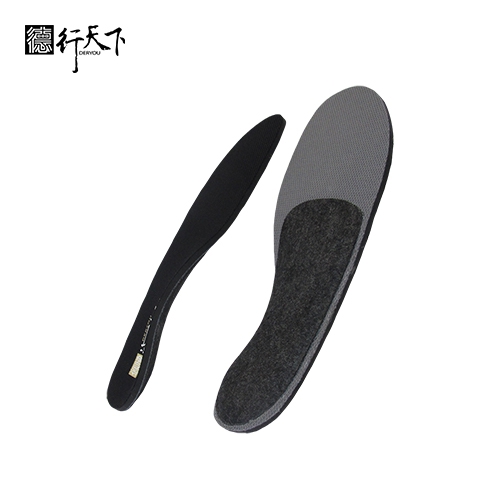
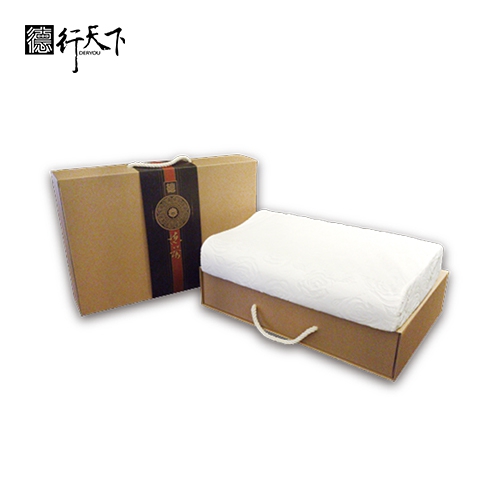
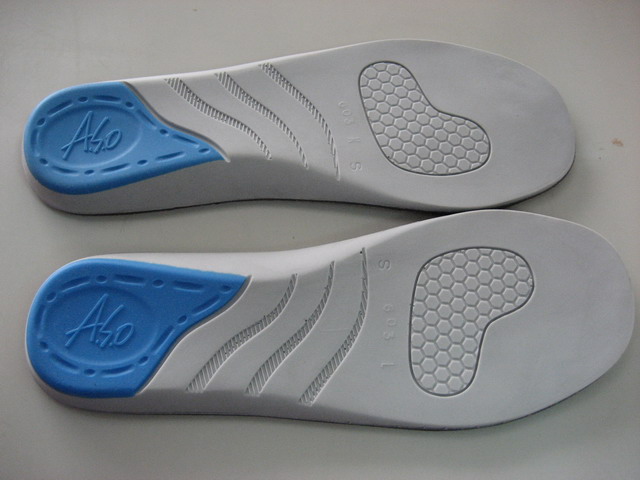
At GuangXin Industrial, our core strength lies in our deep expertise and versatility in insole and pillow manufacturing. We specialize in working with a wide range of materials, including PU (polyurethane), natural latex, and advanced graphene composites, to develop insoles and pillows that meet diverse performance, comfort, and health-support needs.
Whether it's cushioning, support, breathability, or antibacterial function, we tailor material selection to the exact requirements of each project-whether for foot wellness or ergonomic sleep products.
We provide end-to-end manufacturing capabilities under one roof—covering every stage from material sourcing and foaming, to precision molding, lamination, cutting, sewing, and strict quality control. This full-process control not only ensures product consistency and durability, but also allows for faster lead times and better customization flexibility.
With our flexible production capacity, we accommodate both small batch custom orders and high-volume mass production with equal efficiency. Whether you're a startup launching your first insole or pillow line, or a global brand scaling up to meet market demand, GuangXin is equipped to deliver reliable OEM/ODM solutions that grow with your business.
Customization & OEM/ODM Flexibility
GuangXin offers exceptional flexibility in customization and OEM/ODM services, empowering our partners to create insole products that truly align with their brand identity and target market. We develop insoles tailored to specific foot shapes, end-user needs, and regional market preferences, ensuring optimal fit and functionality.
Our team supports comprehensive branding solutions, including logo printing, custom packaging, and product integration support for marketing campaigns. Whether you're launching a new product line or upgrading an existing one, we help your vision come to life with attention to detail and consistent brand presentation.
With fast prototyping services and efficient lead times, GuangXin helps reduce your time-to-market and respond quickly to evolving trends or seasonal demands. From concept to final production, we offer agile support that keeps you ahead of the competition.
Quality Assurance & Certifications
Quality is at the heart of everything we do. GuangXin implements a rigorous quality control system at every stage of production—ensuring that each insole meets the highest standards of consistency, comfort, and durability.
We provide a variety of in-house and third-party testing options, including antibacterial performance, odor control, durability testing, and eco-safety verification, to meet the specific needs of our clients and markets.
Our products are fully compliant with international safety and environmental standards, such as REACH, RoHS, and other applicable export regulations. This ensures seamless entry into global markets while supporting your ESG and product safety commitments.
ESG-Oriented Sustainable Production
At GuangXin Industrial, we are committed to integrating ESG (Environmental, Social, and Governance) values into every step of our manufacturing process. We actively pursue eco-conscious practices by utilizing eco-friendly materials and adopting low-carbon production methods to reduce environmental impact.
To support circular economy goals, we offer recycled and upcycled material options, including innovative applications such as recycled glass and repurposed LCD panel glass. These materials are processed using advanced techniques to retain performance while reducing waste—contributing to a more sustainable supply chain.
We also work closely with our partners to support their ESG compliance and sustainability reporting needs, providing documentation, traceability, and material data upon request. Whether you're aiming to meet corporate sustainability targets or align with global green regulations, GuangXin is your trusted manufacturing ally in building a better, greener future.
Let’s Build Your Next Insole Success Together
Looking for a reliable insole manufacturing partner that understands customization, quality, and flexibility? GuangXin Industrial Co., Ltd. specializes in high-performance insole production, offering tailored solutions for brands across the globe. Whether you're launching a new insole collection or expanding your existing product line, we provide OEM/ODM services built around your unique design and performance goals.
From small-batch custom orders to full-scale mass production, our flexible insole manufacturing capabilities adapt to your business needs. With expertise in PU, latex, and graphene insole materials, we turn ideas into functional, comfortable, and market-ready insoles that deliver value.
Contact us today to discuss your next insole project. Let GuangXin help you create custom insoles that stand out, perform better, and reflect your brand’s commitment to comfort, quality, and sustainability.
🔗 Learn more or get in touch:
🌐 Website: https://www.deryou-tw.com/
📧 Email: shela.a9119@msa.hinet.net
📘 Facebook: facebook.com/deryou.tw
📷 Instagram: instagram.com/deryou.tw
Indonesia high-end foam product OEM/ODM
Are you looking for a trusted and experienced manufacturing partner that can bring your comfort-focused product ideas to life? GuangXin Industrial Co., Ltd. is your ideal OEM/ODM supplier, specializing in insole production, pillow manufacturing, and advanced graphene product design.
With decades of experience in insole OEM/ODM, we provide full-service manufacturing—from PU and latex to cutting-edge graphene-infused insoles—customized to meet your performance, support, and breathability requirements. Our production process is vertically integrated, covering everything from material sourcing and foaming to molding, cutting, and strict quality control.Indonesia insole ODM service provider
Beyond insoles, GuangXin also offers pillow OEM/ODM services with a focus on ergonomic comfort and functional innovation. Whether you need memory foam, latex, or smart material integration for neck and sleep support, we deliver tailor-made solutions that reflect your brand’s values.
We are especially proud to lead the way in ESG-driven insole development. Through the use of recycled materials—such as repurposed LCD glass—and low-carbon production processes, we help our partners meet sustainability goals without compromising product quality. Our ESG insole solutions are designed not only for comfort but also for compliance with global environmental standards.High-performance insole OEM Indonesia
At GuangXin, we don’t just manufacture products—we create long-term value for your brand. Whether you're developing your first product line or scaling up globally, our flexible production capabilities and collaborative approach will help you go further, faster.Taiwan custom product OEM/ODM services
📩 Contact us today to learn how our insole OEM, pillow ODM, and graphene product design services can elevate your product offering—while aligning with the sustainability expectations of modern consumers.Custom foam pillow OEM in Taiwan
Heliconius butterflies exhibit enhanced cognitive functions through specialized brain development, revealing deeper insights into the evolution of learning and memory systems. (Heliconius butterfly brain.) Credit: Max Farnworth Research on Heliconius butterflies illustrates how variations in brain circuits are aligned with their unique foraging behaviors, enhancing their spatial and visual memory. A tropical butterfly species with uniquely expanded brain structures shows a fascinating mosaic pattern of neural expansion linked to a key cognitive innovation. The study, published today (October 18) in Current Biology, explores the neural basis of behavioral innovation in Heliconius butterflies, the only genus known to feed on both nectar and pollen. As part of this behavior, these butterflies exhibit an impressive ability to learn and remember the locations of their food sources—abilities tied to the expansion of a brain region called the mushroom bodies, which play a crucial role in learning and memory. Heliconius butterflies stand out for their diet, which includes both nectar and pollen, and their impressive cognitive abilities. Credit: Max Farnworth Examining Neural Circuit Evolution Lead author Dr. Max Farnworth from the University of Bristol’s School of Biological Sciences explained: “There is huge interest in how bigger brains may support enhanced cognition, behavioral precision, or flexibility. But during brain expansion, it’s often difficult to disentangle effects of increases in overall size from changes in internal structure.” To answer this question, the study authors delved deeper into the changes that occurred in the neural circuits that support learning and memory in Heliconius butterflies. Neural circuits are quite similar to electrical circuits as each cell has specific targets that they connect with, and assembles a net with its connections. This net then elicits specific functions by constructing a circuitry. Mosaic Brain Evolution in Heliconius Through a detailed analysis of the butterfly brain, the team discovered that certain groups of cells, known as Kenyon cells, expanded at different rates. This variation led to a pattern called mosaic brain evolution, where some parts of the brain expand while others remain unchanged, analogous to mosaic tiles all being very different from each other. Dr. Farnworth explained: “We predict that because we see these mosaic patterns of neural changes, these will relate to specific shifts in behavioral performance – in line with the range of learning experiments which show that Heliconius outperform their closest relatives in only very specific contexts, such as long-term visual memory and pattern learning.” Heliconius butterflies are a unique genus known for their ability to feed on both nectar and pollen, a rare trait among butterflies. Credit: Max Farnworth Neural Adaptations for Pollen Foraging To feed on pollen, Heliconius butterflies need to have efficient routes of feeding, as pollen plants are quite rare. Project supervisor and co-author, Dr. Stephen Montgomery said: “Rather than having a random route of foraging, these butterflies apparently choose fixed routes between floral resources – akin to a bus route. The planning and memory processes needed for this behavior are fulfilled by the assemblies of neurons inside the mushroom bodies, hence why we’re fascinated by the internal circuitry throughout. Our results suggest that specific aspects of these circuits have been tweaked to bring about the enhanced capacities of Heliconius butterflies.” Future Directions in Neural Circuit Research This study contributes to the understanding on how neural circuits change to reflect cognitive innovation and change. Examining neural circuits in tractable model systems such as insects promises to reveal genetic and cellular mechanisms common to all neural circuits, thus potentially bridging the gap, at least on a mechanistic level, to other organisms such as humans. Looking ahead, the team plans to explore neural circuits beyond the learning and memory centers of the butterfly brain. They also aim to increase the resolution of their brain mapping to visualize how individual neurons connect at an even more granular level. Dr. Farnworth said: “I was really fascinated by the fact that we see such high degrees of conservation in brain anatomy and evolution, but then very prominent but distinct changes.” “This is a really fascinating and beautiful example of a layer of biodiversity we don’t usually see, the diversity of brain and sensory systems, and the ways in which animals are processing and using the information provided by the environment around them” concluded Dr. Montgomery. Reference: “Mosaic evolution of a learning and memory circuit in Heliconiini butterflies” by Max S. Farnworth, Theodora Loupasaki, Antoine Couto and Stephen H. Montgomery, 18 October 2024, Current Biology. DOI: 10.1016/j.cub.2024.09.069
A reconstruction of Thylacosmilus atrox. It is commonly known as the “marsupial (or metatherian) sabertooth” because its extraordinarily large upper canines recall those of the more famous placental sabertooth that evolved in North America. Credit: © Jorge Blanco How the “Marsupial Sabertooth” Thylacosmilus Saw Its World Study describes how extinct hypercarnivore likely achieved 3D vision despite wide-set eyes more characteristic of an herbivore than a predator. A new study investigates how an extinct, carnivorous marsupial relative with canines so large they extended across the top of its skull could hunt effectively despite having wide-set eyes, like a cow or a horse. The skulls of carnivores typically have forward-facing eye sockets, or orbits, which helps enable stereoscopic (3D) vision, a useful adaptation for judging the position of prey before pouncing. Scientists from the American Museum of Natural History and the Instituto Argentino de Nivología, Glaciología, y Ciencias Ambientales in Mendoza, Argentina, studied whether the “marsupial sabertooth” Thylacosmilus atrox could see in 3D at all. Their results are published today (March 21) in the journal Communications Biology. Popularly known as the “marsupial (or metatherian) sabertooth” because its extraordinarily large upper canines recall those of the more famous placental sabertooth that evolved in North America, Thylacosmilus lived in South America until its extinction about 3 million years ago. It was a member of Sparassodonta, a group of highly carnivorous mammals related to living marsupials. Although sparassodont species differed considerably in size—Thylacosmilus may have weighed as much as 100 kilograms (220 pounds)—the great majority resembled placental carnivores like cats and dogs in having forward-facing eyes and, presumably, full 3D vision. By contrast, the orbits of Thylacosmilus, a supposed hypercarnivore—an animal with a diet estimated to consist of at least 70 percent meat—were positioned like those of an ungulate, with orbits that face mostly laterally. In this situation, the visual fields do not overlap sufficiently for the brain to integrate them in 3D. Why would a hypercarnivore evolve such a peculiar adaptation? A team of researchers from Argentina and the United States set out to look for an explanation. A reconstruction of the skull of Thylacosmilus atrox. Credit: © Jorge Blanco Canine Growth and Cranial Reorganization “You can’t understand cranial organization in Thylacosmilus without first confronting those enormous canines,” said lead author Charlène Gaillard, a Ph.D. student in the Instituto Argentino de Nivología, Glaciología, y Ciencias Ambientales (INAGLIA). “They weren’t just large; they were ever-growing, to such an extent that the roots of the canines continued over the tops of their skulls. This had consequences, one of which was that no room was available for the orbits in the usual carnivore position on the front of the face.” Gaillard used CT scanning and 3D virtual reconstructions to assess orbital organization in a number of fossil and modern mammals. She was able to determine how the visual system of Thylacosmilus would have compared to those in other carnivores or other mammals in general. Although low orbital convergence occurs in some modern carnivores, Thylacosmilus was extreme in this regard: it had an orbital convergence value as low as 35 degrees, compared to that of a typical predator, like a cat, at around 65 degrees. However, good stereoscopic vision also relies on the degree of frontation, which is a measure of how the eyeballs are situated within the orbits. “Thylacosmilus was able to compensate for having its eyes on the side of its head by sticking its orbits out somewhat and orienting them almost vertically, to increase visual field overlap as much as possible,” said co-author Analia M. Forasiepi, also in INAGLIA and a researcher in CONICET, the Argentinian science and research agency. “Even though its orbits were not favorably positioned for 3D vision, it could achieve about 70 percent of visual field overlap—evidently, enough to make it a successful active predator.” Morphological Trade-offs for Functionality “Compensation appears to be the key to understanding how the skull of Thylacosmilus was put together,” said study co-author Ross D. E. MacPhee, a senior curator at the American Museum of Natural History. “In effect, the growth pattern of the canines during early cranial development would have displaced the orbits away from the front of the face, producing the result we see in adult skulls. The odd orientation of the orbits in Thylacosmilus actually represents a morphological compromise between the primary function of the cranium, which is to hold and protect the brain and sense organs, and a collateral function unique to this species, which was to provide enough room for the development of the enormous canines.” Lateral displacement of the orbits was not the only cranial modification that Thylacosmilus developed to accommodate its canines while retaining other functions. Placing the eyes on the side of the skull brings them close to the temporal chewing muscles, which might result in deformation during eating. To control for this, some mammals, including primates, have developed a bony structure that closes off the eye sockets from the side. Thylacosmilus did the same thing—another example of convergence among unrelated species. The Mystery of Ever-Growing Canines This leaves a final question: What purpose would have been served by developing huge, ever-growing teeth that required re-engineering of the whole skull? “It might have made predation easier in some unknown way,” said Gaillard, “But, if so, why didn’t any other sparassodont—or for that matter, any other mammalian carnivore—develop the same adaptation convergently? The canines of Thylacosmilus did not wear down, like the incisors of rodents. Instead, they just seem to have continued growing at the root, eventually extending almost to the rear of the skull.” Forasiepi underlined this point, saying, “To look for clear-cut adaptive explanations in evolutionary biology is fun but largely futile. One thing is clear: Thylacosmilus was not a freak of nature, but in its time and place it managed, apparently quite admirably, to survive as an ambush predator. We may view it as an anomaly because it doesn’t fit within our preconceived categories of what a proper mammalian carnivore should look like, but evolution makes its own rules.” Reference: “Seeing through the eyes of the sabertooth Thylacosmilus atrox (Metatheria, Sparassodonta” by Charlène Gaillard, Ross D. E. MacPhee and Analía M. Forasiepi, 21 March 2023, Communications Biology. DOI: 10.1038/s42003-023-04624-5
In North Carolina USA, male blue ghost fireflies (Phausis reticulata) glow while searching for mates. Their flightless females are highly vulnerable to trampling, as they remain hidden on the forest floor. Credit: Spencer Black First Comprehensive Review on the Growing Global Phenomenon of Firefly Tourism Firefly beetles rank among the world’s most charismatic creatures, with luminous courtship displays that have now turned them into a popular attraction for wildlife tourists. In the first comprehensive review of firefly tourism, published in the journal Conservation Science and Practice, an international team of biologists led by a Tufts University researcher, reveal that an estimated 1 million people now travel each year to witness bioluminescent performances starring some two dozen firefly species around the world. But the authors also point out that while this unique, insect-based tourism can bring economic, social, and psychological benefits to local communities and tourists alike, it also threatens to extinguish some local firefly populations unless adequate protections are put in place. Females of many firefly species lack functional wings, making them especially vulnerable to accidental trampling in areas of heavy foot traffic. Credit: Radim Schreiber “With this review of the current state of firefly tourism and the declining health of their habitats, we are putting out a call to action to engage local communities and governments, as well as the tourists themselves, to act as guardians of the fireflies,” said lead author Sara Lewis, professor of biology at Tufts University and co-chair of the International Union for the Conservation of Nature’s (IUCN) Firefly Specialist Group, which conducted the review. The IUCN firefly group works to identify key threats and conservation issues facing fireflies in different geographic regions, and advocates for the most threatened species at national and global levels. Lewis’ earlier work on fireflies with the IUCN has drawn considerable attention and fascination among the public and other researchers, with media coverage including CNN and The Washington Post. Surge in Tourist Numbers and Consequences In recent years, the number of tourists has skyrocketed at several sites in Mexico, India, Taiwan, Malaysia, Thailand, and the United States. “In Mexico, the rapid growth of firefly tourism over the past decade is thrilling but also alarming,” said Tania López-Palafox, graduate student at Universidad Nacional Autónoma de México and co-author of the review. “The COVID pandemic gave them a momentary respite, but we have witnessed the harm that too much tourism can do.” At Nanacamilpa in Mexico, tourists follow guides into the forest to view courtship displays of synchronous roving fireflies Photinus palaciosi. Credit: Tania López-Palafox Aimed at site managers, tour guides, and tourists, the report highlights the need to recognize ecological requirements across all firefly life stages. To promote the breeding success of firefly adults, sites should minimize light pollution: bright lights from buildings, vehicles, flashlights, and even cell phones — all of which can disrupt firefly courtship rituals. Protection of nearby habitats also plays an essential role. Fireflies spend most of their life cycle in a juvenile, larval stage. These juveniles require several months or even years to develop into their adult form and, depending on the species, spend this time living below ground, in leaf litter or sometimes underwater. The authors describe former firefly sites along mangrove rivers where commercial development and excessive motorboat traffic have degraded riverbank habitat that had been essential for supporting firefly larvae. At some sites, the reproductive cycle of firefly populations is threatened by tourists inadvertently trampling female fireflies and degrading larval habitats. Females in many species can’t fly, and so are particularly susceptible to tourist foot traffic. Learn more about the mating rituals of fireflies studied by the Tufts research team in this video. The report noted the popularity of displays created by several kinds of synchronous fireflies found in Southeast Asia and North America, where hundreds or thousands of firefly males captivate females — and tourists, too — by flashing their lights together in unison. According to co-author Anchana Thancharoen, lecturer at Kasetsart University in Bangkok, “With such mesmerizing lights, the firefly display trees make tourists fall in love at first sight. Our aim with this call to action is to channel that love into support for conservation efforts.” Recommendations for Sustainable Tourism Other recommendations by the authors include: 1) Tailored conservation practices to protect the habitats for all life stages to thrive 2) Involvement of local communities as ecological and economic stakeholders 3) Training programs for guides 4) Educational materials for visitors and best practices for transforming tourist behavior Whether managed by local governments or run by commercial enterprises, well-managed tourism should educate global visitors to become allies in protecting firefly populations. “There is also a larger opportunity here,” said Lewis. “Fireflies hold a special fascination for people, and their fading lights make an obvious and visible case for conservation. But fireflies can also be a gateway bug to get tourists interested in conserving many other insects, which might not be so charismatic, yet still are essential building blocks for healthy ecosystems.” Reference: “Firefly tourism: Advancing a global phenomenon toward a brighter future” by Sara M. Lewis, Anchana Thancharoen, Choong Hay Wong, Tania López‐Palafox, Paola Velasco Santos, Chiahsiung Wu, Lynn Faust, Raphaël De Cock, Avalon C. S. Owens, R. Harvey Lemelin, Hum Gurung, Wan F. A. Jusoh, Daniel Trujillo, Vor Yiu, Pablo Jaramillo López, Soraya Jaikla and J. Michael Reed, 11 March 2021, Conservation Science and Practice. DOI: 10.1111/csp2.391
DVDV1551RTWW78V
Taiwan pillow ODM development factory 》recommended by industry experts for sustainability and performanceESG-compliant OEM manufacturer in Thailand 》tailored support for growing product linesVietnam OEM factory for footwear and bedding 》trusted by DTC and B2B brands alike
下一則: Vietnam orthopedic insole OEM manufacturer 》ready
限會員,要發表迴響,請先登入


