Introduction – Company Background
GuangXin Industrial Co., Ltd. is a specialized manufacturer dedicated to the development and production of high-quality insoles.
With a strong foundation in material science and footwear ergonomics, we serve as a trusted partner for global brands seeking reliable insole solutions that combine comfort, functionality, and design.
With years of experience in insole production and OEM/ODM services, GuangXin has successfully supported a wide range of clients across various industries—including sportswear, health & wellness, orthopedic care, and daily footwear.
From initial prototyping to mass production, we provide comprehensive support tailored to each client’s market and application needs.
At GuangXin, we are committed to quality, innovation, and sustainable development. Every insole we produce reflects our dedication to precision craftsmanship, forward-thinking design, and ESG-driven practices.
By integrating eco-friendly materials, clean production processes, and responsible sourcing, we help our partners meet both market demand and environmental goals.
Core Strengths in Insole Manufacturing
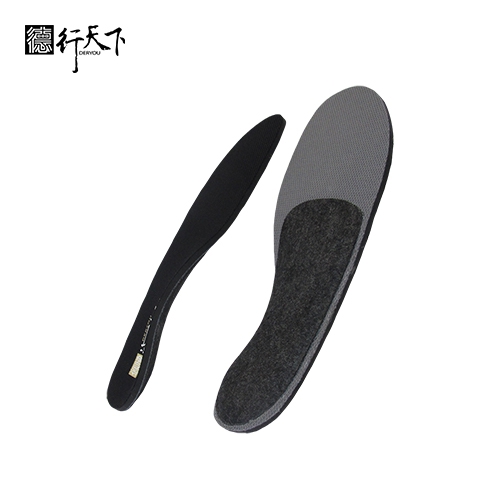
At GuangXin Industrial, our core strength lies in our deep expertise and versatility in insole and pillow manufacturing. We specialize in working with a wide range of materials, including PU (polyurethane), natural latex, and advanced graphene composites, to develop insoles and pillows that meet diverse performance, comfort, and health-support needs.
Whether it's cushioning, support, breathability, or antibacterial function, we tailor material selection to the exact requirements of each project-whether for foot wellness or ergonomic sleep products.
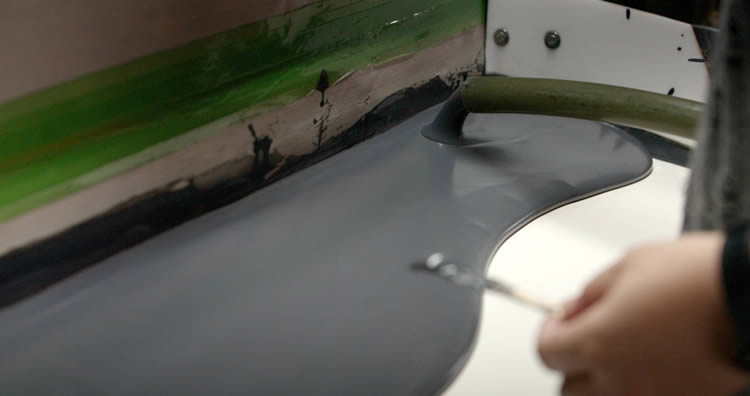
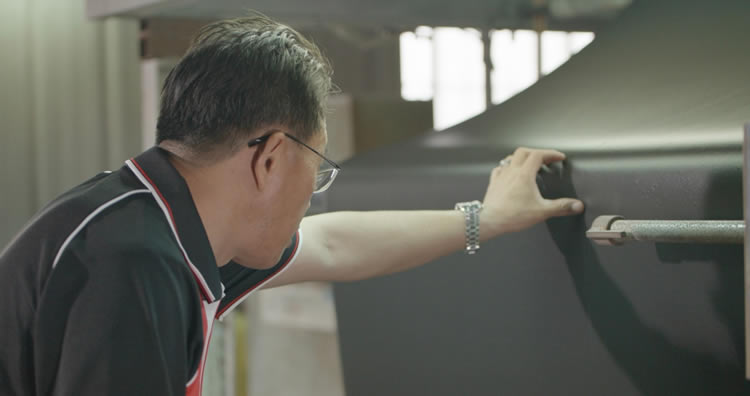
We provide end-to-end manufacturing capabilities under one roof—covering every stage from material sourcing and foaming, to precision molding, lamination, cutting, sewing, and strict quality control. This full-process control not only ensures product consistency and durability, but also allows for faster lead times and better customization flexibility.
With our flexible production capacity, we accommodate both small batch custom orders and high-volume mass production with equal efficiency. Whether you're a startup launching your first insole or pillow line, or a global brand scaling up to meet market demand, GuangXin is equipped to deliver reliable OEM/ODM solutions that grow with your business.
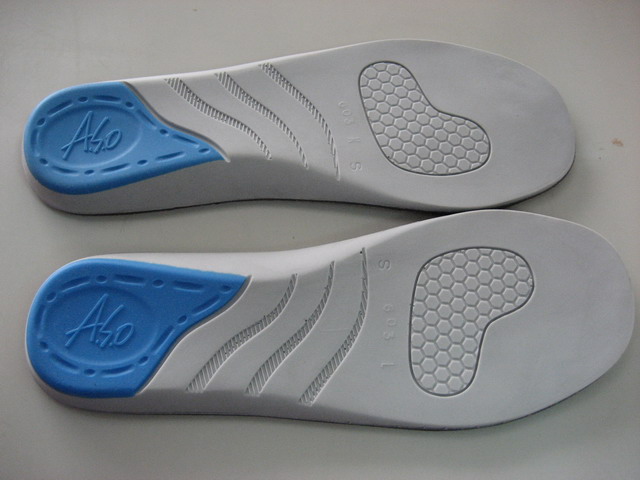
Customization & OEM/ODM Flexibility
GuangXin offers exceptional flexibility in customization and OEM/ODM services, empowering our partners to create insole products that truly align with their brand identity and target market. We develop insoles tailored to specific foot shapes, end-user needs, and regional market preferences, ensuring optimal fit and functionality.
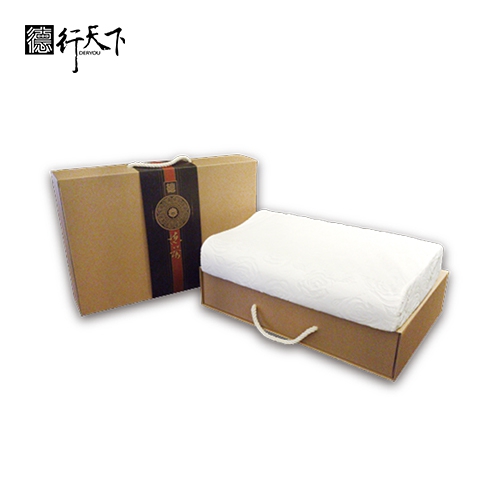
Our team supports comprehensive branding solutions, including logo printing, custom packaging, and product integration support for marketing campaigns. Whether you're launching a new product line or upgrading an existing one, we help your vision come to life with attention to detail and consistent brand presentation.
With fast prototyping services and efficient lead times, GuangXin helps reduce your time-to-market and respond quickly to evolving trends or seasonal demands. From concept to final production, we offer agile support that keeps you ahead of the competition.
Quality Assurance & Certifications
Quality is at the heart of everything we do. GuangXin implements a rigorous quality control system at every stage of production—ensuring that each insole meets the highest standards of consistency, comfort, and durability.
We provide a variety of in-house and third-party testing options, including antibacterial performance, odor control, durability testing, and eco-safety verification, to meet the specific needs of our clients and markets.
Our products are fully compliant with international safety and environmental standards, such as REACH, RoHS, and other applicable export regulations. This ensures seamless entry into global markets while supporting your ESG and product safety commitments.
ESG-Oriented Sustainable Production
At GuangXin Industrial, we are committed to integrating ESG (Environmental, Social, and Governance) values into every step of our manufacturing process. We actively pursue eco-conscious practices by utilizing eco-friendly materials and adopting low-carbon production methods to reduce environmental impact.
To support circular economy goals, we offer recycled and upcycled material options, including innovative applications such as recycled glass and repurposed LCD panel glass. These materials are processed using advanced techniques to retain performance while reducing waste—contributing to a more sustainable supply chain.
We also work closely with our partners to support their ESG compliance and sustainability reporting needs, providing documentation, traceability, and material data upon request. Whether you're aiming to meet corporate sustainability targets or align with global green regulations, GuangXin is your trusted manufacturing ally in building a better, greener future.
Let’s Build Your Next Insole Success Together
Looking for a reliable insole manufacturing partner that understands customization, quality, and flexibility? GuangXin Industrial Co., Ltd. specializes in high-performance insole production, offering tailored solutions for brands across the globe. Whether you're launching a new insole collection or expanding your existing product line, we provide OEM/ODM services built around your unique design and performance goals.
From small-batch custom orders to full-scale mass production, our flexible insole manufacturing capabilities adapt to your business needs. With expertise in PU, latex, and graphene insole materials, we turn ideas into functional, comfortable, and market-ready insoles that deliver value.
Contact us today to discuss your next insole project. Let GuangXin help you create custom insoles that stand out, perform better, and reflect your brand’s commitment to comfort, quality, and sustainability.
🔗 Learn more or get in touch:
🌐 Website: https://www.deryou-tw.com/
📧 Email: shela.a9119@msa.hinet.net
📘 Facebook: facebook.com/deryou.tw
📷 Instagram: instagram.com/deryou.tw
Ergonomic insole ODM support Indonesia
Are you looking for a trusted and experienced manufacturing partner that can bring your comfort-focused product ideas to life? GuangXin Industrial Co., Ltd. is your ideal OEM/ODM supplier, specializing in insole production, pillow manufacturing, and advanced graphene product design.
With decades of experience in insole OEM/ODM, we provide full-service manufacturing—from PU and latex to cutting-edge graphene-infused insoles—customized to meet your performance, support, and breathability requirements. Our production process is vertically integrated, covering everything from material sourcing and foaming to molding, cutting, and strict quality control.Thailand neck support pillow OEM
Beyond insoles, GuangXin also offers pillow OEM/ODM services with a focus on ergonomic comfort and functional innovation. Whether you need memory foam, latex, or smart material integration for neck and sleep support, we deliver tailor-made solutions that reflect your brand’s values.
We are especially proud to lead the way in ESG-driven insole development. Through the use of recycled materials—such as repurposed LCD glass—and low-carbon production processes, we help our partners meet sustainability goals without compromising product quality. Our ESG insole solutions are designed not only for comfort but also for compliance with global environmental standards.Custom graphene foam processing China
At GuangXin, we don’t just manufacture products—we create long-term value for your brand. Whether you're developing your first product line or scaling up globally, our flexible production capabilities and collaborative approach will help you go further, faster.China graphene product OEM service
📩 Contact us today to learn how our insole OEM, pillow ODM, and graphene product design services can elevate your product offering—while aligning with the sustainability expectations of modern consumers.ODM pillow factory in China
A new study reveals hydrogen gas’s role as an energy source at life’s dawn, underscoring its potential as a sustainable fuel. Through examining the natural processes at hydrothermal vents and the early cellular mechanisms for harnessing hydrogen, researchers have gained insights into the origins of life and the ancient utilization of hydrogen as an energy source. This research not only illuminates hydrogen’s historical significance but also its future role in sustainable energy. Hydrogen gas, dubbed the energy of the future, has been providing energy since 4 billion years ago. A recent study reveals how hydrogen gas, often touted as the energy source of tomorrow, provided energy in the past, at the origin of life 4 billion years ago. Hydrogen gas is clean fuel. It burns with oxygen in the air to provide energy with no CO2. Hydrogen is a key to sustainable energy for the future. Though humans are just now coming to realize the benefits of hydrogen gas (H2 in chemical shorthand), microbes have known that H2 is a good fuel for as long as there has been life on Earth. Hydrogen is ancient energy. The very first cells on Earth lived from H2 produced in hydrothermal vents, using the reaction of H2 with CO2 to make the molecules of life. Microbes that thrive from the reaction of H2 and CO2 can live in total darkness, inhabiting spooky, primordial habitats like deep-sea hydrothermal vents or hot rock formations deep within the Earth’s crust, environments where many scientists think that life itself arose. Discovery of Hydrogen’s Role in Early Cellular Energy Harvesting Surprising new insights about how the first cells on Earth came to harness H2 as an energy source are now reported in PNAS. The new study comes from the team of William F. Martin at the University of Düsseldorf and Martina Preiner at the Max Planck Institute (MPI) for Terrestrial Microbiology in Marburg with support from collaborators in Germany and Asia. In order to harvest energy, cells first have to push the electrons from H2 energetically uphill. “That is like asking a river to flow uphill instead of downhill, so cells need engineered solutions,” explains one of the three first authors of the study, Max Brabender. Image from the Sulis formation in the Lost City hydrothermal field, an alkaline hydrothermal vent that produces hydrogen. Credit: Courtesy of Susan Lang, U. of South Carolina /NSF/ROV Jason 2018 © Woods Hole Oceanographic Institution How cells solve that problem was discovered only 15 years ago by Wolfgang Buckel together with his colleague Rolf Thauer in Marburg. They found that cells send the two electrons in hydrogen down different paths. One electron goes far downhill, so far downhill that it sets something like a pulley (or a siphon) in motion that can pull the other electron energetically uphill. This process is called electron bifurcation. The Mechanisms of Electron Bifurcation and Early Evolutionary Puzzle In cells, it requires several enzymes that send the electrons uphill to an ancient and essential biological electron carrier called ferredoxin. The new study shows that at pH 8.5, typical of naturally alkaline vents, “no proteins are required,” explains Buckel, co-author on the study, “the H–H bond of H2 splits on the iron surface, generating protons that are consumed by the alkaline water and electrons that are then easily transferred directly to ferredoxin.” How an energetically uphill reaction could have worked in early evolution, before there were enzymes or cells, has been a very tough puzzle. “Several different theories have proposed how the environment might have pushed electrons energetically uphill to ferredoxin before the origin of electron bifurcation,“ says Martin, “we have identified a process that could not be simpler and that works in the natural conditions of hydrothermal vents”. Since the discovery of electron bifurcation, scientists have found that the process is both ancient and absolutely essential in microbes that live from H2. The vexing problem for evolutionarily-minded chemists like Martina Preiner, whose team in Marburg focusses on the impact of the environment on reactions that microbes use today and possibly used at life’s origin, is: How was H2 harnessed for CO2 fixing pathways before there were complicated proteins? “Metals provide answers,”, she says, “at the onset of life, metals under ancient environmental conditions can send the electrons from H2 uphill, and we can see relicts of that primordial chemistry preserved in the biology of modern cells.” But metals alone are not enough. “H2 needs to be produced by the environment as well” adds co-first author Delfina Pereira from Preiner’s lab. Such environments are found in hydrothermal vents, where water interacts with iron-containing rocks to make H2, and where microbes still live today from that hydrogen as their source of energy. The Surprising Role of Hydrogen in Forming Metallic Iron Hydrothermal vents, both modern and ancient, generate H2 in such large amounts that the gas can turn iron-containing minerals into shiny metallic iron. “That hydrogen can make metallic iron out of minerals is no secret,” says Harun Tüysüz, expert for high-tech materials at the Max-Planck-Institut für Kohlenforschung Mülheim and coauthor on the study. “Many processes in the chemical industry use H2 to make metals out of minerals during the reaction.” The surprise is that nature does this too, especially at hydrothermal vents, and that this naturally deposited iron could have played a crucial role at the origin of life. Iron was the only metal identified in the new study that was able to send the electrons in H2 uphill to ferredoxin. But the reaction only works under alkaline conditions like those in a certain type of hydrothermal vents. Natalia Mrnjavac from the Düsseldorf group and co-first author on the study points out: “This fits well with the theory that life arose in such environments. The most exciting thing is that such simple chemical reactions can close an important gap in understanding the complex process of origins, and that we can see those reactions working under the conditions of ancient hydrothermal vents in the laboratory today.” Reference: “Ferredoxin reduction by hydrogen with iron functions as an evolutionary precursor of flavin-based electron bifurcation” by Max Brabender, Delfina P. Henriques Pereira, Natalia Mrnjavac, Manon Laura Schlikker, Zen-Ichiro Kimura, Jeerus Sucharitakul, Karl Kleinermanns, Harun Tüysüz, Wolfgang Buckel, Martina Preiner and William F. Martin, 21 March 2024, Proceedings of the National Academy of Sciences. DOI: 10.1073/pnas.2318969121
Arabidopsis plants were used to develop the first CRISPR-Cas9-based gene drive in plants. Credit: Zhao Lab, UC San Diego Scientists Develop the First CRISPR/Cas9-Based Gene Drive in Plants New technology designed to breed more robust crops to improve agricultural yield and resist the effects of climate change. With a goal of breeding resilient crops that are better able to withstand drought and disease, University of California, San Diego (UCSD) scientists have developed the first CRISPR-Cas9-based gene drive in plants. While gene drive technology has been developed in insects to help stop the spread of vector-borne diseases such as malaria, researchers in Professor Yunde Zhao’s lab, along with colleagues at the Salk Institute for Biological Studies, demonstrated the successful design of a CRISPR-Cas9-based gene drive that cuts and copies genetic elements in Arabidopsis plants. Breaking from the traditional inheritance rules that dictate that offspring acquire genetic materials equally from each parent (Mendelian genetics), the new research uses CRISPR-Cas9 editing to transmit specific, targeted traits from a single parent in subsequent generations. Such genetic engineering could be used in agriculture to help plants defend against diseases to grow more productive crops. The technology also could help fortify plants against the impacts of climate change such as increased drought conditions in a warming world. A schematic representation of a new plant gene drive using CRISPR/Cas9 technology. Credit: Zhao Lab, UC San Diego The research, led by postdoctoral scholar Tao Zhang and graduate student Michael Mudgett in Zhao’s lab, is published in the journal Nature Communications. “This work defies the genetic constraints of sexual reproduction that an offspring inherits 50% of their genetic materials from each parent,” said Zhao, a member of the Division of Biological Sciences’ Section of Cell and Developmental Biology. “This work enables inheritance of both copies of the desired genes from only a single parent. The findings can greatly reduce the generations needed for plant breeding.” The study is the latest development by researchers in the Tata Institute for Genetics and Society (TIGS) at UC San Diego, which was built upon the foundation of a new technology called “active genetics” with potential to influence population inheritance in a variety of applications. Developing superior crops through traditional genetic inheritance can be expensive and time-consuming as genes are passed through multiple generations. Using the new active genetics technology based on CRISPR-Cas9, such genetic bias can be achieved much more quickly, the researchers say. “I am delighted that this gene drive success, now achieved by scientists affiliated with TIGS in plants, extends the generality of this work previously demonstrated at UC San Diego, to be applicable in insects and mammals,” said TIGS Global Director Suresh Subramani. “This advance will revolutionize plant and crop breeding and help address the global food security problem.” Reference: “Selective inheritance of target genes from only one parent of sexually reproduced F1 progeny in Arabidopsis” by Tao Zhang, Michael Mudgett, Ratnala Rambabu, Bradley Abramson, Xinhua Dai, Todd P. Michael and Yunde Zhao, 22 June 2021, Nature Communications. DOI: 10.1038/s41467-021-24195-5 Coauthors of the paper include: Tao Zhang, Michael Mudgett, Ratnala Rambabu, Bradley Abramson, Xinhua Dai, Todd Michael and Yunde Zhao. The research was funded by TIGS-UC San Diego and a training grant from the National Institutes of Health.
Scientists found a fossil in the Scottish Highlands with two distinct cell types, potentially indicating the earliest recorded instance of a multicellular animal. A billion-year-old fossil, which provides a new link in the evolution of animals, has been discovered in the Scottish Highlands. Scientists have discovered the fossil of an organism with two distinct cell types, thought to be the oldest of its kind ever recorded The fossil reveals a new insight into the transition of single-celled holozoa into more complex multicellular animals Found in the Scottish Highlands, the fossil suggests the evolution of animals occurred at least one billion years ago and may have occurred in freshwater lakes rather than the ocean A team of scientists, led by the University of Sheffield in the UK and Boston College in the USA, has found a microfossil that contains two distinct cell types and could be the earliest multicellular animal ever recorded. The fossil reveals new insight into the transition of single-celled organisms to complex multicellular animals. Modern single-celled holozoa include the most basal living animals, the fossil discovered shows an organism that lies somewhere between single-cell and multicellular animals. The fossil has been described and formally named Bicellum Brasieri in a new research paper published in Current Biology. Image of the fossil. Credit: Professor Paul Strother Professor Charles Wellman, one of the lead investigators of the research, from the University of Sheffield’s Department of Animal and Plant Sciences, said: “The origins of complex multicellularity and the origin of animals are considered two of the most important events in the history of life on Earth, our discovery sheds new light on both of these. “We have found a primitive spherical organism made up of an arrangement of two distinct cell types, the first step towards a complex multicellular structure, something which has never been described before in the fossil record. “The discovery of this new fossil suggests to us that the evolution of multicellular animals had occurred at least one billion years ago and that early events prior to the evolution of animals may have occurred in freshwater like lakes rather than the ocean.” Professor Paul Strother, lead investigator of the research from Boston College, said: “Biologists have speculated that the origin of animals included the incorporation and repurposing of prior genes that had evolved earlier in unicellular organisms. “What we see in Bicellum is an example of such a genetic system, involving cell-cell adhesion and cell differentiation that may have been incorporated into the animal genome half a billion years later.” The fossil was found at Loch Torridon in the Northwest Scottish Highlands. Scientists were able to study the fossil due to its exceptional preservation, allowing them to analyze it at a cellular and subcellular level. The team hope to now examine the Torridonian deposits for more interesting fossils which could provide more insight into the evolution of multicellular organisms. Reference: “A possible billion-year-old holozoan with differentiated multicellularity” by Paul K. Strother, Martin D. Brasier, David Wacey, Leslie Timpe, Martin Saunders and Charles H. Wellman, 13 April 2021, Current Biology. DOI: 10.1016/j.cub.2021.03.051 The research is mainly funded by the UK Natural Environment Research Council (NERC).
DVDV1551RTWW78V
Thailand neck support pillow OEM 》combining comfort, performance, and brand-level supportSoft-touch pillow OEM manufacturing factory in Taiwan 》seamless coordination from idea to finished productInnovative pillow ODM solution in China 》committed to helping you create value through custom manufacturing
限會員,要發表迴響,請先登入


