★ De
✎ departure (n.)
(1) The act of leaving; a going away.
(2) A beginning of a new course of action or thought.
(3) Death.
(4) Deviation, as from a standard, rule, etc.
(5) Distance due east or west made by a boat or aircraft on its course.
✎ deficient
(1.) Wanting; incomplete; defective.
★ lamentation (n.)
(1) Grief expressed aloud; outcry.
★ Lamentations
A lyrical poetic book of the Old Testament, attributed to Jeremiah the prophet.
★ elegy
The writer of an elegy. 輓歌的作者。
★ foreshadowing
(1) To suggest beforehand.
➜ Those dark clouds foreshadow a storm.
★ Xerox
A process for reproducing printed, written or pictorial matter by xerography. Orig. 全錄影印。
➥ Xerox
Xerox Corporation /ˈzɪərɒks/ is a U.S. based global corporation that sells business services and document technology products to businesses and governments of all sizes.

★ Q-tip
Q-tip is also called Cotton swabs (American) or cotton buds (British), consisting of a small wad of cotton wrapped around one or both ends of a short rod, usually made of either wood, rolled paper, or plastic.
➥ Q-tips
The cotton swab is a tool invented in the 1920s by Leo Gerstenzang after he attached wads of cotton to toothpicks. His product, which he named "Baby Gays", went on to become the most widely sold brand name, "Q-tips", with the Q standing for "quality". The term "Q-tips" is often used as a genericized trademark for cotton swabs in the USA and Canada.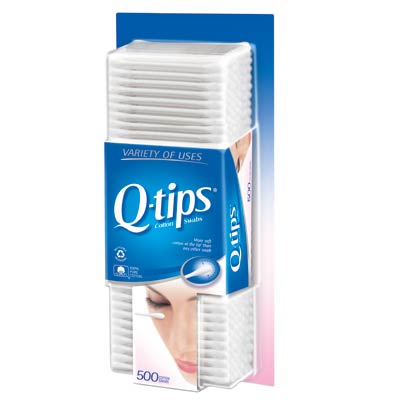
★ Kotex
Kotex is a brand of feminine hygiene products, which includes the Kotex maxi, thin and ultra-thin pads.
➥ Kotex
Kotex is owned and managed by Kimberly-Clark, a consumer products corporation active in more than 80 countries.

★ tampon
A tampon is a mass of absorbent material, primarily used as a feminine hygiene product. Historically, the word "tampon" originated from the medieval French word "tampion", meaning a piece of cloth to stop a hole, a stamp, plug, or stopper. At present, tampons are designed to be easily inserted into the vagina during menstruation and absorb the menstrual flow.

★ E. E. Cummings

Edward Estlin Cummings, popularly known as E. E. Cummings, with the abbreviated form of his name often written by others in all lowercase letters as e. e. cummings, was an American poet, painter, essayist, author, and playwright. His body of work encompasses approximately 2,900 poems, an autobiographical novel, four plays and several essays, as well as numerous drawings and paintings. He is remembered as a preeminent voice of 20th century poetry, as well as one of the most popular.
★ One Art
By Elizabeth Bishop 1911–1979
The art of losing isn’t hard to master;
so many things seem filled with the intent
to be lost that their loss is no disaster.
Lose something every day. Accept the fluster
of lost door keys, the hour badly spent.
The art of losing isn’t hard to master.
Then practice losing farther, losing faster:
places, and names, and where it was you meant
to travel. None of these will bring disaster.
I lost my mother’s watch. And look! my last, or
next-to-last, of three loved houses went.
The art of losing isn’t hard to master.
I lost two cities, lovely ones. And, vaster,
some realms I owned, two rivers, a continent.
I miss them, but it wasn’t a disaster.
—Even losing you (the joking voice, a gesture
I love) I shan’t have lied. It’s evident
the art of losing’s not too hard to master
though it may look like (Write it!) like disaster.


