How to choose a suitable variable frequency drive?
2025/07/05 17:28
瀏覽139
迴響0
推薦0
引用0
1. Basic introduction to variable frequency drives
Variable-frequency drive (VFD) is a power control device that controls the speed of AC motors by changing the power supply frequency and voltage, realizing soft start, smooth speed regulation and stop control of the motor, and can meet the speed regulation under different load requirements. It is mainly used to accurately adjust the motor running speed, optimize energy consumption and extend the life of the equipment.
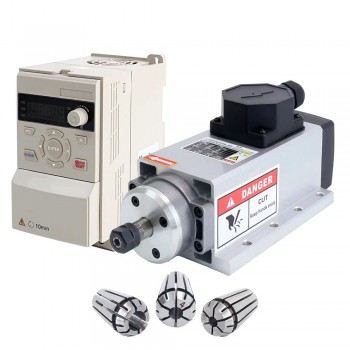
2. The main structure of variable frequency drives
The inverter is mainly composed of rectifier, DC intermediate link and inverter. The rectifier converts AC power into DC power, while the inverter converts DC power into adjustable frequency AC power, directly drives the motor and realizes speed control. The DC intermediate link (such as capacitor) is used for energy storage and filtering, but the core function is still completed by the inverter.
3. Control methods of variable frequency drives
1. Speed control: This is the most basic control method, which changes the speed of the motor by adjusting the output frequency of the inverter. Speed control can be divided into open-loop control and closed-loop control. The former is simple and easy to use but not very accurate, while the latter requires additional speed sensors for feedback to achieve more accurate speed regulation.
2. Torque control: Torque control aims to control the output torque of the motor, which is particularly suitable for occasions requiring constant torque. By adjusting the output voltage and frequency of the inverter, it can be ensured that the motor can output the required torque at different speeds.
3. PID control: PID control is a control method based on proportional, integral, and differential algorithms, which is suitable for precise control of process variables. In the application of inverters, PID control is often used to achieve closed-loop control of physical quantities such as pressure and temperature.
4. Multi-speed control: Multi-speed control allows users to preset multiple speed sections and switch them at any time as needed. This control method is suitable for occasions that require frequent speed changes, such as different processes on a production line.
5. Communication network control: With the development of intelligent technology, inverters are increasingly supporting remote control through industrial networks. This control method can achieve collaborative work between multiple inverters and improve the automation level of the system.
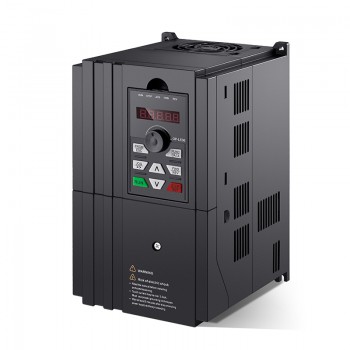
4. Selection principles of variable frequency drives
1. Load type: The load type (such as constant voltage control, constant current control, etc.) must be clearly defined. Different loads have different control methods and performance requirements for the inverter. For example, it is recommended to use a dedicated inverter for torque-reducing loads such as fans and water pumps, while a inverter with closed-loop control function should be selected for scenes that require precise control.
2. Power and voltage matching: The rated power and voltage of the inverter must match the motor. Ordinary centrifugal pumps and other loads are mainly based on current matching, while special loads such as deep-water pumps need to refer to the maximum current of the motor and appropriately enlarge the inverter capacity. Voltage matching requires ensuring that the input/output voltage of the inverter is consistent with the rated voltage of the power supply and the motor.
3. Control mode: Select the control mode (such as V/F control, vector control, servo control) according to application requirements. For example, machine tool equipment requires constant power characteristics, and a vector control inverter can be selected; fans, water pumps, etc. can use general inverters.
4. Current and torque matching: The inverter capacity needs to be matched according to the rated current and load characteristics of the motor. High-speed motors may increase output current due to low reactance, so the inverter capacity needs to be appropriately increased. Heavy loads or large inertia loads (such as cranes and centrifuges) need to be enlarged by 1-2 gears to select inverters and configure brake units.
5. Environmental adaptability: Environmental factors such as temperature, humidity, and dust need to be considered, and appropriate protection levels (such as IP54, IP65) and operating temperature ranges need to be selected to ensure inverter stability.
6. Function and efficiency: Prioritize inverters with high energy efficiency levels, and consider whether they support network communication, fault diagnosis and other functions. Some inverters have built-in energy-saving functions to reduce operating costs.
自訂分類:不分類
上一則: Main functions of stepper motor encoders下一則: Importance and application of stepper motor encoders
你可能會有興趣的文章:
限會員,要發表迴響,請先登入


