Performance characteristics and selection principles of hollow rotary actuators
2025/05/23 17:35
瀏覽187
迴響0
推薦0
引用0
1. Basic definition of hollow rotary actuators
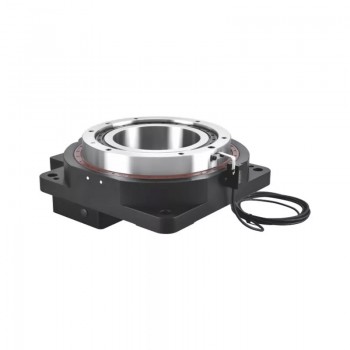
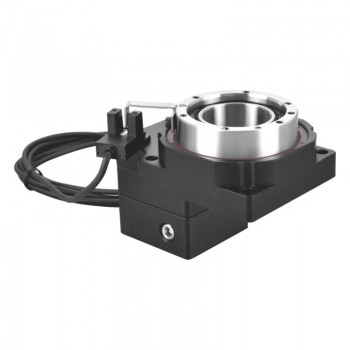
Hollow rotary actuators are a special type of actuator that is mainly used to drive objects to rotate. It is usually composed of components such as motors, reducers, sensors and controllers, and is powered by electrical, hydraulic or pneumatic means to achieve precise rotational motion. Hollow rotary actuators are widely used in automation equipment and robots, especially in situations where high precision and stability are required.
2. Working steps of hollow rotary actuators
1. Power source: Hollow rotary actuators can use motors, hydraulics or pneumatic pressure as power sources. Motor drive is the most common form, which drives the motor to rotate through current, thereby driving the output shaft to rotate. Hydraulic and pneumatic drive uses liquid or gas pressure to drive the piston to move, and then converts it into rotational motion through a mechanical structure.
2. Deceleration and transmission: The reducer is used to reduce the high-speed rotation of the motor and provide greater torque output. Sensors and controllers are used to monitor and adjust the motion state of the rotary actuator in real time to ensure precise control.
3. Control and feedback: The position and speed of the rotary actuator are monitored in real time by sensors, and the controller adjusts the output of the motor or hydraulic/pneumatic system according to the feedback signal to achieve precise servo control.
3. Performance characteristics of hollow rotary actuators
1. High precision and repeatable positioning accuracy: The hollow rotary actuator adopts a single-stage spiral gear reduction method, with a high gear accuracy level and a repeatable positioning accuracy of ±5 arc seconds or ±10 arc seconds (different models may have differences), which can achieve high-precision motion control.
2. High rigidity and load-bearing capacity: The turntable is supported by precision cross roller bearings. The rollers in the bearings are staggered at 90 degrees, and the roller diameter is slightly larger than the raceway size between the inner and outer rings of the bearings, so that there is a preload between the inner and outer rings and rollers of the cross roller bearings, which improves the rigidity of the turntable and can withstand various torques such as radial, axial, and overturning, and the load-bearing capacity is significantly enhanced.
3. High efficiency: The hollow rotary actuator combines the advantages of servo motors, cam dividers and DD motors, improves the reliability of the equipment through direct connection, and reduces costs.
4. Flexibility and versatility: Hollow rotary actuators are suitable for a variety of application scenarios, such as CNC indexing devices, robot joints, automated production lines, etc., and can be programmed to achieve a variety of control modes, flexibly adapting to different production needs.
5. Compact structure and convenient wiring: The turntable is hollow, and the servo motor is connected to the side, which is convenient for the installation of air pipes and wires, especially suitable for occasions with complex wiring.
6. Low noise: The disk of the hollow rotary actuator rotates smoothly and smoothly, positioning quickly, and the noise is low, which is suitable for use in environments with high noise requirements.
4. Selection principles of hollow rotary actuators
1. Load capacity: First, it is necessary to determine the actual load weight, including the equipment and workpieces directly mounted on the platform, and the possible dynamic loads. It is recommended to select a hollow rotary platform with a load capacity of 1.5-2 times the actual load weight to cope with possible instantaneous impact force and wear after long-term operation.
2. Accuracy requirements: Angle accuracy and repeatability are key parameters. Angular accuracy is usually measured in arc minutes or arc seconds, and high-precision applications may require angular accuracy of less than 1 arc minute. Repeatability refers to the deviation of the platform when it rotates to the same target position multiple times, usually expressed in a few arc seconds or a few tenths of a degree.
3. Speed requirements: Consider the operating speed range of the equipment and select a suitable speed platform to ensure that the platform can meet the application requirements. Too low a rotation speed may result in a slow production process, while too fast a speed may affect accuracy.
4. Installation space and size: According to the installation space of the equipment, select the appropriate installation method (such as horizontal installation, vertical installation, etc.) and overall dimensions (including the diameter, height, and location and size of the mounting holes of the platform) to ensure that the platform can be installed smoothly and connected to other components.
5. Power source and drive mode: Calculate the required torque and inertia according to the load and speed, select the appropriate motor power and drive system to ensure the smooth operation of the rotating platform.
6. Cost budget: Consider performance and cost comprehensively and select the most cost-effective product. There are many brands and models of hollow rotating platforms on the market. Through technical evaluation and cost analysis, we select suppliers with good reputation and perfect services to ensure the quality of products and after-sales service.
自訂分類:不分類
上一則: Importance and application of stepper motor encoders下一則: What are the maintenance tips for stepper motor drivers?
你可能會有興趣的文章:
限會員,要發表迴響,請先登入


