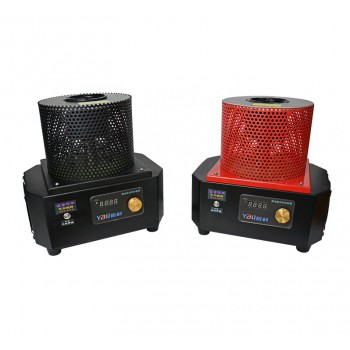
In modern metalworking, medium frequency induction furnaces have become a cornerstone for efficient and controlled melting. Their ability to deliver rapid, uniform heating makes them especially valuable in jewelry casting, small-batch alloy production, and precision foundry work. Yet, simply owning such a furnace does not guarantee optimal performance. The real gains come from fine-tuning the melting cycle itself.
The process begins with charge preparation. A well-organized charge—clean, dry, and properly sized—directly affects melting efficiency. Irregularly shaped scraps or contaminated materials can disrupt electromagnetic coupling, leading to uneven heating or longer melt times. Pre-sorting metals and ensuring consistent feedstock reduces variability and helps the furnace operate within its ideal parameters.
Power control is another critical factor. Medium frequency induction furnaces allow for precise adjustment of input energy, but running at maximum power throughout the entire cycle is rarely efficient. A staged approach works better: high power during initial heating to quickly reach melting temperature, followed by reduced input as the material transitions to a fully liquid state. This not only conserves energy but also minimizes thermal stress on the crucible and coil.
Temperature monitoring plays a central role in optimization. Relying solely on timing can lead to overheating or incomplete melts, especially when working with different alloys. Using infrared pyrometers or thermocouples allows operators to track real-time temperature and make adjustments accordingly. Maintaining the correct superheat—just above the melting point—ensures fluidity without degrading the metal’s properties.
Another often overlooked aspect is stirring, which in induction furnaces occurs naturally through electromagnetic forces. This internal movement promotes homogeneity but can also introduce oxidation if the melt is exposed for too long. Using proper fluxes and limiting unnecessary holding time helps preserve metal quality. Covering the melt when possible further reduces oxidation losses.
Cycle timing should also account for workflow efficiency. Instead of focusing solely on the melting phase, consider the entire cycle, including loading, melting, pouring, and cooling. Reducing idle time between these stages can significantly improve throughput. For example, preparing the next charge while the current batch is finishing can streamline operations without compromising safety.
Maintenance of the furnace itself directly impacts cycle optimization. Coil condition, refractory lining integrity, and cooling system performance all influence heat transfer efficiency. Even minor scale buildup or wear can lead to energy losses over time. Regular inspection and timely maintenance ensure that the furnace continues to operate at peak efficiency.
Energy consumption is an increasingly important consideration. Monitoring power usage across different cycles can reveal inefficiencies that aren’t immediately obvious. Small adjustments—such as improving insulation or refining power input profiles—can lead to noticeable savings over extended operation.
Ultimately, optimizing melting cycles with medium frequency induction furnaces is a balance of preparation, control, and observation. It requires attention to detail and a willingness to refine processes over time. When done correctly, it results in faster melts, better material quality, and more consistent outcomes—advantages that are hard to ignore in any serious metalworking environment.
下一則: Cleaning and Maintenance of Clay Graphite Crucibles
- Improving Production Consistency with a Pearl Drilling Machine
- The Future of Small Induction Melting Furnaces in Jewelry Manufacturing
- Exploring the Technology Behind Modern Pearl Drilling Machines
- Creating Textured Metal Sheets Using a Jewelry Rolling Mill Machine
- The Benefits of Digital Inside Ring Engraving Machines
- Preventing Cracks and Thermal Shock in Ceramic Melting Crucibles
限會員,要發表迴響,請先登入


