As more equipment becomes connected, many product teams are moving from general-purpose development boards to custom single board computers designed for real deployment. This is especially common in IoT gateways, industrial control devices, HMI terminals, automation equipment, and smart connected hardware.
A standard SBC can be useful during early testing, but production products usually need more than a board that simply boots Linux or Android. They need stable interfaces, reliable power design, predictable software behavior, mechanical compatibility, repeatable testing, and long-term manufacturing support.
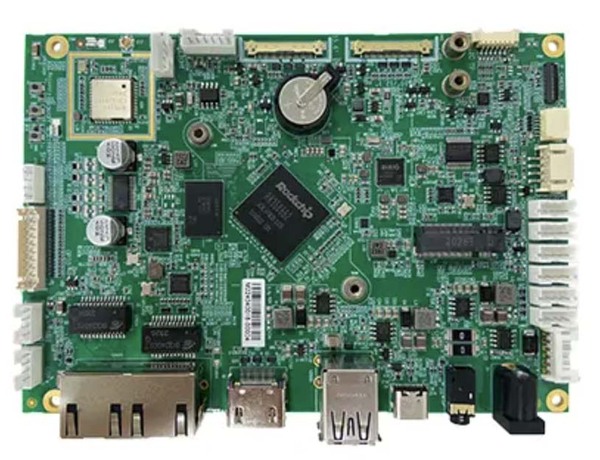
Custom SBC manufacturing helps bridge the gap between prototype hardware and a device that can be built, tested, shipped, and maintained over its product lifecycle.
Why IoT and Industrial Devices Often Need Custom SBCs
Many IoT gateway and industrial control products start with an evaluation board. This approach is fast and practical during the proof-of-concept stage. Engineers can test the processor, operating system, connectivity, and application logic before committing to a hardware design.
However, problems often appear when the same board is used for a final product. The board may not fit the enclosure. Connectors may face the wrong direction. Some interfaces may be unused, while required interfaces are missing. The power input may not match the installation environment. The display, touch panel, wireless module, or industrial I/O may require additional adaptation.
A custom SBC allows the hardware to be designed around the final product instead of forcing the product to adapt to a generic board.
Typical Requirements for IoT Gateway SBCs
An IoT gateway usually connects local devices, sensors, controllers, or machines to a network or cloud system. The SBC inside the gateway must be stable, maintainable, and suitable for long-term operation.
Common requirements include:
- Ethernet connectivity
- Wi-Fi, Bluetooth, LTE, or other wireless modules
- RS485, CAN, UART, USB, GPIO, or other field interfaces
- Embedded Linux support
- Watchdog and recovery behavior
- Reliable storage and logging
- Remote update capability
- Wide input power support
- Compact board size for enclosure integration
- Repeatable production testing
For gateway products, Linux is often selected because it gives engineering teams control over system services, network behavior, drivers, device communication, security settings, and remote maintenance. The SBC design should support these software requirements from the beginning.
Typical Requirements for Industrial Control SBCs
Industrial control devices often have different priorities. They may need stable I/O, long lifecycle components, electrical reliability, predictable boot behavior, and mechanical durability. Some products also need display and touch integration for operator panels or HMI applications.
Common design points include:
- Industrial communication interfaces
- GPIO, relay, PWM, or sensor connections
- Display and touch panel support
- Linux or Android BSP support
- Power protection and stable power sequencing
- Thermal planning
- Clear connector layout
- Functional testing for each production batch
- Component lifecycle review
In these products, the SBC is not only a computing board. It is part of the control system. Interface design, driver support, and production quality directly affect the reliability of the final equipment.
Hardware Design Starts with Interface Planning
Before schematic design, the most useful step is to define the interface list clearly. This list should describe what the product needs, not just what the processor can support.
Important questions include:
- Which operating system is required?
- Which processor platform is suitable?
- How much memory and storage are needed?
- Which wired interfaces are required?
- Which wireless modules are needed?
- Does the product need a display or touch panel?
- What is the power input range?
- What are the enclosure and mounting requirements?
- What production quantity is expected?
- How long should the product remain available?
These answers influence SoC selection, power design, connector placement, PCB layout, BSP workload, test planning, and manufacturing cost. If the interface list changes late, both hardware and software may need rework.
BSP Support and Software Bring-Up
For custom SBC projects, software support is just as important as the hardware. A board that powers on is not enough. The operating system must support the actual interfaces used in the product.
Typical BSP and bring-up work may include:
- Bootloader configuration
- Kernel adaptation
- Device tree changes
- Driver integration
- Display and touch setup
- Ethernet, USB, Wi-Fi, Bluetooth, or LTE testing
- GPIO and industrial interface mapping
- System image preparation
- Factory flashing process
- Functional test software
Hardware and software decisions are connected. For example, changing a wireless module may affect drivers, certification planning, antenna design, and production testing. Changing a display panel may affect power sequencing, timing parameters, touch calibration, and enclosure structure.
Manufacturing and Functional Testing
A custom SBC project should include manufacturing planning from the beginning. Once the prototype is approved, the board must be produced consistently.
Manufacturing may include PCB fabrication, SMT assembly, firmware flashing, inspection, functional testing, aging tests when required, packaging, and shipment coordination.
Functional testing is especially important for IoT and industrial products. The test process should verify the real interfaces used by the product, such as Ethernet, RS485, CAN, USB, Wi-Fi, Bluetooth, display, touch, audio, storage, and GPIO. For higher-volume products, a test fixture may improve consistency and reduce manual errors.
Good manufacturing support also includes component lifecycle awareness. Embedded products may remain in the market for years, so processor, memory, wireless module, connector, and power component availability should be considered during design.
Choosing a Custom SBC Manufacturing Partner
When choosing a custom SBC partner, product teams should look beyond the board specification. A useful partner should understand hardware design, operating system bring-up, interface integration, testing, and manufacturing.
Useful evaluation points include:
- Experience with Android and Linux embedded systems
- Support for ARM platforms such as Rockchip or Allwinner
- Ability to customize board outline and connector layout
- Display and touch integration experience
- I/O and wireless module integration capability
- Manufacturing and functional testing support
- Component lifecycle and supply coordination
- Support from prototype to production
Avontek develops and manufactures Android and Linux embedded SBCs for industrial, commercial, and custom hardware projects. Its capabilities include embedded hardware development, BSP support, display and touch integration, I/O customization, wireless module integration, manufacturing, and functional testing.
Conclusion
Custom SBC manufacturing is important when an embedded product needs more than a standard development board. IoT gateways, industrial control devices, HMI terminals, and smart connected equipment often require specific interfaces, stable software support, enclosure compatibility, and repeatable production testing.
By planning hardware, BSP, mechanical integration, and manufacturing together, product teams can reduce development risk and create a more reliable foundation for long-term deployment.
下一則: PoE Switch vs. Regular Switch: What Is the Real Difference?
限會員,要發表迴響,請先登入


