Introduction
In many automation systems, the control panel is the element operators interact with most frequently. It is where machine status is observed, alarms are acknowledged, and parameters are adjusted during everyday operation. Even when the underlying automation logic runs inside a PLC or controller elsewhere, the panel determines how operators experience the system.
Because of this, the design of the control panel plays a much larger role than it may initially appear. A poorly designed interface can slow down operations or create confusion, while a well-designed one can make even complex systems easier to manage.
Off-the-shelf panels are often used in early projects, but they do not always fit real equipment requirements. One machine might need several serial ports and a compact display, while another requires a larger touchscreen, stronger graphics capability, or improved protection against electrical interference. In these situations, equipment manufacturers often move toward a custom control panel design rather than forcing the machine to adapt to a generic product.
The development process usually starts with requirement analysis rather than hardware design. Only after the operational needs are clearly defined can engineers determine the computing platform, display, communication interfaces, and mechanical layout that best match the application.
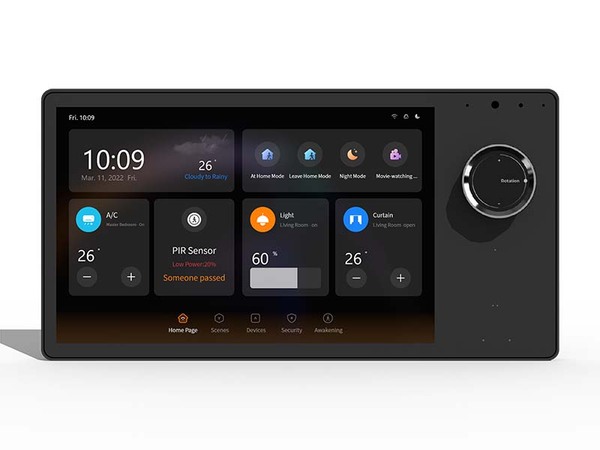
The Role of Industrial Control Panels in Automation
Modern control panels do far more than provide a display with a few buttons. In many systems they integrate computing hardware, touch display, communication interfaces, and power circuitry into a compact module mounted directly on the machine or inside an equipment cabinet.
From the operator’s point of view, the panel turns raw machine data into usable information. It may present running status, temperature values, production counts, maintenance messages, or alarm notifications. In daily operation, this interface effectively becomes the control center of the machine.
Older automation systems relied heavily on indicator lamps, physical push buttons, and simple monochrome displays. While this approach still works for basic machines, it becomes limiting once the system requires graphical data visualization, multilingual interfaces, remote diagnostics, or software updates.
Because of these changing requirements, embedded computing platforms paired with touchscreen displays are increasingly common in modern industrial panel designs.
Defining Requirements for a Custom Control Panel
Before any schematic design begins, engineers usually work with the equipment manufacturer to clarify project requirements. This step may seem straightforward, but in practice it often determines whether the first hardware version will be close to usable or whether multiple redesign cycles will follow.
Instead of focusing only on panel specifications, engineers typically start by understanding the machine itself. A control interface for a packaging line will have very different needs from one used in an energy monitoring system or an access control terminal.
During early project discussions, several practical questions usually need to be answered:
- Which machine or subsystem will the panel control?
- What communication interfaces are required—RS485, Ethernet, CAN, UART, or a combination?
- What display size and resolution are appropriate for the operator interface?
- Will the software handle only basic HMI tasks, or also data processing and networking?
- Where will the panel be installed, and what environmental conditions will it face?
Clarifying these points early helps avoid many redesigns later in the project. In many cases, hardware revisions are not caused by circuit mistakes but by changes in requirements that should have been resolved earlier.
Core Components of a Custom Industrial Control Panel
Once requirements are clear, engineers can break the panel architecture into several key hardware blocks. Although the exact configuration varies by project, most designs include similar elements.
Embedded Computing Platform
The computing platform determines how responsive and flexible the control panel will be. It affects user interface performance, boot time, communication capabilities, and long-term maintainability.
Many modern designs use ARM-based industrial single board computers as the main controller. These platforms provide enough processing power to run Linux or Android while maintaining relatively low power consumption.
Common processors used in industrial SBC platforms include devices from the Rockchip family such as RK3566, RK3588, RK3399, and PX30. These processors integrate CPU, GPU, and multimedia hardware into a single chip, allowing the panel to manage graphical interfaces, networking, and local data processing simultaneously.
Another advantage of SBC-based designs is the availability of mature software ecosystems. Developers can rely on established operating systems and application frameworks rather than building all functionality at the firmware level.
Industrial Touch Display
In many modern control panels, the display is the main interaction surface for the operator. Most systems use TFT LCD displays paired with capacitive touch panels to create flexible graphical interfaces.
Display size depends on the application. Smaller machines may only require a 4- or 5-inch panel, while larger equipment often uses 7- or 10-inch displays to provide enough space for system status information, configuration screens, and alarm messages.
Industrial displays are typically designed for long service life and reliable operation. Features such as high brightness, wide viewing angles, optical bonding, and reinforced cover glass may be used to improve durability and readability in demanding environments.
Communication Interfaces
Control panels rarely operate in isolation. They must communicate with sensors, PLC systems, motion controllers, and other automation equipment. As a result, multiple communication interfaces are usually integrated into the design.
Common interface options include:
- UART for serial communication
- RS232 and RS485 for industrial device connectivity
- Ethernet for networking and remote access
- USB for peripheral devices
- CAN bus for machine control systems
The exact combination depends on the architecture of the automation system and the external devices the panel must interact with.
Power Management
Industrial equipment often runs on standardized 24-volt DC power systems. Control panels therefore require power management circuits capable of handling this input while protecting sensitive electronics.
Typical designs include voltage regulators, protection circuits, and filtering components to maintain stable operation even when electrical noise or supply fluctuations are present.
Choosing the Right Hardware Platform
Selecting the hardware platform early in the project is critical. Once the display resolution, operating system, and interface set are defined, changing the architecture later can become costly.
Android-Based Control Panels
Android platforms are often chosen when the project requires a modern user interface with rich graphical capabilities. The Android ecosystem provides development tools and frameworks that make it easier to build visually complex applications.
For systems such as smart building panels, kiosks, or information terminals, Android can reduce development time while providing strong multimedia and networking support.
Linux-Based Control Panels
Linux is frequently selected when the system requires deeper customization or tighter control over device drivers and communication protocols. Linux environments also allow engineers to tailor system services and software architecture more extensively.
For many industrial automation applications, Linux offers a stable foundation for long-term product maintenance.
Important Engineering Considerations
Environmental Reliability
The operating environment strongly influences hardware design. A panel mounted inside a clean control cabinet experiences very different conditions from one installed near motors, vibration sources, or high temperatures.
For this reason, industrial components are usually selected with extended temperature ranges and long service lifetimes.
Electromagnetic Compatibility
Industrial environments often contain motors, inverters, and switching power equipment that generate electromagnetic interference. Poor shielding, layout design, or filtering can result in communication errors, unstable touch input, or unexpected system resets.
Proper EMC design is therefore essential for reliable operation.
Mechanical Integration
Mechanical factors can influence the electronics more than expected. Connector orientation, mounting depth, cable routing space, and heat dissipation paths must all be considered during the design stage.
Engineers usually work with mechanical drawings early in the project to ensure the panel fits correctly into the machine enclosure.
Typical Applications
Custom industrial control panels are used in many types of equipment where standard HMI products cannot meet mechanical or interface requirements. Typical applications include:
- Factory automation systems displaying machine status and alarms
- Operator terminals for industrial machinery
- Energy management and monitoring systems
- Smart manufacturing equipment
- Industrial IoT gateways requiring both local display and network connectivity
In these environments, the panel acts as the bridge between automation logic and the human operator.
Advantages of Custom Panel Design
While off-the-shelf control panels are widely available, custom designs provide several advantages for equipment manufacturers.
First, hardware can be designed around the machine rather than adapting the machine to a standard product. This often leads to a more efficient interface layout and fewer unused components.
Second, system integration becomes easier when the computing platform, display, and communication interfaces are designed together.
Finally, custom designs provide flexibility for future upgrades. If the system later requires additional interfaces, a larger display, or increased processing power, the platform can evolve more smoothly.
Conclusion
An effective industrial control panel is not defined only by processor specifications or screen size. Its real value comes from how well it integrates with the machine it controls and how easily operators can use it in daily work.
For this reason, successful panel development usually begins with careful requirement analysis rather than immediate component selection. Once the application is clearly understood, the computing platform, display, interfaces, and enclosure can be designed as a unified system.
For automation equipment expected to operate reliably for many years, this approach often makes the difference between a system that merely functions and one that feels well engineered in everyday use.
下一則: Device Tree in Android SBCs: The Practical Layer That Makes Hardware Work
限會員,要發表迴響,請先登入


