◎ ac-: take
for example,
acknowledge (v.) to accept or admit that something exists, is true, or is real
e.g. He never acknowledges his mistakes.
.
◎ hex-: six
for example,
hexameter (n.) a line of poetry that has six metrical feet
.
◎ Dionysus

Dionysus had a strange birth that evokes the difficulty in fitting him into the Olympian pantheon. (掌管play, wine, fertility,...,教人莊稼而晉升為十二主神)
His mother was a mortal woman, Semele, the daughter of king Cadmus of Thebes, and his father was Zeus, the king of the gods. Zeus' wife, Hera, discovered the affair while Semele was pregnant. Appearing as an old crone (in other stories a nurse), Hera befriended Semele, who confided in her that Zeus was the actual father of the baby in her womb. Hera pretended not to believe her, and planted seeds of doubt in Semele's mind. Curious, Semele demanded of Zeus that he reveal himself in all his glory as proof of his godhood. Though Zeus begged her not to ask this, she persisted and he agreed. Therefore he came to her wreathed in bolts of lightning; mortals, however, could not look upon an undisguised god without dying, and she perished in the ensuing blaze. Zeus rescued the unborn Dionysus by sewing him into his thigh.
Dionysus has remained an inspiration to artists, philosophers and writers into the modern era. In The Birth of Tragedy (1872), the German philosopher Friedrich Nietzsche contrasted Dionysus with the god Apollo as a symbol of the fundamental, unrestrained aesthetic principle of force, music, and intoxication versus the principle of form, beauty, and sight represented by the latter. Nietzsche also claimed that the oldest forms of Greek Tragedy were entirely based on suffering of Dionysus
.
◎ Ancient Greece
https://www.youtube.com/watch?v=Kqw6t6AKP-0
--Five century B.C.E. > Greece Golden Age
--Two major Athenian religious occasions that included major dramatic performances: the Great Dionysia and the Lernaea. Both festivals were held in honor of the god Dionysus, who was associated with alcohol, and, more generally, with overturning the rules and conventions of the normal, everyday world.
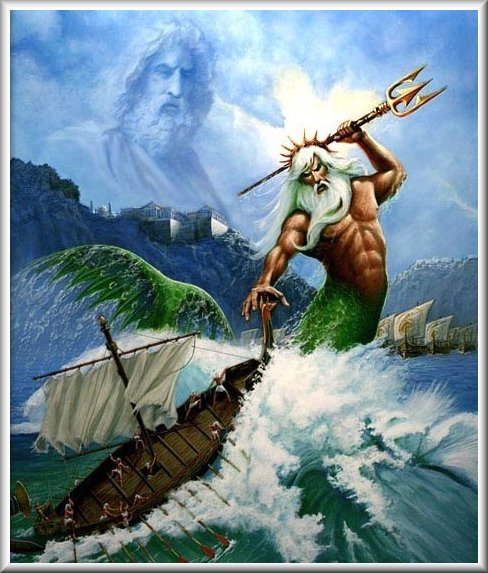
--Poseidon: death of the earth (or earthquake) and sea
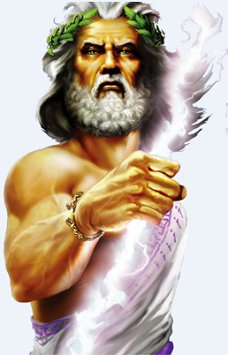
--Zeus: ruler of gods
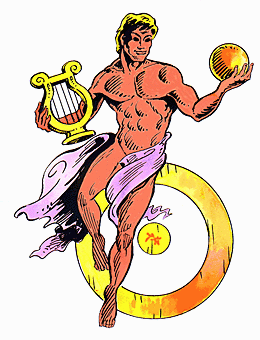
--Apollo: knowledge, healing, sports, oracle (prophet)
.
◎ The Odyssey, Book XI
'Don't try to sell me on death, Odysseus.
I'd rather be a hired hand back up on earth,
Slaving away for some poor dirt farmer,
Than lord it over all these withered dead. ......' (Achilles)
.
◎ Persephone

Persephone was abducted by Hades, the god-king of the underworld. The myth of her abduction represents her function as the personification of vegetation, which shoots forth in spring and withdraws into the earth after harvest; hence, she is also associated with spring as well as the fertility of vegetation.
限會員,要發表迴響,請先登入


