Introduction – Company Background
GuangXin Industrial Co., Ltd. is a specialized manufacturer dedicated to the development and production of high-quality insoles.
With a strong foundation in material science and footwear ergonomics, we serve as a trusted partner for global brands seeking reliable insole solutions that combine comfort, functionality, and design.
With years of experience in insole production and OEM/ODM services, GuangXin has successfully supported a wide range of clients across various industries—including sportswear, health & wellness, orthopedic care, and daily footwear.
From initial prototyping to mass production, we provide comprehensive support tailored to each client’s market and application needs.
At GuangXin, we are committed to quality, innovation, and sustainable development. Every insole we produce reflects our dedication to precision craftsmanship, forward-thinking design, and ESG-driven practices.
By integrating eco-friendly materials, clean production processes, and responsible sourcing, we help our partners meet both market demand and environmental goals.
Core Strengths in Insole Manufacturing
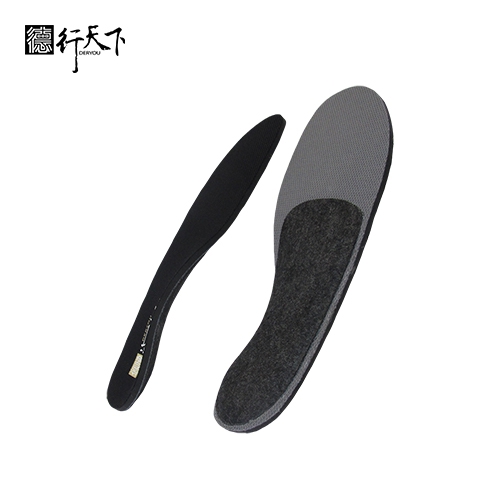
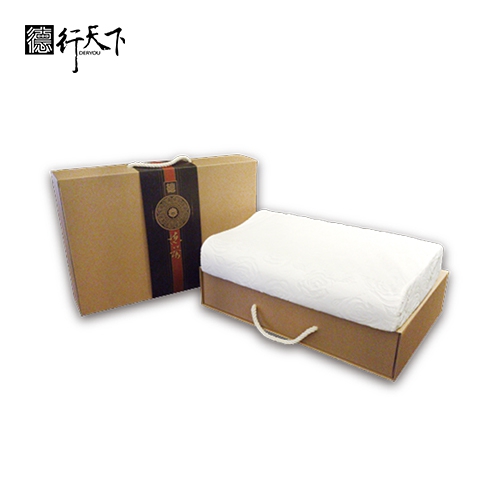
At GuangXin Industrial, our core strength lies in our deep expertise and versatility in insole and pillow manufacturing. We specialize in working with a wide range of materials, including PU (polyurethane), natural latex, and advanced graphene composites, to develop insoles and pillows that meet diverse performance, comfort, and health-support needs.
Whether it's cushioning, support, breathability, or antibacterial function, we tailor material selection to the exact requirements of each project-whether for foot wellness or ergonomic sleep products.
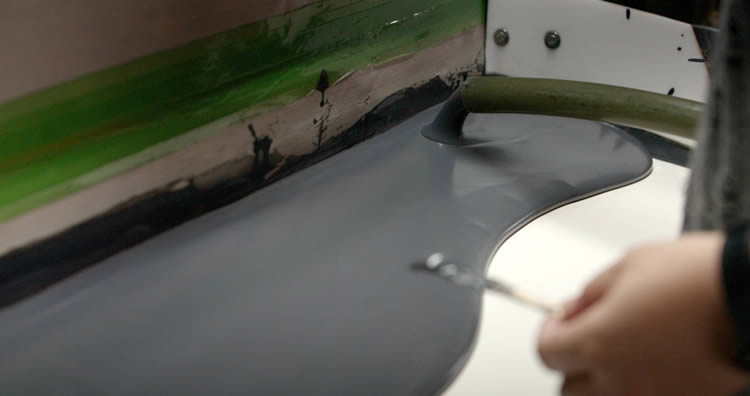
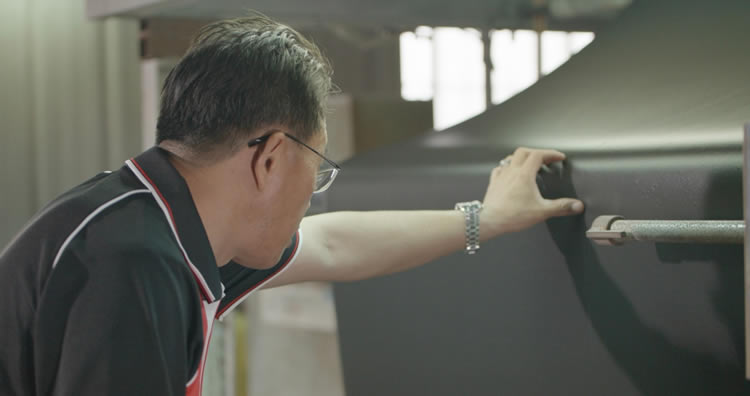
We provide end-to-end manufacturing capabilities under one roof—covering every stage from material sourcing and foaming, to precision molding, lamination, cutting, sewing, and strict quality control. This full-process control not only ensures product consistency and durability, but also allows for faster lead times and better customization flexibility.
With our flexible production capacity, we accommodate both small batch custom orders and high-volume mass production with equal efficiency. Whether you're a startup launching your first insole or pillow line, or a global brand scaling up to meet market demand, GuangXin is equipped to deliver reliable OEM/ODM solutions that grow with your business.
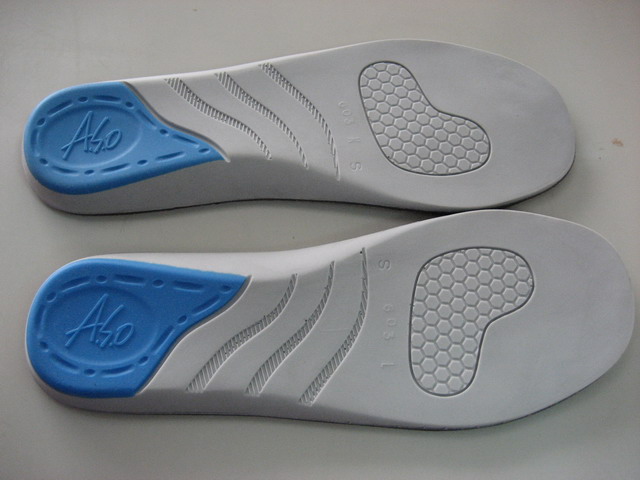
Customization & OEM/ODM Flexibility
GuangXin offers exceptional flexibility in customization and OEM/ODM services, empowering our partners to create insole products that truly align with their brand identity and target market. We develop insoles tailored to specific foot shapes, end-user needs, and regional market preferences, ensuring optimal fit and functionality.
Our team supports comprehensive branding solutions, including logo printing, custom packaging, and product integration support for marketing campaigns. Whether you're launching a new product line or upgrading an existing one, we help your vision come to life with attention to detail and consistent brand presentation.
With fast prototyping services and efficient lead times, GuangXin helps reduce your time-to-market and respond quickly to evolving trends or seasonal demands. From concept to final production, we offer agile support that keeps you ahead of the competition.
Quality Assurance & Certifications
Quality is at the heart of everything we do. GuangXin implements a rigorous quality control system at every stage of production—ensuring that each insole meets the highest standards of consistency, comfort, and durability.
We provide a variety of in-house and third-party testing options, including antibacterial performance, odor control, durability testing, and eco-safety verification, to meet the specific needs of our clients and markets.
Our products are fully compliant with international safety and environmental standards, such as REACH, RoHS, and other applicable export regulations. This ensures seamless entry into global markets while supporting your ESG and product safety commitments.
ESG-Oriented Sustainable Production
At GuangXin Industrial, we are committed to integrating ESG (Environmental, Social, and Governance) values into every step of our manufacturing process. We actively pursue eco-conscious practices by utilizing eco-friendly materials and adopting low-carbon production methods to reduce environmental impact.
To support circular economy goals, we offer recycled and upcycled material options, including innovative applications such as recycled glass and repurposed LCD panel glass. These materials are processed using advanced techniques to retain performance while reducing waste—contributing to a more sustainable supply chain.
We also work closely with our partners to support their ESG compliance and sustainability reporting needs, providing documentation, traceability, and material data upon request. Whether you're aiming to meet corporate sustainability targets or align with global green regulations, GuangXin is your trusted manufacturing ally in building a better, greener future.
Let’s Build Your Next Insole Success Together
Looking for a reliable insole manufacturing partner that understands customization, quality, and flexibility? GuangXin Industrial Co., Ltd. specializes in high-performance insole production, offering tailored solutions for brands across the globe. Whether you're launching a new insole collection or expanding your existing product line, we provide OEM/ODM services built around your unique design and performance goals.
From small-batch custom orders to full-scale mass production, our flexible insole manufacturing capabilities adapt to your business needs. With expertise in PU, latex, and graphene insole materials, we turn ideas into functional, comfortable, and market-ready insoles that deliver value.
Contact us today to discuss your next insole project. Let GuangXin help you create custom insoles that stand out, perform better, and reflect your brand’s commitment to comfort, quality, and sustainability.
🔗 Learn more or get in touch:
🌐 Website: https://www.deryou-tw.com/
📧 Email: shela.a9119@msa.hinet.net
📘 Facebook: facebook.com/deryou.tw
📷 Instagram: instagram.com/deryou.tw
Vietnam custom insole OEM supplier
Are you looking for a trusted and experienced manufacturing partner that can bring your comfort-focused product ideas to life? GuangXin Industrial Co., Ltd. is your ideal OEM/ODM supplier, specializing in insole production, pillow manufacturing, and advanced graphene product design.
With decades of experience in insole OEM/ODM, we provide full-service manufacturing—from PU and latex to cutting-edge graphene-infused insoles—customized to meet your performance, support, and breathability requirements. Our production process is vertically integrated, covering everything from material sourcing and foaming to molding, cutting, and strict quality control.China OEM/ODM hybrid insole services
Beyond insoles, GuangXin also offers pillow OEM/ODM services with a focus on ergonomic comfort and functional innovation. Whether you need memory foam, latex, or smart material integration for neck and sleep support, we deliver tailor-made solutions that reflect your brand’s values.
We are especially proud to lead the way in ESG-driven insole development. Through the use of recycled materials—such as repurposed LCD glass—and low-carbon production processes, we help our partners meet sustainability goals without compromising product quality. Our ESG insole solutions are designed not only for comfort but also for compliance with global environmental standards.Thailand graphene material ODM solution
At GuangXin, we don’t just manufacture products—we create long-term value for your brand. Whether you're developing your first product line or scaling up globally, our flexible production capabilities and collaborative approach will help you go further, faster.Private label insole and pillow OEM Vietnam
📩 Contact us today to learn how our insole OEM, pillow ODM, and graphene product design services can elevate your product offering—while aligning with the sustainability expectations of modern consumers.Vietnam pillow OEM manufacturer
Life reconstruction of Sahonachelys mailakavava, preying upon tadpoles of the giant Madagascan frog Beelzebufo ampinga using specialized suction feeding. Credit: Artwork by Andrey Atuchin A new pelomedusoid turtle from the Late Cretaceous of Madagascar provides evidence for convergent evolution of suction feeding among pleurodires. We here describe a new species of pelomedusoid turtle from a geological formation in Madagascar otherwise known for its exquisitely preserved fossil birds, dinosaurs, crocodilians, and mammals. The new turtle possesses an unusually flattened skull combined with a particularly gracile lower jaw and enlarged tongue bones (hyoids), which not only gave it a frog-like appearance, but also suggests that it was adapted to a specialized feeding mode called suction-feeding. “This is the best-preserved turtle of the entire Late Cretaceous of the southern continents and as such very significant in terms of reconstructing its way of life and relationships with other turtles” Prof. Walter Joyce, first author of study Suction feeders open their mouths rapidly to suck in prey items under water, which is in contrast to other subaquatic feeding modes in which animals shoot their heads forward to reach for prey. Fossil of Sahonachelys mailakavava, showing the preserved skull parts. Credit: Prof. Dr. Walter Joyce The new turtle has several modifications in its head skeleton that show that it was well suited for suction feeding: its skull is low but wide, and the jaws are strongly bowed and angled forward, which creates a strongly rounded mouth opening that is physically beneficial for creating large suction forces. The tongue bones are strongly developed, and this hints at large muscles that pulled the tongue skeleton backwards and opened the esophagus during the strike at prey — again creating more suction. “As paleontologists, we try to understand the biology and evolution of past life. Fossils like this give a wealth of information that is not always present. The identification of suction feeding in a new turtle lineage is exciting and was unexpected. It shows how animals evolve similar traits for similar functions, even if they are only distantly related.” Serjoscha Evers, co-author of study As in all modern turtles, the new species lacks teeth, but in addition the surfaces at the upper and lower jaws that face toward each other are poorly developed, showing that this turtle did not use its jaws to process food, but instead swallowed prey whole, which is typical for suction feeders. We hypothesize that the turtle fed on small-bodied living prey, such as insect larvae, fish fry, and tadpoles using quick strikes. We, therefore, name the new species Sahonachelys mailakavava, which means “quick-mouthed frog turtle” using Malagasy and Greek words. Special about the turtle is also its preservation: it is known from a nearly complete skeleton, despite its small body size, barely more than a foot long. Fossil of Sahonachelys mailakavava, showing the preserved shell. Credit: Prof. Dr. Walter Joyce Turtle fossils often come either as shells or skulls that have been separated from one another; for many extinct turtles, we only either one or the other, but not both. Having a complete skeleton helps us to understand the whole animal, and also makes it possible to compare it to other turtle fossils, regardless of how these are preserved. Based on such comparisons, we constructed a family tree of turtles that shows that Sahonachelys mailakvava was an early relative of podocnemidid turtles, which today are native to Madagascar and South America, but which were more widespread in the past. “Sahonachelys is a stunning example of evolution in isolation. It represents a lineage that evolved on Madagascar for over 20 million years and joins a litany of other bizarre Late Cretaceous vertebrate animals that we’ve found on the island. This specimen is, by far, the best turtle fossil we discovered during the 28 years of conducting field research there.” David Krause, co-author of study The palaeontological fauna of Madagascar is known for animals that are very specialized, which is in part due to its long isolation from surrounding continents. Our turtle shows that the Madagascan fauna was already unique in the Late Cretaceous: Sahonachelys mailakavava is the only representative of its group to have evolved suction-feeding, which is otherwise only known in distant relatives, so-called snake-necked turtles Reference: “A new pelomedusoid turtle, Sahonachelys mailakavava, from the Late Cretaceous of Madagascar provides evidence for convergent evolution of specialized suction feeding among pleurodires” by Walter G. Joyce, Yann Rollot, Serjoscha W. Evers, Tyler R. Lyson, Lydia J. Rahantarisoa and David W. Krause, 5 May 2021, Royal Society Open Science. DOI: 10.1098/rsos.210098
Newly found fossils of different stages in the life cycle of the ancient lamprey may upend our ideas about vertebrate evolution. Above, an artist’s rendering of a hatchling P. riniensis. Credit: Illustration by Kristen Tietjen Long-Accepted Theory of Vertebrate Origin Upended by Lamprey Fossils A new study out of the University of Chicago, the Canadian Museum of Nature and the Albany Museum challenges a long-held hypothesis that the larvae of modern lampreys are a holdover from the distant past, resembling the ancestors of all living vertebrates, including ourselves. The new fossil discoveries indicate that ancient lamprey hatchlings more closely resembled modern adult lampreys, and were completely unlike their modern larvae counterparts. The results were published on March 10, 2021, in Nature. “We’ve basically removed lampreys from the position of the ancestral condition of vertebrates,” said first author Tetsuto Miyashita, formerly a Chicago Fellow at the University of Chicago and now a paleontologist at the Canadian Museum of Nature. “So now we need an alternative.” Artist’s reconstruction showing the life stages of the fossil lamprey Priscomyzon riniensis. It lived around 360 million years ago in a coastal lagoon in what is now South Africa. Clockwise from right: A tiny, yolk-sac carrying hatchling with its large eyes; a juvenile; and an adult showing its toothed sucker. Credit: Kristen Tietjen Lampreys—unusual jawless, eel-like creatures—have long provided insights into vertebrate evolution, said Miyashita. “Lampreys have a preposterous life cycle,” he said. “Once hatched, the larvae bury themselves in the riverbed and filter feed before eventually metamorphosing into blood-sucking adults. They’re so different from adults that scientists originally thought they were a totally different group of fish. “Modern lamprey larvae have been used as a model of the ancestral condition that gave rise to the vertebrate lineages,” Miyashita continued. “They seemed primitive enough, comparable to wormy invertebrates, and their qualities matched the preferred narrative of vertebrate ancestry. But we didn’t have evidence that such a rudimentary form goes all the way back to the beginning of vertebrate evolution.” Newly discovered fossils in Illinois, South Africa and Montana are changing the story. Connecting the dots between dozens of specimens, the research team realized that different stages of the ancient lamprey lifecycle had been preserved, allowing paleontologists to track their growth from hatchling to adult. On some of the smallest specimens, about the size of a fingernail, soft tissue preservation even shows the remains of a yolk sac, indicating that fossil record had captured these lampreys shortly after hatching. Crucially, these fossilized juveniles are quite unlike their modern counterparts (known as “ammocoetes”), and instead look more like modern adult lampreys, with large eyes and toothed sucker mouths. Most excitingly, this phenotype can be seen during the larval phase in multiple different species of ancient lamprey. Multiple Lineages, Same Developmental Pattern “Remarkably, we’ve got enough specimens to reconstruct a trajectory from hatchling to adult in several independent lineages of early lampreys,” said Michael Coates, a professor in the Department of Organismal Biology and Anatomy at UChicago, “and they each show the same pattern: the larval form was like a miniature adult.” From left: Study co-authors Michael Coates (left) and Rob Gess excavate fossils from the 360-million-year-old Waterloo Farm black shales in South Africa. Credit: University of Chicago The researchers say that these results challenge the 150-year-old evolutionary narrative that modern lamprey larvae offer a glimpse of deep ancestral vertebrate conditions. By demonstrating that ancient lampreys never went through the same blind, filter-feeding stage seen in modern species, the researchers have falsified this cherished ancestral model. Reconsidering the Root of Vertebrate Evolution After looking back at the fossil record, the team now believes that extinct armored fishes known as ostracoderms might instead represent better candidates for the root of the vertebrate family tree, whereas modern lamprey larvae are a more recent innovation. The team thinks the evolution of filter-feeding larvae may have allowed lampreys to populate rivers and lakes. Fossil lampreys reported in the new study all came from marine sediments, but modern lampreys mostly live in freshwater. The researchers say that this is the sort of discovery that can rewrite textbooks. “Lampreys are not quite the swimming time capsules that we once thought they were,” said Coates. “They remain important and essential for understanding the deep history of vertebrate diversity, but we also need to recognize that they, too, have evolved and specialized in their own right.” The team credits the hard work of their collaborators and co-authors, including Rob Gess of the Albany Museum in South Africa, with identifying multiple larval fossil samples, and Kristen Tietjen of the University of Kansas with CT scan and life reconstruction of fossil lampreys. For more on this research, read Fossilized Fish Larvae Discovery Challenges Long-Accepted Theory of Vertebrate Origin. Reference: “Non-ammocoete larvae of Palaeozoic stem lampreys” by Tetsuto Miyashita, Robert W. Gess, Kristen Tietjen and Michael I. Coates, 10 March 2021, Nature. DOI: 10.1038/s41586-021-03305-9 Funding: National Science Foundation
The spread of 46 human chromosomes measured using X-rays in the study, with color added. Credit: Archana Bhartiya et al/ Chromosome Research The mass of human chromosomes, which contain the instructions for life in nearly every cell of our bodies, has been measured with X-rays for the first time in a new study led by University College London (UCL) researchers. For the study, published in Chromosome Research, researchers used a powerful X-ray beam at the UK’s national synchrotron facility, Diamond Light Source, to determine the number of electrons in a spread of 46 chromosomes which they used to calculate mass. They found that the chromosomes were about 20 times heavier than the DNA they contained – a much larger mass than previously expected, suggesting there might be missing components yet to be discovered. As well as DNA, chromosomes consist of proteins that serve a variety of functions, from reading the DNA to regulating processes of cell division to tightly packaging two-meter strands of DNA into our cells. Senior author Professor Ian Robinson (London Centre for Nanotechnology at UCL) said: “Chromosomes have been investigated by scientists for 130 years but there are still parts of these complex structures that are poorly understood. “The mass of DNA we know from the Human Genome Project, but this is the first time we have been able to precisely measure the masses of chromosomes that include this DNA. “Our measurement suggests the 46 chromosomes in each of our cells weigh 242 picograms (trillionths of a gram). This is heavier than we would expect, and, if replicated, points to unexplained excess mass in chromosomes.” In the study, researchers used a method called X-ray ptychography, which involves stitching together the diffraction patterns that occur as the X-ray beam passes through the chromosomes, to create a highly sensitive 3D reconstruction. The fine resolution was possible as the beam deployed at Diamond Light Source was billions of times brighter than the Sun (ie, there was a very large number of photons passing through at a given time). The chromosomes were imaged in metaphase, just before they were about to divide into two daughter cells. This is when packaging proteins wind up the DNA into very compact, precise structures. Archana Bhartiya, a PhD student at the London Centre for Nanotechnology at UCL and lead author of the paper, said: “A better understanding of chromosomes may have important implications for human health. “A vast amount of study of chromosomes is undertaken in medical labs to diagnose cancer from patient samples. Any improvements in our abilities to image chromosomes would therefore be highly valuable.” Each human cell, at metaphase, normally contains 23 pairs of chromosomes, or 46 in total. Within these are four copies of 3.5 billion base pairs of DNA. Reference: “X-ray Ptychography Imaging of Human Chromosomes After Low-dose Irradiation” by Archana Bhartiya, Darren Batey, Silvia Cipiccia, Xiaowen Shi, Christoph Rau, Stanley Botchway, Mohammed Yusuf and Ian K. Robinson, 31 March 2021, Chromosome Research. DOI: 10.1007/s10577-021-09660-7 The research was supported by Diamond Light Source, UKRI, the Biotechnology and Biological Sciences Research Council (BBSRC), the Engineering and Physical Sciences Research Council (EPSRC), the European Research Council, and the US Department of Energy.
DVDV1551RTWW78V
Graphene cushion OEM factory in Indonesia 》trusted by clients across wellness, footwear, and bedding industriesTaiwan custom insole OEM factory 》designed for quality-conscious brands who care about user experienceIndonesia eco-friendly graphene material processing 》supporting your ESG goals through sustainable production
下一則: Arch support insole OEM from Thailand 》where quali
限會員,要發表迴響,請先登入


