Introduction – Company Background
GuangXin Industrial Co., Ltd. is a specialized manufacturer dedicated to the development and production of high-quality insoles.
With a strong foundation in material science and footwear ergonomics, we serve as a trusted partner for global brands seeking reliable insole solutions that combine comfort, functionality, and design.
With years of experience in insole production and OEM/ODM services, GuangXin has successfully supported a wide range of clients across various industries—including sportswear, health & wellness, orthopedic care, and daily footwear.
From initial prototyping to mass production, we provide comprehensive support tailored to each client’s market and application needs.
At GuangXin, we are committed to quality, innovation, and sustainable development. Every insole we produce reflects our dedication to precision craftsmanship, forward-thinking design, and ESG-driven practices.
By integrating eco-friendly materials, clean production processes, and responsible sourcing, we help our partners meet both market demand and environmental goals.
Core Strengths in Insole Manufacturing
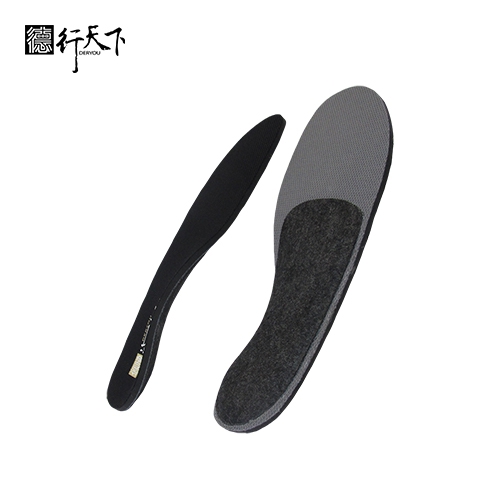
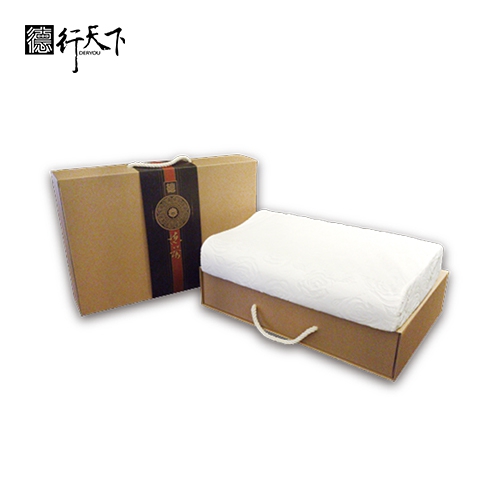
At GuangXin Industrial, our core strength lies in our deep expertise and versatility in insole and pillow manufacturing. We specialize in working with a wide range of materials, including PU (polyurethane), natural latex, and advanced graphene composites, to develop insoles and pillows that meet diverse performance, comfort, and health-support needs.
Whether it's cushioning, support, breathability, or antibacterial function, we tailor material selection to the exact requirements of each project-whether for foot wellness or ergonomic sleep products.
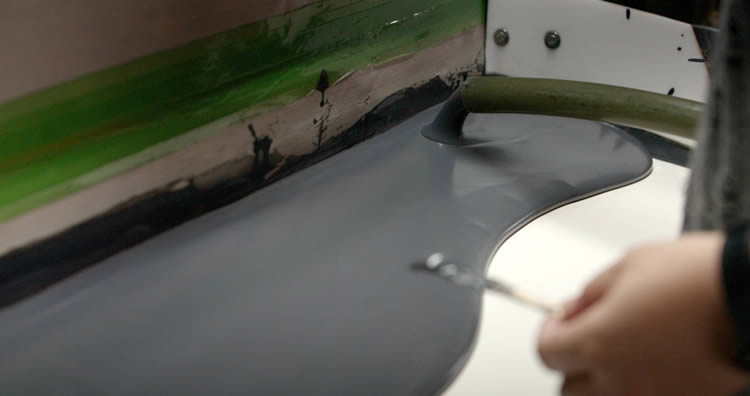
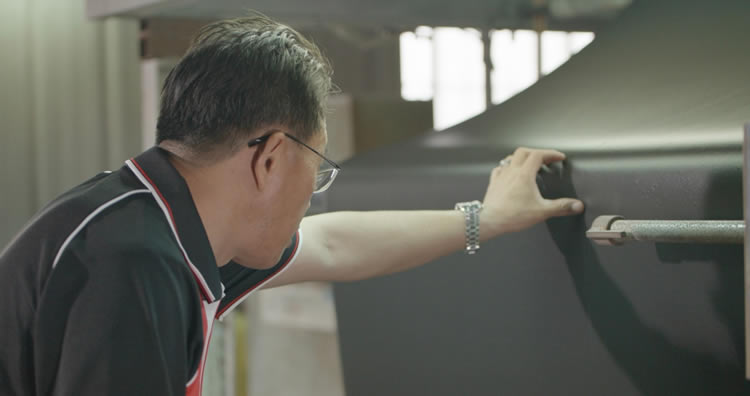
We provide end-to-end manufacturing capabilities under one roof—covering every stage from material sourcing and foaming, to precision molding, lamination, cutting, sewing, and strict quality control. This full-process control not only ensures product consistency and durability, but also allows for faster lead times and better customization flexibility.
With our flexible production capacity, we accommodate both small batch custom orders and high-volume mass production with equal efficiency. Whether you're a startup launching your first insole or pillow line, or a global brand scaling up to meet market demand, GuangXin is equipped to deliver reliable OEM/ODM solutions that grow with your business.
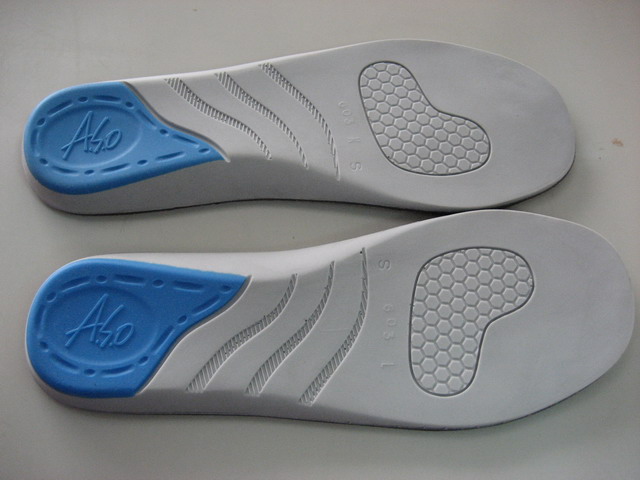
Customization & OEM/ODM Flexibility
GuangXin offers exceptional flexibility in customization and OEM/ODM services, empowering our partners to create insole products that truly align with their brand identity and target market. We develop insoles tailored to specific foot shapes, end-user needs, and regional market preferences, ensuring optimal fit and functionality.
Our team supports comprehensive branding solutions, including logo printing, custom packaging, and product integration support for marketing campaigns. Whether you're launching a new product line or upgrading an existing one, we help your vision come to life with attention to detail and consistent brand presentation.
With fast prototyping services and efficient lead times, GuangXin helps reduce your time-to-market and respond quickly to evolving trends or seasonal demands. From concept to final production, we offer agile support that keeps you ahead of the competition.
Quality Assurance & Certifications
Quality is at the heart of everything we do. GuangXin implements a rigorous quality control system at every stage of production—ensuring that each insole meets the highest standards of consistency, comfort, and durability.
We provide a variety of in-house and third-party testing options, including antibacterial performance, odor control, durability testing, and eco-safety verification, to meet the specific needs of our clients and markets.
Our products are fully compliant with international safety and environmental standards, such as REACH, RoHS, and other applicable export regulations. This ensures seamless entry into global markets while supporting your ESG and product safety commitments.
ESG-Oriented Sustainable Production
At GuangXin Industrial, we are committed to integrating ESG (Environmental, Social, and Governance) values into every step of our manufacturing process. We actively pursue eco-conscious practices by utilizing eco-friendly materials and adopting low-carbon production methods to reduce environmental impact.
To support circular economy goals, we offer recycled and upcycled material options, including innovative applications such as recycled glass and repurposed LCD panel glass. These materials are processed using advanced techniques to retain performance while reducing waste—contributing to a more sustainable supply chain.
We also work closely with our partners to support their ESG compliance and sustainability reporting needs, providing documentation, traceability, and material data upon request. Whether you're aiming to meet corporate sustainability targets or align with global green regulations, GuangXin is your trusted manufacturing ally in building a better, greener future.
Let’s Build Your Next Insole Success Together
Looking for a reliable insole manufacturing partner that understands customization, quality, and flexibility? GuangXin Industrial Co., Ltd. specializes in high-performance insole production, offering tailored solutions for brands across the globe. Whether you're launching a new insole collection or expanding your existing product line, we provide OEM/ODM services built around your unique design and performance goals.
From small-batch custom orders to full-scale mass production, our flexible insole manufacturing capabilities adapt to your business needs. With expertise in PU, latex, and graphene insole materials, we turn ideas into functional, comfortable, and market-ready insoles that deliver value.
Contact us today to discuss your next insole project. Let GuangXin help you create custom insoles that stand out, perform better, and reflect your brand’s commitment to comfort, quality, and sustainability.
🔗 Learn more or get in touch:
🌐 Website: https://www.deryou-tw.com/
📧 Email: shela.a9119@msa.hinet.net
📘 Facebook: facebook.com/deryou.tw
📷 Instagram: instagram.com/deryou.tw
Thailand OEM factory for footwear and bedding
Are you looking for a trusted and experienced manufacturing partner that can bring your comfort-focused product ideas to life? GuangXin Industrial Co., Ltd. is your ideal OEM/ODM supplier, specializing in insole production, pillow manufacturing, and advanced graphene product design.
With decades of experience in insole OEM/ODM, we provide full-service manufacturing—from PU and latex to cutting-edge graphene-infused insoles—customized to meet your performance, support, and breathability requirements. Our production process is vertically integrated, covering everything from material sourcing and foaming to molding, cutting, and strict quality control.Vietnam custom insole OEM supplier
Beyond insoles, GuangXin also offers pillow OEM/ODM services with a focus on ergonomic comfort and functional innovation. Whether you need memory foam, latex, or smart material integration for neck and sleep support, we deliver tailor-made solutions that reflect your brand’s values.
We are especially proud to lead the way in ESG-driven insole development. Through the use of recycled materials—such as repurposed LCD glass—and low-carbon production processes, we help our partners meet sustainability goals without compromising product quality. Our ESG insole solutions are designed not only for comfort but also for compliance with global environmental standards.China high-end foam product OEM/ODM
At GuangXin, we don’t just manufacture products—we create long-term value for your brand. Whether you're developing your first product line or scaling up globally, our flexible production capabilities and collaborative approach will help you go further, faster.Vietnam graphene product OEM service
📩 Contact us today to learn how our insole OEM, pillow ODM, and graphene product design services can elevate your product offering—while aligning with the sustainability expectations of modern consumers.Taiwan foot care insole ODM development factory
Membrane-separated compartments are visible inside the peroxisomes of 4-day-old Arabidopsis thaliana plant cells in this image from a confocal microscope. The cells were genetically modified to produce fluorescent proteins in both the membranes (green) and lumen (magenta) of the peroxisomes. Credit: Image courtesy of Zachary Wright/Rice University Newly discovered peroxisome subcompartments may enhance fat processing and reshape our understanding of cell metabolism and related diseases. Discovery “requires us to rethink everything we thought we knew about peroxisomes.” In his first year of graduate school, Rice University biochemist Zachary Wright discovered something hidden inside a common piece of cellular machinery that’s essential for all higher-order life from yeast to humans. What Wright saw in 2015 — subcompartments inside organelles called peroxisomes — is described in a study published today in Nature Communications. “This is, without a doubt, the most unexpected thing our lab has ever discovered,” said study co-author Bonnie Bartel, Wright’s Ph.D. advisor and a member of the National Academy of Sciences. “This requires us to rethink everything we thought we knew about peroxisomes.” Peroxisomes are compartments where cells turn fatty molecules into energy and useful materials, like the myelin sheaths that protect nerve cells. In humans, peroxisome dysfunction has been linked to severe metabolic disorders, and peroxisomes may have wider significance for neurodegeneration, obesity, cancer, and age-related disorders. Much is still unknown about peroxisomes, but their basic structure — a granular matrix surrounded by a sacklike membrane — wasn’t in question in 2015. Bartel said that’s one reason Wright’s discovery was surprising. Zachary Wright is a postdoctoral research associate in Rice University’s Department of BioSciences. Credit: Photo by Jeff Fitlow/Rice University Fluorescent Imaging Unveils Hidden Structures “We’re geneticists, so we’re used to unexpected things. But usually they don’t come in Technicolor,” she said, referring to another surprising thing about Wright’s find: beautiful color images that show both the walls of the peroxisome subcompartments and their interiors. The images were possible because of bright fluorescent reporters, glowing protein tags that Wright employed for the experiments. Biochemists modify the genes of model organisms — Bartel’s lab uses Arabidopsis plants — to tag them with fluorescent proteins in a controlled way that can reveal clues about the function and dysfunction of specific genes, including some that cause diseases in people, animals, and plants. Wright, now a postdoctoral research associate in Bartel’s lab, was testing a new reporter in 2015 when he spotted the peroxisome subcompartments. “I never thought Zach did anything wrong, but I didn’t think it was real,” Bartel said. She thought the images must be the result of some sort of artifact, a feature that didn’t really exist inside the cell but was instead created by the experiment. “If this was really happening, somebody would have already noticed it,” she recalled thinking. Bonnie Bartel is the Ralph and Dorothy Looney Professor of BioSciences at Rice University. Credit: Photo by Jeff Fitlow/Rice University “Basically, from that point on, I was trying to understand them,” Wright said. He checked his instruments, replicated his experiments and found no evidence of an artifact. He gathered more evidence of the mysterious subcompartments, and eventually wound up at Fondren Library, combing through old studies. Clues in Forgotten Studies from the 1960s “I revisited the really old literature about peroxisomes from the ’60s, and saw that they had observed similar things and just didn’t understand them,” he said. “And that idea was just lost.” There were a number of references to these inner compartments in studies from the ’60s and early ’70s. In each case, the investigators were focused on something else and mentioned the observation in passing. And all the observations were made with transmission electron microscopes, which fell out of favor when confocal microscopy became widely available in the 1980s. “It’s just much easier than electron microscopy,” Bartel said. “The whole field started doing confocal microscopy. And in the early days of confocal microscopy, the proteins just weren’t that bright.” Wright was also using confocal microscopy in 2015, but with brighter reporters that made it easier to resolve small features. Another key: He was looking at peroxisomes from Arabidopsis seedlings. “One reason this was forgotten is because peroxisomes in yeast and mammalian cells are smaller than the resolution of light,” Wright said. “With fluorescence microscopy, you could only ever see a dot. That’s just the limit that light can do.” Arabidopsis Seedlings Provide a Unique Window The peroxisomes he was viewing were up to 100 times larger. Scientists aren’t certain why peroxisomes get so large in Arabidopsis seedlings, but they do know that germinating Arabidopsis seeds get all of their energy from stored fat, until the seedling leaves can start producing energy from photosynthesis. During germination, they are sustained by countless tiny droplets of oil, and their peroxisomes must work overtime to process the oil. When they do, they grow several times larger than normal. “Bright fluorescent proteins, in combination with much bigger peroxisomes in Arabidopsis, made it extremely apparent, and much easier, to see this,” Wright said. But peroxisomes are also highly conserved, from plants to yeast to humans, and Bartel said there are hints that these structures may be general features of peroxisomes. “Peroxisomes are a basic organelle that has been with eukaryotes for a very long time, and there have been observations across eukaryotes, often in particular mutants, where the peroxisomes are either bigger or less packed with proteins, and thus easier to visualize,” she said. But people didn’t necessarily pay attention to those observations because the enlarged peroxisomes resulted from known mutations. Subcompartments Aid Fat Metabolism The researchers aren’t sure what purpose is served by the subcompartments, but Wright has a hypothesis. “When you’re talking about things like beta-oxidation, or metabolism of fats, you get to the point that the molecules don’t want to be in water anymore,” Wright said. “When you think of a traditional kind of biochemical reaction, we just have a substrate floating around in the water environment of a cell — the lumen — and interacting with enzymes; that doesn’t work so well if you’ve got something that doesn’t want to hang around in the water.” “So, if you’re using these membranes to solubilize the water-insoluble metabolites, and allow better access to lumenal enzymes, it may represent a general strategy to more efficiently deal with that kind of metabolism,” he said. Bartel said the discovery also provides a new context for understanding peroxisomal disorders. “This work could give us a way to understand some of the symptoms, and potentially to investigate the biochemistry that’s causing them,” she said. Reference: “Peroxisomes form intralumenal vesicles with roles in fatty acid catabolism and protein compartmentalization in Arabidopsis” by Zachary J. Wright and Bonnie Bartel, 4 December 2020, Nature Communications. DOI: 10.1038/s41467-020-20099-y Bartel is the Ralph and Dorothy Looney Professor of BioSciences at Rice. The research was supported by the National Institutes of Health (R01GM079177, R35GM130338, S10RR026399) and the Welch Foundation (C-1309).
Electrical synapses connect neurons in almost all brains; however, little is known about them. A study now shows for the first time where these specific synapses occur in the fruit fly brain and that they influence the function and stability of nerve cells. Credit: MPI for Biological Intelligence, i.f. / Julia Kuhl Electrical Synapses – Omnipresent and Yet Hardly Explored They are part of the brain of almost every animal species, yet they remain usually invisible even under the electron microscope. “Electrical synapses are like the dark matter of the brain,” says Alexander Borst, director at the MPI for Biological Intelligence, in foundation (i.f). Now a team from his department has taken a closer look at this rarely explored brain component: In the brain of the fruit fly Drosophila, they were able to show that electrical synapses occur in almost all brain areas and can influence the function and stability of individual nerve cells. Neurons communicate via synapses, small contact points at which chemical messengers transmit a stimulus from one cell to the next. We may remember this from biology class. However, that is not the whole story. In addition to the commonly known chemical synapses, there is a second, little-known type of synapse: the electrical synapse. “Electrical synapses are much rarer and are hard to detect with current methods. That’s why they have hardly been researched so far,” explains Georg Ammer, who has long been fascinated by these hidden cell connections. “In most animal brains, we therefore don’t know even basic things, such as where exactly electrical synapses occur or how they influence brain activity.” An electrical synapse connects two neurons directly, allowing the electrical current that neurons use to communicate, to flow from one cell to the next without a detour. Except in echinoderms, this particular type of synapse occurs in the brain of every animal species studied so far. “Electrical synapses must therefore have important functions: we just do not know which ones!” says Georg Ammer. Distribution in the Brain To track down these functions, Ammer and his two colleagues, Renée Vieira and Sandra Fendl, labeled an important protein building block of electrical synapses. In the brain of fruit flies, they were thus able to show that electrical synapses do not occur in all nerve cells, but in almost all areas of the brain. By selectively switching off the electrical synapses in the area of visual processing, the researchers could show that the affected neurons’ reaction to certain stimuli is much weaker. Furthermore, without electrical synapses, some nerve cell types became unstable and began to oscillate spontaneously. “The results suggest that electrical synapses are important for diverse brain functions and can play very different functional roles, depending on the type of neuron,” Ammer summarizes. “These synapses should therefore also be integrated in connectome studies.” The connectome is a map of all neurons and their connections in a brain or brain area. Often, this information is reconstructed from electron microscope images – where electrical synapses are largely invisible. How these can be integrated into connectome investigations and what other secrets electrical synapses hold are subjects for further studies. Reference: “Anatomical distribution and functional roles of electrical synapses in Drosophila” by Georg Ammer, Renée M. Vieira, Sandra Fendl and Alexander Borst, 5 April 2022, Current Biology. DOI: 10.1016/j.cub.2022.03.040
The Strange Big-eared Brown Bat, first described in 1916 in Brazil and not seen since, has been rediscovered by a team of researchers. Captured in Palmas Grassland Wildlife Refuge in 2018, the bat was identified as this rare species, revealing its presence in diverse terrains and altitudes, although its conservation status remains classified as Data Deficient due to habitat threats.Credit: Cláudio et al. The Strange Big-eared Brown Bat, last seen in 1916, has been rediscovered in Brazil. The Strange Big-eared Brown Bat, Histiotus alienus, was first described by science in 1916, by the British zoologist Oldfield Thomas. This account was derived from a lone specimen found in Joinville, Paraná, in the southern region of Brazil. For over a century, no further captures of the species were reported. It was solely identified by its holotype, a unique specimen representing the physical and molecular characteristics of the species, housed in The Natural History Museum in London, United Kingdom. Now, after a century, the species has been rediscovered. Scientists Dr. Vinícius C. Cláudio, Msc Brunna Almeida, Dr. Roberto L.M. Novaes, and Dr. Ricardo Moratelli, Fundação Oswaldo Cruz, Brazil and Dr. Liliani M. Tiepolo, and Msc Marcos A. Navarro, Universidade Federal do Paraná, Brazil have published details on the sighting in a paper in the open access journal ZooKeys. During field expeditions of the research project Promasto (Mammals from Campos Gerais National Park and Palmas Grasslands Wildlife Refuge) in 2018, the researchers captured one specimen of a big-eared bat at Palmas Grassland Wildlife Refuge. To catch it, they used mist nets—equipment employed during the capture of bats and birds—set at the edge of a forest patch. When they compared it to the Tropical Big-eared Brown Bat (Histiotus velatus), commonly captured in the region, they found it was nothing like it. The unidentified big-eared bat specimen was then collected and deposited at the Museu Nacional in Rio de Janeiro, Brazil, for further studies. The Strange Big-eared Brown Bat, Histiotus alienus. Credit: Cláudio et al. After comparing this puzzling specimen against hundreds of other big-eared brown bats from almost all the species in the genus, the researchers were able to conclusively identify the bat as a Strange Big-eared Brown Bat and confirm its second known record. “Since the description of several the species within the genus is more than one hundred years old and somewhat vague, comparisons and data presented by us will aid the correct identification of big-eared brown bats,” they say. Distinctive Features of the Strange Big-Eared Brown Bat The Strange Big-eared Brown Bat has oval, enlarged ears that are connected by a very low membrane; general dark brown coloration in both dorsal and ventral fur; and about 100 to 120 mm in total length. This combination of characters most resembles the Southern Big-eared Brown Bat (Histiotus magellanicus), in which the membrane connecting ears is almost absent. The only known record of the Strange Big-eared Brown Bat until now was from Joinville, Santa Catarina state, southern Brazil, which is about 280 kilometers (175 miles) away from where it was spotted in 2018. So far, the species is known to occur in diverse terrains, from dense rainforests to araucaria and riparian forests and grasslands, at altitudes from sea level to over 1,200 m (3,900 ft) a.s.l. This increase in the distribution of the species, however, does not represent an improvement in its conservation status: the species is currently classified as Data Deficient by the International Union for the Conservation of Nature. Its habitat, the highly fragmented Atlantic Forest, is currently under pressure from agricultural activity. But there is still hope: “The new record of H. alienus in Palmas is in a protected area, which indicates that at least one population of the species may be protected,” the researchers write in their study. Reference: “Rediscovery of Histiotus alienus Thomas, 1916 a century after its description (Chiroptera, Vespertilionidae): distribution extension and redescription” by Vinícius C. Cláudio, Brunna Almeida, Roberto L. M. Novaes, Marcos A. Navarro, Liliani M. Tiepolo and Ricardo Moratelli, 14 August 2023, ZooKeys. DOI: 10.3897/zookeys.1174.108553
DVDV1551RTWW78V
One-stop OEM/ODM solution provider Thailand 》empowering smart brands through better materials and processPillow OEM for wellness brands China 》craftsmanship meets efficiency for maximum valueSmart pillow ODM manufacturing factory Taiwan 》offering full-service support from design to delivery
下一則: Thailand insole ODM service provider 》craftsmanshi
限會員,要發表迴響,請先登入


