Introduction – Company Background
GuangXin Industrial Co., Ltd. is a specialized manufacturer dedicated to the development and production of high-quality insoles.
With a strong foundation in material science and footwear ergonomics, we serve as a trusted partner for global brands seeking reliable insole solutions that combine comfort, functionality, and design.
With years of experience in insole production and OEM/ODM services, GuangXin has successfully supported a wide range of clients across various industries—including sportswear, health & wellness, orthopedic care, and daily footwear.
From initial prototyping to mass production, we provide comprehensive support tailored to each client’s market and application needs.
At GuangXin, we are committed to quality, innovation, and sustainable development. Every insole we produce reflects our dedication to precision craftsmanship, forward-thinking design, and ESG-driven practices.
By integrating eco-friendly materials, clean production processes, and responsible sourcing, we help our partners meet both market demand and environmental goals.
Core Strengths in Insole Manufacturing
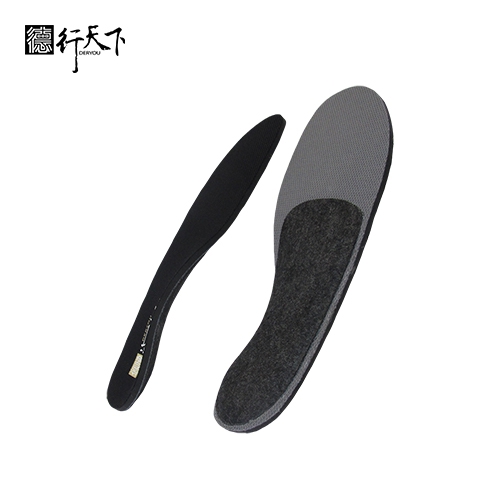
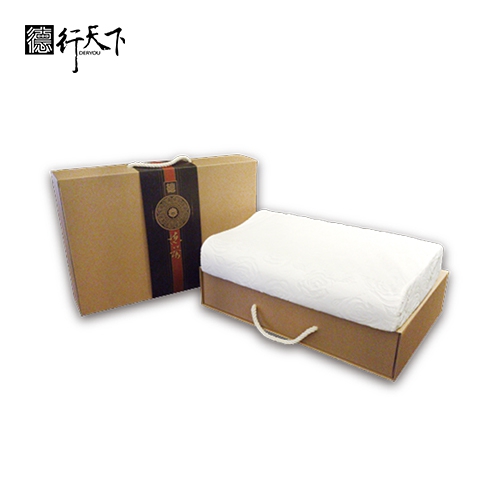
At GuangXin Industrial, our core strength lies in our deep expertise and versatility in insole and pillow manufacturing. We specialize in working with a wide range of materials, including PU (polyurethane), natural latex, and advanced graphene composites, to develop insoles and pillows that meet diverse performance, comfort, and health-support needs.
Whether it's cushioning, support, breathability, or antibacterial function, we tailor material selection to the exact requirements of each project-whether for foot wellness or ergonomic sleep products.
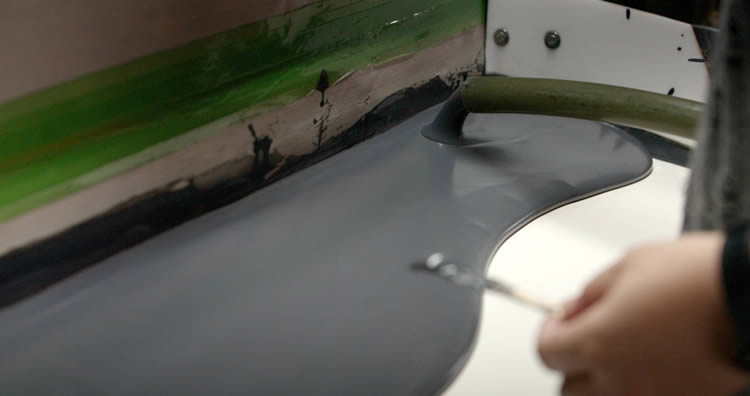
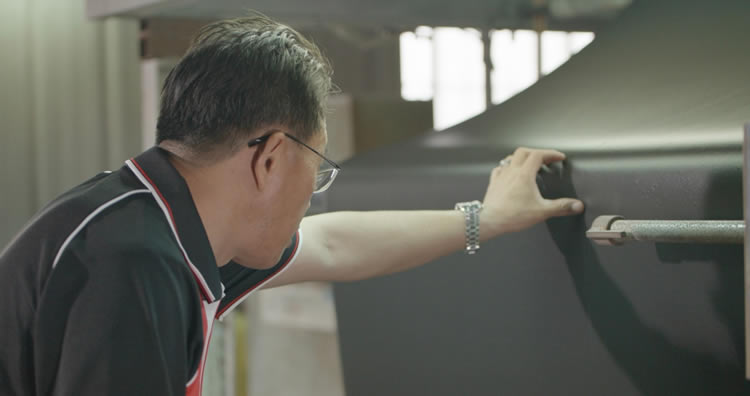
We provide end-to-end manufacturing capabilities under one roof—covering every stage from material sourcing and foaming, to precision molding, lamination, cutting, sewing, and strict quality control. This full-process control not only ensures product consistency and durability, but also allows for faster lead times and better customization flexibility.
With our flexible production capacity, we accommodate both small batch custom orders and high-volume mass production with equal efficiency. Whether you're a startup launching your first insole or pillow line, or a global brand scaling up to meet market demand, GuangXin is equipped to deliver reliable OEM/ODM solutions that grow with your business.
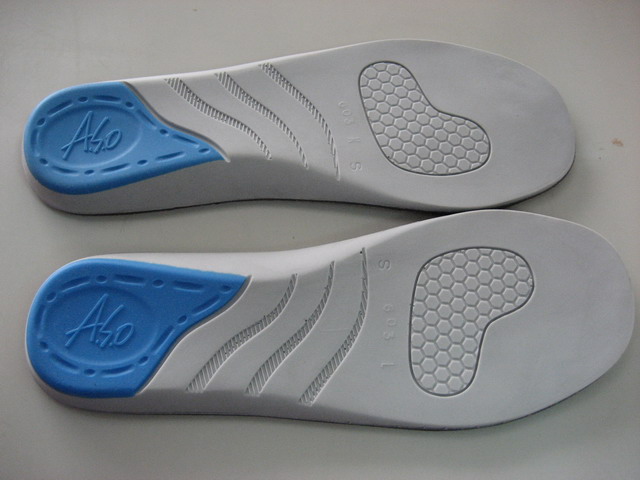
Customization & OEM/ODM Flexibility
GuangXin offers exceptional flexibility in customization and OEM/ODM services, empowering our partners to create insole products that truly align with their brand identity and target market. We develop insoles tailored to specific foot shapes, end-user needs, and regional market preferences, ensuring optimal fit and functionality.
Our team supports comprehensive branding solutions, including logo printing, custom packaging, and product integration support for marketing campaigns. Whether you're launching a new product line or upgrading an existing one, we help your vision come to life with attention to detail and consistent brand presentation.
With fast prototyping services and efficient lead times, GuangXin helps reduce your time-to-market and respond quickly to evolving trends or seasonal demands. From concept to final production, we offer agile support that keeps you ahead of the competition.
Quality Assurance & Certifications
Quality is at the heart of everything we do. GuangXin implements a rigorous quality control system at every stage of production—ensuring that each insole meets the highest standards of consistency, comfort, and durability.
We provide a variety of in-house and third-party testing options, including antibacterial performance, odor control, durability testing, and eco-safety verification, to meet the specific needs of our clients and markets.
Our products are fully compliant with international safety and environmental standards, such as REACH, RoHS, and other applicable export regulations. This ensures seamless entry into global markets while supporting your ESG and product safety commitments.
ESG-Oriented Sustainable Production
At GuangXin Industrial, we are committed to integrating ESG (Environmental, Social, and Governance) values into every step of our manufacturing process. We actively pursue eco-conscious practices by utilizing eco-friendly materials and adopting low-carbon production methods to reduce environmental impact.
To support circular economy goals, we offer recycled and upcycled material options, including innovative applications such as recycled glass and repurposed LCD panel glass. These materials are processed using advanced techniques to retain performance while reducing waste—contributing to a more sustainable supply chain.
We also work closely with our partners to support their ESG compliance and sustainability reporting needs, providing documentation, traceability, and material data upon request. Whether you're aiming to meet corporate sustainability targets or align with global green regulations, GuangXin is your trusted manufacturing ally in building a better, greener future.
Let’s Build Your Next Insole Success Together
Looking for a reliable insole manufacturing partner that understands customization, quality, and flexibility? GuangXin Industrial Co., Ltd. specializes in high-performance insole production, offering tailored solutions for brands across the globe. Whether you're launching a new insole collection or expanding your existing product line, we provide OEM/ODM services built around your unique design and performance goals.
From small-batch custom orders to full-scale mass production, our flexible insole manufacturing capabilities adapt to your business needs. With expertise in PU, latex, and graphene insole materials, we turn ideas into functional, comfortable, and market-ready insoles that deliver value.
Contact us today to discuss your next insole project. Let GuangXin help you create custom insoles that stand out, perform better, and reflect your brand’s commitment to comfort, quality, and sustainability.
🔗 Learn more or get in touch:
🌐 Website: https://www.deryou-tw.com/
📧 Email: shela.a9119@msa.hinet.net
📘 Facebook: facebook.com/deryou.tw
📷 Instagram: instagram.com/deryou.tw
Graphene insole OEM factory Indonesia
Are you looking for a trusted and experienced manufacturing partner that can bring your comfort-focused product ideas to life? GuangXin Industrial Co., Ltd. is your ideal OEM/ODM supplier, specializing in insole production, pillow manufacturing, and advanced graphene product design.
With decades of experience in insole OEM/ODM, we provide full-service manufacturing—from PU and latex to cutting-edge graphene-infused insoles—customized to meet your performance, support, and breathability requirements. Our production process is vertically integrated, covering everything from material sourcing and foaming to molding, cutting, and strict quality control.Indonesia insole ODM for global brands
Beyond insoles, GuangXin also offers pillow OEM/ODM services with a focus on ergonomic comfort and functional innovation. Whether you need memory foam, latex, or smart material integration for neck and sleep support, we deliver tailor-made solutions that reflect your brand’s values.
We are especially proud to lead the way in ESG-driven insole development. Through the use of recycled materials—such as repurposed LCD glass—and low-carbon production processes, we help our partners meet sustainability goals without compromising product quality. Our ESG insole solutions are designed not only for comfort but also for compliance with global environmental standards.Customized sports insole ODM factory Taiwan
At GuangXin, we don’t just manufacture products—we create long-term value for your brand. Whether you're developing your first product line or scaling up globally, our flexible production capabilities and collaborative approach will help you go further, faster.Taiwan OEM insole and pillow supplier
📩 Contact us today to learn how our insole OEM, pillow ODM, and graphene product design services can elevate your product offering—while aligning with the sustainability expectations of modern consumers.Orthopedic pillow OEM solutions Vietnam
Scientists found a fossil in the Scottish Highlands with two distinct cell types, potentially indicating the earliest recorded instance of a multicellular animal. A billion-year-old fossil, which provides a new link in the evolution of animals, has been discovered in the Scottish Highlands. Scientists have discovered the fossil of an organism with two distinct cell types, thought to be the oldest of its kind ever recorded The fossil reveals a new insight into the transition of single-celled holozoa into more complex multicellular animals Found in the Scottish Highlands, the fossil suggests the evolution of animals occurred at least one billion years ago and may have occurred in freshwater lakes rather than the ocean A team of scientists, led by the University of Sheffield in the UK and Boston College in the USA, has found a microfossil that contains two distinct cell types and could be the earliest multicellular animal ever recorded. The fossil reveals new insight into the transition of single-celled organisms to complex multicellular animals. Modern single-celled holozoa include the most basal living animals, the fossil discovered shows an organism that lies somewhere between single-cell and multicellular animals. The fossil has been described and formally named Bicellum Brasieri in a new research paper published in Current Biology. Image of the fossil. Credit: Professor Paul Strother Professor Charles Wellman, one of the lead investigators of the research, from the University of Sheffield’s Department of Animal and Plant Sciences, said: “The origins of complex multicellularity and the origin of animals are considered two of the most important events in the history of life on Earth, our discovery sheds new light on both of these. “We have found a primitive spherical organism made up of an arrangement of two distinct cell types, the first step towards a complex multicellular structure, something which has never been described before in the fossil record. “The discovery of this new fossil suggests to us that the evolution of multicellular animals had occurred at least one billion years ago and that early events prior to the evolution of animals may have occurred in freshwater like lakes rather than the ocean.” Professor Paul Strother, lead investigator of the research from Boston College, said: “Biologists have speculated that the origin of animals included the incorporation and repurposing of prior genes that had evolved earlier in unicellular organisms. “What we see in Bicellum is an example of such a genetic system, involving cell-cell adhesion and cell differentiation that may have been incorporated into the animal genome half a billion years later.” The fossil was found at Loch Torridon in the Northwest Scottish Highlands. Scientists were able to study the fossil due to its exceptional preservation, allowing them to analyze it at a cellular and subcellular level. The team hope to now examine the Torridonian deposits for more interesting fossils which could provide more insight into the evolution of multicellular organisms. Reference: “A possible billion-year-old holozoan with differentiated multicellularity” by Paul K. Strother, Martin D. Brasier, David Wacey, Leslie Timpe, Martin Saunders and Charles H. Wellman, 13 April 2021, Current Biology. DOI: 10.1016/j.cub.2021.03.051 The research is mainly funded by the UK Natural Environment Research Council (NERC).
A research team from Pohang University of Science and Technology unveiled the mechanism behind crossover interference during meiosis, solving a long-standing mystery in genetics. This breakthrough could revolutionize agricultural breeding by enabling precise control over crop traits, paving the way for improved disease resistance and productivity in plants. Movies such as ‘X-Men,’ ‘Fantastic Four,’ and ‘The Guardians,’ which showcase vibrant mutant heroes, have captivated global audiences. Recently, a high-throughput genetic screening of meiotic crossover rate mutants in Arabidopsis thaliana garnered the interest of the academic community by unraveling a century-old mystery in the life sciences. A research team, consisting of Professor Kyuha Choi, Dr. Jaeil Kim, and PhD candidate Heejin Kim from the Department of Life Sciences at Pohang University of Science and Technology (POSTECH), has achieved a remarkable feat by unveiling the molecular mechanism responsible for crossover interference during meiosis, a biological pattern at the chromosome level. The findings of this research were published on February 20 in Nature Plants, an international journal in the field of life sciences. The Role of Meiosis in Genetic Diversity In sexually reproducing organisms, individuals resemble their parents or siblings. Despite the striking similarities, it’s crucial to recognize that absolute identicalness is unattainable. This variation is attributed to the process of meiosis, which generates reproductive cells like sperm and eggs in animals or pollen and ovules in plants. Unlike somatic cell division, which duplicates and divides the genome identically, meiosis creates genetically diverse reproductive cells through a mechanism known as crossover. Meiosis and crossover play pivotal roles in biodiversity and have significant implications in breeding where the selection and cultivation of superior traits in crops occur. Typically, most animal and plant species exhibit a minimum of one and a maximum of three crossovers per a pair of homologous chromosomes. a. Genetic isolation of hcr3 mutants using a fluorescent seed crossover measurement system. b. Genomic crossover maps showing a 2-fold increase in crossover in J3G155R transgenic plants expressing hcr3 allele (highlighted in red) compared to the wild type (depicted in blue). c. hcr3 showed an increased number of HEI10 foci and reduced distance between HEI10 foci per bivalent. d. Model illustrating control of HEI10 degradation-mediated crossover interference through the HCR3-HSP70 chaperone network. Credit: POSTECH The ability to control the number of these crossovers could lead to cultivating crops with specific desired traits. However, achieving such control has been challenging due to the ‘phenomenon of crossover interference.’ Crossover interference, where one crossover inhibits the formation of another crossover nearby along the same chromosome, was initially identified by fruit fly geneticist Hermann J. Muller in 1916. Despite researchers’ persistent efforts over the past century since its discovery, it is only recently that the mechanisms underlying crossover interference have started to unveil their secrets. Breakthrough in Understanding Crossover Interference In this research, the team utilized a high-throughput fluorescent seed scoring method to directly measure crossover frequency in Arabidopsis plants. Through a genetic screen, they identified a mutant named hcr3 (high crossover rate3) that exhibited an increased crossover rate at the genomic level. Further analysis revealed that the elevated crossovers in hcr3 was attributed to a point mutation in the J3 gene, which encodes a co-chaperone related to HSP40 protein. This research demonstrated that a network involving HCR3/J3/HSP40 co-chaperone and the chaperone HSP70 controls crossover interference and localization by facilitating the degradation of the pro-crossover protein, HEI10 ubiquitin E3 ligase. The application of genetic screen approaches to uncover the crossover interference and inhibition pathway successfully addressed a century-old puzzle in the life sciences. POSTECH Professor Kyuha Choi stated, “Applying this research to agriculture will enable us to rapidly accumulate beneficial traits, thereby reducing breeding time.” He expressed optimism by saying, “We hope this research will contribute to the breeding of new varieties and identification of useful natural variations responsible for desirable traits such as disease and environmental stress resistance, improved productivity, and high-value production.” Reference: “Control of meiotic crossover interference by a proteolytic chaperone network” by Heejin Kim, Jaeil Kim, Namil Son, Pallas Kuo, Chris Morgan, Aurélie Chambon, Dohwan Byun, Jihye Park, Youngkyung Lee, Yeong Mi Park, John A. Fozard, Julie Guérin, Aurélie Hurel, Christophe Lambing, Martin Howard, Ildoo Hwang, Raphael Mercier, Mathilde Grelon, Ian R. Henderson and Kyuha Choi, 20 February 2024, Nature Plants. DOI: 10.1038/s41477-024-01633-y The research was conducted with support from the Basic Research Program in Science and Engineering and the Mid-Career Researcher Program of the National Research Foundation of Korea, the Next-Generation BioGreen 21 Program of the Rural Development Administration, the Suh Kyungbae Foundation, and the Samsung Science & Technology Foundation.
A comprehensive family tree for primates has been created that covers more than 900 species. Fossil-based compilation reveals new information on the evolution and spread of primates. The largest and most comprehensive family tree of the order primates, including both living and extinct species, has been assembled by researchers at the University of Chicago and the University of Leeds. Covering more than 900 species—about half living and half extinct—the new tree can help scientists understand the history of monkeys, apes, gorillas, and humans, and how species originated and spread around the globe. “What this allows us to do is to ask some basic, but big-picture questions about the evolution of this group,” said UChicago geophysical scientist Anna Wisniewski, a graduate student and first author on the paper. A new primate family tree covers more than 900 species—about half living and half extinct. The tree can help scientists understand more about the origins and spread of various species, such as the Indonesian spectral tarsier (pictured). Swinging About Trees If you want to make a family tree for apes (or any other species), there are essentially two approaches. You can assemble all the fossils you have—which might not be very many. Or you can examine the DNA of modern species and work backward to estimate how the species evolved—though this requires some assumptions. Each approach has its pros and cons, and is often done piecemeal, resulting in trees that cover only some species or some geographic areas. Working with UChicago geophysical scientist Graham Slater, Wisniewski set out to turn all of these pieces into a larger whole. She collated data from 116 studies done in the past 40 years using both approaches, into one single, extensive tree. With a birds-eye view, she and Slater could look for answers to questions about the history of us and our closest living relatives. There are many pieces missing from the story of primate evolution, but scientists do agree on some key details. Broadly, we know that the primates originated between 50 and 80 million years ago. As they spread around the world they grew and evolved into lineages with different body shapes, characteristics, habitats and diets. But where they originated and how and when they spread remains controversial. “There are different ways that primates can spread around the globe,” said Slater, an assistant professor in the Department of Geophysical Sciences. “A particular species could arise in North America and disperse into Eurasia; then, new species can branch off from that lineage in North America or Eurasia or both, or go extinct in either location. By working back along tree branches, we can figure out what the most likely scenarios and ancestors were.” “What this allows us to do is to ask some basic, but big-picture questions about the evolution of this group.” UChicago geophysical scientist Anna Wisniewski Reconstructing an evolutionary tree allows scientists to ask questions about how and why primates moved and changed. They can cross-reference information such as the climate that would have existed at the time of a given species, or what food was available, and watch how those things affect species evolving or going extinct. Throwing Monkey Wrenches in the Works Examining the new tree, they found several places where it disagreed with commonly held views among biologists. For example, scientists have long debated the geographical origin of the ancestor of haplorhine monkeys—a group that today includes African, South American and Eurasian monkeys and apes and the small, insect-eating tarsiers. “It’s hard to tell because you see these guys all over the place today,” explained Slater; but their tree definitively places the ancestor in North America. With such a large and comprehensive tree, they were also able to run “tests” showing how the answers would differ based on which approach you use to analyze the data. Biologists who work with molecular-only data sometimes try to correct for the lack of fossils in various ways. For example, Africa didn’t collide with Europe until 30 million years ago, a tectonic shift that would have made it easier for species to move around the world. This is the kind of thing that biologists might try to artificially account for. But when the UChicago team tested whether or not that “correction” made a difference, they found it didn’t. “That was a significant surprise,” Slater said. In other words, there seem to be clear limits to the molecular-only approach. “That suggests that if, say, an extinction takes out a species which was once really common—then you can try all the statistical tricks you want, but you won’t be able to rescue the results,” Slater explained. “That’s big news for biologists,” he said. “It suggests that the window to infer past evolution of groups is pretty recent. If you try to go too far back, you simply can’t figure out what was actually going on.” “It’s bad news if your group doesn’t have a fossil record,” said Wisniewski. Many types of animals have spotty or absent fossil records—for example, anything soft-bodied, like jellyfish, don’t readily fossilize. There are lots of other questions that scientists can study with the tree, they said. “For example, haplorhine primates, like humans, don’t synthesize our own vitamin C, but other primates can,” said Slater. “Did we lose it for an adaptive reason? If so, when and why? We don’t know.” Reference: “Extant species fail to estimate ancestral geographical ranges at older nodes in primate phylogeny” by Anna L. Wisniewski, Graeme T. Lloyd and Graham J. Slater, 18 May 2022, Proceedings of the Royal Society B. DOI: 10.1098/rspb.2021.2535
DVDV1551RTWW78V
Flexible manufacturing OEM & ODM factory Taiwan 》dedicated to product consistency, material innovation, and fast lead timeTaiwan athletic insole OEM supplier 》combining comfort, performance, and brand-level supportChina insole ODM for global brands 》combining comfort, performance, and brand-level support
下一則: PU insole OEM production factory in Taiwan 》design
限會員,要發表迴響,請先登入


